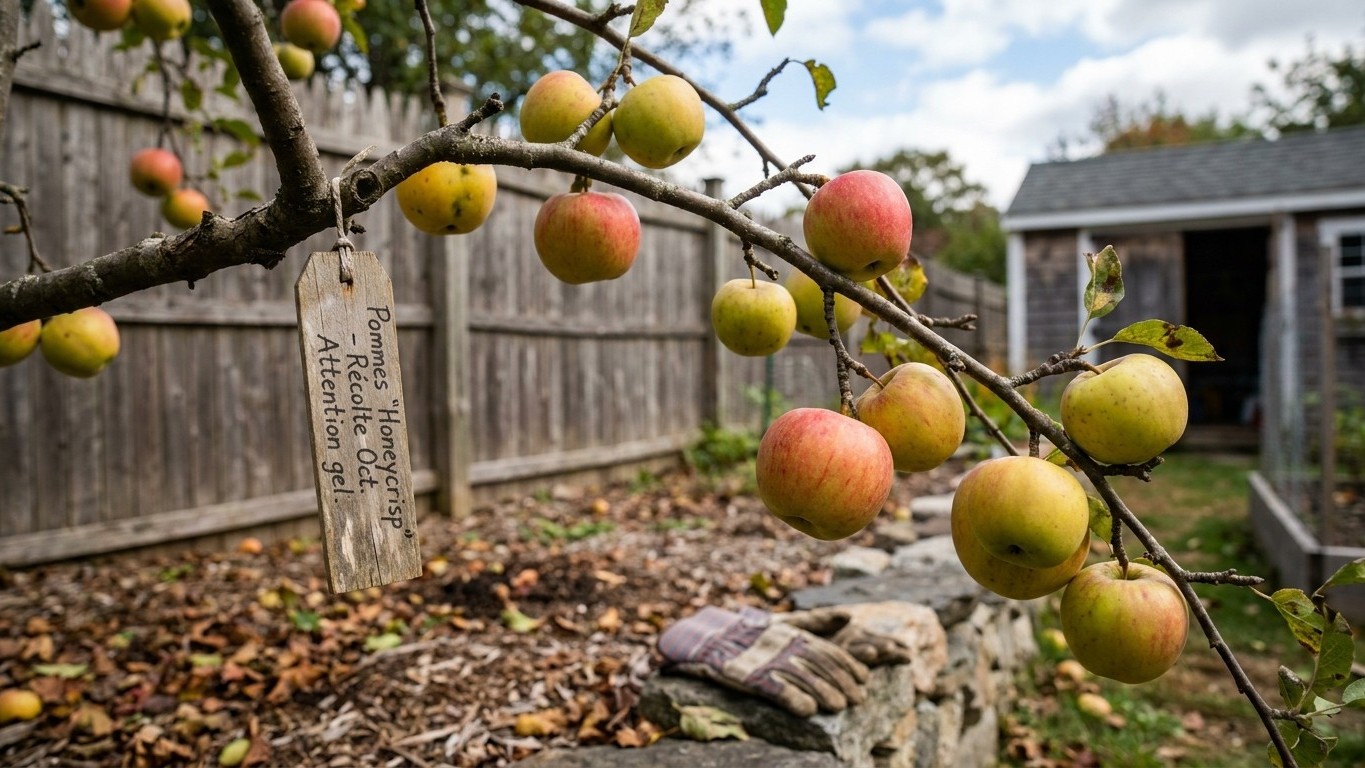

Two zones separate a Boston backyard from a hilltop orchard in Franklin County, and that gap is what decides which apple tree survives here. The coldest month’s average low hovers just above 22°F near the coast, but push inland toward the Berkshires and winters turn sharply harder, closer to zone 5a. An apple bred for mid-Atlantic winters might thrive on the Cape and still get burned in Pittsfield. Choosing a variety starts with your own town, not the state.
Can you grow apples in Massachusetts
Massachusetts has grown apples in backyard orchards and commercial rows since colonial days, and nothing about the current climate rules that out. NOAA’s 1991-2020 climate normals, measured at the Boston reference station, put the coldest month’s average daily minimum at 22.2°F. That figure is a mean, not a record low, but it tells you a cultivar bred for cold winters will get through the season without dieback.
USDA’s 2023 Plant Hardiness Zone Map spans zones 5a to 7b across the state. Boston and the immediate coastline sit at the milder end of that range. The Berkshires and the higher inland towns of Franklin and Worcester counties run colder, closer to zone 5a, sometimes colder in a sheltered valley. That’s a wide spread for one state, and it matters for variety choice more than most gardeners expect.
What this means for your yard
A cultivar rated hardy to zone 5 will come through winter in Pittsfield or the hill towns of Franklin County without trouble. Something bred for the upper end of zone 7, more typical of the mid-Atlantic, might survive on the Cape or immediately around Boston Harbor but take winter injury further inland. Match the cultivar to your own town’s zone, not to the state-wide range, because the difference between coastal and inland Massachusetts can be two full zones.
None of this makes any part of the state a bad place to plant an apple tree. It means the choice of which apple tree changes depending on where in the state you are standing, and that the Boston figures above describe the coast, not the interior. For a fuller picture of timing and tasks through the season, the Massachusetts apple Calendar lays out what to expect month by month.
Which varieties suit this climate

Massachusetts sits well inside the range of cold-hardy standard apple cultivars, and the state has its own history of producing them. For a full rundown of options, see The Best Apple Varieties for Massachusetts. ‘McIntosh’, one of the most widely planted apples in New England, is rated hardy through roughly zone 3 to zone 7 in nursery catalogues and handles the coldest inland Massachusetts winters without protection. ‘Cortland’, ‘Empire’ and ‘Liberty’ carry similar published hardiness and all crop reliably from the Berkshires to the coast. ‘Honeycrisp’, bred in Minnesota, is rated hardy to roughly zone 3, more cold-tolerant than almost anywhere in Massachusetts will require, though it is more disease-prone than ‘Liberty’ and needs a spray program to keep scab off the fruit. ‘Northern Spy’ is a slower, later-cropping tree but among the hardiest and latest-blooming standard cultivars, useful where spring frost lingers.
The chill filter, separate from hardiness
Hardiness tells you whether the tree survives winter. Winter chill, the number of cold hours a tree needs before it will break dormancy and flower properly, is a different question entirely, and Massachusetts sits at the long-chill end of that spectrum. Winters here reliably deliver more than enough cold accumulation for the standard Northern cultivars listed above. The risk runs the other way: a low-chill selection bred for a short, mild winter, the kind recommended in our guide to growing apples in North Carolina, can satisfy its (short) chill requirement during a January warm spell in Massachusetts and push bloom weeks early, straight into a spring cold snap. Stick to varieties documented as suited to Northern winters rather than anything marketed for southern gardens.
No local extension source we found publishes a Massachusetts-specific variety recommendation list with chill hours attached. Where that gap exists, go by the published hardiness zone and chill category on the nursery tag, and lean toward cultivars with a track record in New England orchards rather than newer introductions bred for other regions.
| Variety | Published hardiness | Pollen | Bloom timing | Notes |
|---|---|---|---|---|
| ‘McIntosh’ | Zone 3-7 | Fertile | Mid-season | New England standard, fireblight-prone |
| ‘Liberty’ | Zone 4-8 | Fertile | Mid-season | Scab-immune, low spray needs |
| ‘Cortland’ | Zone 4-8 | Fertile | Mid to late | Reliable cropper, slow to brown when cut |
| ‘Honeycrisp’ | Zone 3-8 | Fertile | Mid-season | Scab-susceptible, needs spray program |
| ‘Northern Spy’ | Zone 4-7 | Fertile | Late | Slow to bear, good frost buffer |
| ‘Baldwin’ | Zone 4-8 | Sterile (triploid) | Mid-season | Old New England heirloom, needs two pollinizers |
Planting a pair that works here
An apple tree needs a second, different variety blooming at the same time nearby, with viable pollen, to set a crop. Almost no standard apple is reliably self-fruitful, so plan for two trees from the start, or a neighbor’s tree within bee range.
Given the varieties that suit Massachusetts winters, the easiest pairing is ‘Liberty’ with ‘McIntosh’, since both bloom mid-season and both carry fertile pollen that will pollinate the other. ‘Cortland’ also overlaps that bloom window and works as a third tree or a substitute for either. If you want ‘Honeycrisp’ in the mix, pair it with ‘Liberty’ or ‘McIntosh’ rather than relying on it to pollinate anything else, since its own bloom timing is mid-season but its pollen performance is inconsistent in some regional trials.
Watch for triploid varieties, including ‘Baldwin’ and ‘Gravenstein’, both old New England favorites. Triploids produce showy blossoms but sterile pollen, so they need a second, fertile-pollen variety to set their own fruit, and they contribute nothing back as a pollinizer for a neighboring tree. Plant a triploid only as a third tree in an orchard of at least two other fertile-pollen varieties, never as one half of a two-tree planting.
The frost that costs a crop here

The frost that matters most to an apple grower in Massachusetts isn’t the one that kills the tree. It’s the one that kills the bloom. NOAA’s 1991-2020 climate normals put the last spring freeze at the Boston reference station between April 1 and April 8, based on the 30 to 70 percent freeze-probability band for a 32°F event. That window describes the coast. Inland suburbs and especially the Berkshires typically frost later in spring than Boston does, which pushes the frost risk further into the tree’s bloom development.
Why a late frost is worse than an early one
Once buds swell past the green tip stage and show pink, the flower tissue inside is exposed and far less cold-tolerant than the wood around it. A freeze that would do nothing to a dormant tree in January can kill the open blossoms or the pink buds just before they open, and the tree will leaf out fine that spring, looking completely healthy, while carrying no fruit at all for the year. That disconnect, a healthy tree with an empty crop, is the single most common frost complaint from home orchardists in this state.
There’s no way to move a real frost, but there are ways to manage the risk. Covering small trees overnight with a frost cloth when a hard freeze is forecast during bloom protects some open flowers. Siting the orchard on a slope rather than in a low frost pocket helps cold air drain away instead of settling on the blossoms. The most reliable protection, though, is variety choice: a late-blooming cultivar such as ‘Northern Spy’ pushes its bloom past the window when frost is most likely, which matters more the further inland and the higher in elevation your site sits. Growers just over the border face the same calculation on a colder timeline, as covered in our guide to growing apples in New Hampshire.
- Blackened or shriveled centers inside an otherwise open flower, a sign the pistil froze
- Bloom that opens normally but drops without swelling into fruit
- A tree that leafs out and grows normally with no fruit set at all that season
The apple year in Massachusetts
Timing an apple orchard by the calendar month is a mistake, since a warm or cold spring shifts everything by weeks. Go by the tree’s stage instead, and anchor those stages against this state’s own frost dates rather than a date on the wall.
Dormancy through green tip
Through winter the tree is fully dormant and this is the window for pruning, dead wood removal, and any dormant oil spray for overwintering pests. As days lengthen, buds swell and show green tip, typically arriving before the Boston-area last frost window of April 1 to 8 named by NOAA’s 1991-2020 normals, and later than that further inland. Green tip tissue tolerates a freeze far better than what follows.
Pink through petal fall
The pink stage, when buds show color but haven’t opened, is the point at which frost sensitivity jumps sharply. Bloom follows within days if temperatures stay mild, and this whole stretch is the highest-risk period discussed above. Watch the forecast closely through this window rather than assuming the “last frost date” is a hard boundary, since it is a 30 to 70 percent probability band, not a guarantee. Petal fall marks the end of the frost-critical period for that year’s crop.
Fruit set through harvest
Once fruit sets, the main jobs are thinning clusters down to one apple per spur for better size, and keeping up with pest and disease scouting through summer. Harvest for early varieties can begin in late summer, and later cultivars like ‘Northern Spy’ hang well into fall, generally finishing before NOAA’s 1991-2020 normals put the first fall freeze at the Boston station, between November 3 and November 14. Inland orchards should expect that fall frost sooner and plan harvest accordingly. For a full month-by-month version of this sequence, see our New Hampshire growing calendar, built on a similar but slightly colder timeline.
Local help
For a variety list specific to your county, current scab and fireblight pressure, and a spray calendar tuned to Massachusetts conditions, the University of Massachusetts Extension is the right first call. Reach their horticulture program at ag.umass.edu before you commit to a variety list, since local disease pressure and site conditions can outweigh the general guidance above.
Common questions
Can I grow apples in a small backyard in Massachusetts?
Yes, on a dwarf or semi-dwarf rootstock, which keeps a mature tree in the 8 to 12 foot range instead of the 20 to 25 feet of a standard rootstock. You still need two compatible varieties for pollination, so a small yard usually means planting them close together or relying on a neighbor’s tree within bee range.
Why did my apple tree bloom but set no fruit?
The most common causes are a late frost during or just after bloom, killing the flowers before they could set, or a pollination failure because the second tree nearby is a different bloom timing or a sterile triploid like ‘Baldwin’ or ‘Gravenstein’. Check your bloom dates and your neighbor’s variety before assuming disease or nutrition.
How many years before a new apple tree produces fruit?
A dwarf tree on the right rootstock can produce a light crop in 3 to 4 years, while a standard-size tree often takes 6 to 8 years to bear meaningfully. Cultivars like ‘Northern Spy’ are known for a particularly slow start even by apple standards.
Do I really need two different varieties, or will one tree fruit alone?
Almost every common apple variety needs a second, different variety blooming at the same time to set fruit, since apple pollen mostly doesn’t work on flowers from the same cultivar. A handful of “self-fertile” cultivars exist but even those crop better with a partner nearby.
Is it too cold in western Massachusetts for apples?
No. The Berkshires and inland hill towns run colder than Boston, closer to USDA zone 5a under the 2023 hardiness map, but that’s still within range for ‘McIntosh’, ‘Liberty’, ‘Cortland’ and ‘Northern Spy’, all rated hardy through zone 4 or colder. The bigger adjustment there is a later last frost and a shorter frost-free season, not an inability to grow the trees.