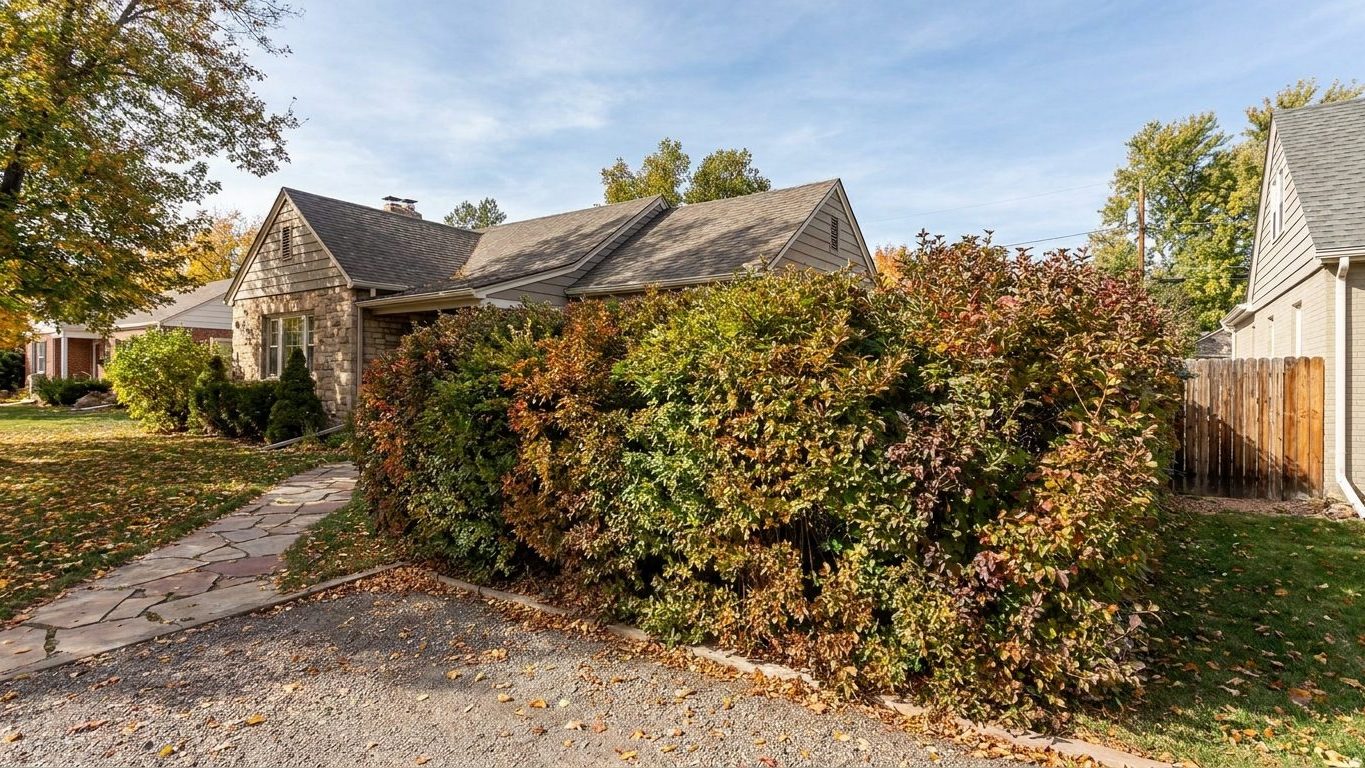

Search “hedge height law Massachusetts” and you’ll find pages quoting a single number for the whole state. None of them are right. Massachusetts has no statewide hedge height law. Height limits come from municipal ordinance, town by town, usually tucked into the zoning chapter under “fences” or “accessory structures.” The real answer isn’t a number. It’s a method for finding your town’s number.
There is no Massachusetts hedge height law
The Massachusetts legislature has never passed a statute capping how tall a hedge, a shrub row, or a living screen can grow on private property. That’s not an oversight. Land use regulation of this kind falls under home rule, the constitutional authority that lets each of the Commonwealth’s 351 cities and towns write its own zoning bylaw or ordinance. Boston’s rule, if it has one, has no bearing on Worcester’s. Worcester’s has no bearing on a small town in the Berkshires. Each municipality decides independently whether to regulate hedge height at all, and if so, how.
Why aggregator sites get this wrong
Content sites that rank for this kind of query often pull a figure from one town’s code, or from a neighboring state, and present it as if it applied everywhere. It’s an easy mistake to make and a costly one to repeat. A homeowner in one town who trims a hedge to match a number they read online could be well under their own town’s actual limit, or could be violating a stricter rule they never checked. Since no single figure covers Massachusetts, any page claiming otherwise is describing one town, one ordinance, or nothing verifiable at all.
This matters because fence height and hedge height are frequently treated as two separate questions inside the same code. A town might cap a solid wooden fence at a specific height in a front yard while saying nothing at all about a living hedge planted along that same property line. Others fold both into a single “accessory structure” definition. A few say nothing about height for either, and instead regulate only the sight triangle near a driveway or intersection. You cannot assume your town falls into any one of these categories until you’ve actually opened its code.
The absence of a state rule also means there’s no default to fall back on if your town’s bylaw is silent. Silence in a Massachusetts zoning code doesn’t automatically mean “no limit.” It can mean the town relies on a general nuisance provision, a site plan review process for anything over a certain height, or an unwritten practice enforced case by case through the building department. That’s frustrating if you want a clean number, but it’s also exactly why calling your town is more reliable than trusting a search result.
How to find the rule that actually applies to you
Start with the name of your city or town, not the word “hedge.” Most Massachusetts municipalities publish their full municipal code online, and almost all of them use one of three platforms: Municode, American Legal Publishing, or eCode360. A quick search for “[your town name] municipal code” will usually land you on one of these directly.
Where the rule actually lives
| Publisher | Typical web address | How to search it |
|---|---|---|
| Municode | library.municode.com | Use the built-in search bar; type “fence height” and “hedge” separately |
| American Legal Publishing | codelibrary.amlegal.com | Browse to the Zoning or Land Use chapter, then check the definitions section |
| eCode360 | varies by town, hosted under the town’s own domain | Use the search icon at the top of the code, then filter to “Zoning” |
Once you’re inside your town’s code, skip the general search engine and use the platform’s own search bar instead. Try more than one term: “fence,” “hedge,” “screening,” and “accessory structure” can each turn up different, sometimes contradictory, provisions in the same document. A code that regulates fence height in detail may not mention hedges at all, which means the fence limit likely doesn’t apply to your shrubs, whatever a neighbor insists.
Pay attention to where the height limit sits in the chapter. Some towns apply one number to front yards and a different one to side and rear yards. Corner lots and lots with a driveway entrance often carry an additional, separate restriction tied to visibility rather than general height, which is covered in the next section. If your property sits inside a historic district or is governed by a homeowners association, there may be a second layer of rules on top of the town’s zoning code, and those can be stricter than anything the municipality itself requires.
Call before you cut
If the code is ambiguous, or if you can’t find any mention of hedges, call the zoning or planning department directly rather than guessing. Ask specifically whether living screens are treated as fences under local law, whether there’s a maximum height for your zoning district, and whether a permit or site plan review is required for anything over a certain height. Many departments will give you a written determination on request, which is worth having if a dispute with a neighbor ever escalates. A five-minute phone call beats an afternoon of ambiguous search results, and it’s the only source that reflects your specific address.
The branches that cross the line
A hedge height ordinance and a boundary encroachment dispute are two different legal questions, and it helps to keep them separate. The first asks how tall a hedge may grow. The second asks what happens when it grows past the line dividing your yard from your neighbor’s.
Overhanging branches
In most states, the governing principle comes from case law rather than a written statute: a property owner whose neighbor’s branches or roots cross onto their land may trim the growth back to the boundary line, at their own expense, without the other owner’s permission. What they generally cannot do is cut back further than the property line, enter the neighbor’s yard to do the trimming, or take action severe enough to kill the plant. This rule shows up across the country in slightly different forms, shaped by each state’s own court decisions, so treat it as a general principle rather than a specific Massachusetts statute. If a dispute over encroaching branches turns serious, that’s a question for a real estate attorney familiar with your state’s case law, not a zoning department.
The sight triangle exception
One rule shows up in nearly every Massachusetts municipal code, regardless of whether the town regulates general hedge height at all: the sight triangle. At a street corner, or where a driveway meets a public road, nothing planted or built may block a driver’s line of sight. This isn’t a suggestion. It’s a safety provision, and the height limit inside a sight triangle is typically far lower than whatever general fence or hedge height the same code allows elsewhere on the property. A hedge that’s perfectly legal along a side yard can still be a code violation, and a real hazard, if it sits inside this triangle at a corner lot or driveway apron.
Because the sight triangle limit is usually measured in a small number of feet rather than the taller figures allowed elsewhere, it’s worth checking even if you’re confident your general hedge height is fine. Towns typically define the triangle by measuring a set distance back from the corner along each property line, then drawing the third side to complete it. Anything inside that triangle, hedge or otherwise, is subject to the stricter limit.
What to check before you plant
The best time to sort out height rules is before you put a shrub in the ground, not after it’s six feet tall and your neighbor is asking questions. A short checklist covers most of what matters:
- Confirm which zoning district your lot falls under and whether that district’s bylaw mentions hedges, fences, or accessory structures separately
- Ask the zoning department directly whether a living hedge is treated the same as a built fence under local code
- Check whether your lot includes a corner or driveway apron subject to a sight triangle restriction
- Review any homeowners association covenant or historic district guideline that might impose a stricter limit than the town’s own code
- Consider the mature height of the species you’re planting, since a shrub that looks modest at purchase can outgrow the legal limit within a few growing seasons
That last point trips up a lot of homeowners. Nursery tags describe a plant’s typical size at maturity, but “typical” assumes average conditions and years of growth most buyers don’t picture at planting time. A hedge that will eventually reach well past any local limit is a problem you’re better off catching at the garden center, not after it’s established. If your town’s code caps height and requires review above a certain point, it’s worth getting that answer in writing from the zoning office before your plants are in the ground, when moving the row a few feet or swapping the species is still a cheap fix instead of an expensive one.
Common questions
Does Massachusetts regulate hedges the same way it regulates fences?
No, and neither does any individual Massachusetts town automatically. Some municipal codes apply one height limit to both, others regulate fences in detail while staying silent on living hedges, and a few treat them as entirely separate categories. Check the exact wording your town’s code uses before assuming a fence rule applies to your shrubs.
What if my town’s zoning code doesn’t mention hedges at all?
Silence doesn’t necessarily mean there’s no limit. It can mean the town falls back on a general nuisance provision, a case-by-case building department practice, or a site plan review trigger for anything unusually tall. Call the zoning department and ask directly rather than assuming no rule exists.
Can my neighbor cut branches from my hedge if they cross onto their yard?
In most states, yes, up to the property line and at their own expense, though they generally can’t go further onto your side or damage the plant enough to kill it. This comes from case law that varies by state, so treat it as a general principle rather than a specific number, and consult an attorney if a dispute gets serious.
Where do I actually find my town’s municipal code online?
Search your town’s name along with “municipal code.” Most Massachusetts municipalities publish through Municode (library.municode.com), American Legal Publishing (codelibrary.amlegal.com), or eCode360, hosted under the town’s own domain. Once you’re on the site, use its internal search bar and try “fence,” “hedge,” and “accessory structure” as separate search terms.