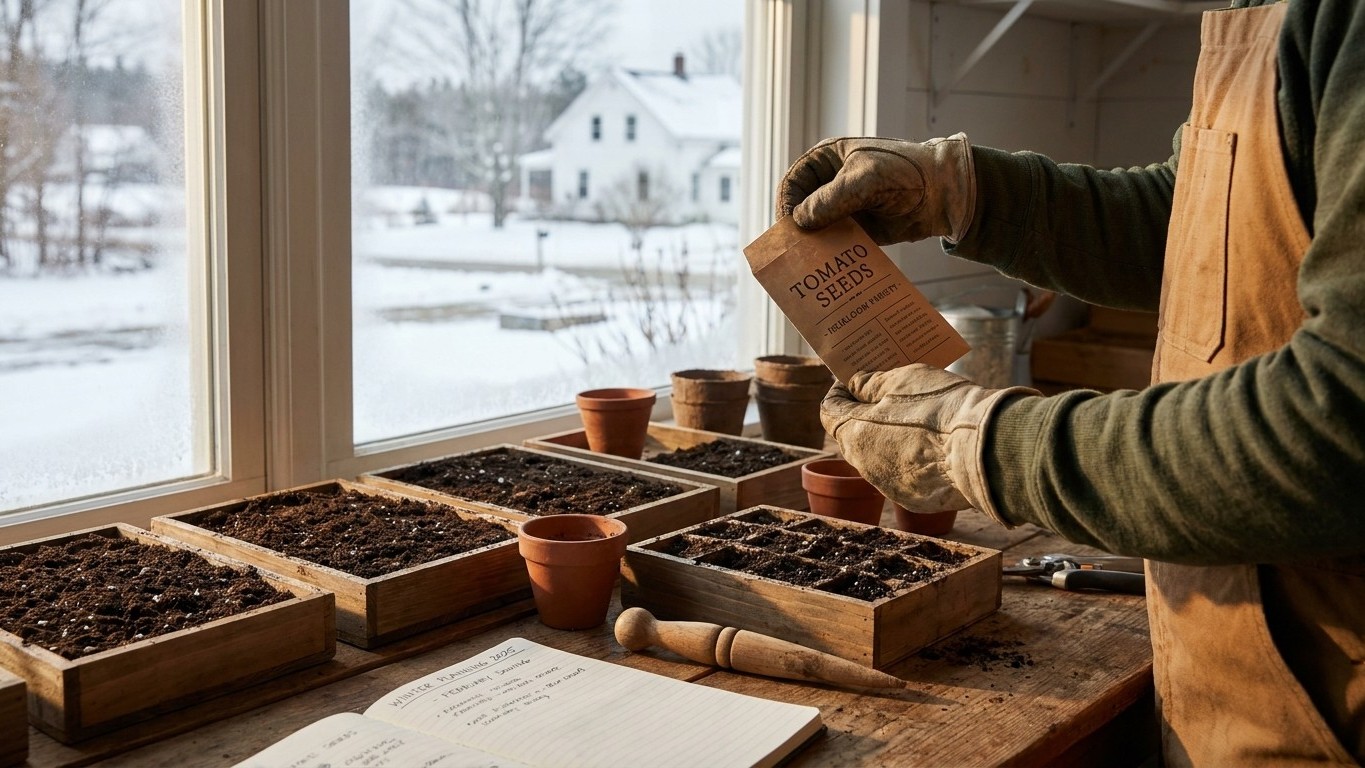

January in Massachusetts is a planning-and-pruning month, not a planting month. With the ground frozen solid across most of the state, direct sowing outdoors is off the table. The real work happens indoors and under cover: forcing dormant plants, starting the earliest seed trays, and getting soil, tools, and orders ready before the frost window opens.
What goes in the ground in January

The decision here isn’t the calendar, it’s the soil. Massachusetts sits in USDA Hardiness Zone 5a-7b, a range built entirely on average annual extreme minimum temperature, and Boston itself lands toward the milder end of that band. But hardiness zone tells you almost nothing about whether a shovel can break the surface in January. That answer comes from soil temperature and frost timing, and both say no for open-ground planting this month.
NOAA’s 1991-2020 Climate Normals put the last spring frost at Logan Airport in Boston between April 1 and April 8, with the first fall frost landing November 3 to November 14. Logan is a waterfront, urban station and the mildest spot in the state, so those dates already represent the earliest reasonable planting window anywhere in Massachusetts. Inland suburbs and the Berkshires frost later in spring and earlier in fall, sometimes by weeks. In January, with three months still standing between now and even the mildest version of that spring frost window, the ground itself is typically frozen from Worcester to the Berkshires and locked hard even along much of the coast.
That rules out direct-sown vegetables, bare-root trees, and transplants entirely. Garlic and shallots, which do go into open ground in Massachusetts, are an October-through-November job, not a January one; by the time January arrives the beds meant for them are already planted and mulched, or the window has closed until next fall.
What’s actually possible this month lives under cover or indoors. Cold frames holding spinach, mache, or claytonia sown in fall keep producing on sunny days. Rhubarb crowns and chicory roots dug and brought into a dark, cool spot will force new growth for cutting in a matter of weeks. If a warm coastal pocket happens to have unfrozen, workable soil during a mild stretch, it’s still not worth planting into: a refreeze is coming, and newly disturbed roots handle that worse than undisturbed dormant ones.
What to start under cover
The right way to plan indoor seed starting isn’t “it’s January, start seeds.” It’s counting backward from that April 1-8 frost window at the mild end of the state, and later still inland. Onions and leeks are the main candidates this month because they need 10 to 12 weeks of growth before they go outside as transplants, and they tolerate a longer stretch under lights better than most crops. Counting back 10 to 12 weeks from early April lands squarely in mid-to-late January, which is exactly why seed catalogs push onion and leek starts hard this time of year.
Cole crops like broccoli and cabbage run a shorter clock, roughly 6 to 8 weeks before transplant, and go outside a few weeks before the last frost since they tolerate light cold. Starting those in January is early for most of the state; late January into February fits better once the arithmetic is redone against a specific county’s frost pattern rather than Boston’s.
The two ways this goes wrong are predictable. Start too early and warm-loving crops like tomatoes and peppers turn leggy and rootbound sitting in small trays for months before it’s safe outside, weakening the plant before it ever sees a garden bed. Start too late, especially with onions, and the transplants never bulk up enough to size well before the shortening days of fall shut growth down.
| Crop | Weeks before transplant (indoor start) | Approx. seed-start window at Boston’s frost timing |
|---|---|---|
| Onions, leeks | 10-12 weeks | Mid to late January |
| Broccoli, cabbage | 6-8 weeks | Late January to mid-February |
| Peppers | 8-10 weeks | Mid to late February |
| Tomatoes | 6-8 weeks | Early to mid-March |
That table uses Logan’s mild-end dates. Anyone inland or at higher elevation should push every window later, sometimes by two to three weeks, once county-level frost timing is checked.
What is ready to pick
Outdoors, the honest answer is little to nothing. Any exposed row crop has either been harvested already or knocked back by repeated hard freezes. But a well-planned fall garden still feeds the table this month, just not from bare soil.
Kale and leeks left in the ground under a thick mulch or snow cover often survive and can be dug when the soil isn’t frozen solid on top; both actually sweeten after repeated cold exposure, which is why some growers leave them in deliberately. Cold frames sown in September or October with spinach, mache, or arugula keep offering small cuttings on clear days, since the glazing traps enough heat to keep soil temperature above freezing even when the air outside isn’t.
Indoors, sprouts and microgreens fill the gap fastest, ready in one to two weeks from seed with no soil or sunlight requirements beyond a windowsill. They’re the closest thing to a January harvest most Massachusetts gardeners will see.
Storage crops need active attention now, not passive waiting. Squash should be checked for soft spots or a sweet, fermenting smell, both signs it’s turning and needs to be used immediately or composted. Potatoes with green-tinged skin or soft, sprouting eyes should come out of storage before they spread rot to the rest of the bin. Onions that have gone soft at the neck or started sprouting green shoots are past holding and should be used first.
The jobs that matter this month
A quiet-looking garden still has a full list of deadlines, and January is when several of them land.
Dormant pruning of fruit trees and cane berries is a January task because the plants are fully asleep and the branch structure is easy to see without leaves in the way. Apples, pears, and brambles all take well to cuts made now, though extreme cold snaps, well below the teens, make wood brittle and prone to cracking rather than clean cutting, so pruning is better saved for a milder stretch within the month.
Seed ordering has a real deadline too: popular varieties, especially disease-resistant tomatoes and specialty onions, sell out from catalogs by late winter. Ordering in January beats competing for the same seed packets in March.
Planning next season’s crop rotation is easiest now, on paper, before soil work starts. Moving nightshades, brassicas, and legumes to new beds each year cuts down on soil-borne disease buildup, and January is the slow month to actually sketch that plan out.
Soil testing can be done through the growing season, but sending samples to a lab now means results are back well before spring planting, giving time to work in lime or amendments based on what comes back. Turning compost piles, even in cold weather, keeps the pile from going anaerobic and speeds decomposition once temperatures rise. Tools benefit from the downtime too: cleaning rust off blades and sharpening pruners and hoes now means no delay once the ground softens. Fencing and raised bed frames damaged by fall storms or freeze-thaw heaving are far easier to repair without a garden full of plants in the way.
What not to do in January
The most common mistake this month is reading a warm afternoon as spring. A 50-degree day in January doesn’t mean the soil has warmed or that frost risk has passed, since Massachusetts sits three months out from even Boston’s earliest last-frost date of April 1. Seeds or transplants put outside on the strength of one mild day almost always meet a hard freeze within days.
Uncovering cold frames or pulling back mulch during that same mild stretch causes a similar problem. Plants that have been insulated and stable suddenly get exposed to a temperature swing, and when the cold returns, as it reliably does in Massachusetts winters, the plant takes damage it wouldn’t have taken if left covered.
Starting warm-season seeds like tomatoes and peppers too early is another classic error, covered above in the arithmetic, but it’s worth restating: a leggy, rootbound seedling started in January rarely outperforms one started on schedule in March.
Feeding nitrogen to dormant plants is wasted effort at best. Trees, shrubs, and any overwintering perennials aren’t actively growing, so nitrogen applied now either leaches away before spring or, worse, pushes a flush of tender growth right before a freeze if there’s an unusually warm stretch, and that new growth is the part most likely to die back.
Checking this against your own county
Every date and window in this article is a state-wide starting point, not a set of instructions for a specific yard. Elevation, distance from the coast, and even lake effect near larger bodies of water shift frost timing by weeks in either direction. The Berkshires and the hill towns of central Massachusetts routinely frost later in spring and earlier in fall than the Boston numbers cited here, since Logan is a waterfront, urban station and the mildest reporting point in the state.
The UMass Extension service publishes county-specific guidance and a planting calendar built for Massachusetts conditions, and it’s the right place to confirm local frost timing before committing seed or transplants to a schedule based on statewide averages.
Common questions
Can I plant garlic in January in Massachusetts?
Not typically. Garlic goes into the ground in October or November so it can establish roots before winter dormancy. By January the ground is usually frozen and the fall planting window has already closed until next fall.
Is it too early to start tomato seeds indoors in January?
For most of Massachusetts, yes. Tomatoes need only 6 to 8 weeks indoors before transplanting, which happens after the last frost. Starting in January against an April 1-8 frost window at the mild end of the state produces leggy, rootbound plants long before it’s safe to move them outside.
What vegetables can survive a Massachusetts winter outdoors?
Kale and leeks are the most reliable, often surviving under mulch or snow cover and sweetening from the cold exposure. Cold-frame spinach, mache, and arugula also hold up and can be harvested in small amounts through the winter.
Why does my area frost later than the dates listed for Boston?
The Boston frost dates come from a waterfront, urban weather station, the mildest reporting point in Massachusetts. Inland areas, higher elevations, and the Berkshires lose the coast’s moderating effect and typically see later last-spring frosts and earlier first-fall frosts, sometimes by several weeks.