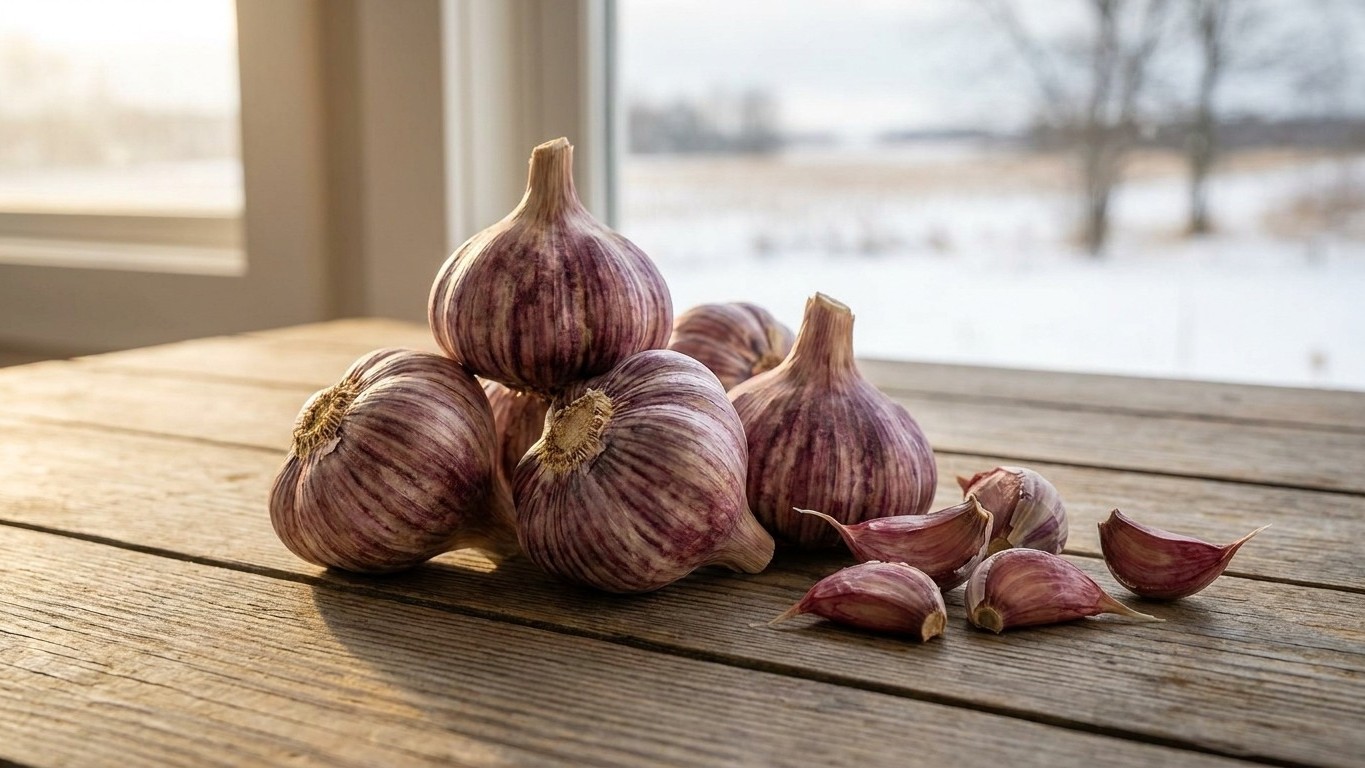

Garlic in Michigan usually comes out of the ground in mid to late July, sometimes stretching into the first days of August in a cool, wet season. The signal isn’t a date on the calendar. It’s the plant itself: when the bottom third to half of the leaves have browned and dried while several upper leaves are still green, the bulb has finished sizing up and the wrappers are tight enough to survive curing and months in storage.
When garlic is ready to lift in Michigan
Garlic planted in Michigan is a fall crop that finishes the following summer. Cloves go into the ground in autumn, root through the cold months, then push up green shoots as soil warms in spring. That long runway matters because it means harvest timing this year is set in part by a planting decision made ten months earlier, not by anything you do in July.
Reading the leaves, not the calendar
Pull one test bulb rather than trusting the whole bed to look the same. Slice it in half. If the cloves are plump and the skins around each one are distinct and papery, it’s ready or close to it. If the clove skins are still thin and translucent, give the bed another week. Waiting too long backfires too: bulbs left in the ground after the wrappers split open lose their outer layers, and those exposed bulbs won’t store past a few weeks.
Why the fall planting date shapes summer harvest
Michigan’s zone 6a areas see their first fall frost anywhere from October 6 to October 21, according to MSU Extension’s Michigan Garden Calendar. That’s a midpoint, not a promise. In roughly one year out of two, frost arrives after October 21, which is exactly the kind of variability that pushes some gardeners to get cloves in the ground earlier than they’d planned, aiming for root establishment before the ground locks up. A garlic bed that goes in during a mild, late-frost year develops differently than one planted just ahead of an early freeze, and that difference shows up the following July as a week or two of spread in harvest readiness across a given neighborhood, even among gardeners growing the same stock.
Stop watering roughly a week or two before you expect to lift bulbs. Wet soil at harvest time means muddy wrappers, and wrappers that go into curing already damp are the ones most likely to mold instead of dry.
Curing it, and where to hang it here
Curing is the step between “harvested” and “storable.” Skip it or rush it, and even a perfectly grown bulb will soften or rot within weeks. Done right, it turns a freshly pulled bulb with damp skins into something that can sit in a cool corner of the house until spring.
The basic drying window
Leave the stems, leaves, and roots attached at harvest. Don’t wash the bulbs. Move them somewhere shaded, dry, and out of direct sun, with air moving around them rather than piled in a bucket. The bulbs need to lose moisture slowly and evenly, and that takes weeks, not days. You’ll know curing is finished when the outer wrappers are fully papery and rustle rather than feel cool and rubbery, the roots are dry and brittle, and the neck where the stem meets the bulb has tightened and dried rather than staying soft.
Best spots in a Michigan garage or barn
Michigan summers bring enough humidity that curing indoors in a closed room without airflow often ends in soft spots or gray mold on the wrappers. A garage with the door cracked, a barn aisle, or a covered porch out of rain and sun all work, especially with a box fan running nearby on the muggiest days. Hanging bulbs in loose bunches, or laying them in a single layer on screens or slatted crates, beats stacking them in bags or bins where trapped moisture has nowhere to go. If a stretch of rain pushes indoor humidity up, running a dehumidifier in the curing space for a few days helps more than moving the bulbs somewhere warmer.
Storing it through a Michigan winter
Once cured, garlic wants a cool, dry, dark spot with steady conditions. It’s the steadiness that matters most. Bulbs that swing between a warm afternoon and a cold night lose quality faster than bulbs held at one consistent temperature, even if that temperature isn’t perfectly ideal.
Temperature and humidity that keep bulbs firm
Warm storage pushes bulbs toward early sprouting, which pulls flavor and substance out of the clove as the green shoot inside feeds on it. Storage that’s too cold and damp, on the other hand, invites rot. Somewhere between those extremes, dry rather than humid, and away from direct light, keeps bulbs firm the longest. Trim the dried stems to an inch or two once curing is done, or braid softneck varieties if you’d rather hang them whole.
Where in a Michigan home that actually happens
A finished basement kept at typical living temperatures is usually too warm for long-term storage. An unheated but insulated basement corner, an attached garage that doesn’t freeze hard, a mudroom, or an old-style root cellar tend to work better because they hold a cooler, steadier temperature through winter without dropping below freezing. Avoid the refrigerator for whole bulbs meant for eating over months. The cold, moist environment there tends to trigger sprouting faster than a dry pantry shelf will. Set aside your best, largest bulbs as seed stock for fall planting and store them separately from the bulbs you plan to cook with, so you’re not tempted to eat your way into next year’s planting supply. For growing questions specific to a county or a particular season, MSU Extension‘s outreach service is the land-grant contact point for Michigan gardeners.
What goes wrong here
Most garlic failures in Michigan trace back to timing rather than disease: pulled too early, cured too fast, or stored somewhere too warm. But pests do factor in, and it’s worth being precise about what’s actually documented rather than guessing.
Pests documented for this territory
MSU Extension Bulletin E3276, Diseases and Insects in Michigan Cucurbits, documents a set of pests for Michigan growers. That bulletin is built around cucurbit crops like squash and cucumbers, so the list below skews toward pests of that group rather than garlic specifically, and it should be read with that limit in mind:
- Asiatic garden beetle
- Cutworms
- Emerald ash borer (Agrilus planipennis)
- Flea beetles
- Seedcorn maggot (Delia platura)
- Slugs
- Spotted cucumber beetle
- Squash bug (Anasa tristis)
- Squash vine borer (Melittia cucurbitae)
- Striped cucumber beetle
Of these, cutworms and slugs are the ones most likely to show up around a garlic bed, since both feed broadly on young shoots and soft plant tissue rather than sticking to one crop family. No garlic-specific pest list for Michigan is published in this source, so it’s more honest to say the gap exists than to fill it with a guess.
Curing and storage mistakes worth naming
Beyond pests, the recurring problems are curing bulbs in a closed, humid space, storing damp bulbs before they’ve fully dried, and holding finished bulbs somewhere warm enough to wake them out of dormancy early. Each of those is fixable with airflow, patience, and a cooler storage spot, none of which requires special equipment.
Common questions
How long does garlic take to cure in Michigan?
There’s no single published number for Michigan specifically. Growers generally cure bulbs for several weeks in a shaded, ventilated spot until the wrappers are fully papery and the neck has dried tight, rather than working to a fixed day count.
Can I harvest garlic before the leaves die back?
Pulling too early means smaller, underdeveloped cloves with thin wrappers that won’t cure or store well. Waiting for roughly the lower third to half of the leaves to brown, while the top leaves stay green, gives the bulb time to finish sizing without the wrappers splitting open.
Does an early Michigan frost ruin garlic already in the ground?
Garlic in the ground over winter is dormant and built to handle cold, so an early fall frost doesn’t threaten a bed planted in autumn. Frost timing matters more for deciding when to plant in the first place, since Michigan’s zone 6a frost window runs October 6 to October 21 and can land later than that in about half of years.
Where should I store garlic if I don’t have a root cellar?
An unheated garage that doesn’t freeze, an insulated basement corner, or a mudroom away from direct light all serve as reasonable substitutes. The goal is a cool, dry, steady spot rather than one specific type of room.