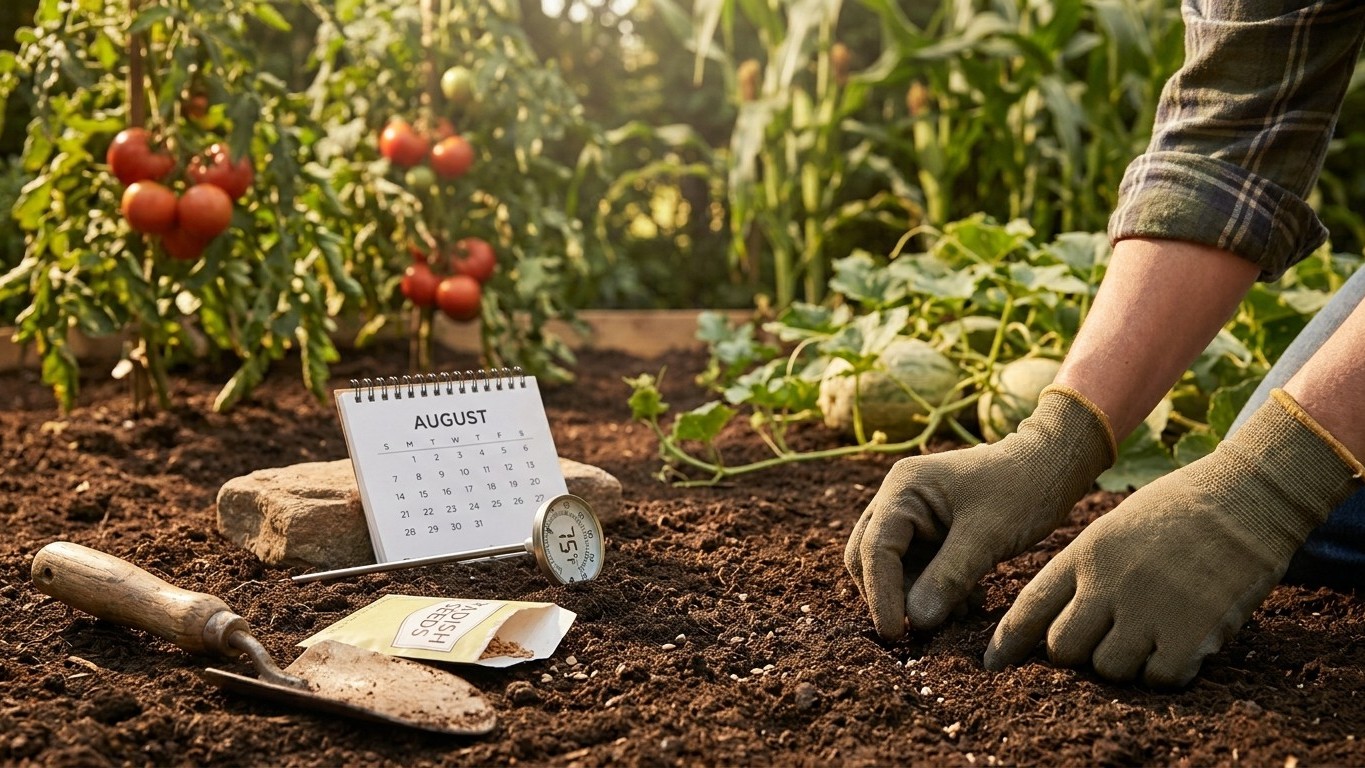

August in Michigan splits into two jobs at once: bring in the peak harvest of tomatoes, corn, and melons, and sow a second round of fast-maturing crops before the first fall frost closes the season. Direct-seed lettuce, spinach, radishes, turnips, beets, and a last batch of bush beans early in the month. Skip anything needing more than about 60 days to mature unless it’s already frost-tolerant.
What goes in the ground in August

The calendar says August, but the number that actually matters is closer to 60. That’s roughly how many days remain between early August and Michigan’s first fall frost, which lands somewhere between October 6 and October 21 for zone 6a, according to MSU Extension’s Michigan Garden Calendar. Every seed packet lists “days to maturity,” and that figure, not the outside temperature, is the real filter this month.
Soil temperature works the opposite way it does in spring. By August, ground across the Lower Peninsula has been warming for weeks and often sits well above 75°F at seed-planting depth. That’s too warm for lettuce and spinach seed to germinate reliably, so gardeners direct-sowing those crops now often shade the row with a board or light cloth for a few days, or wait for a stretch of cooler nights later in the month.
Safe versus a gamble
| Crop | Days to maturity | August verdict |
|---|---|---|
| Radishes | 25-30 | Safe, sow anytime in the month |
| Lettuce, spinach, arugula | 30-45 | Safe, sow through most of the month |
| Beets, turnips | 50-60 | Safe if sown early August |
| Bush beans | 50-55 | Safe only in the first two weeks |
| Peas (fall crop) | 60-65 | Gamble past mid-August |
| Carrots | 70-80 | Gamble after the first week |
Transplants of broccoli, cauliflower, and cabbage started earlier in summer can still move into the garden now for a fall harvest. Garlic and shallots, the classic “plant now” crops in many state guides, don’t belong in a Michigan August bed; those go in during fall once the ground has cooled, not while it’s still holding summer heat.
What to start under cover
Under cover in August usually means one of two things: seed trays under lights indoors, kept out of the worst heat, or a cold frame lid ready to go on once nights start dropping. Either way, the math starts from the same end point, the first fall frost between October 6 and October 21, and works backward from there.
Take kale as an example. A transplant needs about three to four weeks in a tray before it’s ready for garden soil, then another 55 to 65 days to reach full size outdoors. Add those together and a kale seedling started under cover in early August is cutting it close for the early end of that frost window, and comfortable for gardeners closer to the later end. Spinach and lettuce, needing far less total time, can be started under cover into September in many parts of the state and still make it.
Two ways this goes wrong. Starting too early, in the first days of August in a hot garage or greenhouse, produces leggy, rootbound seedlings before there’s anywhere cool enough outside to move them, since the plants stretch looking for relief from intense heat and light. Starting too late skips past the arithmetic altogether: a transplant needing seven weeks total, started in the last days of August, simply runs out of season before a frost between October 6 and October 21 ends it.
The safer approach is working backward from a date that matters to your county, not a fixed rule of thumb. Count the days to maturity on the seed packet, add three to four weeks if the crop needs a head start indoors, and subtract that total from the earliest frost date your area sees. Whatever’s left is the sowing window.
What is ready to pick
August is peak output for a Michigan garden, not a lean month, so this list runs long on what’s coming in rather than short.
Tomatoes color up fast once they start; picking at full color rather than waiting for maximum softness keeps fruit ahead of splitting and cracking, especially after a heavy rain. Sweet corn is ready when the husk feels tight, the silks have browned and dried, and a quick thumbnail test on a kernel produces a milky, not clear, liquid. Summer squash and zucchini need daily checks; a fruit left two extra days on the vine goes from tender to a baseball bat, and the plant slows production once it’s carrying oversized fruit.
Cucumbers for fresh eating come off firm and dark green before yellowing starts; that yellow tinge signals the seeds have toughened and turned bitter. Melons announce themselves: a ripe cantaloupe slips from the vine with light pressure at the stem, and a ripe watermelon gives a deep, hollow thud rather than a flat one when tapped.
Beans, bush or pole, stay tender only a few days after the pod fills out; picking every two to three days keeps the plant setting new flowers instead of pouring energy into maturing seed. Michigan’s blueberries and raspberries run through much of August in many counties, alongside the first apples of the season in early varieties. None of these wait patiently; a garden left unchecked for a week in August loses food to rot, birds, and over-ripening rather than to frost.
The jobs that matter this month
Watering rhythm decides more in August than any other single job. Deep, infrequent watering aimed at the root zone, rather than frequent light sprinkling overhead, carries plants through the hottest stretch of the year without pushing shallow rooting. Tomatoes and peppers that dry out and then get soaked tend to split fruit or drop blossoms, a problem that traces back to watering habits more often than to disease.
Staking and support can’t wait past this point. Tomato plants carrying a full fruit load, and pole beans at peak height, snap or topple in the first strong August storm if they aren’t tied up before the weight arrives, not after.
Mulch that’s thinned out by midsummer needs topping up now, both to hold soil moisture through dry stretches and to keep weeds from setting seed before fall. Bare soil in August heat loses moisture fast enough to stress shallow-rooted crops within a day or two.
Pest scouting matters more now than earlier in the season, since populations of squash vine borer, Japanese beetle, and tomato hornworm build through summer and peak in August. Checking the undersides of leaves and the base of squash stems every few days catches an infestation while hand-removal still handles it, before anything stronger is needed.
Succession sowing keeps the harvest window open: pulling a finished bean or pea row and immediately reseeding with a fast fall green means that space isn’t wasted for the weeks still left before frost. Seed saving from the best-performing tomato, pepper, or bean plants, done as fruit fully ripens, costs nothing and pays off the following spring. Any bed that finishes early is worth sowing to a quick cover crop like buckwheat rather than leaving it bare through fall.
What not to do in August
The most common August mistake is starting warm-season crops from seed, tomatoes, peppers, melons, on the logic that the weather still feels like summer. It does, but the math doesn’t work: a tomato started from seed in August needs eight to ten weeks just to reach transplant size, then another two months to fruit, putting harvest well past even the latest fall frost date in the state. If a warm-season crop isn’t already in the ground and growing by August, seed-starting it now produces a plant, not a harvest.
Feeding nitrogen heavily late in the month is a close second. Established tomato and pepper plants that get a strong nitrogen dose respond with a burst of leafy growth rather than fruit, and that new growth is exactly the tissue most vulnerable if an early frost arrives ahead of schedule. A lower-nitrogen, higher-potassium feed once plants are fruiting well is the better move.
Overhead watering in the heat of the day, rather than deep watering at the base in early morning or evening, wastes water to evaporation and leaves foliage wet through the hottest hours, exactly when powdery mildew and other fungal problems take hold on squash and cucumber leaves.
Letting ripe produce sit has its own real cost: tomatoes, beans, and summer squash left on the plant past their peak signal the plant to slow or stop setting new fruit, reading a full load of maturing seed as a sign to quit producing. Picking on schedule, not when convenient, keeps the yield going through the rest of the season.
Checking this against your own county
A single frost window for the whole state is a starting point, not an instruction for your backyard. Michigan’s geography moves these dates by real weeks: colder pockets of the northern Lower Peninsula see frost well before the Detroit area does, while land close to Lake Michigan’s shoreline often stays frost-free longer than spots just a few miles inland, thanks to the lake’s moderating effect. Elevation shifts things further, with low-lying frost pockets cooling faster than nearby high ground.
The reliable next step is MSU Extension, which publishes county-level frost data and a Michigan-specific planting calendar. Check the outreach office covering your county before locking in a sowing date.
Common questions
Can I still plant tomatoes in Michigan in August?
No, not from seed, and transplants set out this late rarely have enough time to ripen a full crop before frost arrives between October 6 and October 21 in zone 6a. Established plants already producing should be kept going, not replaced.
What vegetables can I direct-sow in Michigan in August?
Fast-maturing crops fit the remaining frost window: lettuce, spinach, arugula, radishes, turnips, beets, and bush beans sown early in the month, plus a last round of quick Asian greens.
When does the first fall frost typically hit Michigan?
MSU Extension places the first fall frost for zone 6a between October 6 and October 21, though the exact date varies by county, elevation, and closeness to the Great Lakes.
Is August too late to start a fall garden in Michigan?
Not for quick crops. Anything maturing in 60 days or fewer, sown in the first half of August, still has a workable path to harvest before frost across most of the Lower Peninsula.