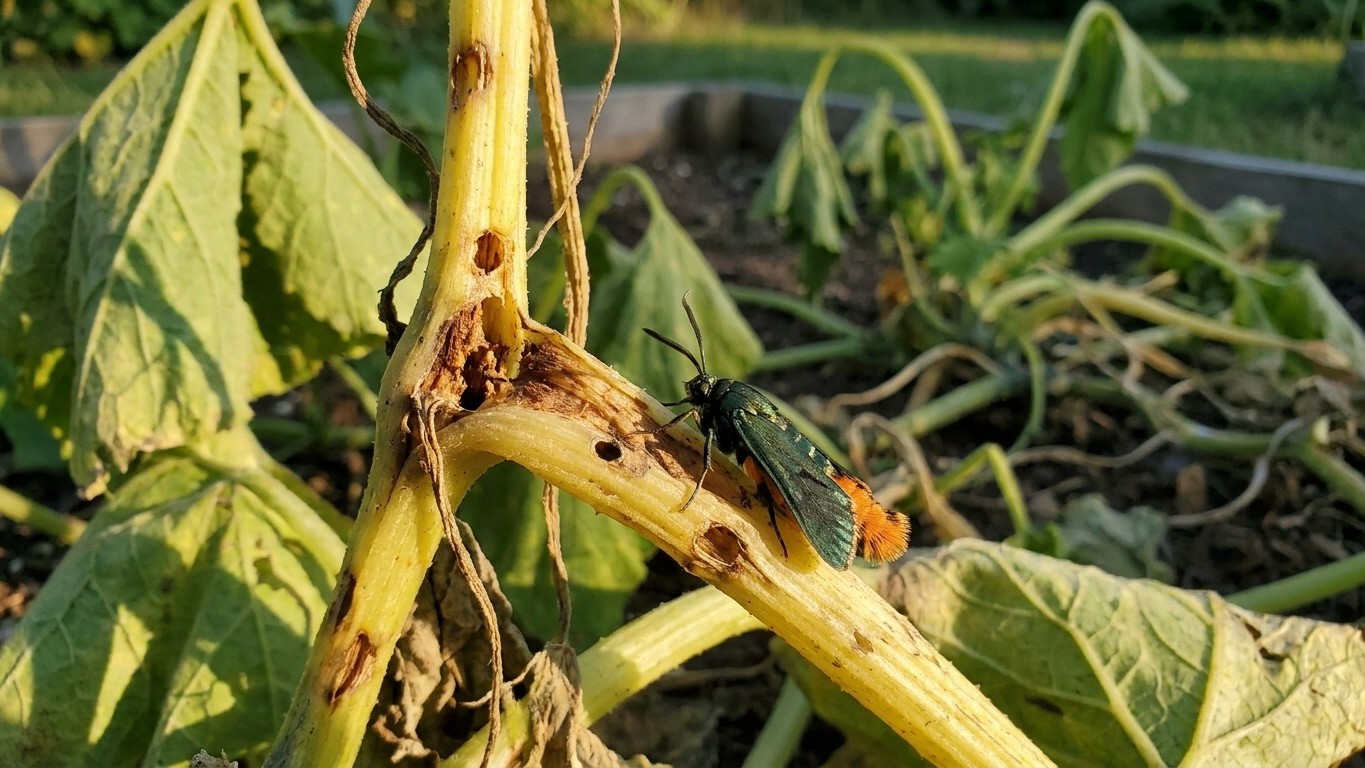

Squash vine borer adults start flying in Michigan in late June, with egg-laying activity running through July and sometimes into early August. That single window matters more than almost anything else in the fight against this pest, because once a larva tunnels into a stem, spraying does nothing. Timing isn’t a detail here. It’s the whole strategy.
Michigan gardeners lose entire squash and pumpkin plants to this insect every summer, often without ever seeing the moth responsible. The damage looks sudden: a healthy, sprawling vine collapses within days, sometimes overnight. By the time the wilt shows up, the larva has already been feeding inside the stem for a week or two. What follows is a breakdown of when this pest actually operates in Michigan, how to catch it before the damage is done, and which control methods hold up against it.
The Insect Behind the Damage

Squash vine borer (Melittia cucurbitae) isn’t a beetle or a caterpillar in the way most gardeners picture pests. The adult is a day-flying moth with a metallic green-black body and an orange, fringed abdomen that makes it look more like a wasp than a moth. It’s easy to mistake for a beneficial insect buzzing around the garden, which is part of why so many infestations go unnoticed until the vine is already dying.
Michigan sits far enough north that the borer completes just one generation per year, unlike southern states where two generations can overlap and extend the threat from spring through fall. That single-generation pattern is actually good news for Michigan growers. It means there’s one defined egg-laying period to plan around, rather than a months-long rolling threat.
The insect overwinters as a mature larva or pupa inside a tough, silk-lined cocoon buried one to two inches deep in the soil, usually right where an infested vine grew the previous season. Adults emerge from those cocoons the following summer, mate, and the females go looking for host plants within days.
When Squash Vine Borer Shows Up in Michigan
Emergence timing tracks with soil temperature and cumulative degree days rather than the calendar, which is why the window shifts slightly from year to year and even from the southern Lower Peninsula to the northern counties. Generally, moths start emerging in late June across most of Michigan, with peak flight and egg-laying activity through July. In cooler regions of the state, or during a slow-warming spring, that peak can push into early August.
Michigan State University Extension runs regional pest monitoring for vegetable growers, tracking degree-day accumulation and trap catches to help commercial and home growers time their scouting instead of guessing. That kind of tracking exists because the emergence window genuinely moves, and spraying or covering plants two weeks too early or too late wastes the effort.
Females lay eggs singly at the base of stems, on leaf stalks, or right at soil level near the crown of the plant. A single female can lay somewhere between 150 and 200 eggs over her lifespan, scattering them across multiple plants. Eggs hatch in about a week, and the newly hatched larva bores directly into the stem within hours of emerging, which is the narrow moment when the pest is still exposed and vulnerable.
Which Squash Are Most at Risk
Not every plant in the cucurbit family faces equal risk. Hubbard squash is a favorite target and often gets planted specifically as a trap crop to lure moths away from other varieties. Zucchini, summer squash, and pumpkins with hollow, fleshy stems also take heavy hits. Butternut squash, by contrast, has a solid, less hollow stem structure and tends to shrug off infestations far better than its relatives. Cucumbers and melons get attacked occasionally but far less often than pumpkins and squash.
Spotting an Infestation Before It’s Too Late
The classic sign is sudden wilting of one runner or the entire plant during hot afternoons, even when soil moisture looks fine. That symptom alone gets mistaken for drought stress or squash bug damage constantly, which delays the correct response.
Look closer at the base of the stem, within the first foot or so from the soil. Frass, a sawdust-like, greenish-yellow material that resembles wet sawdust, usually piles up near a small entry hole. That hole is where the larva bored in, and it’s the clearest confirmation available without cutting the stem open. Pulling back mulch or soil right at the crown often reveals it.
Splitting the stem lengthwise with a clean knife, starting an inch or two from the entry point, will expose the larva directly: a cream-colored, wrinkled grub up to an inch long. Finding it this way confirms the diagnosis, though by this stage the vine has already sustained real internal damage.
What Actually Stops It
Control has to happen on two fronts: keeping adults from laying eggs in the first place, and catching larvae in that brief early window before they’ve tunneled deep into the stem. Nothing works as a single fix. Combining methods gets far better results than relying on any one tactic.
Physical Barriers and Timing
Floating row covers placed over young plants at transplant, and kept sealed at the edges, block adult moths from reaching the stems entirely. The catch is that squash and pumpkin flowers need pollinator access to set fruit, so covers have to come off once blooming starts. That leaves a gap right around the time Michigan’s moth flight typically peaks in July, which is why timing the cover removal against local emergence reports matters more than following a fixed date.
Wrapping the base of each stem in aluminum foil or a strip of nylon stocking from the soil line up to four inches also physically blocks egg-laying at the most vulnerable point on the plant. It’s a low-cost method that home gardeners have used for decades with reasonable success on a handful of plants, though it’s not practical at large scale.
Scouting and Mechanical Removal
Checking stem bases twice a week from late June through July catches eggs before they hatch. The eggs are tiny, flattened, and reddish-brown, laid singly rather than in clusters, which makes them tedious but not impossible to spot and crush by hand.
Once a larva has already entered the stem, the surgical option still works: slit the stem lengthwise near the entry hole, remove the larva, then mound moist soil over the wounded section to encourage the vine to root along the buried portion and recover. Plenty of Michigan gardeners have saved otherwise doomed pumpkin vines this way, though it only works if caught within the first week or two of entry, before the internal damage spreads too far up the stem.
Biological and Cultural Controls
Beneficial nematodes applied to the soil and injected into infested stems have shown some success against larvae, since the nematodes can reach the pest inside its tunnel in a way that surface treatments can’t. Results tend to be inconsistent, though, and nematode viability depends heavily on soil moisture and temperature at application.
Fall cleanup matters just as much as anything done during the growing season. Tilling the soil after harvest, or at minimum removing and destroying vine debris rather than composting it, disrupts overwintering cocoons before next year’s adults can emerge from them. Crop rotation, planting cucurbits in a different bed each year, reduces the odds that next season’s moths will find host plants right where last year’s larvae burrowed down for winter.
Insecticide applications, where used, only work during the brief window between egg-laying and larval entry, meaning a treatment applied even a few days late does nothing once the larva is inside the stem. That narrow effective window is exactly why scouting and degree-day tracking carry more weight in managing this pest than any single spray decision.
Choosing Varieties That Hold Up Better
Planting resistant varieties doesn’t eliminate the risk, but it shifts the odds. Butternut and other Cucurbita moschata types consistently show less damage than Cucurbita pepo varieties like zucchini and most summer squash, largely because of stem structure rather than any chemical deterrent. Michigan gardeners dealing with repeated losses in the same bed sometimes shift their main crop toward butternut and reserve a sacrificial Hubbard plant elsewhere in the yard specifically to draw moths away from the plants they actually want to harvest.
Staggered planting, putting in a second round of squash seeds two to three weeks after the first, can also help. Later plantings sometimes miss the peak egg-laying window entirely, especially in years when moth emergence runs early. It’s not a guaranteed dodge, since Michigan’s emergence dates shift from year to year, but it adds a second line of defense for gardeners who’ve already lost a first planting to borers.
Related guides
- Squash vine borer in Ohio: When It Shows Up and What Stops It
- Squash vine borer in Indiana: When It Shows Up and What Stops It
- Squash vine borer in Minnesota: When It Shows Up and What Stops It
- Squash vine borer in Missouri: When It Shows Up and What Stops It
- Squash vine borer in Massachusetts: When It Shows Up and What Stops It
- Squash vine borer in Texas: When It Shows Up and What Stops It