
Minnesota gardeners get one clear answer for March: nothing goes into open garden soil yet, almost anywhere in the state. The ground is still frozen solid or turning to cold mud, and the earliest safe outdoor planting doesn’t arrive until the last spring frost window passes, April 17 to April 30 in the Twin Cities and later still up north. March is a prep month, not a planting month, and treating it that way saves seedlings and seed money.
What goes in the ground in March

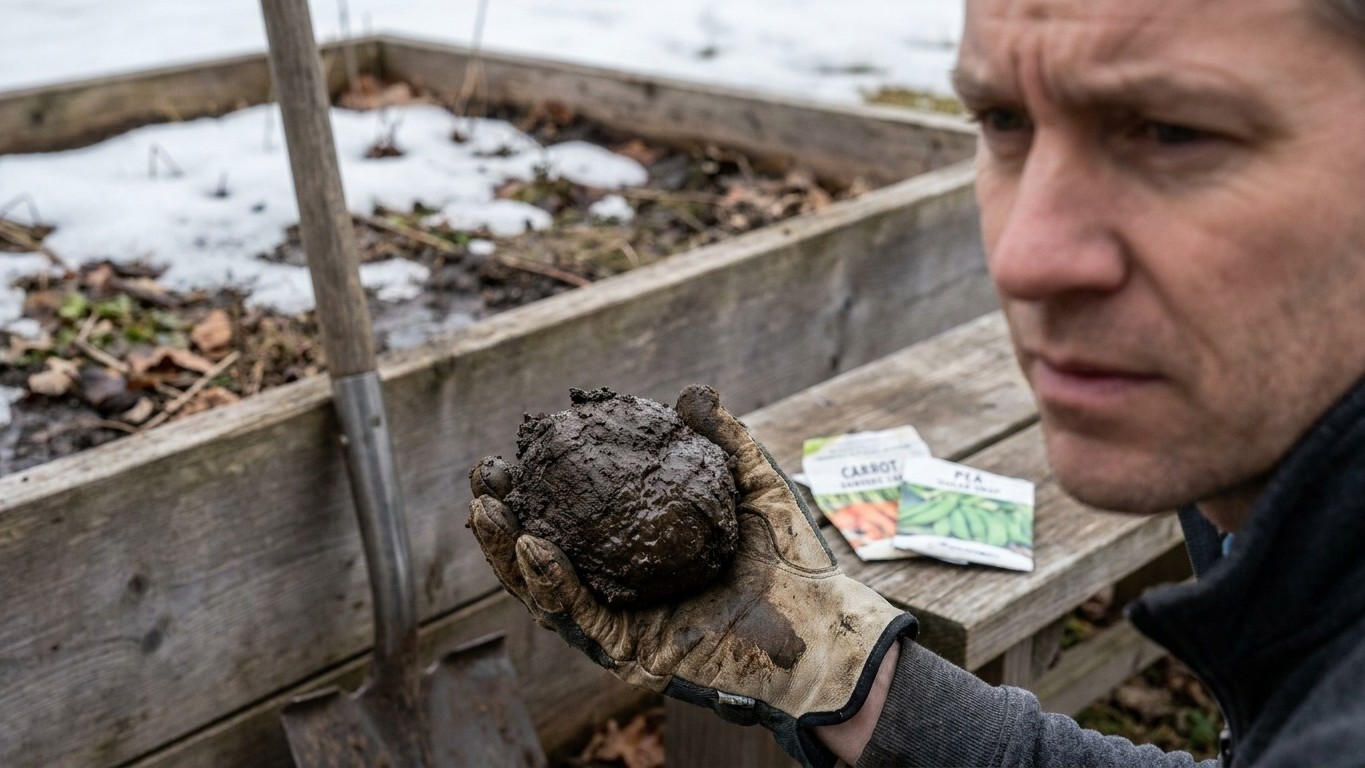
The decision here isn’t the calendar page. It’s soil temperature and moisture, and in March those two numbers are working against you almost everywhere in Minnesota. A patch of ground can look bare and brown by mid-month, but two inches down it’s often still frozen, or it’s saturated with snowmelt and will compact into bricks if you walk on it, let alone dig it. Soil that squeezes into a muddy ball instead of crumbling apart isn’t ready, no matter how warm the afternoon air feels.
For most of the state, the honest answer is that nothing goes into open garden beds this month. The last spring frost window runs April 17 to April 30 based on NOAA’s 1991-2020 climate normals, and that’s for the milder southern part of the state; northern counties run two to three weeks tighter on both ends. Direct-sowing anything, even famously cold-tolerant crops like spinach or peas, ahead of that window is a gamble on a thaw that may not hold.
What’s actually possible
That doesn’t mean the garden sits idle. In the far southern tier, where soil has thawed and dried enough to crumble by the last week or two of the month, a cold frame or low tunnel can hold spinach, arugula, and the toughest lettuce varieties, giving them a jump on the season without exposing them to open air. Bare-root fruit trees, brambles, and asparagus crowns can go in as soon as the planting hole itself isn’t frozen, since these are dormant, hardy stock built for cold ground. Rhubarb crowns and chicory roots can be dug from storage or the garden edge and forced indoors in a dark space for an early, tender harvest weeks before anything outdoors is ready. None of this is direct outdoor sowing, but all of it moves the season forward honestly, without pretending March soil is April soil.
What to start under cover
Indoor sowing runs on its own math, and it’s worth doing that math out loud rather than trusting a fixed date on a seed packet. Count backward from the last spring frost window of April 17 to April 30, using the number of weeks a seedling needs indoors before it’s sturdy enough to go outside.
| Crop | Weeks needed before last frost | Approximate indoor sow window |
|---|---|---|
| Onions and leeks (from seed) | 10-12 weeks | Late January to early February |
| Peppers and eggplant | 8-10 weeks | Mid-February to early March |
| Tomatoes | 6-8 weeks | Late February to mid-March |
| Cole crops (broccoli, cabbage, kale) | 6-8 weeks | Late February to mid-March |
| Basil and other tender herbs | 5-6 weeks | Mid-March to early April |
Tomatoes and cole crops land squarely in March for most Minnesota gardeners, since sowing them in the first half of the month puts them at the right size to transplant once the frost window has passed and the soil has actually warmed. Basil and other tender herbs are better held until later in March or even into April, since they need warm nights, not just a frost-free day, to settle in outside.
Two mistakes show up every year. Starting too early means six or seven weeks of extra growth with nowhere to go, since the outdoor frost window doesn’t move up to meet an ambitious seed-starting schedule, and the result is leggy, rootbound plants stressed before they ever see the garden. Starting too late is the quieter mistake but just as costly: Minnesota’s frost-free season runs roughly from late April to mid-October, and a tomato or pepper started weeks behind schedule may not ripen fruit before the first fall frost arrives on October 11 to October 23.
What is ready to pick
Outdoors, March harvests are close to nonexistent across most of Minnesota. Ground under snow or frozen through mid-month isn’t producing anything fresh, and pretending otherwise sets up disappointment. What keeps a household fed from the garden this month comes from what was tucked away before winter, and from what’s growing under cover.
Kale and leeks left in the ground under a thick mulch or snow cover sometimes survive and can be dug as soon as the soil around them softens, tasting sweeter than they did in fall since cold converts starches to sugars. A cold frame started in late winter may already be producing thinnings of spinach or arugula by late March in the southern counties. Indoors, sprouts and microgreens are the most reliable fresh crop of the month, ready in five to fourteen days from a jar or a tray on a windowsill, with zero dependence on outdoor weather.
March is also the month to go through the root cellar or basement storage with a critical eye. Squash, potatoes, and onions put up in fall are five to six months into storage by now, right when soft spots, sprouting eyes, and sour smells start showing up. Sort through the bins, pull anything turning before it spreads to its neighbors, and use the marginal ones first in soups and roasts rather than losing them outright.
The jobs that matter this month
March carries more weight than its bare planting list suggests, and skipping these jobs costs real ground later in the season.
Pruning and structure
Dormant pruning of apple, pear, and plum trees, along with raspberry and blackberry canes, should happen before buds break, and March is typically the last comfortable window for it in Minnesota. Cutting into a tree once sap is rising and buds are swelling stresses it and invites disease into fresh wounds; cutting it while it’s still fully dormant heals cleanly. This is also the month to walk the garden and repair whatever winter wrecked, sagging fence sections, cracked raised bed corners, trellises knocked flat by snow load, before beds fill in and make the repair work awkward.
Soil, seed, and supply lines
Order seed now if it hasn’t happened yet. Popular varieties, especially disease-resistant tomatoes and the earliest sweet corn types, sell out from seed companies by late winter most years, and a March order can mean settling for a second-choice variety. Once soil is workable enough to test without turning it to mud, pull a sample for a soil test through the University of Minnesota Extension and amend based on what it actually needs rather than guessing. Turning the compost pile, even a half-frozen one, speeds decomposition and gets it closer to usable by transplant time. Sharpen and oil pruners, hoes, and shovel edges now, while there’s time to do it properly instead of mid-rush in May.
What not to do in March
The classic March mistake in Minnesota is trusting a warm afternoon over the soil itself. A 55-degree day in the second week of March can feel like spring, but air temperature has almost no relationship to soil temperature four inches down, where seeds and roots actually live. Direct-sowing anything warm-season, corn, beans, squash, into that soil doesn’t just risk frost, it risks seeds rotting in cold, damp ground before they ever germinate.
A second common error follows a mild stretch: gardeners pull row covers, mulch, or cold frame lids off too soon, assuming winter has broken for good. Minnesota’s frost window doesn’t close until April 17 at the earliest in the mildest areas, and a hard freeze after an early uncovering can undo weeks of protected growth in a single night. Leave winter protection on longer than instinct suggests, and remove it in stages rather than all at once.
Nitrogen timing trips people up too. Feeding beds heavily with nitrogen in March, before plant roots are active enough to take it up, mostly feeds runoff into storm drains and nearby waterways rather than any crop. Hold nitrogen applications until plants are actually growing and able to use it, and lean on a soil test rather than a fixed fertilizing schedule to decide what a bed needs.
Checking this against your own county
Everything above is a state-wide starting point, not a rule for a specific yard. Minnesota’s growing conditions shift by weeks depending on where you garden: the state spans USDA hardiness zones 3a to 5a, elevation and lake-effect microclimates near Lake Superior push frost dates later into spring and earlier into fall, and the gap between the mild southern counties and the far north can run two to three weeks at both ends of the season. A frost window built from data at one reference station won’t match a hillside garden fifty miles north or a low frost pocket in a river valley. Check local conditions and planting guidance through the University of Minnesota Extension before locking in a date.
Common questions
Can I plant anything directly outside in Minnesota in March?
For most of the state, no. The soil is typically still frozen or too wet to work, and the last spring frost doesn’t arrive until April 17 to April 30 even in the milder south. The exception is the very end of March in southern counties, where a cold frame or low tunnel can hold hardy greens once the soil has thawed and dried enough to crumble.
When should I start tomato and pepper seeds indoors for a Minnesota garden?
Tomatoes need six to eight weeks indoors before transplanting, which lines up with sowing in late February to mid-March. Peppers and eggplant need eight to ten weeks, so mid-February to early March is the better window; sowing them later in March means a shorter runway before transplant time.
Is it too early to prune fruit trees in March in Minnesota?
No, March is typically the ideal window, as long as it happens before buds visibly swell and break. Pruning fully dormant wood heals cleanly; waiting until growth resumes stresses the tree and opens fresh wounds to disease.
What USDA hardiness zone is Minnesota in?
Minnesota spans USDA Plant Hardiness Zones 3a to 5a, based on the USDA’s 2023 map built from 1991-2020 average extreme minimum winter temperatures. That’s a wide range across the state, so a zone number alone won’t tell you much without pairing it with your local frost dates.