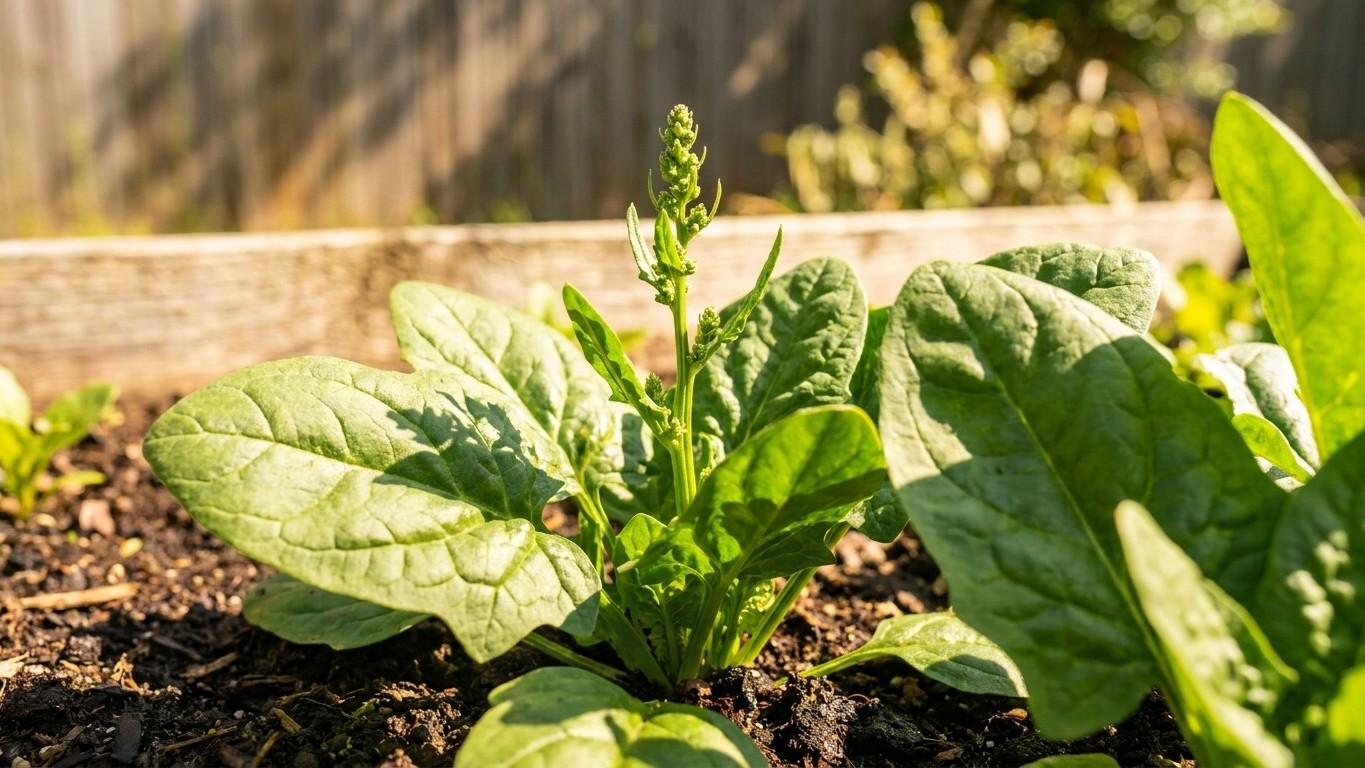

Spinach in a Nebraska garden gets chewed, sucked on and tunneled by a short list of pests. Nearly all of them arrive in the warm stretch between the last spring frost and the first fall frost. The spring crop meets them as the weather warms. The fall crop meets them as seedlings come up in late-summer heat. The first damage you see on the leaf points to the likely culprit, and that decides what to do before the row is gone. For the full growing picture, start with Growing Spinach in Nebraska.
Which pests attack spinach in Nebraska
Six groups of garden pests do the real damage to spinach leaves and seedlings here: leaf miners, aphids, flea beetles, caterpillars, slugs and cutworms. Nebraska Extension is the service that follows garden pests across the state, and its county offices are where you confirm which of these are active near you. The groups below are sorted by how they feed, because the leaf shows you the feeding pattern long before you spot the insect.
Which ones chew holes in the leaves?
Flea beetles are tiny, jump when disturbed, and pepper leaves with small round holes. Seedlings suffer most because they have little leaf to spare. Caterpillars make larger, ragged holes and leave dark droppings on the leaf or the soil below. Slugs also leave ragged holes, but with dried silvery slime trails, and they feed at night and on damp ground. Cutworms work the same night shift. They cut a seedling off at the soil line, so a plant that stood upright yesterday lies on its side this morning.
Which ones suck sap or tunnel inside the leaf?
Aphids are small, soft-bodied insects that cluster on the underside of leaves and on new growth in the center of the plant. They curl the leaves and leave a sticky residue. Leaf miners behave differently. The larvae live between the top and bottom surfaces of the leaf and leave pale, winding trails or blotches. Because the feeder sits inside the tissue, it is the hardest of the six to reach. Turn the leaf over and hold it to the light before you decide anything, since both of these hide where a quick glance misses.
Which pests on a Nebraska list can you skip?
State pest lists carry insects that attack fruit trees, field corn and stored grain. None of them feeds on spinach. If a source describes damage to wood, ears or kernels, set it aside and look at the groups above.
When each one shows up, and what it does first
At the Omaha reference station, the mean last spring frost falls between April 12 and April 23, and the mean first fall frost between October 15 and October 26. Suburban and rural gardens typically see the last spring frost one to two weeks later and the first fall frost one to two weeks earlier, and more so at elevation. Pests keep to that window, so count from your own frost dates.
What shows up in the spring crop?
The first trouble comes right after seedlings emerge or transplants go in. Flea beetles leave small round holes within days of the first warm spell. Cutworms topple seedlings overnight. Slugs show up when spring turns wet, with ragged holes and slime trails by morning. Later, as the leaves reach full size, leaf miners leave pale blotches that gradually turn into tunnels. Aphids build up as the weather warms, first as a few clusters on the newest leaves and then as a curled, sticky mass. Caterpillars come last, as heat builds, and their droppings give them away.
Heat squeezes the same crop from the other side. Spinach grows best where temperatures stay at or below 75 F, and the reference station averages 28.1 days a year reaching 90 F or more. The weeks when caterpillars and aphids are building are also the weeks when the plants start running out of cool weather.
What shows up in the fall crop?
Fall sowing waits on the soil. Seed germination drops once soil goes above 80 F, so the window opens when the ground cools, and that can still be late summer. Seedlings therefore emerge among flea beetles and caterpillars that are still active. Frost in the October 15 to October 26 window at the reference station slows the feeding, though a garden outside the city can see it one to two weeks sooner. Timing details are in When to Sow Autumn Spinach in Nebraska.
Telling the damage apart from everything else
Plenty of things make a spinach leaf look eaten. Nutrient shortage, uneven watering, disease, hail and plain bolting all leave marks that get blamed on insects. A useful first test is the pattern. Pests work plant by plant, while water, nutrient and weather problems tend to hit the whole row at once. The second test is a close look at one leaf, front and back.
| What you see | Often points to | What tells them apart |
|---|---|---|
| Pale winding trails or blotches inside the leaf | Leaf miner feeding | A small larva inside the leaf when you split it open. Disease spots have no tunnel. |
| Ragged holes with silvery trails | Slugs | Dried slime on the leaf and soil. Caterpillar holes come with droppings and no slime. |
| Many small round holes, worst on young plants | Flea beetles | Tiny beetles that jump when you brush the leaf |
| Torn, shredded leaves on every plant at once | Hail or wind | The same damage on other crops after a storm, with no insects or droppings |
| Curled, sticky leaves | Aphid feeding, or heat and dry soil | Clusters on the underside point to aphids. Leaves that perk up by evening point to water stress. |
| Yellowing older leaves across the row | Nutrient shortage or soggy soil | Nothing on the undersides, and the pattern follows soil, not individual plants |
| Seedlings flat at the soil line | Cutworms, or a seedling disease | A cut, clean stem points to cutworms. A thin, shriveled stem at the soil line points to disease. |
| Tall central stalk, narrow leaves | Bolting | No feeding marks at all, just a plant that has switched to flowering |
The last row trips up many gardeners. Spinach bolts during long days and warm temperatures, and the longest day at the reference city brings 14 h 59 of daylight. A cool summer does not buy extra weeks, because the day length alone is enough to trigger flowering. Read Will Spinach Bolt Early in Nebraska? before you blame insects for a row that has stopped producing.
What actually works here, and what is a waste of time
A physical barrier at the right moment beats nearly any treatment, and on a season this short the calendar does more than the product. Lay floating row cover over the bed the day you sow or transplant, and bury or weigh down every edge. It keeps flying adults from laying eggs on the crop, and it works best over soil where spinach did not grow the season before. Lift it only to weed or thin.
Timing is the second tool. A spring crop sown as soon as the soil can be worked has the most cool weather before heat and insect pressure build. A fall crop sown on the right side of the 80 F soil line comes up faster and thicker, which gives it more leaf to spare. Hand-picking pays off in a small bed. Remove caterpillars you find, pull leaves with leaf miner trails, and drop them in a bag in the trash rather than the compost pile. Clear old leaves and boards from the bed’s edges at the end of each crop, since slugs and cutworms shelter there.
Several popular habits waste effort. Spraying a leaf that has tunnels does little for larvae living inside it. Sowing the fall crop early to beat the pests backfires, because warm soil cuts germination and leaves you with a thin stand.
If a pest outruns these steps, ask Nebraska Extension what is registered for use on spinach in the state. Labels and registrations change, and the county office is the one source that tracks them for Nebraska.
Where to check this for your own county
Pest pressure varies inside Nebraska. The frost dates above come from one airport station at Omaha, and a garden in the Panhandle, the Sandhills or the southwest may sit one to two weeks off in either direction. Which pests are active, and how many, can differ between neighboring counties and even between neighborhoods.
Your county office of Nebraska Extension is the best place to ask. Staff know what has been showing up locally, and they can match a damaged leaf to a feeding group. They can also tell you when your area’s spring and fall windows open. Bring a sealed bag with a damaged leaf, a photo of the whole plant and its underside, and the date you sowed.
Common questions
Do I have to throw out the whole row if some leaves are chewed?
No. Pick off the damaged leaves, wash what remains, and keep harvesting. Spinach is a short-lived crop anyway, and at the 41 to 50 F typical of a fridge door it yellows within days. Store it at the back of the bottom shelf, where it runs colder, and plan on two weeks as a ceiling.
When should I start looking for pests after sowing?
As soon as seedlings emerge or transplants go in. Cutworms and flea beetles go after young plants first, and a thin seedling has little leaf to lose. Check every few days, and check again at dusk or first light.
Does frost end the pest problem?
It slows feeding, and the first fall frost at the Omaha reference station falls between October 15 and October 26. Gardens outside the city often see it one to two weeks sooner. Cold weather does not remove leaf damage already done or the debris where some pests overwinter.
Who can identify what is eating my spinach?
Your county office of Nebraska Extension. Bring a damaged leaf, photos of the plant and its underside, and the dates you sowed and first saw damage.