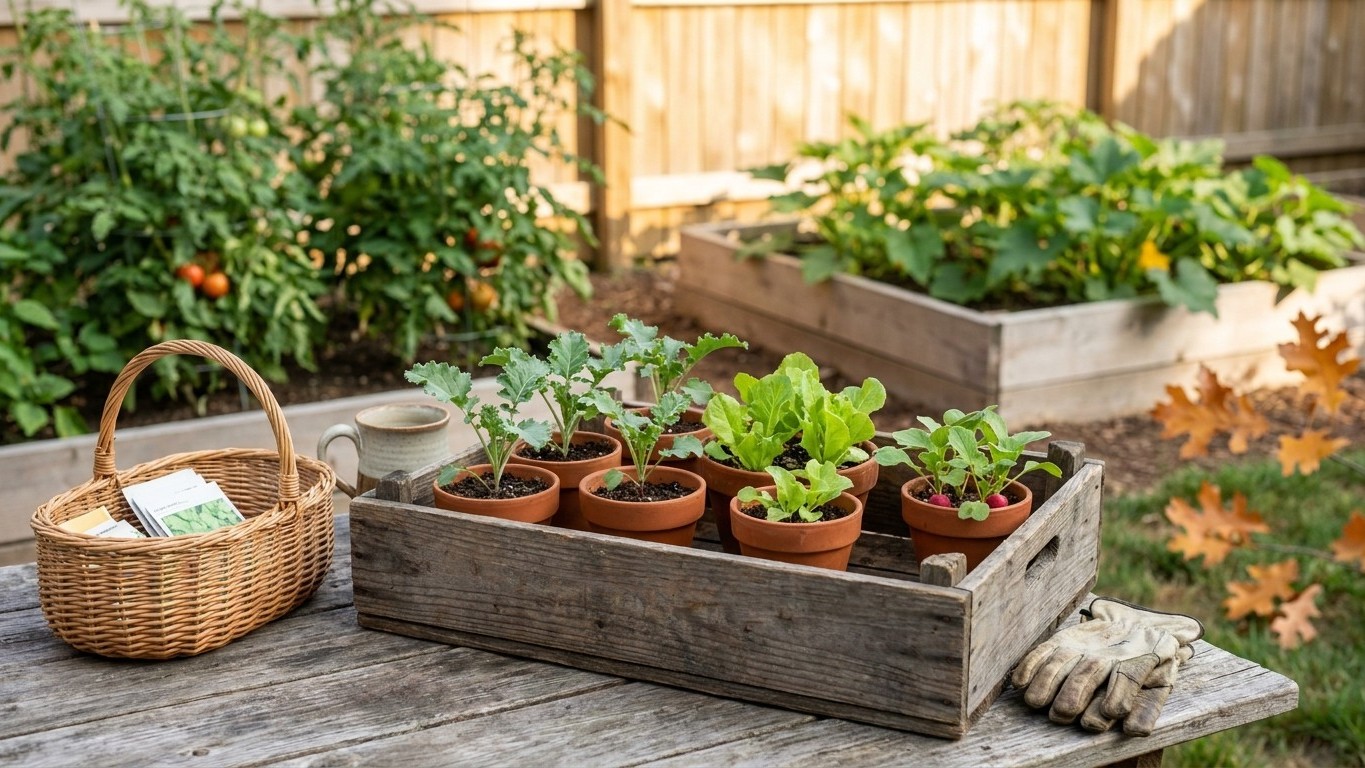

August in Montana sits in the gap between two frost dates: the ground has been safely frost-free since late April or early May, and the first fall freeze is still six to ten weeks out. That window is short enough to rule out anything slow, but long enough for a real second round of fast, cool-tolerant crops if you sow them in the first half of the month.
What goes in the ground in August

The decision this month isn’t about soil temperature the way it is in spring. It’s about counting backward from the first fall frost, which lands between October 1 and October 14 across the reference station used for this data (Billings, per NOAA NCEI 1991-2020 Climate Normals). That gives a garden roughly six to ten weeks of open-air growing time, depending on where in the month you’re sowing and how close you are to the mild end of the state’s frost range.
Fast crops fit. Slow ones don’t. A radish that matures in 25 days, a spinach that matures in 40, or a bush of quick-cooking turnip greens can still go from seed to plate before the ground cools. A winter squash needing 100 days, or a second round of sweet corn, cannot. That’s the whole test: days-to-maturity on the seed packet against the weeks left before frost, with a buffer of a week or two because fall growth slows as daylight shortens.
Safe bets versus gambles
| Crop | Typical days to maturity | August verdict |
|---|---|---|
| Radish | 25-30 | Safe, direct sow through mid-August |
| Spinach | 35-45 | Safe, sow early to mid-August |
| Lettuce (leaf) | 40-50 | Safe, sow before mid-August |
| Bush beans | 50-60 | Tight, only in the first week if at all |
| Fall peas | 55-70 | Gamble unless sown in the first days of the month |
| Winter squash | 90-100+ | Too late, skip until spring |
Transplants can stretch the calendar a little further than direct seed, since a start already has a head start on maturity. Cabbage, broccoli, or kale transplants set out early in the month can still size up before frost in the milder valleys, though anyone farming a higher mountain basin should treat that as optimistic rather than guaranteed.
What to start under cover
Anything started under cover in August is aimed at one thing: squeezing a few more weeks of growing time out of a season that’s already closing. Count backward from the October 1 to October 14 frost window, subtract the days-to-maturity on the seed packet, and subtract another week or two for the slower growth of shortening fall days. What’s left is your sowing deadline, and in most of Montana that deadline falls in the first half of August, not the last.
Lettuce, spinach, and quick Asian greens are the reliable choices for starting indoors or in a cold frame this month, since they mature in five to seven weeks and transplant well as small starts. Kale and other hardy brassicas can also go in as transplants if started right away, since a few of them will actually improve in flavor after a light frost rather than being ruined by one.
The two ways this goes wrong are almost mirror images of each other. Start too early in August’s heat and the seedlings under cover get stressed, leggy, and rootbound before the weather even cools enough to plant them out. Start too late and the math simply doesn’t work: the plant runs out of season before it runs out of growth to do, and you’re left pulling half-sized heads right before frost. Splitting the difference, sowing in the first one to two weeks of the month, gives the seedlings enough of August’s warmth to germinate fast without spending so long under cover that they outgrow their trays.
What is ready to pick
August is the heaviest harvest month most Montana gardens see all year, and the trick is mostly about timing the pick rather than waiting for anything to ripen. Summer squash and cucumbers should come off the vine small and often, since a zucchini left two extra days can double in size and turn woody. Bush and pole beans are ready when the pods snap cleanly rather than bend, and picking them regularly keeps the plant producing instead of setting seed and quitting.
Tomatoes begin coloring up in earnest this month in most valleys, and the ones that split after a heavy watering following a dry spell are still fine to eat if you catch them the same day. Sweet corn is ready when the silks have browned and a punctured kernel weeps a milky liquid rather than a clear one. Onions and garlic, if they went in earlier in the season, are typically already pulled and curing by August, so check the storage shed rather than the garden bed for those.
Raspberries and other cane fruit are usually in full production, and berries should be picked every couple of days since ripe fruit left on the cane draws wasps and rot equally fast. Root crops like carrots and beets can be pulled young for fresh eating even if the plan is to leave the rest in the ground longer, since thinning the row now gives the remaining roots more room to size up before fall.
The jobs that matter this month
Watering rhythm matters more in August than almost any other month, since this is typically the hottest, driest stretch of the Montana growing season. Deep, infrequent watering that soaks down six inches or more encourages roots to grow downward and tolerate heat better than a daily shallow sprinkle ever will. Mulch around tomatoes, squash, and beans now holds that moisture in and keeps soil temperatures from spiking during afternoon heat.
Staking and trellising can’t wait. Indeterminate tomatoes and vining squash that sprawl unsupported in July become tangled, disease-prone messes by the time August humidity and heat set in, and untangling a collapsed tomato cage in peak season damages more fruit than it saves.
Succession sowing belongs on the to-do list for the first half of the month specifically, since that’s the last realistic window for another round of lettuce, spinach, or radishes before the math from the sections above stops working. Pest scouting also pays off now: grasshoppers build to their heaviest numbers in Montana gardens during the hot, dry weeks of August, and checking the undersides of brassica leaves for cabbage worm eggs catches an infestation before it strips a row overnight.
Behind the scenes, this is also a smart month to start curing and storing the earliest winter squash and onions as they come off the vine, checking each one for soft spots before it goes into long-term storage. A single bruised onion left in a storage bin will rot and take its neighbors with it, so a five-minute inspection now saves a much bigger loss come November.
What not to do in August
The most common mistake is planting anything long-season this month because the weather still feels like the middle of summer. Air temperature has nothing to do with whether a crop has enough days left to mature, and a packet of winter squash or a second round of sweet corn sown in mid-August is chasing a frost date it cannot beat, no matter how warm the afternoons still feel.
Feeding nitrogen heavily late in the month is another trap. A dose of high-nitrogen fertilizer in August pushes soft, leafy new growth on tomatoes, peppers, and squash right when those plants should be shifting energy into ripening fruit rather than growing more foliage. That soft new growth is also the first tissue damaged when temperatures dip, so a late nitrogen feed can actually make a plant more frost-sensitive rather than more productive.
Skipping deep watering during a hot spell because the plants “look fine” is a slower version of the same mistake. Heat stress on tomatoes and peppers during August’s driest stretches shows up days later as blossom drop or blossom end rot, by which point the damage to that fruit set is already done. And anyone gardening at higher elevation should resist the urge to treat the state-wide frost window as a guarantee: a mountain valley can see a frost in any month of the growing season, August included, regardless of what the lower valleys are experiencing.
Checking this against your own county
Everything above is built around Billings as a reference point, and Montana’s growing conditions swing far wider than one city can capture. The state’s USDA Plant Hardiness Zone ranges from 3a to 6a, and elevation, mountain valleys, and the divide between the state’s eastern plains and western mountains can shift a frost window by weeks in either direction. A gardener in a high mountain valley should treat every date here as a starting estimate, not a fixed rule.
For a planting calendar built around your specific county, the Montana State University Extension is the right next stop, with local offices that track frost data and crop timing at a finer grain than any state-wide page can offer.
Common questions
Is it too late to plant tomatoes in Montana in August?
Yes, for anything started from seed. A tomato transplant already several weeks along could still ripen fruit if set out in the first days of the month in a milder valley, but new tomato seed sown in August will not mature before the first fall frost.
Can I still start a vegetable garden in August in Montana?
A full garden, no. But a fast-crop garden built around lettuce, spinach, radishes, and turnip greens, sown in the first half of the month, can still produce a real fall harvest before the frost window opens in October.
When should garlic go in the ground in Montana?
Not in August. Garlic is a fall-planted crop in most of Montana, typically going into the ground closer to the first frost window so it roots before winter without pushing top growth. August is better spent finishing the harvest and curing of garlic planted the previous fall.
Why are my August seedlings leggy under cover?
Starting seed too early in the month, while daytime heat under cover is still high, often stresses seedlings into stretching for light faster than they thicken up. Sowing slightly later in the same window, or improving ventilation under the cover, usually fixes it.