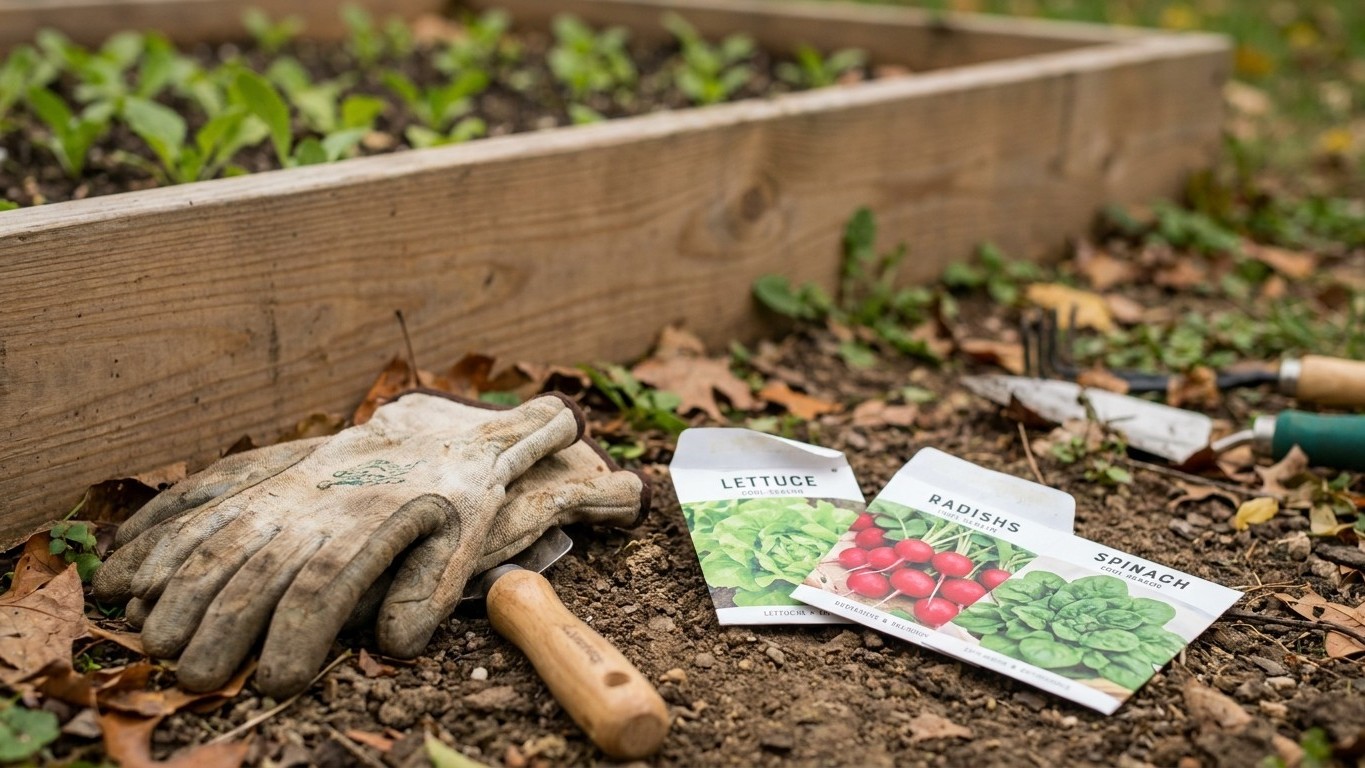

September in Montana means garlic and shallots go into the ground, spring bulbs get tucked in for their winter nap, and cold frames start earning their keep for the last tender greens. The bigger job this month is getting ahead of the first fall frost, which lands anywhere from October 1 to October 14 depending on elevation and location.
What goes in the ground in September

The decision this month isn’t the calendar, it’s the countdown. With the first fall frost due October 1 to October 14 (NOAA NCEI 1991-2020 Climate Normals, based on the Billings station), anything you plant outdoors in September needs to either tolerate a hard freeze or finish its business before one arrives. That’s a narrow window, and it rules out almost every warm-season crop you’d have started back in May.
Garlic and shallots are the one September planting that actually benefits from the coming cold. Cloves set into the ground now push roots down while the soil is still workable, then sit dormant through winter and take off again in spring, well ahead of anything you could plant fresh in April. Spring-flowering bulbs, tulips, daffodils, crocus, follow the same logic: they need roughly six to eight weeks of soil warmth above freezing to establish before the ground locks up, which makes September the last comfortable window in most of the state.
Trees, shrubs, and perennials can also go in now, provided you treat it as a root-establishment job rather than a display planting. Roots keep growing in soil above roughly 40°F even after the top of the plant has stopped putting out new leaves, so a September planting gets a head start that a spring planting doesn’t. Cover crops like winter rye or hairy vetch are worth sowing too, as long as there’s enough warmth left for germination.
- Safe bets: garlic, shallots, spring bulbs, bare-root and container trees/shrubs/perennials, cover crops
- A real gamble: anything warm-season, tomatoes, peppers, squash transplants, beans
- Only under protection: fast, cold-hardy greens in a cold frame or low tunnel
Skip the temptation to squeeze in a last round of direct-sown lettuce or spinach in open soil. Without cover, there simply isn’t enough season left in most of the state to get a harvest before frost shuts things down.
What to start under cover
Under cover is where September still has room to be productive, but the math runs backward from that first-frost window rather than forward from a seed packet date. Take the earliest realistic frost date for your area, subtract the days-to-maturity listed on the seed packet, and add a buffer of a week or two because cool, shortening days slow growth even under row cover or in a cold frame. A radish that matures in 25 days under summer sun may need closer to 35 in a cold frame in late September.
That arithmetic rules out most crops except the fastest, toughest ones: baby greens, radishes, spinach, and quick Asian greens are realistic if sown in the first half of the month under a cold frame or low tunnel. Anything with a longer maturity window, carrots, beets, most brassicas, is better treated as already past its window for this year and saved for next spring’s under-cover start.
There are two ways to get this wrong. Sow too early and heat still lingering in the cold frame can push plants to bolt before they’re worth eating, especially in a warm early-September spell. Sow too late and the shrinking daylight simply won’t give young seedlings enough energy to size up before frost or hard freeze ends the season outright. Splitting the difference, sowing a small batch in the first week and a second in the second week, hedges against both failure modes and gives you a better read on what your specific cold frame or tunnel can actually support.
Indoors, September is also a reasonable time to start biennials and cold-hardy perennials from seed if you want transplants ready for next spring. These don’t need to race the frost the way a vegetable crop does, since they’ll winter over as young plants rather than trying to produce a harvest before the ground freezes.
What is ready to pick
This is peak harvest month across most of Montana, and the urgency is real: anything still on the vine when a hard frost hits is likely lost. Winter squash should come off once the rind resists a fingernail press and the stem has started to dry and corky; leave them in the field past that point and you’re only risking frost damage for no gain. Onions are ready when the tops have flopped over and started to dry, a sign the bulb has finished sizing up and is shifting into storage mode.
Tomatoes and peppers, if you still have plants producing, are worth watching closely. Green tomatoes picked just ahead of frost will often ripen indoors on a windowsill, while fruit left on the vine through a freeze turns to mush overnight. Potatoes can stay in the ground a bit longer since the soil buffers them from light frost, but once vines have died back it’s worth digging before a hard freeze penetrates deeper.
Apples in home orchards are typically ready this month too, tested by taste and by how easily the fruit separates from the branch with a gentle twist rather than a pull. Root vegetables like carrots and beets can often stay in the ground a while longer under a layer of mulch, actually improving in flavor as nights cool, but they should come out before the ground freezes solid.
If you’re storing squash, onions, or potatoes from an earlier harvest, this is a good month to check the pile. A single soft or moldy squash can spread rot to its neighbors fast, so pull anything questionable before it takes down the rest of the stash.
The jobs that matter this month
September rewards gardeners who treat it as a closing-out month rather than an extension of summer. The single most time-sensitive job is harvesting tender crops ahead of that first frost window; once a frost warning shows up in the forecast, tomatoes, peppers, squash, and beans need to come off or be covered, because a single hard freeze ends their season instantly.
Soil, structure, and storage
Once beds are cleared, it’s worth pulling a soil sample rather than waiting until spring. Amendments like lime take months to change soil pH, so applying them now, based on a test rather than a guess, gives them a full winter to work before next season’s planting. Clean up and compost healthy plant debris, but pull and discard anything that showed disease or heavy pest pressure this season rather than composting it, since home compost piles rarely get hot enough to kill off pathogens reliably.
Curing matters as much as harvesting for winter squash and onions. Both need one to two weeks in a warm, dry, well-ventilated spot before they go into cold storage; skip this step and they’ll rot faster in the root cellar or pantry.
Setting up next season
Order spring bulbs and garlic seed stock now if you haven’t already, since the better varieties tend to sell out before planting windows close. Sketch out next year’s crop rotation while this season’s layout is still fresh in mind. Row cover and cold frame materials are worth pulling out and inspecting for tears now, before the night you actually need them on short notice for an early frost.
Watering rhythm should taper as days shorten and evaporation slows, except for newly planted garlic and bulbs, which need steady moisture to root in before the ground cools further.
What not to do in September
The classic September mistake in Montana is waiting too long to harvest, gambling on a few more warm days and then losing a full tomato or squash crop to a sudden overnight freeze. Frost windows are ranges, not fixed dates, and a warm stretch in late September can be followed by a hard freeze with little warning. Keep row cover or old sheets on hand and use them the moment a frost advisory appears, rather than waiting to see how cold it actually gets.
Planting garlic too early is another common error. Cloves put in while soil is still warm can push top growth before winter, and that growth gets damaged by the first hard freeze, weakening the bulb going into spring. Wait until soil temperatures have cooled but the ground is still workable, generally later in the month in most of the state.
Nitrogen fertilizer is worth avoiding on trees, shrubs, and perennials this month. A nitrogen boost pushes soft new growth that has no time to harden off before frost, and that tender growth is often the first thing killed when temperatures drop, which stresses the plant heading into winter rather than helping it.
Finally, don’t uncover cold frames too enthusiastically on a warm afternoon and then forget to close them before an evening frost. It’s a small mistake that undoes weeks of protected growing in a single night.
Checking this against your own county
Everything above is built around Billings-area data, and Montana’s geography makes that a starting point, not a rule. Mountain valleys elsewhere in the state can see frost in any month, and elevation, local topography, and proximity to larger bodies of water can shift both the last spring frost and first fall frost by weeks in either direction. The statewide hardiness range runs from USDA zone 3a to 6a, which tells you how wide that variation really is.
Before committing to a planting date, check your county’s numbers against the Montana State University Extension service, which tracks local frost data and planting guidance specific to your area.
Common questions
Is it too late to plant a vegetable garden in Montana in September?
For most open-ground vegetables, yes, since the first fall frost is due October 1 to October 14 across much of the state. Garlic, shallots, and cover crops are the exceptions, and fast greens can still work under a cold frame or low tunnel.
When should garlic go in the ground in Montana?
Later in September through October, once soil has started to cool but is still workable, gives cloves time to root without pushing top growth that would get damaged by the first hard freeze.
What’s the safest thing to plant outdoors in September if I’m not sure about my frost date?
Garlic and spring bulbs are the lowest-risk options anywhere in Montana, since they’re designed to go dormant through winter cold rather than race against it.
How do I know if my county’s frost dates differ from the statewide range?
Check the Montana State University Extension for county-level data; elevation and local geography can move frost dates by weeks compared to lower valleys like Billings.
Gardeners who plant by the Moon can check the September 2027 moon planting calendar, a tradition rather than a proven method.