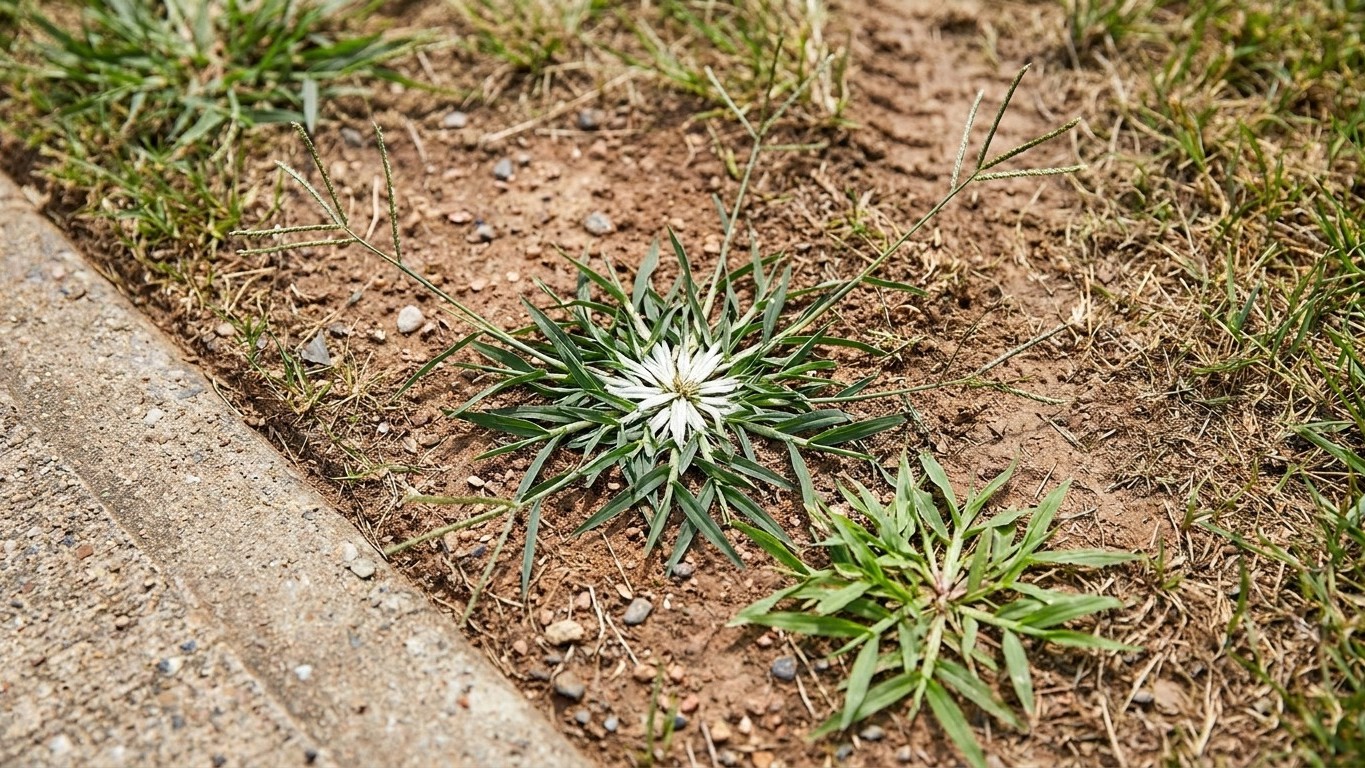

The best time to sow grass seed in Nebraska is late summer, finishing no later than about 45 days before your first fall freeze. Spring is the backup. Cool-season seed germinates in soil between 50 and 65 °F, and it needs that 45-day runway of growing weather to get established. At the NOAA reference airport station, the first fall freeze lands between October 15 and October 26. Your yard will differ, so count from your own county’s date.
The best time to sow grass seed in Nebraska
Soil temperature decides the calendar, not the date on the wall. Seed sits dormant until the ground, measured two inches down in mid-morning, reads between 50 and 65 °F. Push a probe thermometer in at that depth and take the number before the afternoon sun skews it.
Late summer wins because the ground is still warm from July while the air has begun to cool. Seedlings get steady soil heat, softer sun and fewer weeds coming up beside them. Spring sowing starts from the opposite direction. Soil climbs out of winter into the germination range, but the seedlings then have to be tough enough for summer heat before they have much root. That is why spring is second-best, not equal.
What the frost dates say
NOAA’s 1991-2020 Climate Normals put the last spring freeze at the reference airport station between April 12 and April 23, and the first fall freeze between October 15 and October 26. Those are the 30 to 70 percent probability band for a 32 °F freeze, and they describe one station, not the state. Suburban and rural lawns usually see the last spring frost later and the first fall frost earlier, often by one to two weeks, and higher ground shifts it further. Ask your county office or local nursery what your own dates are before you lean on these.
Grasses that hold here
The cool-season species are the ones to buy: tall fescue, Kentucky bluegrass, perennial ryegrass, fine fescues and rough bluegrass. Tall fescue and Kentucky bluegrass anchor most seed mixes in this part of the country. A warm-season grass is a different bet. It germinates in summer heat and then turns brown after the first frost, so it spends much of the year dormant, and a seedling that has not knit together before cold arrives has little chance of coming back. Cool-season grasses are built for exactly this swing between hot summers and hard winters.
The last date that still works
Forty-five days. That is the amount of growing weather a new cool-season lawn needs before the first fall freeze. Seed sown after that point often germinates, then dies over winter, because the seedlings never grew enough root to survive.
The arithmetic is simple. Take your first fall freeze date and count back 45 days. At the reference station, an October 15 freeze puts the cutoff at August 31. An October 26 freeze puts it at September 11. So the last workable sowing there falls somewhere between August 31 and September 11, depending on how the year behaves. In a suburb or on higher ground where the freeze comes one to two weeks sooner, the cutoff moves earlier by the same margin. Take your own county’s date, subtract 45 days, and write the result on the calendar.
Today is October 2, which has a plain consequence. At the reference station that window has already closed, and the same is likely true for most of the state. Sowing now is a gamble with poor odds. The sound move is to hold the seed until spring, when soil temperature climbs back into the 50 to 65 °F range and the last freeze has passed, then sow without delay so the grass gets as much cool weather as possible.
Other states run the same rule against different calendars. A gardener in When to Plant Grass Seed in Wyoming faces an earlier fall freeze and a tighter window, while When to Plant Grass Seed in Connecticut lands on its own dates. Same 45 days, different starting line.
Seed rate and soil preparation
Nebraska’s official state soil is the Holdrege series, a Mollisol, the deep, dark prairie ground that built the Corn Belt. USDA NRCS records its surface layer as a silt loam: 67 percent silt, 22 percent clay and 11 percent sand, with a pH of about 6.2 (slightly acid), organic matter of about 2.0 percent, and good drainage. Ground like that tends to drain well and run near neutral, but silty surfaces can seal over after a hard rain, which is a problem for tiny seedlings trying to push up.
Treat those numbers as the state’s representative soil, not a reading of your yard. River bottoms, hill country and any lot a builder has scraped or filled can behave nothing like it. A soil test tells you your real pH and what to add, and University of Nebraska–Lincoln Extension can point you to testing options. Do it before you buy fertilizer or lime.
Prepare the seedbed by clearing debris, loosening the surface with a rake and leveling low spots. Then spread the seed, and here is where most patchy lawns begin. Cover seed with no more than a quarter inch of soil and press it down for good seed-to-soil contact. Seed buried deeper often never emerges.
Rates below are pounds per 1,000 square feet for a new lawn. Overseeding an existing lawn takes half.
| Grass | New lawn | Overseeding (half) |
|---|---|---|
| Tall fescue | 6 to 8 lb | 3 to 4 lb |
| Fine fescues | 4 to 6 lb | 2 to 3 lb |
| Rough bluegrass | 2 to 3 lb | 1 to 1.5 lb |
| Kentucky bluegrass | 1 to 3 lb | 0.5 to 1.5 lb |
| Perennial ryegrass | 4 to 10 lb | 2 to 5 lb |
More seed is not insurance. Crowded seedlings compete for light and water, and the weaker ones thin out anyway. For the full step-by-step sequence, see Starting a New Lawn From Seed.
Watering a new lawn until it holds
Dry seed is dead seed. Once a seed takes up water and starts to sprout, letting it dry out ends the effort, so the top layer of soil has to stay damp from sowing until the grass has filled in.
In practice that means short, light waterings, often more than once a day if wind or sun is drying the surface fast. Nebraska wind will strip moisture from a seedbed faster than most people expect. Check by touch: if the surface has gone pale and powdery, you waited too long. Aim for damp, not puddled, because standing water washes seed into low spots and leaves bare patches on the high ones.
As the grass comes up and roots begin to grip, shift the pattern. Water less often and for longer, so moisture reaches deeper and roots follow it down. Seedlings do not all appear on the same day, so keep watering the late arrivals even after the first green shows. The seeding window you chose matters here too. A late-summer sowing, with cooling air and the 45-day runway, needs less rescue watering than a spring sowing that runs into early summer heat.
Hold off mowing until the new grass is clearly tall enough to cut, and keep the mower blade sharp so it trims rather than tears young plants. Keep foot traffic off the area while it fills in.
Common questions
Can I plant grass seed in Nebraska in spring?
Yes, once the last freeze has passed and soil at two inches down is in the 50 to 65 °F range. At the reference airport station the last spring freeze falls between April 12 and April 23, and suburban or rural lawns usually see it one to two weeks later. Spring lawns need more watering, and fall is still the better window.
How much seed do I need to overseed a thin lawn?
Half the new-lawn rate for your grass. For tall fescue, that is 3 to 4 pounds per 1,000 square feet instead of 6 to 8. Putting down extra does not speed anything up, because crowded seedlings thin themselves out.
Do I need a soil test before seeding?
It is worth it. The Holdrege soil that represents the state runs slightly acid at about 6.2, but your yard could be quite different, especially on filled or scraped ground. A test gives your own number and keeps you from guessing at amendments.
What happens if I sow too late in fall?
The seed may germinate, but the seedlings die over winter without 45 days of growing weather behind them. Seed left on the ground does not always survive either, so if the cutoff has passed, plan for spring and spend the winter getting your soil test done.