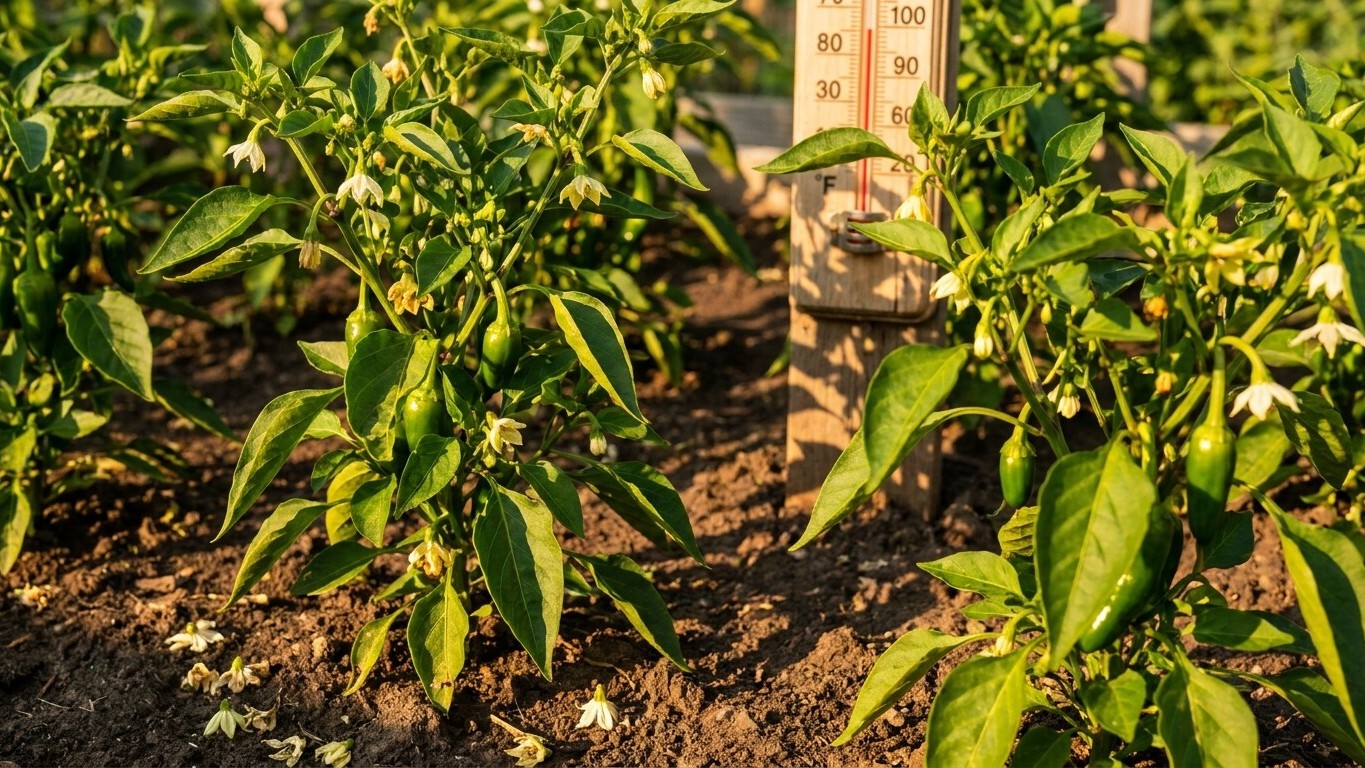

Nebraska’s summers throw two different problems at pepper plants, and they hit at opposite ends of the thermometer. The Omaha area averages 28.1 days a year at or above 90 F, which is enough heat to stall fruit set during the hottest stretches. But peppers also fail when nights drop below 55 F, and that number isn’t something this site tracks for your area, so it’s on you to watch your own overnight lows. Choosing among the Pepper Varieties That Ripen in a Nebraska Season can help offset some of this risk by matching your plants to the state’s tight temperature window.
The short answer

Twenty-eight days above 90 F might not sound like much spread across a whole growing season, but pepper flowers don’t care about the average. They care about the day they’re open and trying to set fruit. When a 90-plus stretch lands during flowering, especially if it runs three or four days in a row, blossoms drop before pollination finishes. Why Peppers Fail to Set Fruit in Nebraska comes down to this mechanism: heat doesn’t kill the plant, it just interrupts the handoff between flower and fruit. A pepper plant can look perfectly healthy, glossy leaves and steady growth, while quietly shedding every bloom it opens for a week.
The 28.1-day figure comes from the NOAA NCEI Climate Normals for 1991 to 2020, measured at the reference station in Omaha. That’s a statewide reference point, not a guarantee for your yard. Western Nebraska trends hotter and drier in midsummer than the eastern river valleys, and a black-top driveway or a south-facing brick wall can push a container of peppers 5 to 10 degrees past whatever the nearest weather station reports. If your garden runs warmer than average, plan on more of those blossom-drop days than the state figure suggests, which is why knowing When to Start Pepper Seed in Nebraska matters as much as tracking the heat itself.
Then there’s the other end, and it matters just as much. Pepper fruit set also fails when nighttime temperatures drop below 55 F, according to Utah State University Extension. Cool nights slow pollen viability the same way extreme heat does, just through a different mechanism. This is the piece growers tend to overlook, because they’re bracing for July heat and forget that a cold snap in late May, or a chilly stretch in early September, can just as easily strip a plant of its fruit set window.
Here’s the catch: this site carries the heat-day count for Nebraska, but it does not carry summer night minima. Nobody should guess at that number based on how far north the garden sits, or by looking at the coldest month of the year. Overnight lows during the growing season depend on humidity, cloud cover, elevation, and whether cold air pools in a low spot, none of which line up neatly with latitude. The only reliable fix is to track your own thermometer through the season, particularly during the weeks your plants are flowering, and note when nights dip into the 50s.
When to start seed here
Getting the timing right means working backward from two hard limits: the last spring frost and the point when soil finally warms enough for pepper roots to function. Here’s how the arithmetic runs for a Nebraska garden.
- Start with your frost window. At the Omaha-area reference station, the last spring frost typically falls somewhere between April 12 and April 23, based on NOAA NCEI’s 1991-2020 freeze-probability data. That’s a 30 to 70 percent probability band, not a fixed date, and it comes from an airport weather station. Gardens in suburban or rural settings, especially at higher elevation or in low-lying cold pockets, often see their last frost run one to two weeks later than that airport figure.
- Add the soil-temperature requirement on top of frost. Utah State University Extension advises transplanting pepper starts only after the soil has reached 60 F, and only after frost risk has passed. Air temperature can feel warm on a 65-degree spring afternoon while the soil six inches down is still sitting in the 40s. Peppers set into cold soil simply sulk. They stop growing, sometimes for weeks, even once the weather turns warm.
- Count back 8 to 10 weeks for indoor seed starting. That’s the window Utah State University Extension recommends for pepper seedlings to reach transplant size indoors. If your soil is realistically hitting 60 F sometime in mid-to-late May, an 8 to 10 week countback lands seed-starting somewhere in mid-March.
- Adjust for your actual county, not the reference station. If your last frost tends to run a week or two behind the Omaha-area figures, and your soil warms slowly because of clay content or persistent shade, shift the whole schedule later rather than push transplants out too early into cold ground.
The point of doing the math this way, rather than picking a date off a calendar, is that it survives a bad spring. A late cold snap or a wet, slow-to-warm April doesn’t wreck the plan, because the trigger is soil temperature and frost risk, not a fixed day of the month.
What goes wrong here
- Blossom drop during a hot spell. Flowers open, then fall off within a day or two, with no fruit behind them. This tracks directly with those 90-plus-degree days piling up during flowering. There’s no way to cool the air, but afternoon shade cloth over the plants during the worst stretch, along with deep watering the night before a predicted heat spike, keeps the plant from adding drought stress on top of heat stress. Once the hot spell breaks, new flowers should set normally.
- Blossom drop after a cool night. The same symptom, dropped flowers with no fruit, can also follow a night that dips below 55 F. Because this site doesn’t track summer night minima for Nebraska, the only real defense is watching your own thermometer during flowering season and expecting a temporary pause in fruit set after any unusually cool night, rather than assuming disease or a watering problem.
- Sunscald on exposed fruit. Nebraska’s summer sun is strong enough that peppers left uncovered by foliage develop soft, pale, sunken patches on the side facing direct light. This usually follows aggressive pruning or a plant that’s lost leaves to disease. Leaving natural foliage in place to shade the fruit, or draping light shade cloth over exposed plants during peak sun hours, prevents most of it.
- Blossom-end rot. A dark, leathery patch forms on the bottom of the fruit, usually during a stretch of uneven watering rather than a calcium shortage in the soil itself. Fluctuating between bone-dry and soaked disrupts calcium uptake even where soil calcium is adequate. Steady, consistent moisture, delivered through mulch and a regular watering schedule rather than occasional deep soaks, resolves most cases within a few fruit cycles.
Checking this against your own county
Everything above is built from statewide and reference-station data, useful for planning but not a substitute for what’s actually happening in your yard. Soil warms at different rates depending on drainage and sun exposure, frost pockets form in low spots that a regional average never sees, and a garden tucked against a building can run several degrees warmer or cooler than open ground a mile away.
The University of Nebraska-Lincoln Extension, at extension.unl.edu, tracks county-level growing conditions and can point you toward local frost records and soil data specific to your area. That’s the resource to check before locking in a transplant date, particularly if your garden sits outside the Omaha metro area where the reference-station figures come from.
Common questions
Can I speed up pepper fruit set by fertilizing more during a hot spell?
No. Extra fertilizer, especially nitrogen, pushes leafy growth rather than fixing the flower-drop problem, and heavy feeding during heat stress can make things worse. The fix is managing water and shade, not adding nutrients.
Will a shade cloth reduce my pepper harvest overall?
Used only during the worst 90-plus-degree stretches, shade cloth protects flowering and fruit from sunscald without meaningfully cutting total light. Leaving it up all season would reduce yield, but short-term use during heat spikes is a trade worth making.
How do I know if my soil has actually hit 60 F?
A basic soil thermometer, pushed 4 to 6 inches deep in the morning before the sun heats the surface, gives an honest reading. Guessing from air temperature alone is unreliable, since soil lags well behind air temperature swings.
What if my county’s last frost date is different from the figures here?
Use your own county’s data instead. The Omaha-area figures come from one reference station, and gardens elsewhere in Nebraska, particularly at higher elevation or farther west, often see later spring frosts. Check with University of Nebraska-Lincoln Extension for numbers specific to your area before setting a transplant date.