
Panicle and smooth hydrangeas are the safest bets across Nevada. Bigleaf and oakleaf types survive in milder pockets, but a hard winter or a late freeze can take their flower buds. The state spans USDA hardiness zones 4a to 10a, a very wide range, so the right pick depends on your elevation and valley more than on the state line.
What this comes down to in Nevada

At the Las Vegas airport weather station, NOAA’s NCEI climate normals put the last spring freeze (30 to 70 percent probability band) between January 7 and February 1, and the first fall freeze between December 8 and December 23. That is a desert urban-heat-island extreme. Reno, Carson City and anywhere at elevation freeze months earlier in fall and months later in spring, so the toughness of the wood counts for more than any one frost window.
Two things decide whether a hydrangea comes through. The first is the coldest night of the year, which is what the USDA system measures: it uses a single variable, the average annual extreme minimum temperature. The second is a freeze after the buds have swollen. Hydrangeas that bloom on new wood grow their flowers fresh each spring, so a cold winter only costs them some stem. Those that bloom on old wood carry next summer’s flowers on last summer’s stems, and one bad night can erase the whole season. The varieties below run from the toughest in cold to the most tender. Zone ratings come from typical catalogue listings and vary a little by grower.
Annabelle
A smooth hydrangea (Hydrangea arborescens) that blooms on new wood. It blooms on new wood, with big white mopheads that open lime green. It can die to the ground in a hard winter and still flower. In Nevada’s sun it needs afternoon shade, and its heavy blooms flop after rain or irrigation.
Incrediball
Another smooth hydrangea, with white blooms on new wood. Its stems are stiffer than Annabelle’s, so the flowers stay upright. It handles the same cold, which makes it a sound choice for high valleys with long winters.
Limelight
A panicle hydrangea (Hydrangea paniculata). The cone-shaped blooms open lime green, turn white, then blush pink in fall, all on new wood. Panicles tolerate more sun and wind than the other types here, which is why they are the usual first recommendation for exposed Nevada yards.
Bobo
A compact panicle hydrangea. White blooms fade to pink on new wood. Its small size suits a container or a sheltered corner, and a pot can be moved against a wall when a hard freeze is forecast.
Endless Summer
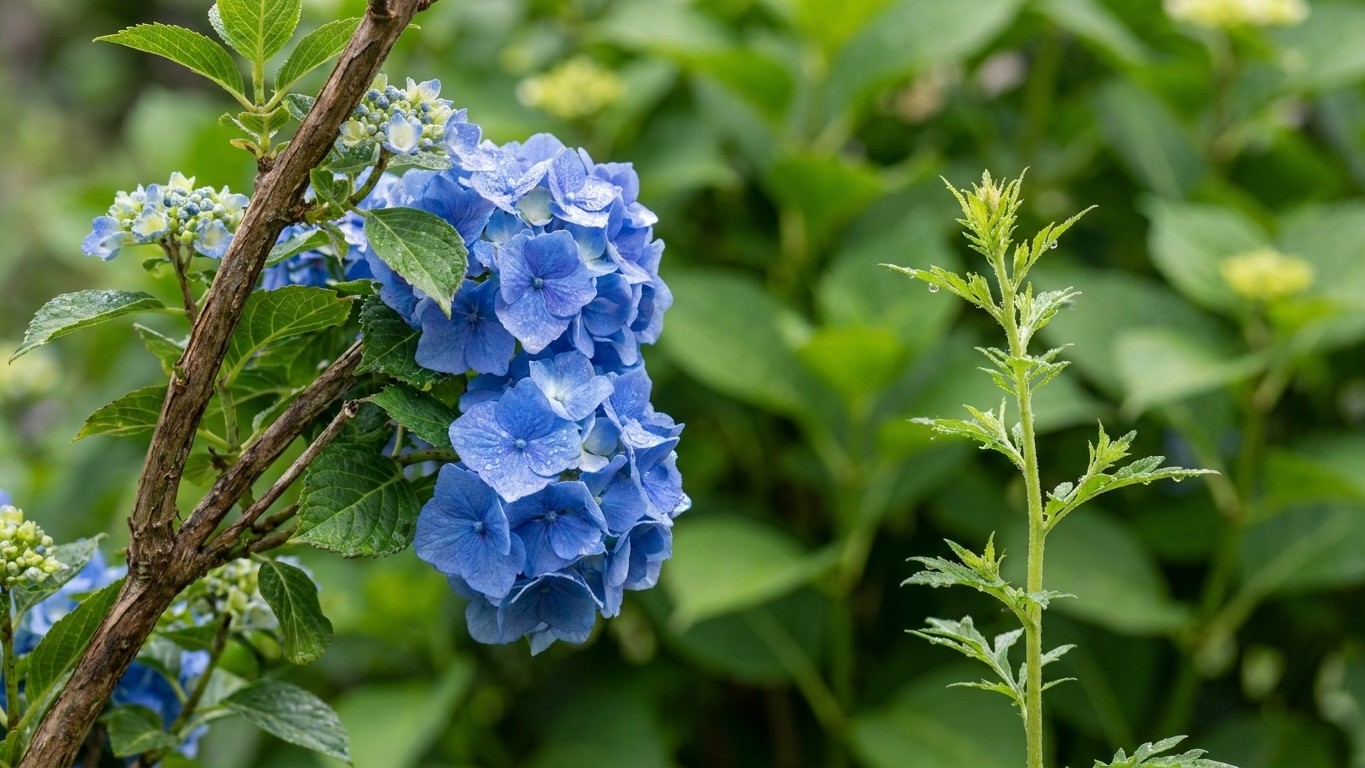
A bigleaf hydrangea (Hydrangea macrophylla). It flowers on both old and new wood, so it still blooms after the old-wood buds freeze. Flowers lean pink in Nevada’s alkaline soil and turn blue only where the soil is acidic. This is the bigleaf to try where winters are cold.
Snow Queen
An oakleaf hydrangea (Hydrangea quercifolia). White cone-shaped blooms age to pink on old wood, and the leaves turn red in fall. It is a good fit for milder lower-elevation yards, with a windbreak against drying winter gusts.
Nikko Blue
A classic bigleaf that blooms only on old wood. In acidic soil the flowers are blue, and in Nevada’s alkaline ground they shift toward pink or purple. It is the likeliest of the seven to leaf out green and never flower after a cold winter. Southern Nevada gardeners have the best odds with it.
Working it out for your own garden
How do you check that a hydrangea is hardy enough for your yard?
Enter your ZIP code on the USDA Plant Hardiness Zone Map and write down your zone, including the a or b half. A plant rated for a warmer zone than your yard can see temperatures colder than its rating allows. For new-wood bloomers, a rating that matches your zone is enough. For old-wood bloomers, pick one rated for a zone at least one number lower (colder) than your own, as a margin. Then look at your site. A south-facing wall wakes plants early, and a low spot pools cold air on still nights.
How does it work out for Annabelle?
Take a yard in zone 5. Annabelle is rated for zones 3 to 9, which leaves a two-zone margin. In a bad winter the top growth may freeze back to the ground. The crown and roots live, new stems rise in spring, and those stems carry the flowers. Even a late freeze that nips the first shoots only delays bloom, because the plant keeps sending up more. Annabelle passes, with room to spare.
Where does the line fall for Nikko Blue?
Put Nikko Blue in the same zone 5 yard. Its rating starts at zone 6, a zone warmer than the yard, so the margin is negative. The flower buds formed the previous summer and sit exposed on the stems all winter. Even in a zone 6 yard, a warm spell in late winter can swell those buds, and the next hard night kills them. The shrub then leafs out green and healthy and never flowers. Endless Summer sits in between. Its rating starts at zone 4, and because it also blooms on new wood, it gives some flowers even in a year when the old buds are lost.
What changes across the state
How much does elevation matter?
Nevada is mostly basin and range, and cold air drains downhill and pools on valley floors. A yard in a high valley can sit a full zone or more below one a few miles away on a slope. That spread is how the state’s map stretches from 4a to 10a. Elevation also shortens the stretch between the last spring freeze and the first fall freeze, which matters for hydrangeas because wood that does not harden off before the first hard freeze is more likely to die back.
How different are northern and southern Nevada?
In the south, the Mojave Desert, winter cold rarely kills hydrangea wood. The Las Vegas airport numbers above show how mild the winters are there. The danger is summer heat, dry wind and alkaline soil. Bigleaf and oakleaf types survive winter easily but scorch without morning sun and afternoon shade, and they often yellow from iron deficiency.
Farther north, around Reno and Carson City on the dry side of the Sierra, nights are cold and the swing between daytime and nighttime temperature is large. Warm afternoons in late winter can start the buds moving before a hard freeze returns. In the northeast, around Elko and the high basins, winters are longer and colder still, and panicle and smooth hydrangeas are the dependable choices. Old-wood bloomers need real protection or a pot that can come inside. The details are in Protecting Hydrangeas Through a Nevada Winter.
The mistakes this state punishes

Trusting a warm spell is a common one. A run of mild days in February or March makes the garden feel ready. It is not, because freezes in northern and high-elevation Nevada can arrive weeks after the first green shows. Leave mulch and wraps in place until the freeze danger has passed, and do not cut back old-wood types on a warm day. Wait until you can see which buds are alive, a timing covered in When to Prune Hydrangeas in Nevada.
Buying a bigleaf rated for warmer zones and planting it in a cold valley comes next. The label shows the coldest zone it was rated for, not how its buds handle your coldest night. Match the rating to your zone, and if you want a bigleaf anyway, choose one that blooms on new wood as well.
A shrub set out in late fall in a cold area has little time to root before the ground freezes, so plant in spring or early fall. Heavy fertilizer in late summer pushes soft growth that the first freeze burns. And in a dry winter, hydrangeas need water on days when the soil is not frozen, since dry air and wind pull moisture from the stems. A deep soak during a warm, dry stretch helps keep stems from drying out.
Checking this against your county
A state-wide figure is a starting point. Your own freeze dates depend on your valley, your slope and your side of town. Call your county office of University of Nevada, Reno Extension and ask which hydrangeas have come through recent winters near you, and when the last hard freeze usually lands. For the rest of the basics, read the state guide to growing hydrangeas in Nevada.
Common questions
Will a hydrangea that freezes to the ground come back?
Usually, yes. Smooth and panicle hydrangeas resprout from the crown and bloom on the new growth. Wait until the shrub should be leafing out before judging it. Bigleaf types may come back green but skip flowers that year.
Is a zone 4 hydrangea safe anywhere in Nevada?
No. The zone rating covers winter minimums only. Wind, late freezes, alkaline soil and desert heat decide the rest, and the state spans zones 4a to 10a. Check your own zone first, then the site.
Why does my bigleaf hydrangea leaf out but never bloom?
Its flower buds probably froze. Old-wood types set buds the summer before, and a cold winter or a spring freeze after the buds swell kills them. Switching to a reblooming variety or a new-wood type can fix it.
Do hydrangeas need water in a Nevada winter?
Yes, during dry stretches. When there has been no snow or rain for a few weeks and the soil is not frozen, give the root zone a slow, deep soak. Water in the morning so it can soak in before nightfall.