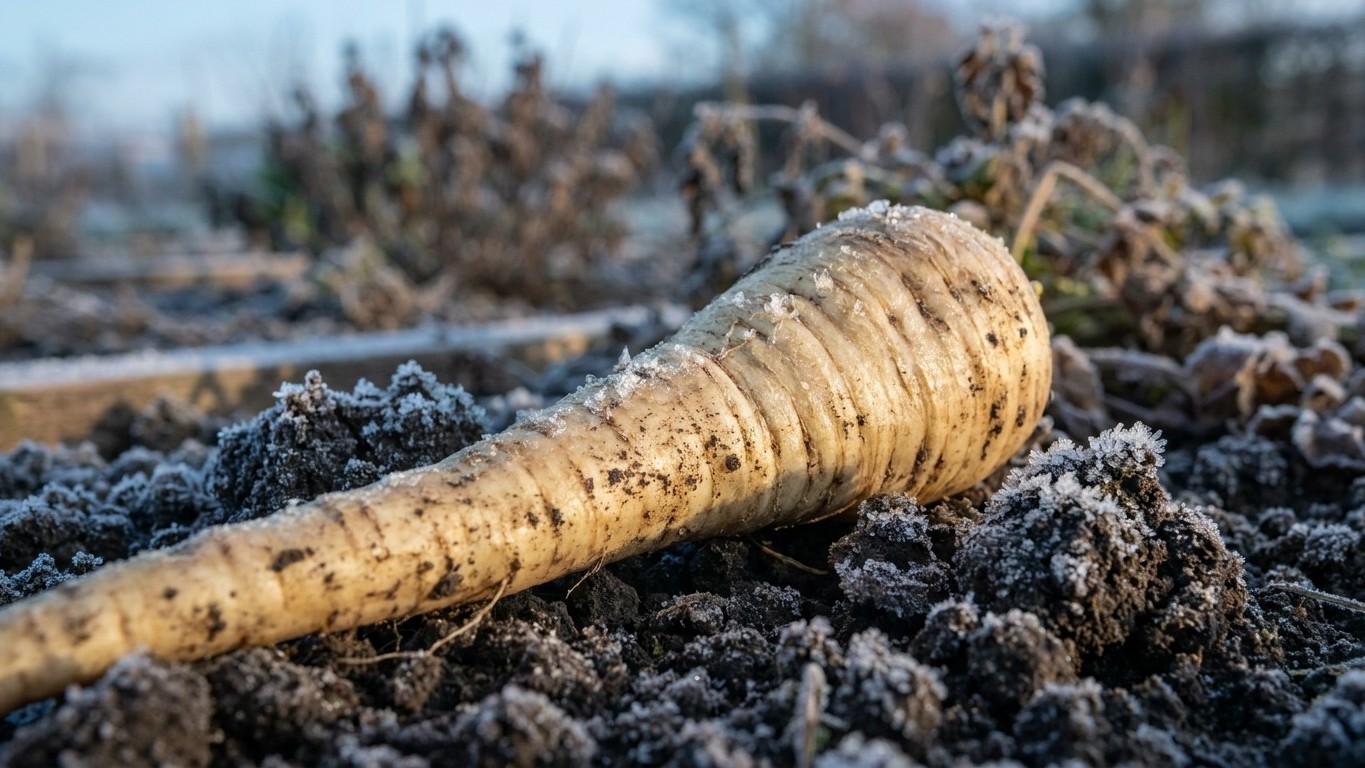

Lift parsnips after several weeks of frosty weather, and expect them to keep four to six months once they are out of the ground, if the storage is right. Across much of Nevada, the cooler valleys and higher ground deliver those frosty weeks by late fall. The low desert often does not. Cold storage at 32 to 34°F with 98% humidity is what stretches a harvest to half a year, and almost no house holds conditions that steady.
The short answer
Whether the ground delivers several frosty weeks is the question that decides everything here. Utah State University Extension says parsnips taste best after several weeks of cool, frosty weather, which converts stored starch to sugar. At the Las Vegas reference station, the mean daily minimum of the coldest month is 39.6°F, according to NOAA NCEI climate normals. That is above freezing on an average night in the coldest month. A parsnip grown in that kind of low desert will size up fine and taste like a mild, earthy root, but it will merely grow. It will not sweeten the way the crop is known for.
Reno, Carson City and any garden at elevation sit in a different world. Frost arrives months earlier in fall and lingers months later in spring, so those beds collect the cold weeks the root needs. Gardens between those extremes fall somewhere in the middle, and your county extension office can tell you what your own ground typically sees. Frost exposure is what sweetens a parsnip. A hardiness rating only describes how low the worst night can drop, and a comfortable rating does not add up to several frosty weeks.
When should you lift parsnips in Nevada?
Wait until the roots have reached full size and the ground has been through several frosty weeks. Then dig as you need them, since parsnips hold well in the soil. A simple test works better than any date: pull one root after a few cold weeks, cook it and taste it. If it is sweet, the rest are ready. If it tastes flat, give them another week or two of frost. Dig the whole row before the ground freezes too hard to work and before the tops start new growth in spring. Where winter nights stay above freezing, waiting for sweetness buys you nothing, so lift at full size and enjoy a milder root.
How long do parsnips keep after lifting?
The USDA’s Agricultural Handbook 66 states that parsnip roots can be stored 4 to 6 months at 32 to 34°F with 98% relative humidity. That is a long keeper by any standard. It assumes the temperature and humidity are held steady the whole time, which a typical kitchen, garage or pantry does not manage. Parsnips are not chilling sensitive, so the cold itself will not hurt them.
Ethylene is the real danger. Parsnips produce very little of it themselves, but the handbook notes that even low levels in cold storage cause bitterness. Apples and other ripening fruit give off plenty. A parsnip stored next to them, even at the right temperature, turns bitter. Keep the roots in their own drawer or container. Top the greens after harvest, but do not trim into the crown.
Does the season fit?
Parsnips need 100 to 120 days from seeding, and the seed goes in two to three weeks before the last spring frost. Here is how that plays out across Nevada’s very different climates.
- Sow in place. Parsnips are seeded directly where they will grow, so the 100 to 120 days run from the day the seed goes into the soil.
- Seedlings are slow. Bare soil at day ten is normal, and digging it up to re-sow wastes the planting.
- Count 100 to 120 days from seeding. That is a little over three months at the short end and about four months at the long end, with the clock running from the seed, not from the first sprout.
- Check the low desert against that count. The Las Vegas airport reference station has a mean last spring freeze between January 7 and February 1 and a mean first fall freeze between December 8 and December 23. That is a desert urban-heat-island extreme, and no other part of the state looks like it. A parsnip sown there finishes growing after the cold is over and with little frost left to sweeten it. It fits the calendar for growing and not for sweetness.
- Check the cooler valleys and higher ground. Last frost comes late in spring and first frost comes early in fall. A sowing made two to three weeks ahead of the last frost reaches full size by late summer or early fall, and the frosty weeks arrive after the roots are already made. That is a comfortable fit. The tightest spots are the highest elevations, where a short summer leaves little slack, so ask your county extension office for the typical last frost date before you sow.
The growing window is rarely the problem in the cooler parts of the state. The sweetening window is the one to protect, so a late sowing that still finishes before hard cold arrives costs you nothing. For the full picture on sowing, soil and spacing, see Growing Parsnips in Nevada. For more on what the cold actually does to the root, read Will Parsnips Sweeten in Nevada?
What goes wrong here
Most parsnip failures in Nevada come down to soil, water, timing or storage. Each has a fix, and most of them are cheap.
- Forked roots from heavy or stony ground. A root that hits a rock or a dense clay layer splits around it. Utah State University Extension recommends deep sandy soil, and heavy ground should be double dug. Loosen the bed deeper than you think necessary and pull out stones before seeding. Soil type varies a lot across the state, so push a spade down and see what is really under the surface.
- Forked roots from overwatering. This is a separate problem, and it can happen in perfectly loose soil. Constantly wet ground leads to forked and misshapen roots. Water deeply when the soil below the surface has dried out, and let the bed drain between waterings rather than keeping it soggy.
- A season that runs out. Seed that goes in too late may not have the full 100 to 120 days before the ground is too cold to grow. Sow two to three weeks before the last spring frost, and confirm that date with your county extension office.
- A winter too mild to sweeten. In the low desert, nights rarely stay frosty for weeks on end, so the roots grow but stay mild. No watering or feeding trick changes that. Accept a mellow parsnip, or put the bed space toward a crop that suits warm winters.
- Bitterness in storage. A parsnip kept near apples or any ripening fruit turns bitter, even at the right temperature, because of the ethylene they give off. Store the roots on their own, top them without cutting into the crown, and keep them as cold and humid as you can.
Animals can take a crop as easily as weather can, so it is worth reading What Eats Parsnip in Nevada, and When before the roots start to size up.
Common questions
Can parsnips stay in the ground all winter?
They can stay as long as you can still dig them. Leaving them in through several frosty weeks is what makes them sweet. Lift the rest before the soil freezes too hard to work and before new top growth starts in spring.
How long until parsnip seed sprouts?
Mark the row so you do not dig up bare soil and re-sow it. The 100 to 120 days to harvest count from seeding, not from the day the first leaves show.
Can I store parsnips next to apples?
No. Parsnips are not hurt by cold, but even low levels of ethylene in storage make them bitter, and apples and other ripening fruit give it off. Give the roots their own container or drawer.
Will parsnips sweeten in Las Vegas or the low desert?
Rarely to a noticeable degree. The mean daily minimum of the coldest month at the Las Vegas reference station is 39.6°F, above freezing, and sweetening needs several frosty weeks. The root still grows well, and the taste is mild rather than sweet.