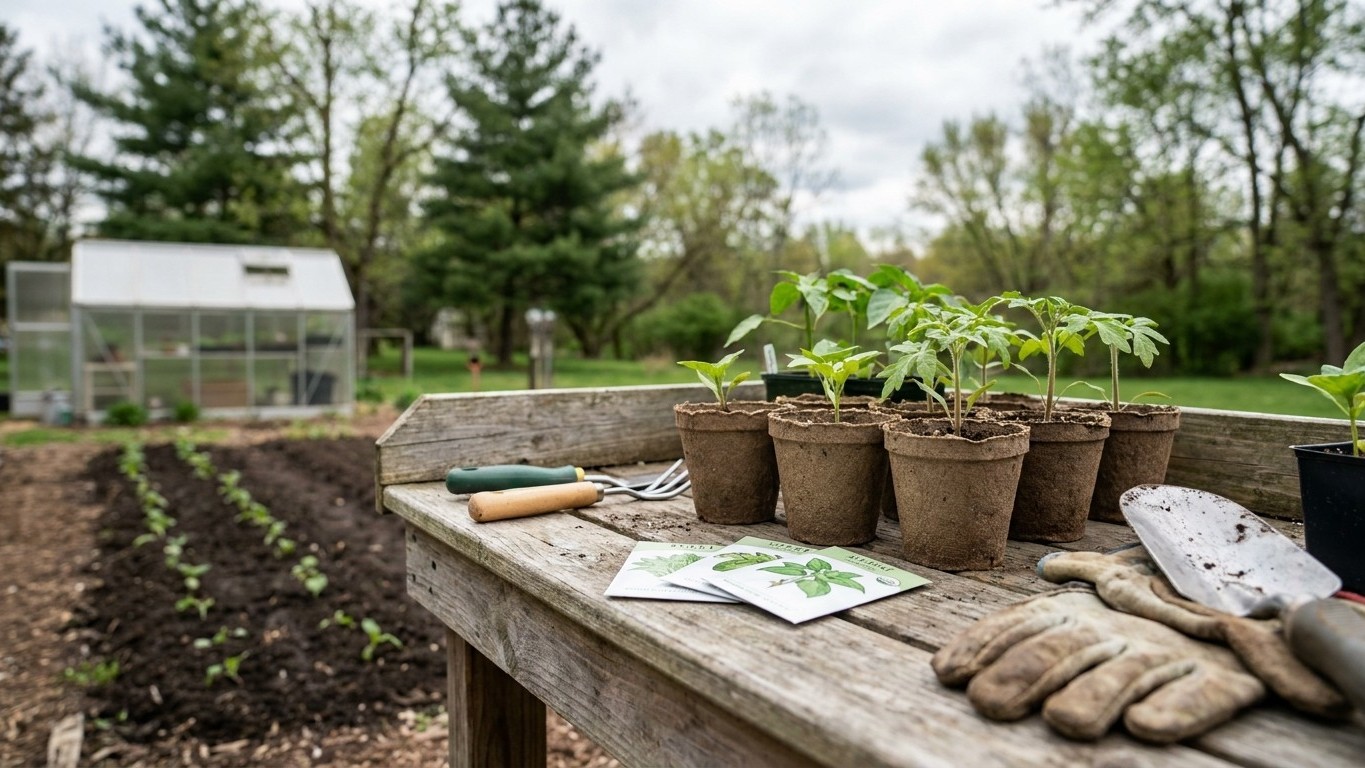

April splits Nevada’s garden calendar right down the middle of the state’s elevation range. In the low desert basin around Las Vegas, the ground is often already warm enough for transplants that would rot in colder soil elsewhere. In the mountain valleys near Reno, Carson City and Elko, April can still sit well inside frost risk. The safe bets across most of the state are peas, hardy greens and alliums; everything past that depends on your own soil, not the calendar.
What goes in the ground in April

Soil temperature at planting depth decides what lives this month, not the date on the wall. The only frost figures published for Nevada in the federal climate record come from the Las Vegas airport station, and they describe an unusually mild desert pocket: NOAA’s 1991-2020 Climate Normals put the last spring freeze there between January 7 and February 1, and the first fall freeze between December 8 and December 23. That is a desert urban-heat-island reading, not a statewide answer. By April, that station has typically finished its frost window two to three months earlier. Reno, Carson City and any garden sitting at elevation freeze months later in spring and months earlier in fall, so borrowing the desert numbers for the rest of the state is how a tray of pepper transplants ends up dead on a cold night.
Given that spread, treat April in most of Nevada as still inside frost risk unless you’re gardening in the low desert basin. What tolerates that uncertainty: peas direct-sown as soon as the soil crumbles instead of clumping in your hand, spinach and lettuce, onion sets and hardened-off transplants, kale and other brassica transplants kept under a cold frame at night, and potatoes once the ground has dried enough to work without compacting into mud. Garlic and shallots, usually a fall planting, can still go in where the bed opened late and never got planted over winter.
In the desert basin itself, where the freeze window closes by February 1 most years, April often means the soil at root depth has already cleared 60 degrees Fahrenheit, the rough threshold that lets warm-season transplants like tomatoes and peppers take hold instead of stalling. Gardeners there are usually past the hardy-crop stage and moving into full transplanting well before gardeners two hours north have touched a trowel. If you’re not sure which camp you fall into, a five-dollar soil thermometer pushed four inches down at mid-morning tells you more than any regional list can.
What to start under cover
Seed-starting math runs backward from your own last-frost window, not forward from today’s date. Tomatoes, peppers and eggplant generally need six to eight weeks indoors before they’re ready to go outside as sturdy transplants; cole crops like broccoli and cabbage need closer to four to six. That arithmetic looks completely different depending on where in Nevada you garden. Where the frost window closes in early February, as the Las Vegas station data shows, those warm-season seeds would have already gone in back in December or January, and by April the transplants themselves are heading into the ground. Where the last frost doesn’t clear until well into spring, as it does across the higher valleys, April is the actual window to start those same seeds indoors for a transplant date in May or later.
The two ways this goes wrong are mirror images of each other. Start too early relative to your county’s frost date and you’re left babying rootbound, leggy seedlings on a windowsill for weeks longer than they can stand, stretching toward the light and going stringy at the stem. Start too late, especially in the shorter growing seasons found in Nevada’s higher valleys, and the transplants never catch up before the compressed summer window closes again in fall. Cold frames and unheated hoop tunnels buy a middle path this month for greens and brassicas that don’t need the full indoor head start tomatoes and peppers require, letting you sow a few weeks closer to outdoor conditions without gambling the whole tray on a warm afternoon.
What is ready to pick
April’s harvest in most of Nevada is modest but real. Established asparagus beds start pushing spears, and the first cuts of the year are usually the tenderest the bed will produce. Rhubarb stalks are worth a first pull once they’ve thickened past a pencil’s width, twisted rather than cut at the base. Anything that overwintered under mulch, kale and leeks especially, is often still standing and edible, sometimes sweeter after cold exposure than it was in fall. Cold-frame lettuce and spinach sown earlier in the season are usually ready for a cut-and-come-again harvest by now, and green onions started from sets are pullable as soon as the tops reach finger length.
Indoors, sprouts and microgreens keep filling the gap between what’s stored and what’s fresh, ready in a week to ten days from seed regardless of what the weather outside is doing. It’s also worth a walk through the root cellar or pantry shelf this month. Stored winter squash, potatoes and onions are nearing the end of their keeping life by April, and a few will start turning before the rest: a soft spot on a squash, a potato going green or sprouting eyes, an onion gone soft at the neck. Sorting those out now saves the ones still good and keeps rot from spreading to the whole bin.
The jobs that matter this month
April rewards work done before plants demand it. Soil preparation tops the list, turning in compost and amendments now gives it weeks to integrate before warm-season transplants go in, rather than shocking roots with fresh, unsettled fertilizer at planting time. Mulch reapplied as beds thaw locks in the moisture that April’s wind tends to strip out fast, especially in the drier valleys where humidity swings hard between morning and afternoon.
Staking and trellising belong on this month’s list even for plants that look nowhere near ready to sprawl. Peas set up on a trellis now grow straight up it instead of tangling into a mat that’s nearly impossible to untangle later. The same logic applies to any vining crop waiting in the wings for warmer soil.
Watering rhythm needs adjusting as days lengthen and soil dries faster than it did a month earlier, particularly in low-elevation gardens already running warm. Succession sowing of quick greens like lettuce and spinach every couple of weeks keeps a steady harvest coming instead of one big flush that bolts all at once. Pest scouting matters now because early detection is cheap and late detection isn’t: aphids and cutworms are waking up with the soil, and a few minutes checking the undersides of leaves this month can prevent a full infestation later. Rounding out the list, finish any dormant pruning on fruit trees before buds break fully, sharpen tools that will see heavy use in the coming weeks, and check drip lines and irrigation timers before the season’s real demand arrives.
What not to do in April
The classic April mistake in Nevada is trusting the air instead of the soil. A warm afternoon doesn’t mean the ground four inches down has caught up, and tomatoes, peppers, squash and melons set into soil that’s still cold below the surface will sit and sulk for weeks even if they don’t outright die. A soil thermometer settles the argument faster than guessing.
The second mistake is pulling row covers and cold frame lids off too early after a mild stretch, only to get caught by a return frost. This is a particular risk in the higher valleys, where the frost window documented for the desert basin simply doesn’t apply and the risk period runs considerably longer. Leave protection in place a little longer than feels necessary rather than betting on a warm week holding.
The third is feeding nitrogen at the wrong moment. A heavy nitrogen application right before a transplant goes into the ground pushes soft, leafy growth that’s more vulnerable to a late frost, and it can do the same to establishing seedlings that would be better served putting energy into roots first. Testing soil before a blanket feeding, rather than fertilizing on a schedule, avoids pushing growth the plant isn’t ready to support yet.
Checking this against your own county
A statewide answer for April is a starting point, not an instruction. Nevada’s hardiness range runs from USDA zone 4a to 10a, a spread wide enough to cover both a low desert basin and high mountain valleys under one state line. Elevation moves frost windows by weeks in either direction, and local topography, canyon drainage, exposure to sun, proximity to water, shifts them further still. Before planting anything based on a statewide list, check your county’s numbers against the University of Nevada Cooperative Extension, which tracks local frost data and planting guidance county by county rather than for the state as a whole.
Common questions
Is it safe to plant tomatoes outdoors in Nevada in April?
Only in the low desert basin, and only once soil temperature at root depth is reliably above roughly 60 degrees Fahrenheit. In the higher valleys, April is typically still inside frost risk, and tomato transplants set out too early will stall or die at the first cold night.
Why can’t I use the Las Vegas frost dates for the rest of Nevada?
The published frost window for Las Vegas reflects a desert urban-heat-island station, one of the mildest readings in the state. Areas at elevation, including Reno and Carson City, freeze months earlier in fall and later in spring, so those dates would badly overestimate how safe an April planting is elsewhere.
What can I still direct-sow outdoors in April if I’m not sure about frost?
Peas, spinach, lettuce, onion sets and potatoes once the soil is workable are the safest choices across most of the state, since all of them tolerate a cold night that would kill a warm-season crop outright.
How do I find my county’s actual last frost date?
The University of Nevada Cooperative Extension publishes county-level guidance rather than a single statewide figure, and it accounts for the elevation and microclimate differences that make a single state date unreliable.