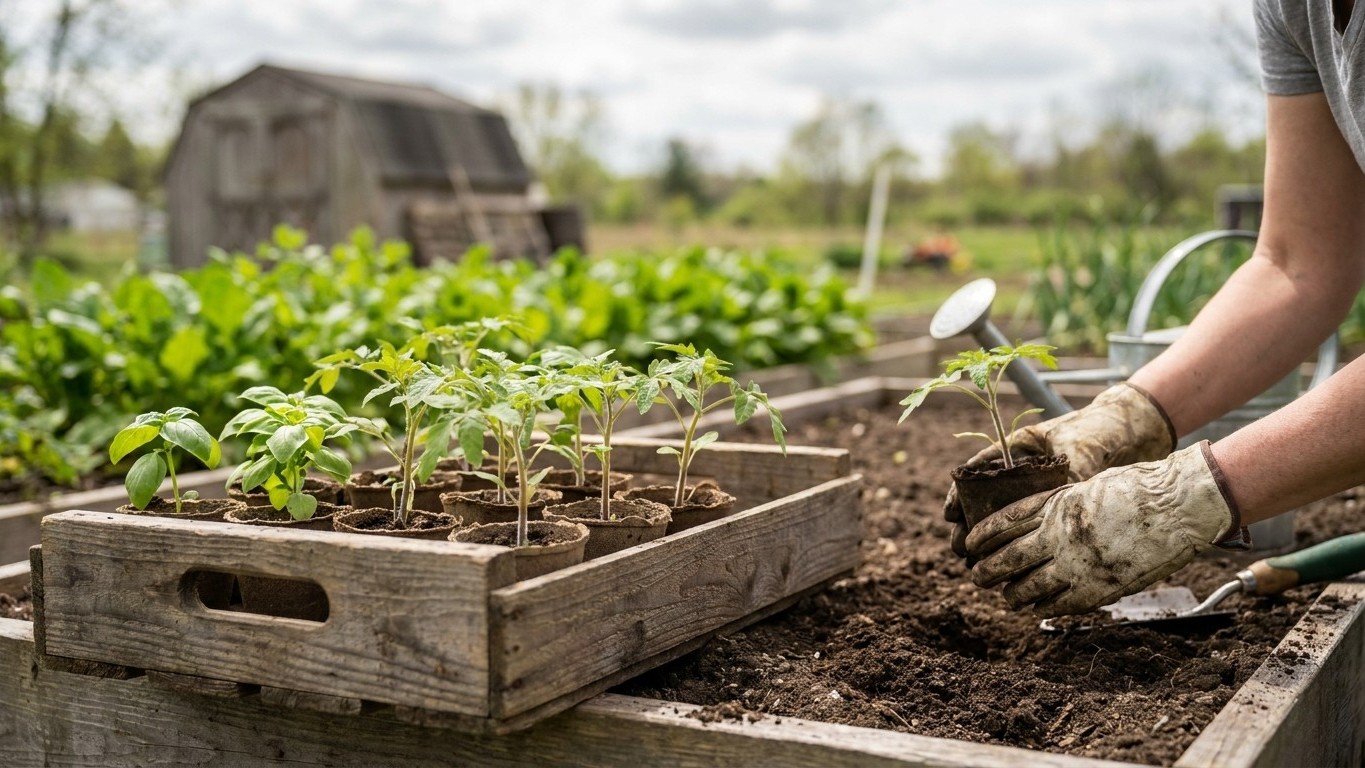

May splits Nevada in two. In the low desert around Las Vegas, the frost season closed months ago and the soil is already warm enough for tomatoes, peppers, squash and melons to go straight into the ground. In Reno, Carson City and the mountain valleys that make up most of the state’s land area, May is often the month the last frost finally clears, so warm-season transplants wait while lettuce, peas and root crops still hold the garden.
What goes in the ground in May

The calendar says May everywhere, but the soil doesn’t read a calendar. What decides whether a seed germinates or rots is soil temperature at planting depth, and in a state that runs from roughly 2,000 feet of elevation in the Colorado River valley to mountain basins above 6,000 feet, that number can differ by 20 degrees or more between two towns an hour apart. Nevada’s USDA Plant Hardiness Zones span 4a to 10a, one of the widest ranges of any state, and that spread is exactly why a single statewide planting date doesn’t exist.
Warm-season crops, meaning tomatoes, peppers, squash, beans, corn, melons and tomatillos, need soil that stays reliably warm through the night, not just a sunny afternoon. Where the frost window has already closed, these go in as transplants without much drama. Where it hasn’t, planting them now is a gamble that a late cold snap will win.
Cold-tolerant crops carry far less risk almost anywhere in the state during May. Direct-sown beets, carrots, radishes, lettuce, spinach, peas and onion sets shrug off a light frost that would kill a pepper seedling overnight. Garlic already in the ground from fall keeps growing regardless.
| Region type | Frost status in May | Warm-season transplants | Cool-season crops |
|---|---|---|---|
| Low desert valleys (Las Vegas area) | Frost season closed well before May | Safe to plant | Racing to finish before summer heat |
| High desert basins and mountain valleys (Reno, Carson City, rural elevation) | May often still inside or near the tail of the frost window | Wait, or use protection | Still productive, safe outdoors |
If you’re not certain which column describes your yard, treat May as a transition month: keep the hardy crops moving outdoors and hold the tender ones a little longer under cover.
What to start under cover
Timing seed starts backward from your local frost window works better than counting forward from any fixed date. Tomatoes and peppers typically need six to eight weeks indoors before they’re ready to go outside, so gardeners in the low desert who are transplanting now should have started those seeds back in early spring. Gardeners at elevation, whose frost window may still be closing, can use May to start a second round of tomato and pepper seedlings timed for a June transplant, or to keep hardening off trays that were started earlier.
Squash, cucumbers and melons germinate fast and resent being confined, so they’re usually better started only three to four weeks ahead, or seeded directly once the soil has warmed. Starting them too early under cover just means a rootbound, leggy plant that sulks for weeks after transplant instead of taking off.
The opposite mistake costs just as much. Starting warm-season seedlings too late, especially in the higher valleys with a shorter growing season, means the plant is still small when the real heat arrives and never catches up before fall frost returns. Cold frames and low tunnels are worth using in May less for warming the soil, which the sun is already doing, and more for hardening off transplants gradually so they don’t scorch or wilt the first week they meet full desert sun and wind.
Basil, tomatillos and eggplant follow the same six-to-eight-week logic as tomatoes and peppers. Fast cool-season crops like lettuce and brassicas can still be started under cover for a short-lived summer harvest at elevation, but in the low desert that window is closing fast.
What is ready to pick
May harvests in Nevada depend heavily on what got planted back in late winter or early spring. Lettuce, spinach, radishes and peas sown then are usually at their peak now, and in the low desert that peak is brief. Rising afternoon temperatures push leafy greens toward bolting within weeks, so pulling a full harvest rather than letting plants linger makes sense once the days start running consistently warm.
Asparagus beds established in prior seasons send up their best spears in May almost statewide, low desert or mountain valley alike, since the crop tracks soil warming more than a fixed date. Overwintered alliums like chives and any garlic planted the previous fall are also filling out.
Herbs that survived the cooler months, mint and chives especially, are usually ready for a first real cutting. It’s also worth going through anything left in winter storage. Squash, potatoes and onions held over from the previous season should get a hand-check now: soft spots, sprouting eyes on potatoes, or a sour smell from an onion mean it’s time to use or compost it before it spreads to the rest of the bin. A few minutes sorting storage crops now saves losing the whole batch later.
The jobs that matter this month
Soil preparation done in May pays off for the entire summer season, and skipping it shows up later as stunted, undersized plants. Working compost or aged manure into beds before the warm-season transplants go in gives roots something to grow into rather than forcing them to fight compacted or nutrient-thin ground once the heat arrives.
Mulching matters more in Nevada than in most states, because low humidity and intense sun pull moisture out of bare soil fast. A two-to-three-inch layer of straw or wood mulch laid down now, before summer heat peaks, keeps roots cooler and cuts how often irrigation lines need to run.
Staking and caging tomatoes, peppers and vining squash before they sprawl is far easier in May than after the plant has already collapsed sideways into its neighbors. Waiting until July to stake a tomato usually means breaking stems in the process.
Watering rhythm needs adjusting now, not later. Seedlings and new transplants want frequent, shallow watering to establish roots, while anything already established benefits from deeper, less frequent watering that trains roots downward instead of keeping them shallow and heat-vulnerable. Checking drip lines and emitters for clogs before the real heat hits saves a scramble later.
Succession sowing of quick cool-season crops, another round of radishes or lettuce, still makes sense in May for gardeners at elevation, while low desert gardeners are better off treating this as the last call before switching beds over to warm-season crops entirely. Pest scouting for aphids and early flea beetles on new transplants is worth five minutes a week now, since a small colony caught in May is a non-event and the same colony ignored until June is an infestation.
What not to do in May
The most common mistake in Nevada gardens is trusting the air temperature over the soil temperature. A warm, sunny afternoon can feel like summer while the soil six inches down is still cold from a recent snowmelt or overnight freeze, especially at elevation. Tomatoes and peppers planted into that cold soil often just sit there, stalled, sometimes for weeks, sometimes permanently.
Uncovering cold frames or removing frost cloth too early after a mild stretch is the second classic error. A few warm days in a row don’t mean the frost window has closed, particularly in the mountain valleys where a cold front can drop temperatures fast and with little warning. It’s safer to keep protection on hand and ready to redeploy through most of May than to pack it away after one nice weekend.
Nitrogen timing trips people up too. Heavy nitrogen feeding right as warm-season crops are getting established pushes lush leafy growth at the expense of root development and, later, fruit set. A balanced feed at transplant, with nitrogen backed off once flowering starts, produces a sturdier plant than one pushed hard with nitrogen from day one.
Overwatering new transplants in an attempt to help them settle in is the last trap. Desert soils often drain fast, and gardeners overcorrect by watering daily, which can suffocate young roots before they’ve had a chance to spread. Watering deeply but less often, and letting the top inch of soil dry between waterings, builds a stronger plant.
Checking this against your own county
Everything above describes Nevada in broad strokes, and broad strokes are a starting point, not an instruction. Elevation alone can shift a frost window by weeks between two counties, and factors like a valley’s exposure to cold air pooling or its distance from a large body of water move things further still. A hardiness zone range of 4a to 10a for a single state is a signal that no one date works for everyone.
The most reliable next step is checking with University of Nevada, Reno Extension at https://extension.unr.edu/, which tracks local frost data and planting guidance by region rather than by statewide average.
Common questions
Can I plant tomatoes outdoors in Nevada in May?
In the low desert, yes, the frost season closes well ahead of May. At elevation, in places like Reno or Carson City, it depends on whether that year’s frost window has fully closed, so checking with local extension guidance before transplanting is worth the few minutes it takes.
Why did my seedlings stall after transplanting in May?
Usually cold soil, not cold air. Warm-season seedlings can look fine going in and then simply stop growing for weeks if the ground temperature at root depth hasn’t caught up with the warm afternoons above it.
Is it too late to start seeds indoors in May?
Not for squash, cucumbers and melons, which only need three to four weeks under cover. It’s getting late for tomatoes and peppers in the low desert, but gardeners at higher elevation with a later frost window often still have time.
What should I do with bolting lettuce and spinach?
Harvest it rather than let it go fully to seed, since the leaves turn bitter fast once a plant bolts. It’s also the signal to start planning that bed’s next crop, since the cool-season window is closing, especially in the low desert.