
September in New Brunswick sits in the narrowing gap between summer harvest and the first hard frost, which lands on average October 2. That leaves roughly four to five weeks of open growing time, enough for fast greens, radishes, and a final round of cold-hardy crops, plus garlic beds going in toward month’s end. Everything else this month is about protecting what’s already producing and getting ahead of the cold.
What goes in the ground in September

The calendar says September, but the soil doesn’t care about the calendar. What decides whether a seed sprouts and matures in time is soil temperature and the shrinking runway before that average October 2 frost date recorded at the Moncton station by Environment and Climate Change Canada’s climate normals. That date is a mean, not a guarantee. Half the years on record, frost arrives later than that. The other half, it arrives sooner. Treat it as the middle of a window, not a line you can plan against down to the day.
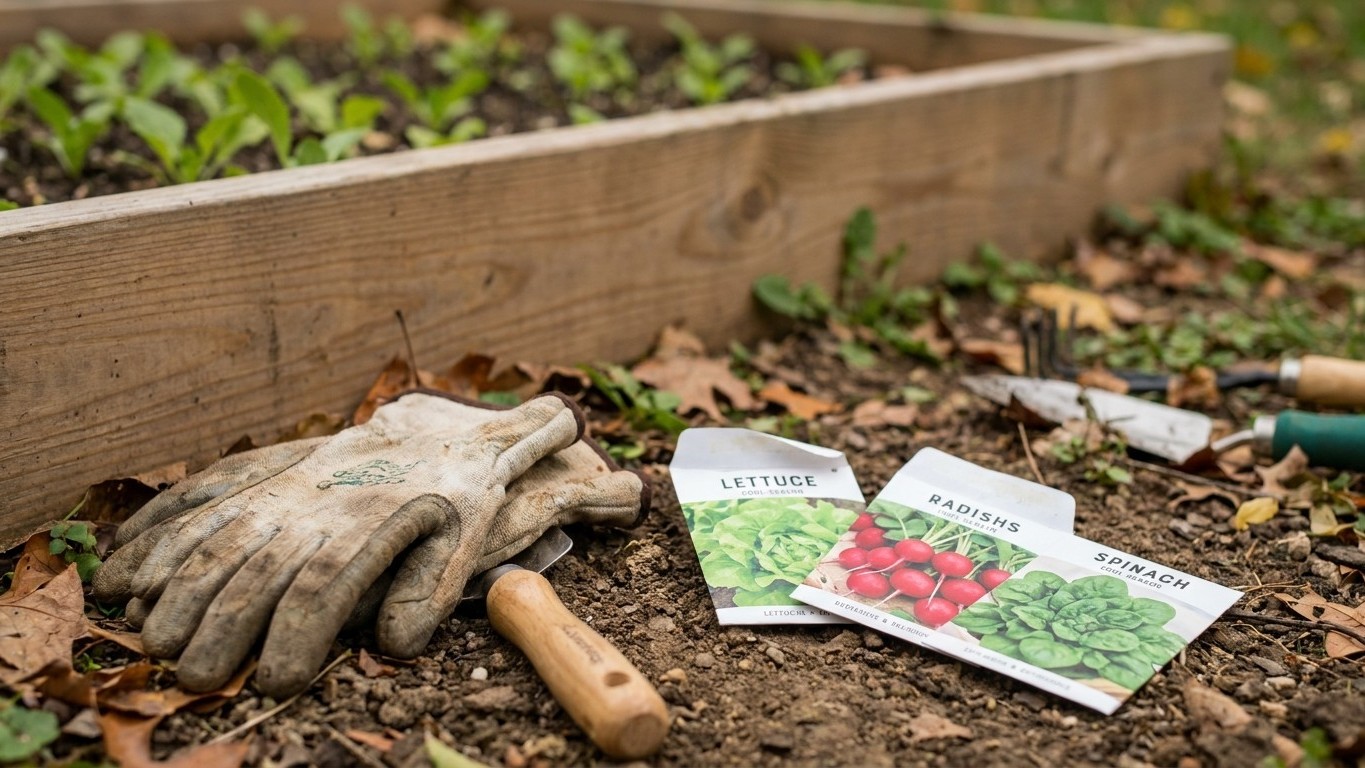
With four to five weeks of realistic growing time left, the safe bets are crops that finish fast and shrug off a light chill. Radishes, arugula, mizuna, and mâche can go from seed to table in three to five weeks. Spinach is slower but tolerates real cold once it’s up, which makes it one of the few crops worth direct-sowing even as September runs out. Peas planted now are a gamble in most of the province; they need six to eight weeks and rarely beat the frost unless the fall runs mild.
Crops worth the risk this month
| Crop | Sowing method | Approx. days to harvest | Verdict for September |
|---|---|---|---|
| Radish | Direct sow | 21-30 | Safe, fast enough for early or mid-month sowing |
| Spinach | Direct sow | 35-45 | Safe; tolerates frost once established |
| Mâche (corn salad) | Direct sow | 40-50 | Safe; actually improves after light frost |
| Kale, transplants | Transplant only | N/A (already sized) | Safe if started under cover in August |
| Peas | Direct sow | 55-70 | Gamble; only worth it early in the month |
Garlic and shallots follow a different clock entirely. They don’t need to beat the fall frost, they need to root before the ground locks up hard, which is a later event than that first light frost. Toward the back half of the month, beds can be prepped and cloves set in, timed so the shoots have a few weeks to anchor roots without pushing much top growth.
What to start under cover
Working backward from an average October 2 frost, anything started under cover this month has to earn its keep fast. A cold frame or a length of row cover buys two to four extra weeks past that date, so the arithmetic is simple: take the days-to-maturity on the seed packet, subtract it from that frost date, and that’s roughly your last safe sowing day for an unprotected bed. Push it later than that only if you have cover ready to go over the row.
The crops that make sense to start under cover now are the same fast greens as outdoors, just given a head start and a buffer: mizuna, spinach, baby lettuce mixes, and mâche. Sown in flats or a protected corner of the garden in the first half of the month, they can be moved into a cold frame once nights turn cold, stretching the harvest window well past what open ground allows.
Two mistakes show up every year with cover-started crops. Starting too early, especially indoors under lights, produces leggy, rootbound seedlings that stall the moment they’re transplanted into cooling soil. Starting too late runs the opposite risk: seedlings that never bulk up before daylight drops off and growth slows to a crawl, leaving a cold frame full of plants too small to be worth the space. The window is narrow. If the flats are still on a shelf by the last week of the month, it’s worth asking whether the crop will size up before the light fades, not whether it will simply survive.
Cover doesn’t have to mean a purpose-built frame. A cloche, a plastic tunnel over hoops, or even a thick row cover cloth pinned down at the edges buys enough warmth to matter for these quick crops.
What is ready to pick
September is one of the fullest harvest months in the New Brunswick garden. Tomatoes and peppers that set fruit through the summer are ripening in earnest, and it’s worth picking anything showing color before a cold, wet stretch invites rot on the vine. Summer squash and cucumbers are winding down but still producing if the vines haven’t succumbed to powdery mildew. Beans keep coming as long as they’re picked regularly, which pushes the plant to set more pods rather than bulk up seed.
Potatoes planted in spring are usually ready once the foliage yellows and dies back, a sign the skins have set and cured underground. Dig on a dry day and let them air out for a few hours before storing, since damp skins headed straight into a bin invite rot. Onions and garlic that were harvested earlier in the summer should be well into curing by now; check that bin now for any bulb going soft at the neck, and pull it before it spreads.
Apples are coming on through the province depending on variety, and early fall brassicas, cabbage, broccoli side shoots, and the first cold-sweetened kale leaves are worth checking weekly. Kale in particular tastes better after a light chill, so there’s no rush to strip the plant before frost touches it.
The jobs that matter this month
This is the month where a little labor now saves a lot of loss later. Watch the overnight forecast and keep row cover or old sheets within reach; a single unexpected dip below freezing can wipe out tomatoes, basil, and squash vines that were otherwise weeks from finishing. Pull anything genuinely tender the day a frost warning shows up rather than gambling on it surviving.
Curing matters as much as harvesting. Winter squash needs a warm, dry week or two after picking to harden its skin for storage; skip that step and it rots in weeks instead of lasting through winter. Onions need the same treatment, laid out somewhere airy and out of direct rain.
Cleared beds shouldn’t sit bare and shouldn’t sit weedy either. Pulling spent plants, especially anything that showed disease, and either composting the healthy debris or bagging the diseased material keeps next season’s pest and fungus load down. A fast-growing cover crop or a heavy mulch on cleared ground protects soil structure through the wetter fall weeks ahead.
Pest scouting doesn’t stop just because summer’s ending. Cabbage worms and aphids often have one more generation in them before cold shuts them down, and catching an infestation on brassicas now is easier than fighting it once the plants are stressed by cold. Garlic beds being prepped for planting are also worth a soil test if one hasn’t been done recently, since amending now, ahead of planting, beats trying to fix pH after the cloves are in the ground.
What not to do in September
The most common mistake this month is trusting a warm afternoon over the calendar. A run of mild, sunny days can make it tempting to set out warm-season transplants, but soil that warm on the surface is often still cool a few inches down, and any seedling put in now is racing a frost date that’s already close. There isn’t enough season left for tomatoes, peppers, or squash started fresh in September to produce anything worth the effort.
The reverse mistake happens just as often: pulling row cover off too soon after one warm night, assuming the risk has passed. It hasn’t. Average frost dates are exactly that, averages, and a mild stretch in late September says nothing about what the first week of October will do.
Nitrogen-heavy feeding is another late-season trap. Pushing lush new growth on perennials, fruit canes, or even vegetable plants this late encourages soft tissue that frost damages first and worst. If anything, this is the month to ease off nitrogen and let growth slow down naturally ahead of the cold.
Waiting too long to harvest is the quiet mistake. Winter squash and the last tomatoes left on the vine past a hard frost don’t recover; they’re compost, not dinner. Better to pick slightly early and finish ripening indoors than to lose the crop to one cold night.
Checking this against your own county
A province-wide guide is a starting point, not an instruction sheet. New Brunswick spans coastal lowlands and inland uplands, and the frost dates cited here come from the Moncton station specifically; a garden further north, at higher elevation, or away from the moderating effect of the coast can run one to three weeks behind that average window in either direction. The hardiness zone figure of 5a used here, from Natural Resources Canada’s Plant Hardiness Site, is also tied to a specific reference location, not the whole province, and it’s built on the Canadian system’s seven climate variables, which doesn’t translate directly to the single-variable USDA zones used elsewhere. For local frost data and planting guidance tuned to a specific county, the federal Department of Agriculture is the reliable starting point when a provincial page isn’t accessible.
Common questions
Is it too late to plant vegetables in New Brunswick in September?
Not entirely. Fast crops like radishes, spinach, arugula, and mâche can still mature before the average October 2 frost, especially if sown in the first half of the month or given cover.
Can garlic be planted in September in New Brunswick?
Late September is workable for garlic, particularly toward the end of the month, since cloves need to root before the ground freezes hard rather than beat the first light frost.
Should tender crops be covered every cold night in September?
Yes, once forecasts mention temperatures near freezing. The average frost date is a midpoint, not a safe cutoff, and a cold night can arrive well before it in a given year.
What’s the biggest harvest mistake to avoid this month?
Leaving winter squash, tomatoes, or peppers on the plant too long. Once a hard frost hits them, they’re done; picking slightly early and finishing indoors is the safer call.
Gardeners who plant by the Moon can check the September 2027 moon planting calendar, a tradition rather than a proven method.