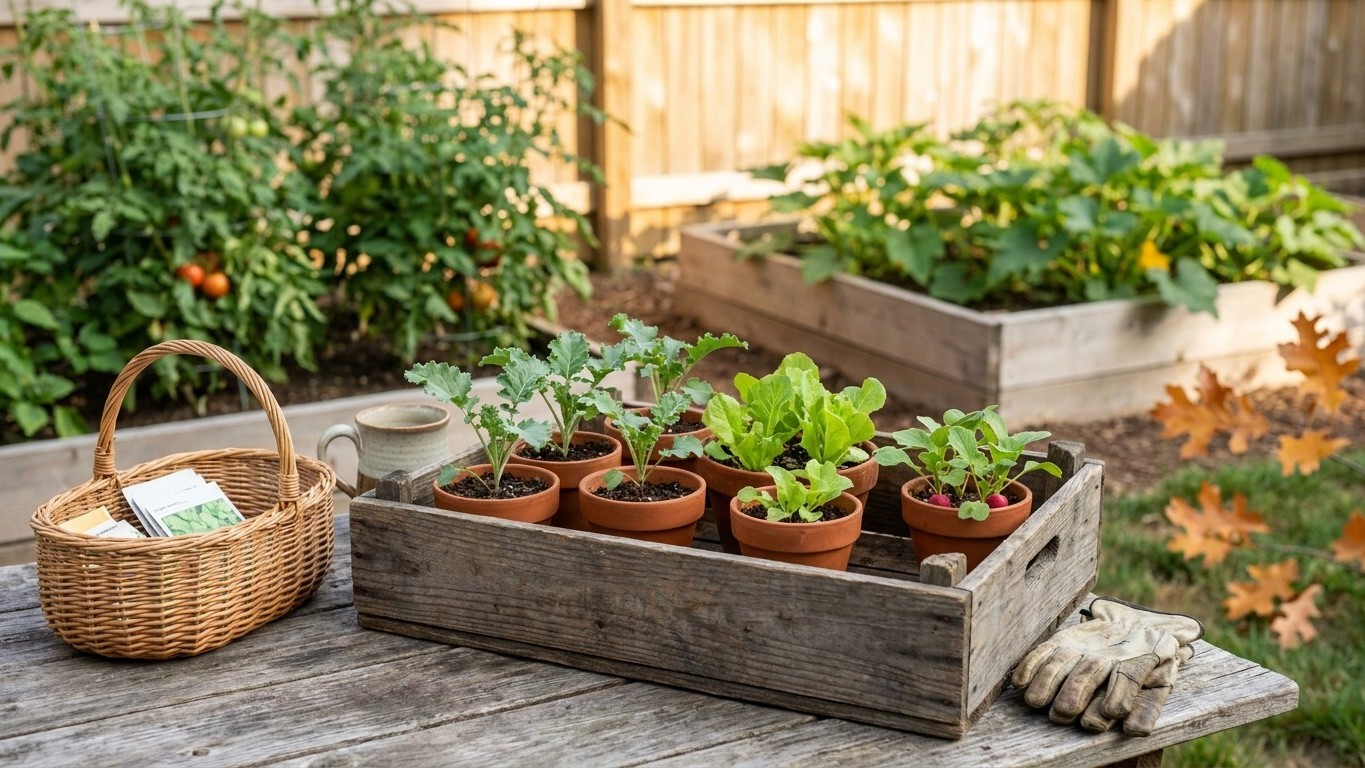

August is full growing season in New Brunswick, sitting comfortably between the average last spring frost and the average first fall frost. That means most of the province’s garden beds are already working hard, and the real question this month isn’t “can I plant?” but “what still has time to finish before the cold comes back?” Fast maturing greens, root vegetables, and a second round of peas are the safe bets.
What goes in the ground in August

The number that actually matters here isn’t the date on the calendar, it’s the days-to-maturity printed on the seed packet, counted against the average first fall frost of October 2. That October 2 figure comes from Environment and Climate Change Canada’s climate normals at the Moncton station, and it’s a mean date, not a guarantee: in roughly half of all years, frost arrives later than that, and in the other half, it arrives sooner. Treat it as the midpoint of a window, and build in a cushion of at least two to three weeks for anything you’re sowing directly outdoors this month.
Early in the month, that leaves close to nine weeks before the average frost, which is enough for a fair number of quick vegetables. By the last week of August, the math tightens to roughly four to five weeks, and only the fastest crops still make sense. Here’s how that plays out with common garden vegetables:
| Crop | Typical days to maturity | Realistic in New Brunswick |
|---|---|---|
| Radish | 25-30 | Through the end of August |
| Spinach | 35-45 | Through mid-August |
| Baby lettuce / mesclun mix | 25-35 | Through late August |
| Bush beans | 50-55 | First half of August only |
| Turnip | 45-55 | First half of August only |
| Peas (fall crop) | 55-65 | Very first days of August |
Anything with a longer season, sweet corn, winter squash, pumpkins, is a gamble once August starts; the plant may grow, but it won’t finish before the cold shuts it down. Garlic and shallots, by contrast, don’t belong in the ground yet at all in New Brunswick, those go in later in the fall for next season’s crop, so don’t rush them in now on the assumption that “bulb crops go in whenever.”
What to start under cover
Row covers and cold frames buy time, and August is when that time starts to matter. If you count backward from the average October 2 frost the same way you would for open ground, a crop under a cold frame or floating row cover effectively gains two to three extra weeks of growing season, since the cover holds a few degrees of warmth and cuts wind exposure overnight. That pushes the safe sowing window for quick greens like spinach, mesclun, and baby kale into the first half of September in most of the province.
The two ways this goes wrong are predictable. Start too early under cover in warm August weather and the plants get leggy and stressed by heat before the cover is even needed, wasting the protection instead of using it. Start too late, past the point where the remaining days-to-maturity plus your frost cushion still fit before October 2, and you end up with a bed of half-grown seedlings that stall the moment real cold arrives. The safest approach is to write down the sowing date, add the days-to-maturity from the seed packet, add roughly two weeks of buffer for a slow finish, and check that total against October 2 before committing seed to soil.
This is also a reasonable month to start biennials and perennial flowers from seed for planting out the following spring, since they don’t need to reach maturity before frost, only to establish a root system and go dormant. Foxglove, hollyhock, and many perennial herbs fall into that category.
What is ready to pick
August is the harvest month in New Brunswick gardens, and the list is long. Garlic planted the previous fall usually comes out in midsummer and should already be curing by now if it hasn’t been dug. Bush and pole beans, zucchini, cucumbers, and summer squash all need checking every day or two at this point in the season, since a missed cucumber or zucchini can go from perfect to oversized and seedy within 48 hours.
Peas sown in spring are usually finishing up, and pods that have gone dull and slightly swollen should come off before the plant puts its energy into drying seed instead of new pods. Early potatoes can be dug once the foliage starts yellowing and dying back, and a quick test dig at the edge of the row will tell you if the tubers have sized up. Cabbage and broccoli heads that have firmed up should be cut promptly, since broccoli in particular will bolt to flower fast in warm, humid stretches.
Berries deserve a daily look too. Raspberries and currants ripen unevenly across the same bush, so picking every couple of days rather than waiting for a big single harvest keeps fruit from dropping or attracting wasps. Tomatoes are usually still green or just turning through most of August in this climate, and that’s normal, not a sign anything is wrong.
The jobs that matter this month
Succession sowing is the single most valuable habit in an August garden here. Every week you skip a quick planting of radish, lettuce, or spinach is a week of harvest you won’t get back before frost closes the window in October. Set a recurring reminder rather than relying on memory, since this is the job that slips fastest once the summer harvest gets busy.
Watering rhythm matters more in August than almost any other month, because established plants under summer heat and stressed soil are also the plants setting the fruit and roots you’ll harvest. Deep, infrequent watering that reaches six to eight inches down encourages roots to follow the moisture downward; light daily sprinkling does the opposite and trains roots to stay shallow and vulnerable to the next hot, dry stretch. Mulch around tomatoes, squash, and beans now if it isn’t down already, it holds that moisture and keeps soil temperature steadier through hot afternoons.
Staking and support work best done before plants sprawl, not after. A tomato vine that’s already flopped onto the ground is much harder to lift and tie without snapping stems than one caught early. Pest scouting is worth five minutes every couple of days: Colorado potato beetle larvae on potato foliage, cabbage worms on brassicas, and squash vine borer damage at the base of squash stems all get much harder to control once populations build. Catching a handful of beetles or eggs early beats spraying a full infestation later.
What not to do in August
The most common mistake is treating warm August air as permission to plant something long-season, sweet corn, winter squash, melons, on the theory that there’s still summer left. There isn’t enough of it. Soil and air can feel like midsummer while the calendar is already running out the clock against that October 2 average frost, and a plant that needs 90 days simply won’t get there.
Feeding nitrogen heavily late in August is another one that backfires, particularly on perennials, shrubs, and fruiting plants. Nitrogen pushes soft, leafy new growth, and that growth doesn’t have time to harden off before cooler nights arrive, making it far more vulnerable to an early frost than growth that was allowed to slow down naturally. If anything, this is a month to taper nitrogen and let plants start settling.
Letting soil dry out between waterings, especially for anything freshly seeded for a fall crop, is a quiet killer. Small seeds like lettuce and spinach need consistently damp soil to germinate, and August heat can dry a seedbed out within hours, not days. Check newly sown beds daily until germination, not on the same schedule as established plants.
Checking this against your own county
Everything above is built on provincial averages, and New Brunswick is not one climate. Elevation, distance from the Bay of Fundy, and the general north-south divide across the province can shift frost timing by two to three weeks in either direction from the Moncton-based figures used here. A garden near the coast may run cooler and later in spring but milder into fall, while an inland or upland spot can see frost arrive well ahead of the provincial average.
For a planting calendar tuned closer to your own conditions, the federal agriculture department’s site is a reasonable starting point: agriculture.canada.ca. Cross-checking your local hardiness zone against the Canadian system’s own municipality data is also worth doing before committing to perennials.
Common questions
Is New Brunswick’s hardiness zone the same as a USDA zone?
No. New Brunswick uses the Canadian hardiness zone system, and the reference city used for this page sits in zone 5a under that system. The Canadian system is built from seven climate variables, while the USDA system uses one, and Natural Resources Canada is explicit that there’s no simple conversion between the two. Don’t treat a Canadian zone number as interchangeable with a USDA zone found on a seed packet from a US supplier.
Can I still plant garlic in August in New Brunswick?
No, and it isn’t a close call. Garlic in this climate goes into the ground later in the fall for harvest the following summer, not in August. Bulbs planted now would sprout into weak top growth going into winter rather than establishing roots properly.
How reliable is the October 2 first frost date for planning?
It’s a mean date from Environment and Climate Change Canada’s climate normals at the Moncton station, meaning frost arrives later than October 2 in roughly half of all years and earlier in the other half. Use it as a midpoint to plan around with a buffer, not as a fixed deadline.
What’s the fastest crop I can still start in late August?
Radish and baby lettuce or mesclun mixes are the safest bets in the final week of August, since both can mature in roughly 25 to 35 days, comfortably inside even the tightened window before the average first frost.