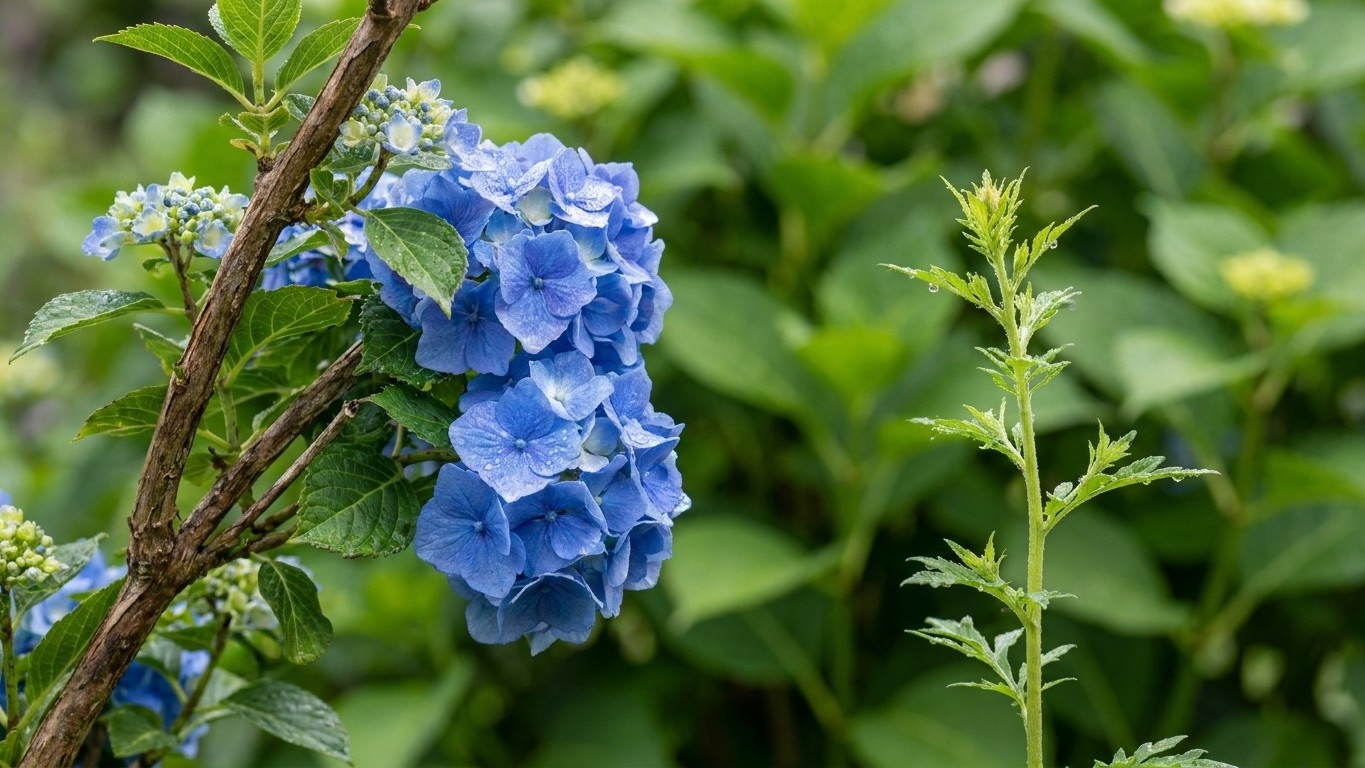

Hydrangeas can grow in most of Alaska’s populated areas, but not every type survives the winter above ground. Panicle and smooth hydrangeas (the kinds that bloom on new wood) shrug off hard freezes and flower reliably even after dying back to the ground. Bigleaf hydrangeas, the ones that turn blue or pink with soil pH, are the tricky ones here, and in much of the state they need heavy winter protection or a sheltered microclimate to bloom at all.
When to plant Hydrangeas in Alaska
In Anchorage, the last spring frost typically falls between May 3 and May 12, and the first fall frost arrives between September 22 and October 1, according to NOAA’s 1991-2020 climate normals for that station. That leaves roughly 143 frost-free days to work with. It sounds tight compared to the Lower 48, but Alaska’s long summer daylight, often 18 to 19 hours of usable light around the solstice in Southcentral, pushes a lot of growth into that window. Gardeners in the Interior (Fairbanks and beyond) and anywhere at higher elevation should expect a shorter season than this, with frost lingering later into spring and returning earlier in fall. There’s no published figure here for those locations specifically, so treat Anchorage’s dates as a starting point, not a statewide rule.
Starting hydrangeas indoors or from cuttings
Unlike vegetable transplants, hydrangeas aren’t usually started from seed on a kitchen windowsill. Seed-grown hydrangeas don’t reliably reproduce the parent plant’s color or bloom form, so most gardeners buy potted nursery stock or root softwood cuttings taken from an established plant. If you’re rooting cuttings, plan on four to six weeks under cover before they’re ready to pot up, then another seven to ten days of hardening off, gradually exposing them to outdoor sun and wind, before they go in the ground. Counting back from the May 3 to May 12 frost window in Anchorage, that means starting cuttings indoors in early to mid March if you want field-ready plants right around the frost-free date.
Transplanting into the ground
For potted nursery stock, the safest planting window opens once the last frost has passed and the soil has warmed enough to work easily, usually a week or two after that May date in Anchorage. Hydrangeas can also go in the ground through midsummer as long as they get consistent water while establishing. Fall planting is riskier this far north: a newly planted shrub needs at least six to eight weeks of root growth before the ground freezes hard, which puts the latest safe planting date in early August if you’re counting back from the September 22 first frost. Plant later than that and the roots may not anchor before winter sets in.
Soil and site preparation
Most hydrangeas want a spot with morning sun and some afternoon shade, especially in Southcentral and Southeast Alaska where long summer days can scorch leaves if a plant sits in full sun with no relief. In cooler, cloudier coastal pockets, full sun is often fine and even helps with bloom production. Wind is the bigger threat in many Alaska yards: a north-facing exposure or a gap between buildings can dry out foliage and snap tender new growth, so look for a spot with some windbreak, whether that’s a fence, a building corner, or established shrubs.
Soil should drain well but hold enough moisture to keep roots from drying out between waterings, since hydrangeas are thirstier than many woody ornamentals. Work compost or well-rotted organic matter into the planting area a few weeks before you put the shrub in the ground, rather than mixing it in the same day, so it has time to settle and start improving structure. Dig the planting hole wide rather than deep, roughly twice the width of the root ball, and set the crown at the same depth it sat in the pot.
Spacing depends on the variety: dwarf panicle types can go in as close as 3 feet apart, while full-size paniculata or arborescens cultivars need 5 to 6 feet to reach mature width without crowding a walkway or foundation. If you’re growing a bigleaf hydrangea for its color-changing blooms, soil pH is worth checking before planting: more acidic soil (below pH 6) tends to produce blue flowers, while soil closer to neutral or alkaline pushes toward pink. This pH effect only shows up in bigleaf hydrangeas; panicle and smooth types don’t have the same aluminum-uptake mechanism, so their color won’t shift no matter what you do to the soil.
Varieties that suit Alaska
The trait that matters most here isn’t days to maturity in the vegetable-garden sense, it’s whether the plant blooms on new wood or old wood. Alaska winters routinely kill hydrangea stems back to the snow line or the ground, even under mulch. A shrub that only sets flower buds on last year’s growth (most bigleaf hydrangeas) can lose its entire bloom for the year if those stems die over winter. A shrub that blooms on new wood, meaning it forms flower buds on the stems it grows that same spring, will flower regardless of how much winter dieback occurred.
Panicle hydrangeas and smooth hydrangeas both bloom on new wood and tolerate cold well into what’s generally described as zone 3 hardiness, which covers a good stretch of populated Alaska. They also tend to shrug off the fungal leaf spot issues that show up in damper climates. Bigleaf hydrangeas are the showier, color-changing type but are far less cold-hardy and need a protected site, heavy winter mulch, or container culture to have any real shot at blooming reliably this far north.
| Type | Blooms on | Cold tolerance | Good for |
|---|---|---|---|
| Panicle (‘Limelight,’ ‘Little Lime,’ ‘Bobo’) | New wood | High, reliable through hard winters | Dependable summer color, cone-shaped blooms |
| Smooth (‘Annabelle’) | New wood | High | Large white blooms even after full dieback |
| Bigleaf (mophead, lacecap) | Old wood (mostly) | Low, needs shelter | Color-changing blooms, best in protected microclimates |
No institution is recommending a specific brand name here; these are simply widely sold cultivars that carry the traits above. If a nursery tag or catalog claims a bigleaf variety is “Alaska hardy,” treat that with some skepticism and ask what protection it actually needs to get through a real winter in your yard.
What to plant alongside
Hydrangeas pair well with plants that share their preference for moist, part-shade conditions and won’t compete hard for the same root zone. Hostas, astilbe, and ferns fill in low around the base, hide bare lower stems, and don’t fight the hydrangea for sun. Spring bulbs like daffodils or crocus planted at the shrub’s drip line give color early in the season, before the hydrangea has leafed out, and finish their cycle before the shrub needs the space.
For pollinators, panicle hydrangeas draw a fair number of bees once the blooms open in mid to late summer, and planting them near other late-season bloomers extends a steady nectar source through the shorter Alaska flowering window. That’s a genuine, observable draw, not a marketing claim.
What to avoid: shallow-rooted annuals that need constant watering and full sun compete directly with hydrangeas for surface moisture and light, and they’ll show stress faster in a bed built around a shrub’s shade. Skip planting hydrangeas tight against foundations with poor drainage, since standing water at the roots causes far more failures than any pest does. As for companion-planting folklore, such as claims that marigolds “repel” the aphids or slugs that actually bother hydrangeas in Alaska, there’s no real evidence behind that pairing. Slug and aphid pressure has more to do with moisture, shelter, and how crowded a bed is than with what flower happens to be growing next to it.
Watering, feeding and support
Hydrangeas want deep, infrequent watering rather than a light daily sprinkle. Aim for the equivalent of about an inch of water a week during the growing season, soaking the root zone rather than just wetting the surface, and adjust upward during a dry stretch or a spell of wind that dries soil out faster than usual. A 2 to 3 inch layer of bark mulch or shredded leaves around the base holds that moisture in, moderates soil temperature swings, and, during winter, adds a little extra insulation over the root crown once the ground starts to freeze.
Feed with a balanced fertilizer once growth starts in spring, then again in early summer if the plant looks like it needs a boost. Stop feeding by midsummer, roughly late July in most of Southcentral Alaska, so new growth has time to harden off before the first fall frost instead of getting caught soft and green when temperatures drop.
Panicle hydrangeas with large flower heads, especially older, established shrubs, sometimes need staking or a simple cage to keep heavy blooms from flopping over after rain. Suckers, the thin shoots that sprout from the base separate from the main stems, should be pruned out through the season to keep the plant’s energy going into the main framework rather than a tangle of weak growth. Pruning timing depends on the bloom type: new-wood bloomers like panicle and smooth hydrangeas can be cut back hard in late winter or early spring with no loss of flowers, while old-wood bloomers should only have dead or damaged wood removed, since cutting live stems on those risks removing next year’s flower buds entirely.
Common problems
Leaf curl on new growth is usually aphid feeding rather than disease. The leaves pucker and twist, and a close look at the undersides usually turns up small clusters of soft-bodied insects. Wilt in an otherwise well-watered hydrangea often points the other direction: soil that drains too slowly and keeps roots sitting wet, which suffocates them just as effectively as drought does. Check drainage before assuming the plant needs more water.
Stem cracking shows up over winter rather than in the growing season, when hard freezes split bark on young or stressed stems. It’s more common on exposed sites without windbreak, and it’s one more reason a sheltered planting spot matters as much as soil prep does. Blossom end rot, the sunken dark spot familiar from tomatoes and peppers, doesn’t occur in hydrangeas at all. It’s strictly a fruiting-vegetable problem tied to calcium movement in developing fruit, and gardeners who see spotting or browning on hydrangea blooms are looking at something else entirely, most often frost damage to the flower buds or simple petal aging as blooms finish their cycle.
The complaint that comes up more than any other with Alaska hydrangeas isn’t disease, it’s a shrub that simply doesn’t flower. Poor bloom set usually traces back to one of three causes: a late spring frost killing already-formed flower buds on an old-wood bloomer, pruning at the wrong time and cutting off the wood that would have flowered, or not enough sun reaching the plant during the short growing season to fully develop buds. Switching to a new-wood variety like a panicle or smooth hydrangea sidesteps the first two problems outright, since there’s no old wood to lose.
Pests that actually show up in Alaska
The University of Alaska Fairbanks Cooperative Extension names root maggots as the most serious recurring insect problem in Alaska home gardens, but that pressure falls on turnips, radishes, cabbage, cauliflower, and broccoli, not on hydrangeas. If your yard has both a vegetable bed and hydrangeas, it’s worth knowing the two don’t share this particular threat. Spruce beetle is another pest the extension service tracks closely, but it targets ornamental spruce specifically and has no bearing on hydrangea health.
Three pests on that same list do affect hydrangeas directly. Cutworms are active early in the season and work at night, clipping young stems off right at soil level, so the first sign is usually a healthy-looking shrub with a stem or two simply gone in the morning. A cardboard collar pushed into the soil around the base of young plants blocks them effectively. Slugs are a continuing problem specifically in cool, damp coastal and Southeast Alaska, where they chew ragged holes in leaves through the growing season; hand removal in the evening, when they’re active, or a shallow dish of beer sunk at soil level, both work better here than most commercial baits. Aphids show up on tender new growth through the summer, curling leaves and leaving a sticky residue behind; a strong spray of water knocks most colonies off before they build up, and it’s usually enough on its own without reaching for a pesticide.
Harvest and end of season
Cutting hydrangea blooms for fresh arrangements is best done in the morning once the flower head feels firm rather than papery, before the sun has stressed the plant for the day. For dried arrangements, wait until the blooms have started to feel papery and slightly stiff on the stem, a sign they’ve lost enough moisture to hold their shape once cut. Hang cut stems upside down in a dry, dark spot for a couple of weeks to finish drying.
As the first fall frost approaches, Anchorage’s window running from September 22 to October 1, shift the shrub into shutdown mode rather than pushing more growth. Fertilizing should have already stopped by midsummer. Cut back on watering gradually rather than all at once, since the plant still needs enough moisture to avoid entering winter drought-stressed, just not the steady deep soaking it got in July. Leave spent flower heads on the plant through fall rather than deadheading; they add a small amount of insulation to the buds just beneath them and can be trimmed off in spring instead. Once the ground starts to freeze, add that extra layer of mulch over the root zone, and for bigleaf hydrangeas in exposed spots, wrap the crown or add a protective cover before the hardest cold sets in.
Local help
Frost dates and pest pressure shift block by block across a state this size, so county-level detail matters more here than almost anywhere else. The University of Alaska Fairbanks Cooperative Extension Service offers local planting calendars, soil testing, and pest identification through district offices around the state, and it’s the best next stop for anything specific to your yard.
Common questions
Can hydrangeas survive Alaska winters? Panicle and smooth hydrangeas generally survive hard freezes and rebloom the following summer because they flower on new wood. Bigleaf hydrangeas are far less reliable without a sheltered site and winter protection.
Which hydrangeas change color with soil pH? Only bigleaf hydrangeas shift between blue and pink based on soil acidity. Panicle and smooth varieties keep their natural white or green-white color regardless of soil.
Can I grow bigleaf hydrangea in Alaska? Yes, but plan on a protected microclimate, heavy winter mulch, or container culture that can be moved somewhere sheltered, since exposed bigleaf plants often lose their flower buds to winter cold.
When do hydrangeas bloom in Alaska? Most bloom from mid to late summer, with panicle types often continuing into early fall, taking advantage of the long daylight hours even though the frost-free season itself is short.
Do hydrangeas need full sun in Alaska? Many do well with morning sun and afternoon shade, especially in warmer inland pockets, though full sun is often fine in cooler, cloudier coastal areas where scorch risk is lower.