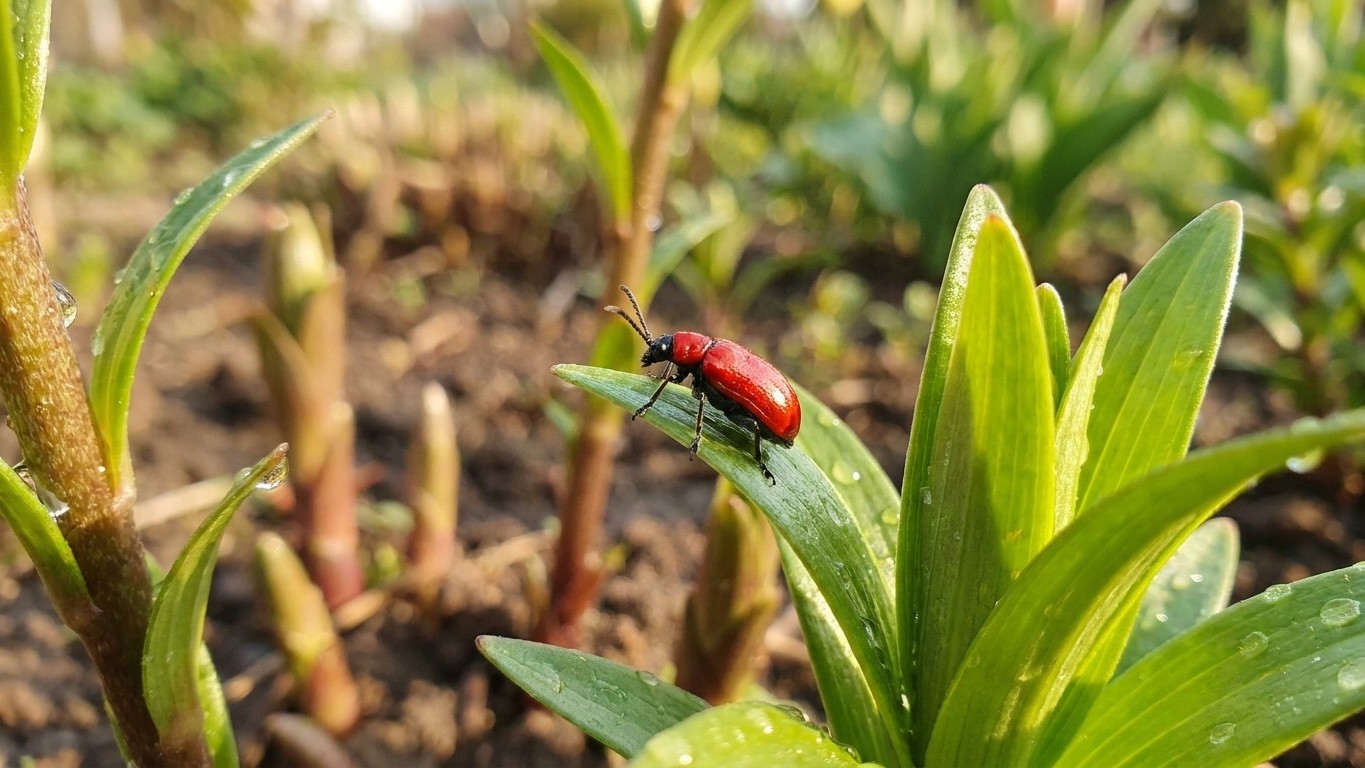

Lily leaf beetle shows up in New Hampshire gardens right when lily shoots break ground in spring, typically mid to late April in the southern part of the state and into May farther north. The bright red adults come out of winter hibernation as soon as soil temperatures warm, and they head straight for emerging lily foliage. What stops them isn’t one silver bullet but a combination of hand removal, timing, and in some cases a small parasitic wasp that’s been quietly doing the heavy lifting across New England for the past two decades.
The weeks to watch

This beetle isn’t native to North America. It arrived from Europe, first turning up near Montreal in the 1940s, likely hitching a ride on imported bulbs. For decades it stayed mostly a Canadian problem. Then in the early 1990s it was found in Cambridge, Massachusetts, and from there it spread outward through New England at a pace that surprised even entomologists who study invasive insects for a living.
New Hampshire has been dealing with established populations for years now, and the beetle is considered common throughout the state’s home gardens, particularly wherever true lilies are grown. It’s not a quarantine pest anymore, in the sense that officials aren’t trying to stop its spread. That ship sailed. The current fight is about managing populations plant by plant, yard by yard.
What It Looks Like and What It Eats
The adult is hard to miss once you know what you’re looking for: a lacquer-red beetle about three-eighths of an inch long, with a jet-black head, legs, and antennae. Flip one on its back and it often makes a faint squeaking sound, a defense mechanism that startles some gardeners the first time they hear it.
The larvae are the part nobody wants to touch. They cover themselves in their own wet excrement, forming a slimy, dark brown blob that sits on the leaf surface. It looks unpleasant on purpose. Birds and other predators tend to leave the mess alone, which is exactly the point.
Host preference matters here, and it’s one of the most useful things a New Hampshire gardener can know. This beetle feeds on true lilies, meaning Lilium species like Asiatic, Oriental, and tiger lilies, along with fritillaria. Daylilies (Hemerocallis), despite the name similarity, are not a preferred food source and rarely show significant damage. If you’re planning a new bed and want to sidestep this pest entirely, daylilies, hostas, and other perennials outside the Lilium genus are a practical workaround.
The Life Cycle, Season by Season
Understanding timing is what actually lets a gardener get ahead of the damage instead of reacting to it after the fact.
Spring emergence
Adult beetles overwinter in soil, leaf litter, and garden debris, sometimes several yards from the lily bed itself. They emerge as soon as temperatures climb in spring, usually within days of lily shoots pushing through the soil. Mating starts almost immediately, and females begin laying eggs in orange-red rows on the undersides of leaves within a week or two.
Early summer larvae
Eggs hatch in about a week, and the larvae feed aggressively for two to three weeks, often skeletonizing leaves down to the veins. This is the stage that does the most visible damage to plant vigor, since heavy feeding can prevent lilies from storing enough energy in the bulb for next year’s bloom.
Pupation and the new generation
Mature larvae drop to the soil to pupate, usually by midsummer. New adults emerge two to three weeks later, feed briefly, then in most of New England produce just one generation per year before seeking overwintering sites in fall. In warmer microclimates or during a long growing season, a partial second generation is possible, which is one reason late-summer scouting still matters even after the spring rush is over.
What Actually Stops Lily Leaf Beetle
No single method wipes this pest out completely, but several tools, used together, keep populations low enough that lilies can thrive.
Hand-picking remains the most reliable low-cost method for home gardens. Adults are easy to spot against green foliage, but they’re also quick to drop off the plant and play dead the moment they sense movement. Checking plants every few days starting the moment shoots emerge, and dropping beetles into soapy water, breaks the reproductive cycle before egg-laying ramps up. Crushing egg rows on the undersides of leaves is tedious but effective, since one missed cluster can mean dozens of larvae a week later.
Soil and debris cleanup in fall reduces overwintering sites near lily beds. Since adults hide in leaf litter and loose mulch close to the soil surface, clearing that debris after frost removes some of the population before it ever gets the chance to wake up in spring.
Row covers placed over lily shoots as soon as they emerge, before adults arrive, can physically exclude beetles during the critical early weeks. This only works if the cover goes on before egg-laying starts, and it needs to come off once lilies need pollinator access for bloom.
Insecticidal options exist for gardeners dealing with heavier infestations. Neem oil and spinosad-based products target larvae with fewer effects on beneficial insects than broad-spectrum sprays, and they work best applied directly to larvae in their early growth stages rather than as a blanket treatment. Systemic insecticides applied to soil can offer season-long protection but come with tradeoffs for pollinators, since lilies do attract bees, so timing and product choice matter more than with ornamentals that don’t flower as prominently.
The Biocontrol Wasp Making a Difference
One of the more encouraging developments for New England gardeners has been the release of a tiny parasitic wasp, Tetrastichus setifer, through a biological control program run out of the University of Rhode Island. This wasp lays its eggs inside lily leaf beetle larvae, and the developing wasp larvae eventually kill their host from the inside. Because the wasp is small and specific to this beetle, it doesn’t harm other garden insects.
Releases began in Rhode Island and Massachusetts and have since spread naturally into surrounding states, including New Hampshire, as wasp populations establish themselves and disperse on their own. Gardeners in areas where the wasp has taken hold sometimes notice a gradual decline in beetle pressure over several seasons without any additional effort on their part. It’s not a fast fix, but it’s one of the few tools working in the background even when nobody is out there picking beetles by hand.
Practical Steps for New Hampshire Gardeners
Start scouting lily beds the moment shoots break ground, typically the last week of April in the southern counties and into early May in the White Mountains and northern reaches of the state. Check the undersides of leaves specifically, since both eggs and early larvae hide there first.
Keep a small container of soapy water on hand during spring garden visits. It sounds low-tech because it is, but consistent removal during the first three weeks of adult activity has an outsized effect on the rest of the season’s population.
Consider mixing lily plantings with daylilies or other non-host perennials rather than growing large blocks of true lilies together. Concentrated stands make it easier for beetles to find host plants and move between them, while mixed plantings slow that process down.
If chemical control becomes necessary, timing applications to target larvae rather than adults tends to produce better results with less collateral impact on bees and other pollinators visiting nearby blooms.
Gardeners who’ve dealt with this pest for several seasons often notice something specific: the beetles seem to find lilies planted near a home’s foundation or in raised beds faster than those tucked into shadier, less-disturbed corners of the yard, likely because those spots warm up earlier in spring and draw overwintering adults out of dormancy first.
Related guides
- Lily leaf beetle in Maine: When It Shows Up and What Stops It
- Lily leaf beetle in Massachusetts: When It Shows Up and What Stops It
- Lily leaf beetle in Nova Scotia: When It Shows Up and What Stops It
- Lily leaf beetle in Prince Edward Island: When It Shows Up and What Stops It
- Lily leaf beetle in Connecticut: When It Shows Up and What Stops It