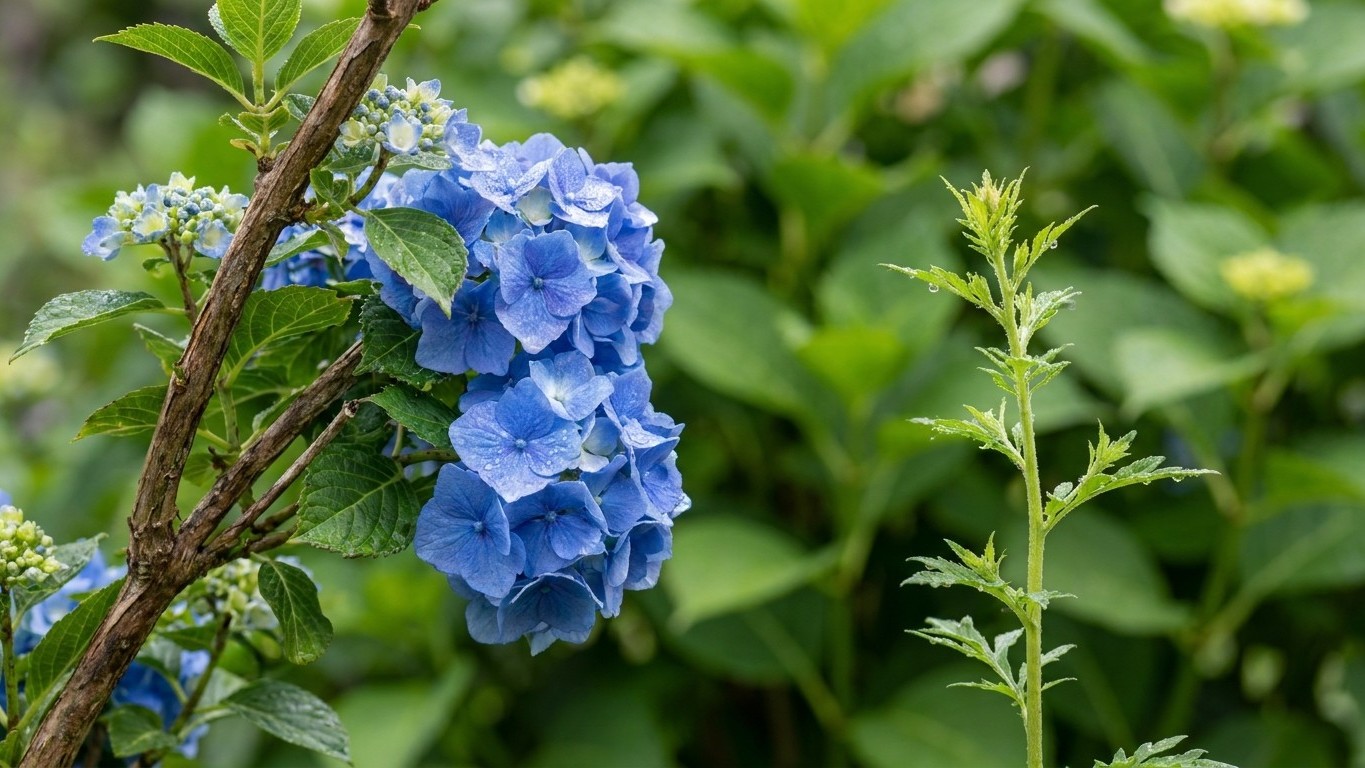

Bigleaf hydrangeas turn pink when the soil is not acidic enough for the plant to take up aluminum, and they turn blue when it is. Color is a soil chemistry result, so you can steer it. Lowering the pH takes a full growing season and regular follow-up, and some hydrangeas will never change no matter what you add.
What this comes down to in New Jersey

At the Newark reference station, the last spring frost falls between March 29 and April 6, and that is when bigleaf hydrangeas begin pulling up the water and minerals that decide flower color. Where soil pH is high enough to lock aluminum away from the roots, the blooms open pink. Suburban and rural gardens often see that last frost later than the airport, and later still at elevation, so treat the Newark window as a starting point.
Why does soil pH change hydrangea color?
Most New Jersey soil already holds plenty of aluminum. What changes is whether the plant can dissolve and absorb it. In acidic soil, aluminum is soluble and moves into the plant, where it combines with the pigment in the sepals (the colored part of the bloom) and shifts it toward blue. In soil closer to neutral, aluminum stays bound up, and the same pigment reads pink. As a rough guide, blue generally needs a more acid soil, pink shows in a less acid soil, and purple or a mix of both on one shrub sits in between.
Several things push garden soil upward without anyone intending it. Lime spread on a lawn washes toward the beds. Concrete foundations leach alkaline compounds into the soil beside them, which is why a hydrangea against the house often runs pinker than one ten feet out. Hard tap water adds alkalinity over a summer of watering. And a fertilizer high in phosphorus ties up aluminum even when the pH is reasonable.
Which hydrangeas can actually turn blue?
Some hydrangeas respond to soil chemistry, while others stay the same color whatever the soil. The rest follow their own genetics.
| Type | Example | Responds to soil pH? |
|---|---|---|
| Bigleaf, mophead or lacecap | Nikko Blue, Endless Summer | Yes, blue to pink |
| Mountain | Blue Billow | Yes, same mechanism |
| Panicle | Limelight | No, white aging to pink on its own |
| Smooth | Annabelle | No, stays white |
| Oakleaf | Snow Queen | No, white aging to rose |
A few bigleaf selections are white, and those stay white. Pink-only types sold as pink, such as some smooth hydrangeas, are bred to hold that color. Check the plant tag before you buy aluminum sulfate for a shrub that cannot use it.
Working it out for your own garden
Start with a soil test. Rutgers Cooperative Extension runs soil testing for New Jersey residents, and the result gives you a pH number and, usually, lime or fertilizer recommendations. Without it, you are guessing at a chemistry problem. Take samples from the root zone, in a few spots around the shrub.
How do you plan the change from pink to blue?
Work through a real case. Say the test on a pink Nikko Blue comes back at a pH too high for blue blooms (near neutral, not acidic), and you want blue. Blue needs a more acid soil, so the soil has to drop. That is a large shift, and it will not happen in one application or one season.
The timing follows the frost window. Growth starts as the soil warms, around the last spring frost, which at Newark falls between March 29 and April 6 and runs later in most suburban and rural yards. Treat the soil in early spring once the ground has thawed and new leaves are showing. Repeat in late spring. Bigleaf flower buds on old wood form in late summer, and the color of this year’s bloom is largely set by what the roots took up while those flowers developed. Expect the first noticeably bluer blooms the following summer, with a few purple ones along the way.
Aluminum sulfate works fast and lowers pH quickly, but it can burn roots when overapplied or used on dry soil. Water the plant well first, dissolve the product as the label directs, and never exceed the labeled rate. Elemental sulfur works more slowly, over months, and is gentler on the roots. Many gardeners use sulfur as the base and add aluminum sulfate for a boost. Stop treatments well before the first fall frost, which at Newark falls in early November (earlier in many gardens outside the city), so the plant is not taking in fresh salts as it goes dormant.
Now the opposite case. A panicle hydrangea like Limelight sits in the same bed at the same pH. You can dose the soil all summer and it will still bloom creamy white and age toward pink on its own schedule. This is where the line falls: the plant, not the soil, sets its color. Match the treatment to the species and you save time and money.
How do you keep it blue once it turns?
Recheck the pH each spring, because rain and watering slowly push the soil back toward neutral. Use a low-phosphorus fertilizer, switch to rainwater or collected water if your tap water is hard, and keep lime away from the bed. Growing in a large container with an acidic potting mix is often the easiest route, since you control the whole root zone.
What changes across the state
New Jersey packs very different ground into a small area, and the soil under your hydrangea matters more than the county line. On the 2023 USDA map, the state runs from about hardiness zone 6b in the northwest to 8a at the southern tip, a range based on the average annual extreme minimum temperature. Newark sits in between, so use it as a reference rather than an answer for your yard.
In the south, the sandy soils of the Pine Barrens and much of the coastal plain are naturally acidic and low in lime. Hydrangeas there often turn blue with little effort, and the problem tends to be the reverse: keeping a pink bloom takes added lime and attention. The winters are milder, which also means bigleaf buds on old wood survive more reliably.
Farther north, the picture is more mixed. The Highlands and the ridges carry rocky, glacially influenced soil, and the northwest has pockets of limestone-derived ground that run closer to neutral or alkaline. A gardener in those pockets may find pink is the default and blue takes steady work. The north is also colder, with a later last frost and an earlier first frost than the reference city, and bigleaf flower buds are more exposed to winter damage. Suburban lots add their own twist: new construction often leaves fill and concrete debris that raise the pH right around the foundation.
Between the two extremes, soil can vary yard to yard, sometimes bed to bed. A test beats any regional rule of thumb.
The mistakes this state punishes

Treating without testing comes first. Gardeners who dump aluminum sulfate on soil that is already acidic risk root burn and aluminum toxicity, and a bush that was going to bloom blue anyway gets nothing for the trouble. Test, then treat.
The second mistake is applying products to dry ground. Water the root zone thoroughly before and after, and split heavy applications into several lighter ones through spring.
Third, a warm spell in March fools plenty of people into fertilizing or mulching heavily and pulling winter protection. New growth that pushes out early can be caught by a frost, since the reference-city window runs to April 6 and later in colder yards. If the buds were killed, you get leaves but no color at all, blue or pink. Our guide to protecting hydrangeas through a New Jersey winter covers how to keep those buds alive, and when to prune hydrangeas in New Jersey explains why cutting bigleaf stems at the wrong time removes next summer’s flowers.
Last, people expect the change within a few weeks. The color of an open bloom is fixed, so treatment shows up in new growth and next year’s flowers. And anyone who leaves lime, fresh concrete, or alkaline mulch next to the bed will undo months of work.
Checking this against your county
Frost dates and soil pH both vary by yard, so treat the Newark window and any pH target as starting points. Your county’s Rutgers Cooperative Extension office can tell you what typical soil looks like near you and take a soil sample. For general care, the state guide on growing hydrangeas in New Jersey covers the rest.
Common questions
Why is my hydrangea pink when the plant tag said blue?
Blue on a tag shows the color the plant can produce in acidic soil. If your soil pH is higher, the flowers shift pink. Lime from a nearby lawn, a concrete foundation, or hard water often explains it.
Can I turn a white hydrangea blue?
No. White varieties, whether bigleaf, smooth, panicle, or oakleaf, lack the pigment that reacts to aluminum. Only blue-and-pink bigleaf and mountain types change.
How long does it take to turn a hydrangea blue?
Expect a full growing season, sometimes two, with purple or mixed blooms along the way. The soil pH has to come down first, and flowers that already formed will not change color.
Do coffee grounds or pine needles turn hydrangeas blue?
They acidify soil only a little and slowly. Used alone, they rarely shift the pH enough. Elemental sulfur or aluminum sulfate, based on a soil test, does the actual work.