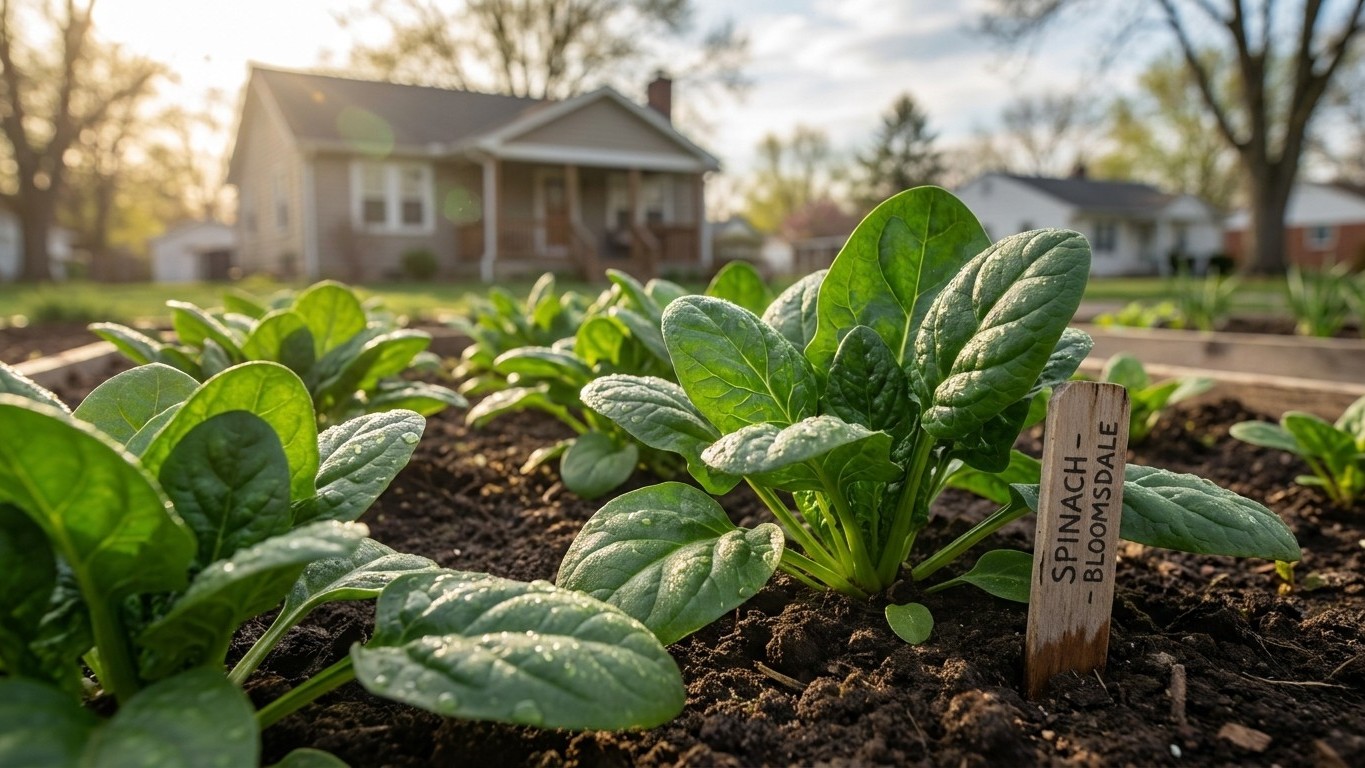

Spring-sown spinach in New Jersey starts bolting as day length and warmth climb together, usually pushing plants to flower by the time late spring turns to early summer, well before the solstice itself arrives. Fall-sown spinach mostly dodges this because the trigger is long days, not heat alone, and autumn days are shortening rather than building toward that threshold, which is why knowing When to Sow Autumn Spinach in New Jersey matters just as much as understanding the spring cutoff. So Will Spinach Bolt Early in New Jersey? The real question isn’t one date on a calendar but two separate limits: how much day length the plant can stand, and how much heat above 75°F it soaks up before that limit is reached.
The short answer
At Newark, the reference station behind these figures, the longest day of the year brings 14 hours and 55 minutes of daylight. That number matters because spinach bolts under long days as well as under warmth. Somewhere as the calendar climbs toward that mid-June peak, day length by itself is already doing enough work to push spinach toward flowering, no matter how mild the air happens to feel that week.
Why a cool summer doesn’t save spinach here
This is the part that trips up gardeners coming from shorter-day climates: a run of comfortable 70-degree afternoons in central New Jersey won’t stretch the harvest, because bolting isn’t purely a heat response. Long days trigger it on their own. New Jersey’s summer day length, at nearly 15 hours on the solstice, sits well above whatever point keeps spinach vegetative, so seed sown too late into spring is racing the calendar as much as the thermometer.
Heat piles on top of that mechanism rather than replacing it. The Newark station averages 20.8 days a year at 90°F or hotter, concentrated in June, July, and August. Spinach stops growing well once temperatures push past 75°F, and that same number marks where leaves start turning bitter even before the plant visibly bolts. The limiting factor here is genuinely both: day length sets the outer edge of the window no matter what the thermometer says, and heat closes in from the inside, souring flavor well before the longest days even arrive.
Practically, spring spinach in New Jersey is a short, front-loaded crop. It goes into the ground as early as soil and frost allow, grows hard while nights are still cool, and needs to be harvested before day length and heat converge, not after. Gardeners who assume more daylight hours mean bigger plants before bolting have it backward: more daylight means the flowering switch flips sooner in the season, not later.
How long the spring window really is
Working out New Jersey’s usable spring window means lining up three things: the last spring frost, the recommended sowing lead time, and the point where day length and heat start working against the crop.
Lining up frost, sowing, and daylight
- Newark’s last spring frost falls between March 29 and April 6. Sowing spinach 2 to 3 weeks ahead of that date puts seed in the ground somewhere between March 8 and March 23, depending on which end of that frost range a given spring lands on.
- Spinach grows best under 75°F. In most New Jersey springs, that ceiling gets breached well before summer officially starts, as afternoons begin topping 75°F sometime in May.
- Day length keeps climbing right through that stretch, adding a few minutes every day on the way to the 14-hour, 55-minute peak in mid-June. By late May, day length alone is already long enough to push bolting, even in a cooler-than-usual year.
- Putting those pieces together, a March sowing gives roughly nine to ten weeks of productive growth before day length and rising heat close the window, usually sometime before June arrives in earnest.
- Common varieties sold in New Jersey garden centers include Bloomsdale, Melody, Teton, and Olympia. Utah State University Extension, the source behind these thresholds, publishes no days-to-maturity or bolt-resistance figures for any of them, so the frost and day-length numbers above are a sturdier planning tool than catalog descriptions.
None of this makes spring spinach not worth growing in New Jersey. Nine or ten weeks is enough for several cut-and-come-again harvests if seed goes in as soon as soil can be worked, rather than waiting for the kind of guaranteed frost-free nights that spinach never needed in the first place.
The autumn crop, and when the soil lets you sow
Fall spinach flips the spring problem. Instead of racing lengthening days, autumn sowings work with shortening ones, which removes the bolting trigger almost entirely. The obstacle instead is getting seed to germinate in soil still carrying summer heat, then getting a harvest in before the season’s first hard frost shuts things down.
Soil still too warm to germinate
Utah State University Extension notes that spinach seed germination drops once soil temperatures climb above 80°F. In New Jersey, that’s a real constraint through most of August, a month that sits inside the stretch producing the region’s average of 20.8 days a year at 90°F or hotter air temperature, which keeps soil warm well past the point where night air cools down. Sowing straight into August soil often means poor, patchy germination, not because the calendar says it’s too early, but because the ground itself is still too warm for spinach seed to sprout reliably. Waiting until soil cools, typically as September gets underway, fixes this without changing anything else about the method.
The frost that ends the season
Newark’s first fall frost arrives between November 4 and November 16. Utah State University Extension recommends sowing 50 to 75 days before the date you want to harvest, which gives two workable windows depending on which end of that frost range a gardener plans against. Aiming to harvest by the earlier date, November 4, means sowing between August 21 and September 15. Aiming for the later date, November 16, shifts sowing to between September 2 and September 27. In practice, the safest overlap for most New Jersey gardens sits in early-to-mid September, late enough that soil has dropped past the 80°F germination barrier, early enough to leave 50 to 75 days of growth before frost shuts the season down.
The mechanism working in the fall grower’s favor is the same one that limits spring: day length. As days shorten past the solstice, the trigger that pushes spinach toward flowering weakens rather than building, and cooler autumn air keeps plants comfortably under the 75°F ceiling where flavor stays sweet instead of turning bitter. That’s a big part of why many New Jersey gardeners treat the fall sowing as the more dependable of the two, even though it depends on hitting a narrower soil-temperature window to get started.
Checking this against your own county
Every figure above comes from the Newark reference station, and NOAA NCEI is explicit that surrounding suburban and rural gardens typically see later last-spring frosts and earlier first-fall frosts than an airport station records, sometimes by one to two weeks, and more at elevation in the state’s northwest corner. That gap matters more for spinach than for most crops, because both the spring sowing date and the fall harvest deadline are pinned directly to frost dates.
Before locking in a sowing schedule, check current frost and soil conditions with Rutgers Cooperative Extension, New Jersey’s land-grant extension service, at njaes.rutgers.edu. County offices there track local frost history and can confirm whether a given garden runs warmer or cooler than the Newark station this guide is built on, which can be the difference between sowing in early March and losing three weeks to a late, unexpected frost.
Common questions
Can I stop spinach from bolting once it starts?
No. Once flowering begins, it’s driven by day length as well as heat, and leaves already turn bitter as the plant redirects energy toward seed. Harvest whatever’s left right away rather than waiting to see if growth resumes.
Does shade cloth delay bolting in New Jersey?
That isn’t covered by the sources behind this page, which address day length and the 75°F growth ceiling, not shading methods. Since bolting is triggered partly by day length itself and not only by heat, shade would only address one side of the mechanism.
Is fall spinach less likely to bolt than spring spinach?
Yes. Autumn day length is shortening rather than climbing toward the trigger point, which removes that side of the mechanism almost entirely. The main risk in fall is frost ending the season, not bolting.
What’s the earliest I can sow spinach in spring in New Jersey?
Based on the Newark station, sowing 2 to 3 weeks before the last spring frost puts seed in the ground between roughly March 8 and March 23. Check with your county extension office first, since suburban and rural gardens often see frost later than the airport station this range is built on.