
In New Mexico, start pepper seed indoors 8 to 10 weeks before you plan to transplant, timing that transplant date to the point after the last frost when soil temperature reaches 60 F. Around Albuquerque, the last spring frost typically falls between March 31 and April 12, which puts most seed-starting dates somewhere in early to mid-February. Your own county’s frost date, and its elevation, will shift that window.
The short answer
Albuquerque logs an average of 42.5 days a year at or above 90 F, according to NOAA NCEI Climate Normals covering 1991-2020. That’s a bigger number than most gardeners guess: it works out to roughly six weeks of the growing season sitting at or above the threshold where pepper fruit set starts to break down. Peppers don’t just slow down in that heat. Per Utah State University Extension, fruit set fails once daytime highs push past 90 F, meaning flowers open, Fail to Set Fruit, and drop.
That’s one end of the problem. The other end matters just as much and gets ignored far more often: nights below 55 F also stop fruit set cold. A plant can sail through a scorching afternoon and still lose its flowers overnight if temperatures dip too low before dawn. This is where New Mexico gets tricky, because the state runs from low desert valleys to mountain benches within a short drive, and nighttime lows can swing wildly between them even when daytime highs look similar on a forecast map.
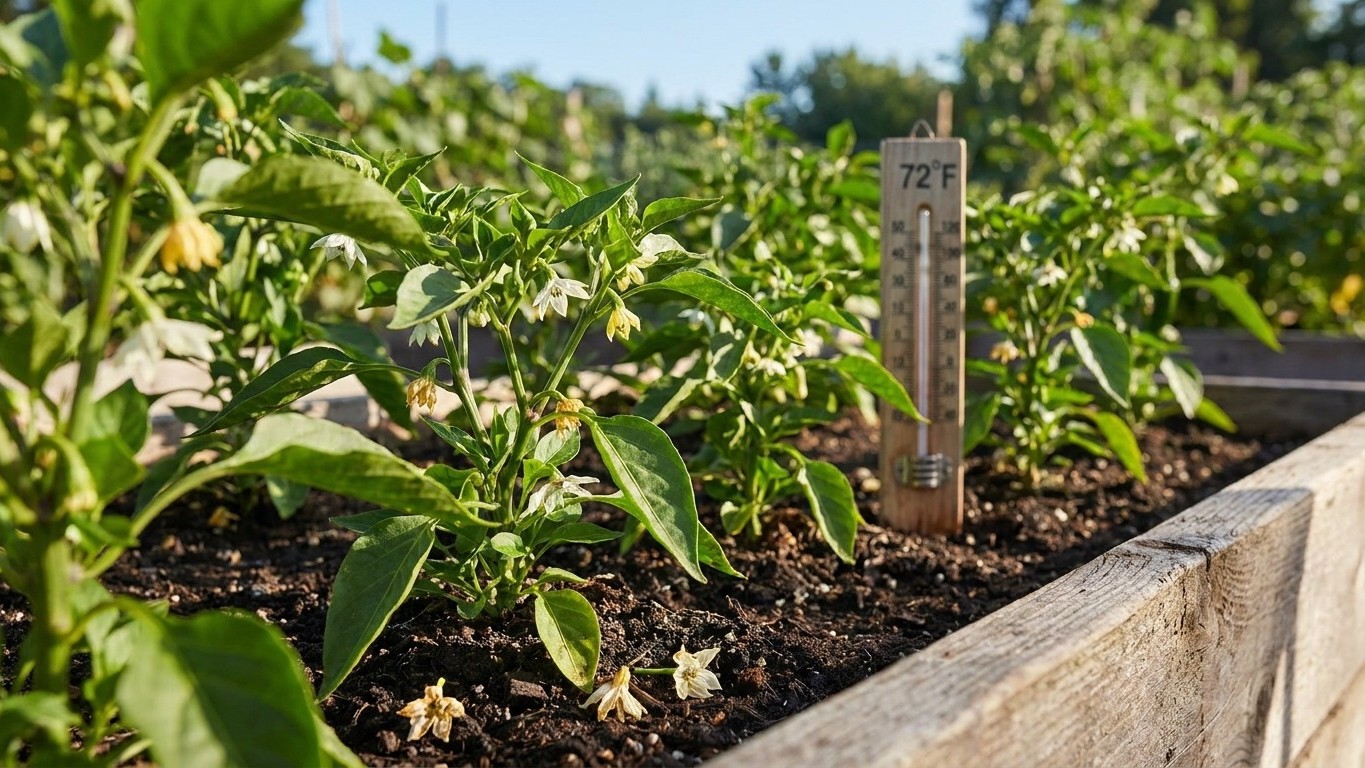
Here’s the catch: this site tracks days at or above 90 F for New Mexico, but it does not carry summer night minima. There’s no reliable shortcut for that number either, since latitude tells you almost nothing about how cool a valley floor gets after sundown, and the coldest month of the year has no bearing on a July or August night. If you garden somewhere that cools fast after dark, whether that’s a foothill lot outside Santa Fe or a river-bottom plot near Los Lunas, put an actual thermometer in the garden during flowering season and watch it yourself. A basic min-max thermometer, checked over a couple of weeks in early summer, will tell you more than any regional average ever could.
Put both ends together and the practical takeaway is this: New Mexico pepper growers are managing a narrow window. Get seed started too early and transplants sit in the ground during a cold snap that stalls them. Wait too long and flowering lands during the hottest stretch of summer, when daytime highs blow past 90 F on a regular basis. The goal is landing flowering and early fruit set in the milder stretch between those two extremes, which for most of the state runs from late spring into early summer, before the deepest heat of July sets in.
When to start seed here
The math is simple once you have your own local numbers, and it works the same way whether you garden in Albuquerque, Roswell, or a high-elevation plot near Taos. Here’s how to build your own countback.
- Find your local last spring frost date. Albuquerque’s reference station puts that date between March 31 and April 12, based on NOAA NCEI’s 1991-2020 climate normals. That figure comes from an airport weather station, so treat it as a reference point, not a guarantee for your own yard.
- Add time for soil to actually warm up. Air temperature clears the frost threshold before soil does, especially in shaded or clay-heavy ground. Peppers need soil at 60 F before transplant, so plan on that date landing anywhere from several days to a couple of weeks after your last frost, depending on how quickly your particular garden bed warms in spring.
- Count back 8 to 10 weeks from that transplant date to find your seed-starting date indoors. If your soil typically hits 60 F in mid-April, counting back 8 weeks lands you in mid-February, and counting back 10 weeks lands you in early February. Splitting the difference around the 9-week mark is a reasonable default if you’re not sure which end of the range your setup favors.
- Adjust for your own frost variance. Suburban and rural gardens tend to see frost linger one to two weeks longer than an airport station shows, and more than that at elevation. If you garden outside city limits, or above roughly 6,000 feet, push your transplant date later and your seed-starting date accordingly.
- Recheck against summer heat once seedlings are up. If your area regularly logs stretches at or above 90 F earlier in the season than Albuquerque’s average, shift your whole schedule a bit earlier so flowering happens before that heat load peaks, rather than during it.
None of this needs to be exact to the day. What matters is having a real transplant target, tied to your own soil and frost data, and working backward from there instead of picking a seed-starting date off a generic calendar.
What goes wrong here
- Blossom drop from a heat spell or a cool night. Flowers open, then fall without setting fruit, whenever daytime highs run above 90 F or nighttime lows drop below 55 F during flowering. Since this site tracks the heat side but not overnight lows, watch your own thermometer during bloom. If a heat spike is forecast, water deeply the day before and consider light afternoon shade for a few days until it passes.
- Sunscald where the sun runs strong. New Mexico’s intense, high-elevation sunlight can scorch exposed fruit, particularly on plants that have been over-pruned or that lost leaf cover to wind or hail. The fix is mostly about restraint: leave foliage in place to shade developing peppers, and if a plant does get thin, add 30 to 40 percent shade cloth over the row during the hottest part of the afternoon.
- Blossom-end rot from uneven watering. The dark, sunken spot at the fruit’s blossom end usually traces back to calcium movement being interrupted by inconsistent soil moisture, not a lack of calcium in the soil itself. Drying out between waterings, then flooding the bed, is often the real trigger in a hot, dry climate. Mulch to buffer soil moisture swings, and settle into a steady watering rhythm rather than reacting to whichever day feels hottest.
Common questions
What’s the best week to start pepper seed indoors in New Mexico?
There’s no single week that fits the whole state. Work backward from your own transplant date: 8 to 10 weeks before soil hits 60 F and frost has passed. For gardens near Albuquerque, that countback typically lands somewhere in early to mid-February, but higher-elevation or rural gardens should shift later.
How do I know when my soil hits 60 F?
A soil thermometer pushed 2 to 4 inches into the bed, checked in the morning over several days, gives the most reliable reading. Air temperature forecasts are not a substitute, since soil lags behind air temperature by days to weeks depending on sun exposure and mulch cover.
Do peppers stop setting fruit in extreme New Mexico heat?
Yes. Per Utah State University Extension, fruit set fails once daytime highs push above 90 F, and Albuquerque averages 42.5 such days a year. Expect a lull in fruit set during the hottest stretch of summer, with production picking back up once temperatures ease.
Should I start seed earlier at higher elevation?
Often yes, but not because of altitude itself. Higher-elevation gardens in New Mexico tend to see a later last frost and slower soil warming than the Albuquerque reference station, so the whole countback shifts later, not earlier. Check your own county’s frost timing rather than assuming elevation moves the date in one fixed direction.