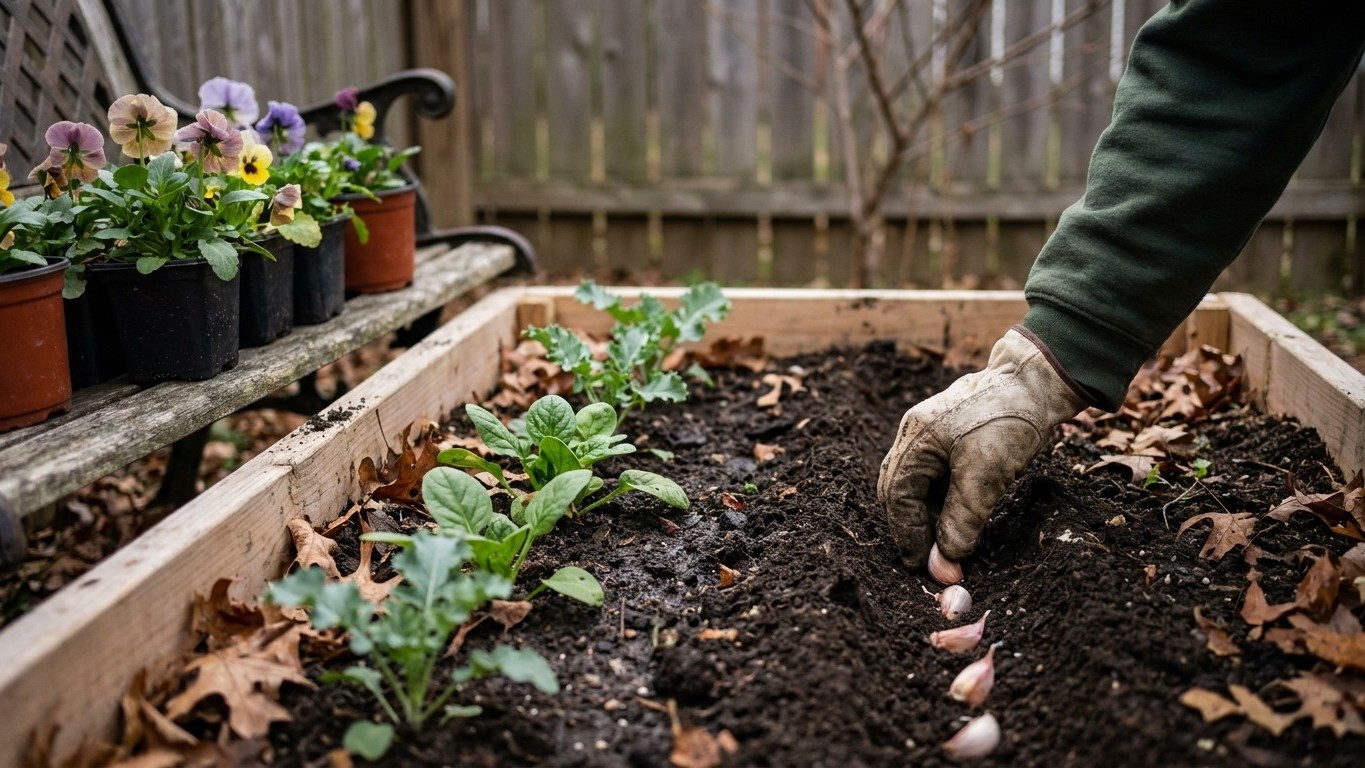

October is prime planting time across most of New Mexico. Garlic and shallots go in the ground now, fast-maturing greens like spinach and arugula can still be direct-sown in the first half of the month, and spring-flowering bulbs need to be tucked in before the ground cools further. The window narrows fast at higher elevations, where frost has often already arrived.
What goes in the ground in October

Soil temperature and the frost window decide what survives here, not the page of a calendar. At the reference weather station used for this guide, the first fall freeze typically lands somewhere between October 29 and November 9. That means for a good two-thirds of the month, the ground is still workable and warm enough for cool-season crops to establish before cold really sets in. This is not a month to sit out.
Garlic is the headline crop. Individual cloves planted now, pointed end up, have six to eight weeks to root before the ground locks up, which sets them up for a strong start once spring arrives. Shallots follow the same logic. Both tolerate the early frosts that arrive later in the month without issue, so there is no need to rush them in during the first week if the ground is still too warm to work comfortably.
Fast, cold-tolerant greens are the other safe bet: spinach, arugula, mustard greens, and radishes can all go from seed to harvest in 30 to 45 days, which fits neatly inside the stretch before that late-October to early-November freeze. Turnips and beets sown early in the month have a reasonable shot too, though they are working with a tighter margin.
Peas are more of a regional call. In the lower, warmer parts of the state, closer to USDA zone 9a, an early-October pea planting can still produce before hard cold shuts things down. Higher up, where the hardiness zone drops toward 4b or 5, that window has usually already closed. Spring-flowering bulbs, tulips, daffodils, crocus, belong in the ground this month regardless of elevation. Bulbs planted in warmer, low-desert zones may need a spell in the refrigerator first, since those areas often don’t deliver enough natural winter chill on their own.
What to start under cover
By October, the goal under cover shifts from getting a jump on summer crops to stretching the harvest season past that first freeze. Row covers and cold frames let you keep spinach, lettuce, and other hardy greens producing for weeks after open ground would have shut them down. Sowing into a cold frame in the first half of the month gives seedlings enough lead time to size up before light levels drop and growth slows for the season.
Count backward from your local frost window rather than from any fixed date. If your area typically freezes in that late-October to early-November stretch, a cold-frame sowing needs roughly four to five weeks to reach a useful size, which puts the sensible cutoff for starting most greens somewhere in the first half of October. Push much later than that and seedlings won’t bulk up before the light and cold both work against them.
The two ways this goes wrong are predictable. Start too early relative to your frame or tunnel’s capacity, and you end up with crowded, leggy transplants competing for light before you even have anywhere colder to put them. Start too late, thinking there’s always another week, and you run out of growing season entirely, left with tiny seedlings sitting stalled through the coldest part of winter with nothing to show for it. A cold frame buys time, it doesn’t stop the clock.
What is ready to pick
October is a genuine harvest month here, and for many home gardeners the green chile harvest is the main event. Pods that have sized up through late summer are ready when the skin has a glossy, taut look and the flesh snaps cleanly rather than bending. Tomatoes, peppers, and summer squash still hanging on from summer plantings need attention now too, since that first freeze can end their season overnight.
Winter squash and pumpkins should come off the vine once the rind resists a fingernail press and the stem has started to dry and harden. Curing them in a warm, dry spot for a week or two afterward extends their storage life considerably. In the state’s pecan-growing regions, harvest typically ramps up through the month as nuts drop from the trees.
Watch the forecast closely as the month wears on. Tender crops like basil, tomatoes, and peppers have no frost tolerance at all, so the smart move is to harvest everything usable, ripe or not, in the day or two before a freeze is expected rather than gambling on one more week of growth. Green tomatoes picked ahead of frost will still ripen indoors on a windowsill. If you’re storing squash, potatoes, or onions from earlier in the season, give them a quick check now for soft spots or sprouting before they spread rot to the rest of the batch.
The jobs that matter this month
Clearing spent summer growth tops the list. Old tomato vines, squash foliage, and pepper plants left in the bed over winter give pests and disease a place to overwinter, so pulling that debris now, rather than in spring, cuts down on next season’s problems before they start. Compost what’s healthy and dispose of anything showing signs of blight or mildew rather than tossing it on the pile.
Mulching beds after the first light frost helps regulate soil temperature swings, which matter more in New Mexico than in milder climates given how sharply daytime warmth can drop off after dark this time of year. A two to three inch layer over garlic and overwintering greens does real work protecting root zones through the colder nights ahead.
Watering rhythm needs adjusting as evaporation slows with cooler air, but don’t cut water off entirely. A deep watering before the ground freezes solid helps woody plants and perennials handle winter stress far better than going into the cold season on dry soil. This is also the window to get a soil test done and work in amendments like compost, since nutrients have all fall and winter to integrate before spring planting.
Toward the back half of the month, once leaves start dropping from fruit trees, light structural pruning can begin, cutting out dead or crossing branches while the tree is easing into dormancy. It’s also worth ordering garlic and spring bulb varieties now if you haven’t already, since the good stock at nurseries and seed suppliers tends to sell through by the time everyone else remembers.
What not to do in October
The most common mistake is trusting the daytime temperature and ignoring the overnight one. New Mexico’s dry air produces some of the widest day-to-night temperature swings in the country, and a warm, sunny afternoon can mask the fact that a freeze is only hours away after sunset. Leaving tomatoes, peppers, or squash uncovered on the strength of a pleasant afternoon is how a season’s harvest gets wiped out overnight.
Planting warm-season crops this month is a losing bet almost everywhere in the state. Tomatoes, peppers, and squash need a long runway to mature, and with the first freeze arriving in that late-October to early-November window at the reference station, and often weeks earlier at elevation, there simply isn’t time left for anything you’d start from seed now.
Fertilizing with nitrogen this late is another trap, particularly around trees and shrubs. Nitrogen pushes soft new growth, and that growth won’t have time to harden off before cold arrives, leaving it vulnerable to freeze damage that a plant otherwise handling dormancy fine wouldn’t have suffered. If you’re feeding anything this month, favor phosphorus and potassium over nitrogen, or hold off feeding altogether until spring.
Overwatering as temperatures drop causes more root rot than most gardeners expect, since cooler soil holds moisture longer and plants are using less of it. Cut back the frequency even while keeping individual waterings deep.
Checking this against your own county
A single statewide month is a starting point, not an instruction, and nowhere is that truer than in New Mexico. The state’s elevation runs from low desert basins near Las Cruces and Carlsbac, closer to USDA hardiness zone 9a, up to mountain towns like Taos and Angel Fire sitting near zone 4b. That spread alone can shift frost timing by a month or more between the northern high country and the southern lowlands. The frost dates cited here come from one reference weather station, and gardens outside that immediate area, especially rural and elevated ones, often see frost arrive one to two weeks earlier than these figures suggest.
For county-specific planting calendars and frost data tailored to your area, the New Mexico State University Cooperative Extension Service is the most reliable next stop.
Common questions
Is it too late to plant garlic in October in New Mexico?
No, October is the standard month for it statewide. Cloves need six to eight weeks of root growth before the ground freezes, and with the reference station’s first freeze not expected until late October or early November, there’s still time even for a mid-month planting in most areas.
Can I still start tomatoes or peppers from seed in October?
No. These are long-season warm-weather crops, and with frost arriving statewide by early November at the latest, and often earlier at elevation, there isn’t enough growing time left before cold shuts them down.
Do spring bulbs need refrigeration before planting in New Mexico?
In the warmer, low-elevation parts of the state, closer to zone 9a, many bulbs need a period of artificial chilling in the refrigerator before planting since natural winter cold there isn’t always sufficient. In higher, colder zones this extra step usually isn’t necessary.
Why did my tomatoes freeze even though the forecast said it wouldn’t be that cold?
New Mexico’s dry climate produces unusually large swings between daytime highs and overnight lows. A mild-feeling afternoon can still be followed by a hard drop after sunset, especially in low-lying areas where cold air pools. Covering tender plants any time frost is even a possibility is safer than relying on the daytime feel of the air.