
Pick summer squash while the fruit is small, glossy and tender, then keep picking every day or two. Off the plant, it lasts about a week in the refrigerator, so a heavy harvest needs a plan: eat some, give some away, and freeze or preserve the rest. For planting and care, start with Growing Summer Squash in New Mexico.
When summer squash are ready in New Mexico
Summer squash is ready when the fruit is small, the skin is shiny, and a fingernail pushes through it easily, usually about 55 days after planting, according to Clemson Cooperative Extension.
The frost dates come from NOAA’s 1991-2020 U.S. Climate Normals for the Albuquerque airport station. There, the last spring frost falls between March 31 and April 12, and the first fall frost between October 29 and November 9. Those are reference-city dates, and gardens in suburbs and rural areas often freeze one to two weeks later in spring and one to two weeks earlier in fall. Higher ground shifts them further. The USDA Plant Hardiness Zone Map (2023) spans zones 4b to 9a across the state, so a garden in the high country runs on a very different calendar than one in the Rio Grande valley. Your county office at New Mexico State University Extension can tell you what your own ground does.
Squash seed sits in cold soil and rots, and a seedling dies at the first frost. Most gardeners wait until the frost window has clearly passed and the soil has warmed. Sow after the last spring frost. Because squash is sown directly in the ground, the 55 days count from sowing.
How small should summer squash be when you pick it?
Smaller than most people expect. A zucchini is at its best around the length of your hand, and a yellow or pattypan squash is better smaller still. The skin should be glossy and thin. When it turns dull and tough, the seeds inside have hardened.
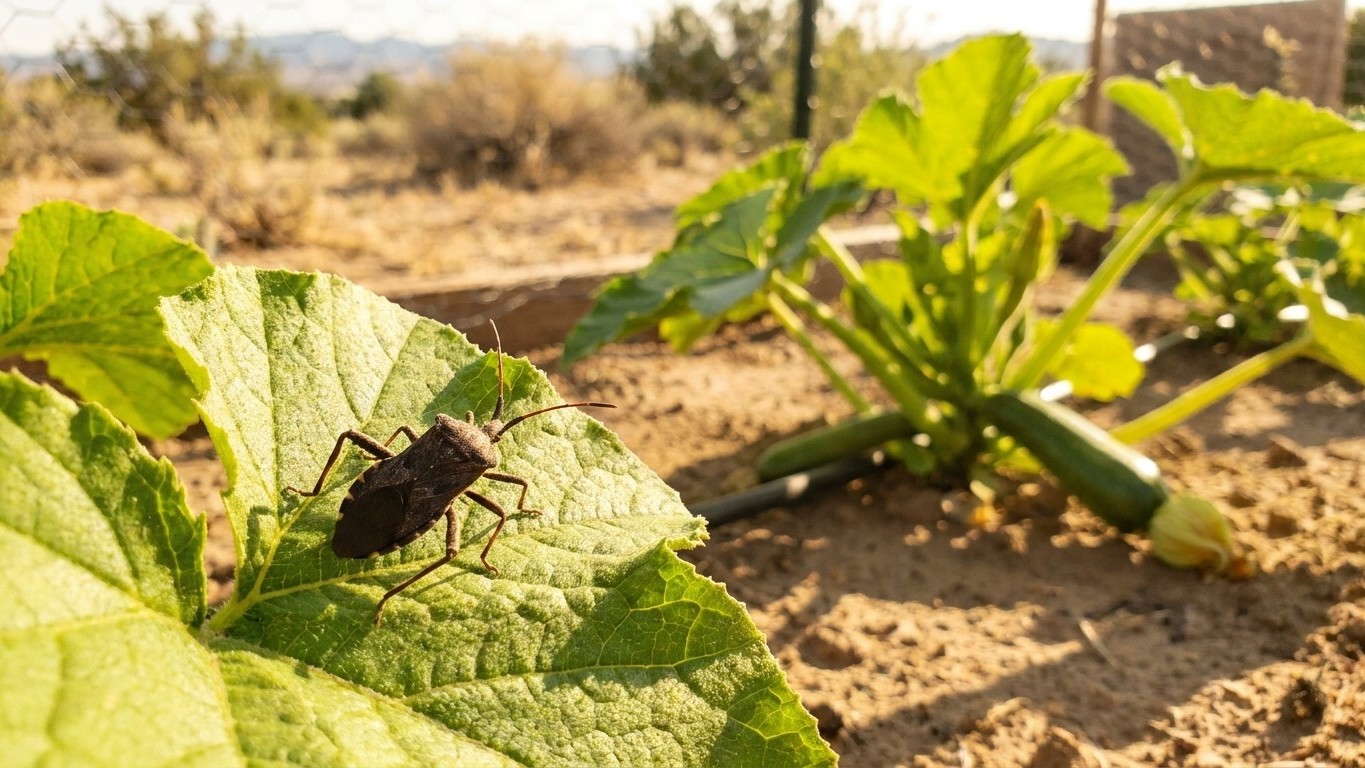
There is also a reason beyond taste. The plant stops setting new fruit once one fruit matures, because its job is to ripen seed. Leaving a big one on the vine shuts down the flowers behind it. Picking often is what keeps the plant producing. Cut the fruit with a knife, leaving a short stem, and look under the leaves while you are there. Squash bugs lay eggs on the undersides, and What Eats Summer Squash in New Mexico, and When shows what to look for.
How long does the picking season last?
Plants keep producing until frost, so the season can stretch into the first days of the fall window, October 29 to November 9 at the reference station. In practice, heat shapes it more than the calendar does. The Albuquerque station averages 42.5 days a year at 90°F or higher, and in those spells plants stress and slow down.
Rain won’t carry the crop. The reference station records about 3.5 inches across June, July and August, and June is the driest month at 0.57 inches. July brings 1.64 inches and August 1.31, mostly as short thunderstorms that run off dry ground. Squash here lives on irrigation. A rain gauge on your own plot will tell you what your garden gets, since slopes, soil and neighboring buildings change it.
Keeping them, and for how long
Clemson Cooperative Extension’s Home and Garden Information Center says to store summer squash in a plastic bag in the refrigerator for up to 1 week. Treat that as the best case. It assumes fruit picked young, dry, and free of cuts or bruises, and it is a maximum, not a promise. A squash that was already large or nicked when you cut it won’t last as long. Their summer squash fact sheet gives the same advice.
Wash the fruit just before you cook it, not before it goes in the bag. Extra moisture on the skin speeds up spoilage. Check the bag every couple of days. Wrinkled skin, soft spots and a slick, watery feel mean the squash has already turned.
Can you store summer squash like winter squash?
No. Winter squash is picked mature, with a hard rind, and it keeps for months in a cool spot. Summer squash is picked immature, with thin skin and a lot of water inside, and it has no such rind to protect it. Putting a bushel in a cellar, a pantry or a garage won’t buy you extra weeks. If you have more than you can eat in a week, the answer is to freeze it or preserve it.
What do you do with a glut?
A few plants can bury a household in fruit. Some options that work:
- Shred it, pack it in measured portions, and freeze it for baking and soups.
- Slice it, blanch it briefly, and freeze it flat on a tray before bagging.
- Make pickles or relish if you already can other vegetables.
- Give it away while it is still fresh, since a neighbor gets the full week you have left.
Frozen squash softens once thawed, so it suits cooked dishes better than a sauté. Planting fewer plants is the cheapest fix for next year. A few plants feed most families, and some varieties set fruit more steadily than others. The Best Summer Squash to Grow in New Mexico covers which ones are worth the space.
Where in the house that actually is
The refrigerator crisper drawer, with the squash in a plastic bag, is the closest match to what Clemson describes. It is also where things can go wrong, because a refrigerator runs colder than some produce tolerates. Summer squash is one of those crops. Left too cold, it develops pitted skin and water-soaked patches, which look like early spoilage but come from chilling.
The other rooms fall short. A kitchen counter is fine for a day or two when you plan to cook soon, but a heated room softens the fruit quickly, and in a hot, dry climate the indoor air pulls moisture from it. A garage is the worst choice. Its temperature swings with the weather, so a mild morning can turn into a hot afternoon, and the same space can run cold on a winter night. A pantry or a cool interior closet is steadier than either, but it still won’t carry squash past a few days.
How do you check that your refrigerator is the right place?
Refrigerators vary by brand, age and where you look inside them. The back wall and the area near the vents tend to run coldest, and the door runs warmest. A crisper drawer is usually in between, though not always. Put a thermometer in the crisper drawer for a day and read it morning and evening before you trust it with a week’s harvest. Skipping that check is how a good crop ends up pitted and slimy in the refrigerator.
If the drawer runs cold, move the bag to a middle shelf toward the front, and keep it away from the back wall. Leave the bag loosely closed so air can move, and don’t stack heavy items on top of it. Bruised fruit goes first, so cook it that day.
Common questions
How often should I pick summer squash?
Check the plants every day or two during peak season. A zucchini can double in size over a weekend in warm weather. Frequent picking keeps the plant setting new fruit.
What should I do with a zucchini that got huge?
Cut it off right away so the plant can keep flowering. The skin is tough and the seeds are hard, so scoop them out and shred the flesh for baking, or add it to the compost pile. Past that size, it won’t taste as good as a young fruit.
Can I store summer squash in a cool garage or cellar?
No. Summer squash has thin skin and holds a lot of water, so it keeps about a week at most in the refrigerator, and a garage or cellar won’t extend that. Freeze it or preserve it instead.
When does the squash harvest end?
It ends at the first hard freeze. At the Albuquerque reference station, the first fall frost falls between October 29 and November 9. Gardens in suburbs, rural areas and higher ground often freeze one to two weeks earlier, so watch the forecast and pick everything usable before a frost night.