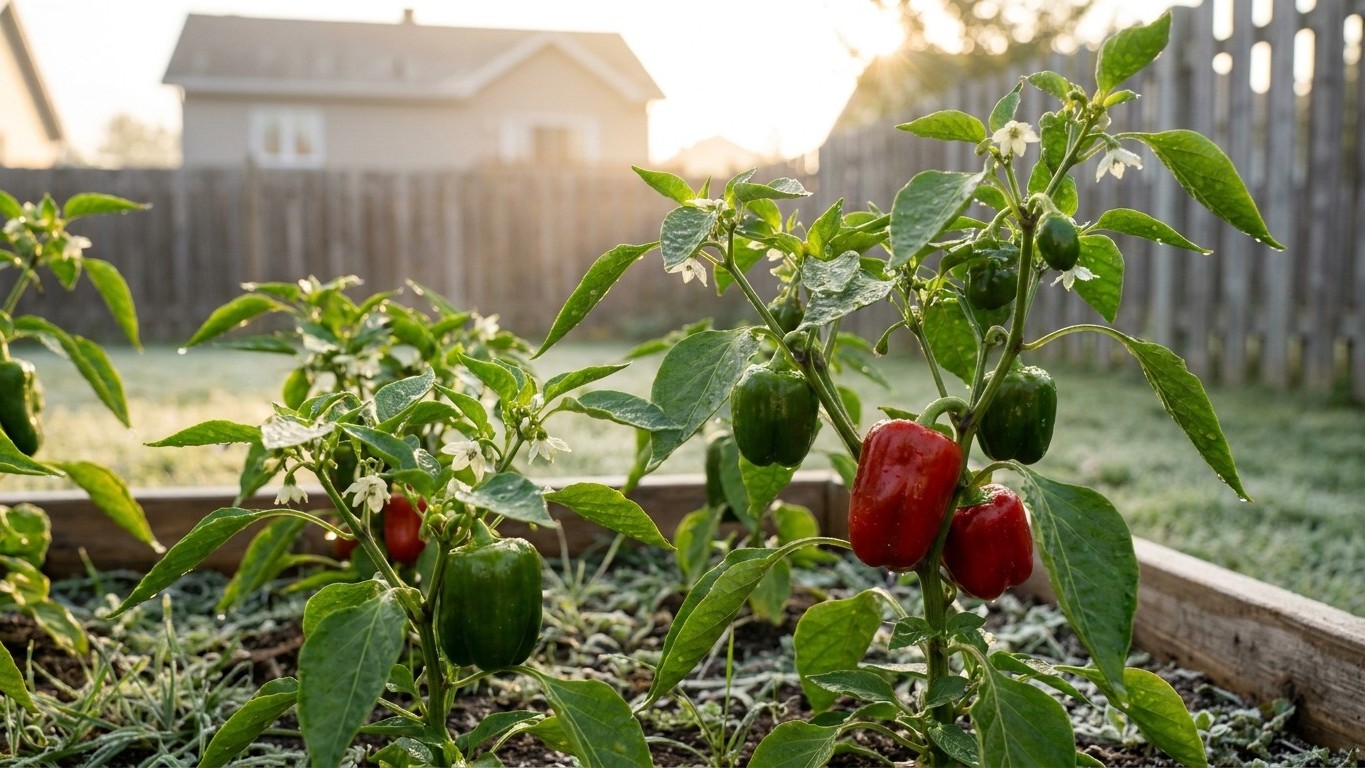

Most damage on garden peppers in Washington comes from a short list of chewers and sap-feeders. Cutworms strike in the first nights after transplanting. Slugs work through the cool, wet stretch. Flea beetles hit young leaves, and aphids arrive once new growth turns soft. Here is who shows up, what they leave behind, and what holds them off. For the wider picture, start with Growing Peppers in Washington.
Which pests attack pepper in Washington
Washington State University Extension documents the insects and slugs that turn up in the state’s home gardens. Four groups on that roster feed on pepper plants: cutworms, slugs and snails, flea beetles, and aphids.
Which pests actually feed on peppers?
- Cutworms: soil-dwelling caterpillars that feed at night and cut young stems at or just below the soil line.
- Slugs and snails: they rasp ragged holes in leaves and scar fruit that touches the ground.
- Flea beetles: tiny jumping beetles that chew many small holes in leaves.
- Aphids: soft-bodied sap-feeders that cluster on shoot tips and under leaves.
All four are common across western Washington gardens, where the maritime climate stays damp and mild. East of the Cascades the picture shifts, because the high-desert season is much shorter and drier. A pest that dominates a Puget Sound bed may be rare in the Columbia Basin, and the reverse holds too.
Which garden pests can you skip worrying about on peppers?
Pests of apple and other orchard trees, lawn grubs, conifer-needle feeders and specialists on cabbage-family crops do not belong on a pepper page. A pepper plant offers none of what they eat. If your yard has one, it is a real problem, but not a pepper problem.
Why do peppers draw the first four so reliably? Part of it is the planting schedule. Transplants need 8 to 10 weeks indoors, and they go out when the soil reaches 60 F, after frost. At the Seattle reference station, the last spring freeze falls between February 27 and March 18 (NOAA NCEI). That window opens early, but cold, wet soil and low light keep pepper transplants small and slow well past it. A small, slow plant has a thin stem and few leaves to spare. That makes it an easy meal for cutworms and slugs.
When each one shows up, and what it does first
The calendar here runs from the day the transplant goes into the ground, because that day moves with soil temperature, not with the last freeze. Look for the symptom first. The insect usually isn’t there in daylight.
What happens in the first nights after transplanting?
Cutworms come first. The sign is a young plant lying on its side with the stem severed near the soil, and the leaves still green. The plant looks fine for a few hours, then wilts. Dig an inch or two into the soil around the stump and you will often find a curled caterpillar. The danger is highest while the stem is thin and soft, so it fades as the plant thickens.
Slugs and snails overlap with that first stretch and run on through the cool, wet part of the season. The first sign is irregular holes with smooth edges, often at the edge of a leaf, and a dried silvery trail on the leaf or the soil. Damage shows up after rain or a heavy watering.
What shows up as the plant puts on leaves?
Flea beetles follow once there is foliage to chew. The first symptom is a scatter of tiny round holes, like shot from a pellet gun, mostly on young leaves. Brush a leaf and small beetles may hop off. A plant that has put on growth tends to outpace the damage.
Aphids tend to arrive later, when shoot tips are tender. Look for curled or puckered new leaves, a sticky shine on the leaf below, and clusters of small insects on the underside. They can also ride in on nursery transplants, so check the plant before it goes in the bed. After that, slugs return as fruit sizes up. Clemson Cooperative Extension puts harvest at about 70 to 85 days after transplanting, and fruit resting on damp soil in that window is the likeliest to be scarred.
Telling the damage apart from everything else
Many pepper problems look like insect damage and are not. Weather, watering and soil cause most of them. Look at the pattern on the plant before you reach for any control. Insect damage is usually uneven, with holes, trails or insects on some leaves and not others. Weather and water stress usually show on the whole plant at once.
| What you see | Possible causes | What settles it |
|---|---|---|
| Plant cut off at soil level | Cutworm feeding, or mechanical damage from a trowel, string trimmer or animal | A clean, chewed cut with a curled caterpillar in the soil nearby points to cutworms. A crushed or torn stem points to mechanical damage. |
| Ragged holes with silvery trails | Slugs or snails | The trail is the giveaway. Hail and wind tear leaves too, but they leave no trail. |
| Tiny round holes | Flea beetles, or a leaf disease | Beetles hop when disturbed. A leaf spot has a margin or halo and no insect. |
| Curled leaves with sticky residue | Aphids, or water or heat stress | Aphids are visible under the leaf. Stress curling comes with no insects and no stickiness. |
| Flowers dropping, no fruit forming | Fruit-set failure from temperature | Fruit set fails when nights fall below 55 F or days climb above 90 F (Utah State University Extension). No insect is needed. |
| Pale, yellowing leaves | Nutrient shortage, cold soil, or overwatering | Check soil temperature and moisture first. Insects rarely cause an even yellowing of the whole plant. |
Heat is the weaker suspect near Seattle. The reference station reaches 90 F or more on only 3.0 days a year (NOAA NCEI). The cool end depends on your own nights, though, and the only way to know them is a thermometer kept in the garden. The full explanation is in Why Peppers Fail to Set Fruit in Washington.
Only the county extension office can say what is in your own bed. A leaf, a photo and a description of when the damage started will usually tell them more than a guess will.
What actually works here, and what is a waste of time
On a season that starts cold and slow, timing does more than any treatment. Hold transplants until the soil reaches 60 F. A plant set out into cold ground sits small and weak for weeks, and that is exactly the stage when cutworms and slugs do the most harm. Waiting a week or so for warmer soil often costs less than losing a plant.
What barriers and habits keep these pests off?
Physical barriers do the most work. A collar around each transplant stem, pressed an inch or so into the soil, keeps cutworms from circling the stem. A stiff paper or cardboard ring does the job. Light row cover over small plants blocks flea beetles and keeps aphids out. Plants on a raised bed or trellis keep fruit up and off wet soil.
Habits matter as much. Water in the morning so leaves and soil surface dry before dark, which makes the bed less friendly to slugs. Clear boards, weeds and debris near the bed, because they shelter slugs and cutworms by day. Pick off what you find on your evening walk.
What is a waste of time?
Spraying a whole bed at the first hole is the most common waste. Many holes are old damage, and a spray hits helpful insects along with the pest. Sprinkling kitchen scraps around the plants as slug barriers rarely holds after the first rain or watering. Planting early to get ahead of pests backfires too, since a cold-stunted plant is what pests find first. Washington State University Extension knows what is registered in the state and how to use it.
Where to check this for your own county
Washington State University Extension is the place to confirm what is feeding on your plants. Every county has an extension office, and many run plant clinics staffed by trained Master Gardener volunteers. Staff can identify an insect from a photo or a sample, and they can tell you which problems are active locally.
Local differences are large. A coastal garden, a Puget Sound suburb, a Yakima Valley plot and a Spokane yard all have different pest pressure, soil and season length. The Seattle reference figures describe western Washington’s mild, maritime climate and should not be applied statewide.
Bring something specific when you go. Take a damaged leaf in a sealed bag, a clear photo of the whole plant, and any insect you can catch. Note when the damage started, how many plants have it, and what the weather was doing. Your own night temperatures help too if flowers are dropping.
Common questions
How soon after transplanting should I start checking for pests?
Start the first night. Cutworm damage shows up in the first nights after planting, while the stem is still thin and soft. Check the soil line at dusk for the first week, then move to a weekly look at leaf undersides.
Does a mild last-frost date mean I can transplant early?
No. At the Seattle reference station the last spring freeze falls between February 27 and March 18, but cold, wet soil and low light hold peppers back long after that. Transplant when the soil reaches 60 F, after frost.
Could the problem be heat or cold rather than insects?
Yes, when flowers drop and no fruit forms. Fruit set fails when nights fall below 55 F or days climb above 90 F. The reference station reaches 90 F or more on only 3.0 days a year, so check your own nights with a thermometer.
Where should I keep harvested peppers?
A refrigerator is too cold. Clemson Cooperative Extension gives the best storage conditions as 45 to 50 F with 80 to 90 percent relative humidity, for two to three weeks at most. Below about 45 F peppers pit and soften from chilling injury. Use a cool pantry or cellar if you have one, and eat the fruit sooner than later.