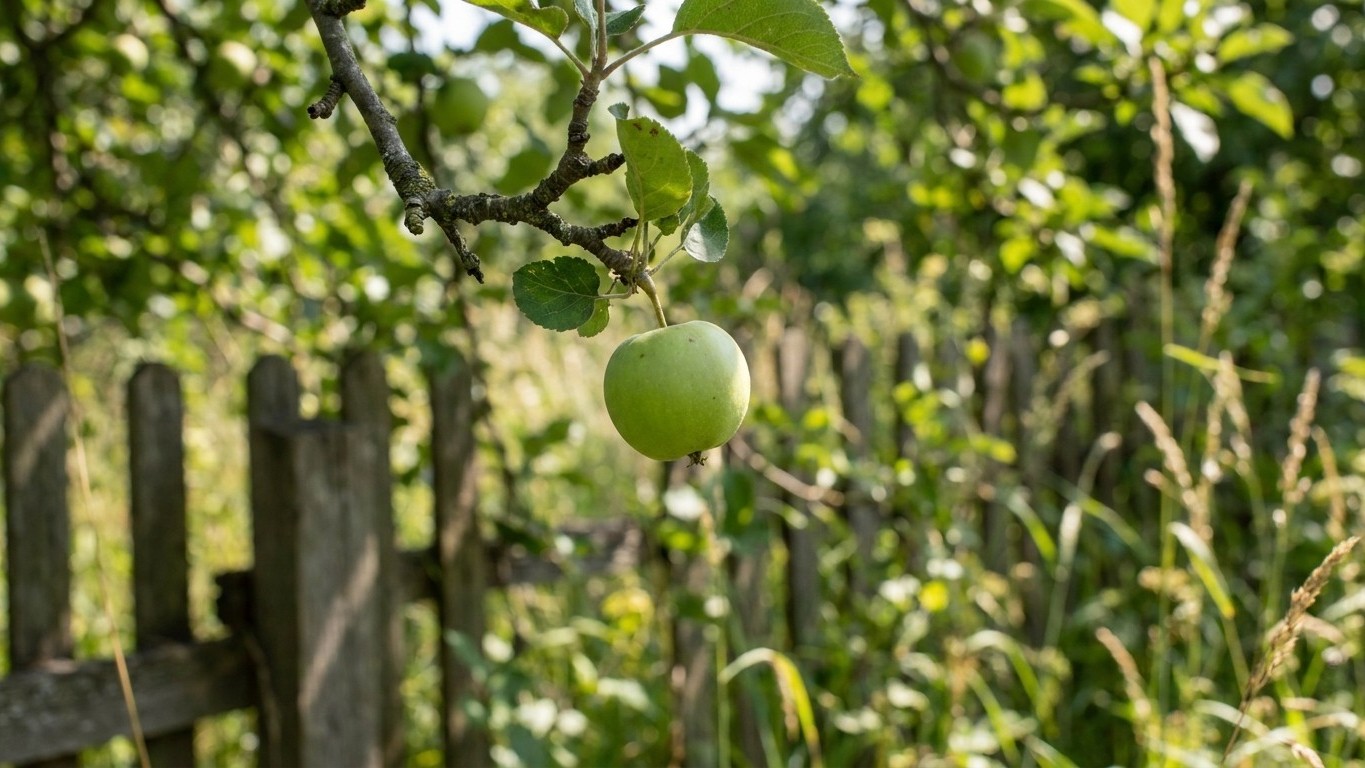

In New York, apple harvest runs from late August through late October in most of the state, with the exact week set by fruit maturity rather than a fixed date. Early varieties like Ginger Gold and Paula Red come off first; late keepers such as GoldRush and Idared hang until closer to the season’s first hard frost. How long they last afterward ranges from a few days at room temperature to well past midwinter in proper cold storage, and the difference comes down entirely to which apple you picked and how you keep it afterward.
When apples are ready to pick in New York
That harvest window isn’t set by a page on a calendar. It’s set by where the tree stands relative to two fixed points: the last frost that could kill spring blossoms, and the first frost of fall that ends the season for whatever’s still hanging. At the NOAA reference station in New York City, the last spring freeze at 32°F falls between March 23 and April 3, and the first fall freeze arrives between November 14 and November 27, both drawn from the 1991-2020 Climate Normals for that Central Park-area station. That’s a New York City reading. Upstate counties, the Adirondacks, and higher elevations see frost weeks earlier in fall and later in spring, so a grower in the northern part of the state is working from a shorter frost-free window than the numbers above suggest, even though no single NOAA figure for those specific spots appears in this data.
Hardiness and chill are two different questions
Whether an apple tree can survive a New York winter is a separate question, and it isn’t the limiting one here. The average daily minimum during the state’s coldest month, measured at the NYC station, sits at 27.9°F, well inside the range standard apple varieties tolerate without dieback. Winter chill, the accumulated cold hours a tree needs before it flowers properly, is a different filter, and no chill-hour dataset for New York appears in the sources behind this page. Practically, that means growers here aren’t fighting to keep trees alive through winter, and they don’t need low-chill, early-blooming varieties to compensate for a mild season. Reaching for those anyway would backfire, pushing bloom earlier into the window where the March 23 to April 3 freeze risk is still live. Full-chill varieties that bloom on the later side of normal are the steadier bet on this territory.
Picking day itself comes down to the fruit. Background skin color shifting from green toward yellow, seeds turning from white to brown, and the apple separating from the branch with a slight upward twist are the signs growers watch for, variety by variety. Cornell Cooperative Extension offices, present in most New York counties, track these maturity signals locally and are the resource to check for county-specific timing rather than a single statewide date.
Which ones keep, and which must be eaten
Not every apple picked in New York is built to last, and treating a Ginger Gold like a GoldRush is the fastest way to end up with a bin of mush by Thanksgiving.
Varieties split into three rough groups, and the split has less to do with flavor and more with cell structure and how much starch has converted to sugar by harvest. Early-season apples, picked from late August into early September in most of the state, tend toward softer flesh and a shelf life measured in days to a couple of weeks even refrigerated. Mid-season apples picked through September hold longer, weeks rather than days, if chilled promptly. Late-season varieties, the ones still hanging as the first fall frost approaches, are dense and slow to lose moisture, and they’re the only group suited to true long-term storage, months rather than weeks, in cold, humid conditions.
| Variety group | Typical NY harvest window | Keeping ability |
|---|---|---|
| Early season (Ginger Gold, Paula Red) | Late August to early September | Short: best eaten within days to two weeks |
| Mid-season (McIntosh, Cortland, Gala) | Early to late September | Moderate: weeks under refrigeration |
| Late-season (Empire, GoldRush, Idared) | Late September into October | Long: months in proper cold storage |
That table is a starting point, not a schedule. Where a grower stands in the state changes when each group actually comes off the tree; the same variety can ripen a week or two later on a hillside orchard than in a warmer valley a few miles away. What doesn’t change is the underlying rule: apples with lower moisture and higher acidity at harvest hold their texture in storage, while the softer, more aromatic early apples are bred for eating fresh, not for sitting in a drawer until January.
Bruised or frost-nipped fruit doesn’t follow either category. Damage breaks down cell walls regardless of variety, so a late-season apple that took a hit on the way into the bin will spoil at early-season speed. Sorting out anything soft, broken-skinned, or already discolored before it goes into storage matters more than which variety it is.
Storing them through a New York winter
Apples keep longest around 30 to 40°F with high humidity, a band that’s easy to state and harder to hold in an average New York home once winter sets in. An unheated garage or shed sounds like a natural cold-storage spot, and for weeks in October and early November it usually is. The trouble starts once the season’s coldest stretch arrives.
Why an unheated space can turn against you
At the reference station for New York City, the average daily minimum during the coldest month runs 27.9°F, cold enough to freeze exposed fruit solid in a structure with no insulation and no heat source. A frozen-then-thawed apple turns mealy and breaks down fast, so a storage spot that felt fine in November can wreck a harvest by January without anyone changing anything except the outdoor temperature. Basements, root cellars, and enclosed unheated porches close to the house tend to hold a steadier range than a detached garage, because they borrow some ambient warmth from the living space nearby. A thermometer left in the storage spot is the cheap fix for the uncertainty; checking it through a cold snap tells a grower whether fruit needs to move somewhere warmer for a few days rather than losing a whole crate to freeze damage.
Humidity matters as much as temperature. Apples lose moisture through their skin, and dry air speeds that loss, leaving fruit shriveled well before it actually spoils. Perforated plastic bags, a slightly damp towel over open crates, or a humidity tray under the storage shelf all slow that loss without inviting mold, provided there’s still some air movement.
One more detail worth knowing: apples give off ethylene gas as they age, and that gas speeds ripening, and eventual spoilage, in whatever sits nearby. Potatoes sprout faster next to a bin of apples, and other produce softens ahead of schedule. Keeping the apple storage area a few feet from root vegetables, with decent airflow between them, avoids that spillover.
What goes wrong here
The most common mistake in New York isn’t a storage error, it’s a timing one: picking by a date copied from somewhere else instead of watching the fruit. A grower using a picking date meant for a warmer state, or even the NYC frost dates when they’re actually up in the Adirondacks, ends up harvesting into a window that doesn’t match what’s happening on their own trees.
Leaving late-season varieties on the branch too long, hoping for a few more days of sugar development, runs into risk on the other end. Once the first fall freeze arrives, and at the NYC station that’s between November 14 and November 27, exposed fruit still hanging can suffer damage that shows up as soft, water-soaked patches once it warms back up. Upstate and at higher elevations, that first freeze lands earlier than the NYC window, so waiting for a specific date rather than watching both the fruit and the forecast is a real risk in those areas.
On the storage side, the recurring error is treating every apple the same regardless of variety, mixing early apples meant for the counter in with late apples meant for the cold room, then wondering why the whole batch softens together. A single bruised or frost-touched apple left in with sound fruit spreads decay faster than most people expect, since the ethylene and moisture from the damaged fruit affects everything around it.
Finally, an unheated storage space that worked fine in a mild November can turn into a freezer overnight once temperatures drop toward that 27.9°F average minimum for the coldest month. Checking on stored fruit through the first hard cold snap of the season, not just at harvest time, catches that problem before a whole crate is lost.
Common questions
When exactly should I pick apples in New York?
There’s no single date. Watch the fruit for background color change, brown seeds, and easy separation from the branch, and use those signs alongside your region’s frost dates rather than a calendar copied from another state. Cornell Cooperative Extension offices track variety-specific timing county by county.
Do apples keep ripening after they’re picked?
Yes. Apples continue to ripen off the tree and release ethylene gas as they do, which is part of why storage temperature and separation from other produce matter so much. An apple picked underripe will improve somewhat off the tree, but one picked overripe won’t get better in storage.
Is an unheated garage safe for storing apples all winter in New York?
It’s usually fine through October and early November. Once the season’s coldest stretch hits, an average daily minimum of 27.9°F at the NYC reference station means an uninsulated garage can freeze fruit solid. A basement, root cellar, or insulated space, checked with a thermometer, is a safer bet through the coldest months.
Which apples grown in New York last the longest in storage?
Dense, late-season varieties like GoldRush, Idared, and Empire are built for long cold storage, holding for months under the right conditions. Early apples like Ginger Gold or Paula Red are meant for eating within days to a couple of weeks, not for the crate in the basement.