
Apple maggot flies become active in New York from late June through September, with the heaviest pressure hitting orchards and backyard trees between mid-July and late August. The single most effective way to stop them is combining fruit sanitation (picking up drops before larvae can burrow into the soil) with properly timed insecticide applications or, for smaller plantings, mass trapping with baited red sphere traps. Waiting until you see wormy apples means you’re already a season behind.
The Apple Maggot’s Calendar in New York

Apple maggot (Rhagoletis pomonella) spends the winter as a pupa buried a few inches deep in the soil under host trees. It doesn’t wake up on a fixed date. Emergence depends on soil warming, which means a cool spring in the Adirondack foothills pushes the schedule later than a mild one in the Hudson Valley or along the Lake Ontario fruit belt.
Most New York orchards start catching the first adult flies in late June, with the population building through July and peaking in early to mid-August. Females need about a week after emerging before they start laying eggs, and they keep at it for weeks, which is why a single generation can stretch damage across two full months. In warmer downstate areas, particularly parts of Long Island and the lower Hudson Valley, a partial second generation sometimes shows up in September if the fall stays mild.
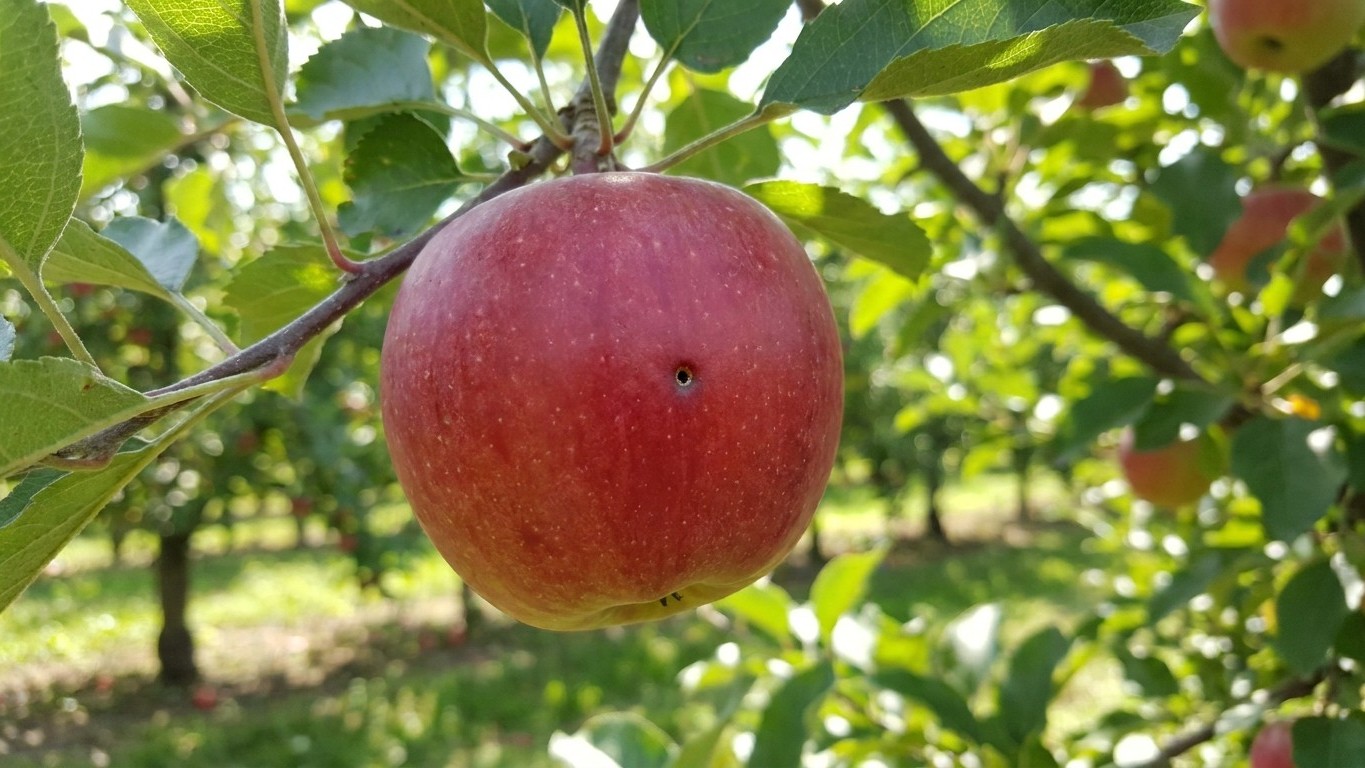
Each female punctures fruit skin and deposits an egg just under the surface. That tiny puncture is often the only visible sign until the larva starts tunneling. The maggot feeds through the flesh for two to three weeks, leaving winding brown trails, then the fruit drops early, sometimes weeks before a healthy apple would fall. The larva exits the rotting fruit, burrows into the soil, and pupates there until the following summer’s warm-up starts the cycle over.
How to Spot the Damage Before It Spreads
The early signs are subtle. Fresh egg-laying punctures look like tiny dimples, barely more than a pinprick, and they’re easy to miss on a tree loaded with fruit. As the larva grows, the skin around the tunnels develops a slightly sunken, discolored patch. Cut one of these apples open and you’ll see brown, thread-like trails running through otherwise firm flesh.
Premature dropping is often the loudest clue. Apple maggot larvae accelerate fruit decay, so trees infested early in the season can lose fruit weeks ahead of a normal harvest window. If you’re finding a scattering of apples on the ground in late July that look otherwise fine on the outside, that’s worth a closer look rather than a quick rake-and-toss.
Crabapples, hawthorns, and even some wild roses in the same plant family can host apple maggot too. A neglected crabapple at the edge of a property, or an abandoned orchard tree down the road, can act as a breeding reservoir that keeps reinfesting nearby trees year after year, regardless of how carefully the main planting is managed.
What Actually Stops Apple Maggot
Control works best as a combination of tactics rather than a single fix, and timing matters more than the product you choose.
Sanitation That Breaks the Cycle
Picking up and destroying dropped and infested fruit within a day or two, before larvae have a chance to leave the apple and burrow into the ground, cuts next year’s population directly. Bagging drops for disposal or burying them at least a foot deep works. Leaving fruit to rot under the tree essentially restocks the soil with next summer’s flies.
Trapping for Monitoring and Small-Scale Control
Red sphere traps coated with sticky adhesive and baited with an apple-scented lure mimic ripening fruit and pull in adult flies. For home growers with just a tree or two, hanging two to four traps per dwarf tree at the outer edge of the canopy, roughly shoulder height, provides enough control pressure to matter on its own. Commercial growers use unbaited or lightly baited traps mainly to time sprays, checking them weekly starting in late June and treating once flies start showing up consistently rather than after a single catch.
Insecticide Timing Keyed to First Catch
For orchard-scale plantings, an insecticide applied within a week of the first sustained fly catch, followed by cover sprays every seven to ten days through the peak flight period, remains the standard commercial approach. Spraying on a calendar without tracking flies wastes money and often misses the window when females are actively laying eggs.
Barrier and Organic Options
Kaolin clay sprays create a fine white film on the fruit surface that confuses egg-laying females and reduces punctures significantly when applied before flight activity ramps up and reapplied after rain. It’s a common tool for growers avoiding conventional insecticides, though it needs more frequent reapplication than a chemical spray program.
Removing or managing nearby wild host trees, especially neglected crabapples and hawthorns within a few hundred feet of a planting, reduces the reservoir population that keeps reinfesting managed trees season after season. This is often overlooked by homeowners who focus entirely on the tree they’re trying to protect while ignoring the volunteer crabapple at the property line doing all the damage.
Regional Notes Across New York
Pressure and timing shift noticeably depending on where you are in the state.
In the Hudson Valley, one of the state’s oldest apple-growing regions, apple maggot has been a persistent problem for decades, partly because of the density of both commercial orchards and old farmstead trees scattered through the hills. Growers here typically see first flies in the last week of June and manage through early September.
Western New York’s Lake Ontario fruit belt, stretching from around Rochester to Niagara County, benefits from the lake’s moderating effect on spring soil temperatures, which can delay emergence by a week or so compared to inland sites, but the flight period still runs long into August once it starts.
On Long Island and in the lower Hudson Valley, milder fall conditions occasionally support that partial second generation mentioned earlier, extending the window growers need to stay alert into late September in years with a warm autumn.
Central and northern New York, including areas around the Finger Lakes and up toward the Adirondacks, generally see a shorter, more compressed flight period because cooler soil temperatures delay emergence and an earlier frost cuts activity off sooner.
Anyone managing even a couple of backyard apple trees in New York benefits from starting to watch for activity by the third week of June and keeping fruit picked up through harvest, since the fly doesn’t care whether the tree belongs to a 200-acre orchard or a single tree in a suburban backyard.