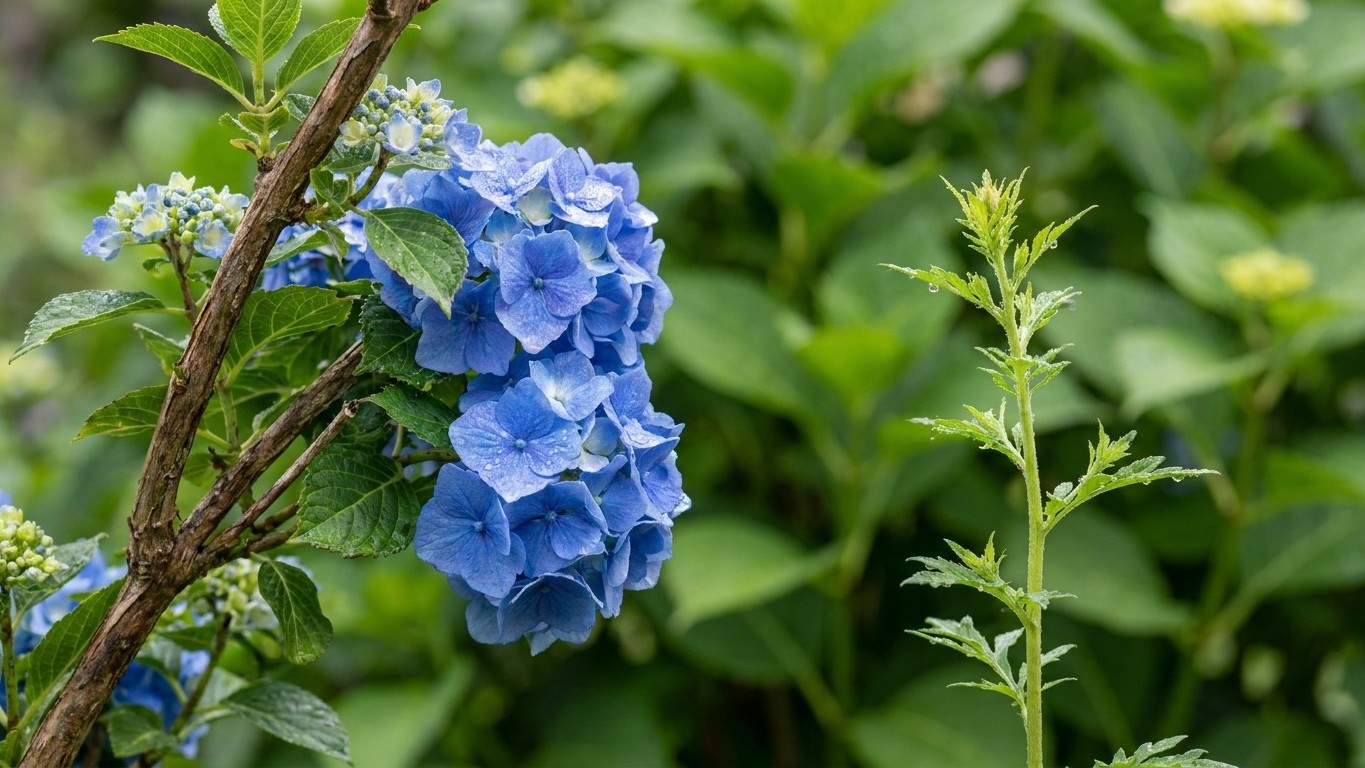

Your hydrangea’s type sets the date. Smooth and panicle types flower on new wood, so you cut them in spring, after the worst cold and before buds open. Bigleaf and oakleaf types flower on stems grown the year before, so you trim them soon after the blooms fade. Cut those in spring or fall and a healthy shrub can sit green and flowerless all summer.
What this comes down to in Newfoundland and Labrador

At St. John’s, the reference station, the mean last spring frost is May 30 and the mean first fall frost is October 17. New-wood hydrangeas get pruned in late winter to spring, old-wood hydrangeas in summer, and nothing gets cut in autumn. Both dates are midpoints. In one year out of two the last frost comes after May 30, and in one year out of two the first fall frost arrives before October 17.
The reference station has about 140 frost-free days between those two dates. That is a short stretch for a shrub that must grow, bloom and then ripen its wood before winter. The same city sits in Canadian hardiness zone 6a. That is the Canadian system, which does not convert to a USDA zone. Pruning timing matters here because a cut made at the wrong moment removes flower buds, and the short season leaves little time to replace them.
Which hydrangeas can be pruned in spring?
Smooth hydrangeas such as Annabelle and Incrediball, and panicle hydrangeas such as Limelight and Quick Fire, make their flower buds on shoots that grow this season. A late frost or a hard winter that kills stem tips costs you little more than height. Cut when the buds begin to swell and the snow has gone from the bed. Taking a panicle back by about a third keeps the framework and produces larger heads. A smooth hydrangea can go lower, down to roughly a foot above the ground, and it will still flower the same summer.
Which hydrangeas should be left alone until summer?
Bigleaf types such as Nikko Blue and oakleaf types such as Snow Queen set next year’s buds on this year’s stems, from late summer into fall. Prune them right after the flowers fade, and only to shape them or remove a few of the oldest stems. Reblooming bigleafs such as Endless Summer flower on both old and new wood. They forgive more, but a light trim after the first flush is still the safest cut. Which of these types actually come through the winter is covered in Which Hydrangeas Survive a Newfoundland and Labrador Winter.
| Type | Examples | Flowers on | Prune |
|---|---|---|---|
| Smooth | Annabelle, Incrediball | New wood | Late winter to early spring, before buds open |
| Panicle | Limelight, Quick Fire | New wood | Late winter to early spring, before buds open |
| Bigleaf | Nikko Blue | Old wood | Right after flowers fade |
| Reblooming bigleaf | Endless Summer | Old and new wood | Light trim after the first flush |
| Oakleaf | Snow Queen | Old wood | Right after flowers fade |
Working it out for your own garden
A calendar date will not survive a late spring or a move to a colder district, but the method will. It has two parts: a rough date from the frost midpoint, then a check on the plant itself.
How do you time spring pruning from the frost dates?
Start from the May 30 midpoint and remember it sits in the middle of a window. Near St. John’s, new-wood pruning usually falls from the end of April into the first part of May, before the buds open. Gardeners in colder districts should expect those dates to land weeks later. Let the buds overrule the arithmetic. Fat, green-tipped buds mean go. Tight, brown buds mean wait.
Take Limelight as a worked case. It is a panicle hydrangea that flowers on new wood. Prune it from the end of April into the first part of May, while the buds are swelling, and the shoots that grow afterward carry the flowers. Even if winter killed half the stems, it will still bloom, because the flowering wood does not exist yet. The mean first fall frost on October 17 leaves the plant the whole summer to bloom.
Now take Nikko Blue, a bigleaf that blooms on old wood. Its buds formed last fall on the tips of stems that must then survive winter. A cold winter can kill those buds while leaving the stems alive. The plant leafs out normally and never flowers. The line falls right there. Spring pruning of a panicle is harmless, but the same cut on a bigleaf removes whatever buds survived. After a hard winter, wait until leaves are well open, usually after the May 30 midpoint, and take out only what is clearly dead.
How do you tell dead stems from live ones?
Scratch a bit of bark with a thumbnail. Green underneath means alive. Brown and dry means dead. A live stem bends, while a dead one snaps with a clean crack. Bigleaf hydrangeas leaf out late, so a bare stem proves nothing. Cut back to the first pair of healthy buds and leave the rest. If a bigleaf produced leaves but no flowers, either the buds died over winter or a spring cut removed them. Trimming right after bloom the following summer keeps your options open. For why the flowers that do appear may be pink, see Why Hydrangeas Are Pink in Newfoundland and Labrador, and How to Turn Them Blue.
What changes across the province
The St. John’s figures come from one station. Inland valleys can warm faster in late spring but also trade that for sharper frosts at both ends of the season.
Elevation and distance from the coast can move the dates by weeks. Upland and northern districts run weeks behind the reference station. Spring pruning shifts later by the same margin, and the fall cutoff arrives sooner. The west coast of the island and the sheltered bays have their own patterns, and a garden in a hollow can be a different climate from one on a hilltop a few miles away.
Labrador is colder still. There, even hardy new-wood hydrangeas often die back to the ground over winter and behave like perennials. That is a good setup for pruning, since you simply cut the dead stems to the base in spring once new shoots show. Old-wood bigleafs are a gamble anywhere the winter regularly kills stem tips, and pruning them hard only adds to the risk.
The mistakes this province punishes
Pruning a bigleaf hard in March is a common one. A warm week tempts people into the garden, and the cut takes off the buds that would have flowered. On a bigleaf, wait for leaves and remove only dead wood.
Tidying in fall costs plants too. A cut made in October can push soft growth that the first frost may kill. On bigleafs it also removes next year’s buds. Leave the spent flower heads on through winter.
Cutting on a warm spell is a quieter error. A mild week in March can be followed by weeks of freezing nights, and new growth triggered by an early cut is the first thing to get nipped. For new-wood types, wait until the buds are swelling and the ground is thawing.
Giving up on a bare shrub too early is another. Gardeners see no leaves in mid-May and cut everything to the ground, then lose a bigleaf’s one chance at flowers. Do the scratch test first.
Last, avoid removing too much of the old stems in a single year on an overgrown shrub. Spread a renewal over several seasons by cutting the oldest stems at the base.
Checking this against your area
A frost date from one city is a starting point. Your own hollow, hillside or harbor-front lot may run weeks different. Your nearest regional office of the Newfoundland and Labrador Department of Fisheries, Forestry and Agriculture can tell you how your district compares and what local gardeners do. For the wider picture, start with the guide to growing hydrangeas in Newfoundland and Labrador.
Common questions
Can I prune hydrangeas in the fall in Newfoundland and Labrador?
Leave them alone. Fall cuts stimulate tender growth ahead of a first frost that averages October 17 at St. John’s, and on bigleaf and oakleaf types they also take off next year’s flower buds. The one exception is snipping off a broken or storm-damaged stem.
My hydrangea has leaves but no flowers. Did I prune it wrong?
If it is a bigleaf or oakleaf, either a spring cut removed the buds or a cold winter killed them. Smooth and panicle types are different, since their buds form on new growth. If one of those did not flower, look at sun, feeding and age before blaming pruning.
When do I cut back an Annabelle or a Limelight?
Do it in late winter to spring, once the buds are swelling. Near St. John’s that usually means from the end of April into the first part of May, and later in colder districts. Cut panicles by about a third and smooth types as low as about a foot.
Should I deadhead hydrangeas?
Not on bigleaf or oakleaf types until after bloom, and then only lightly. On all types, leaving dried heads over winter protects the buds below. Trim them off in spring: with your main pruning on new-wood types, and on old-wood types by removing only the heads, just above the first pair of healthy buds.