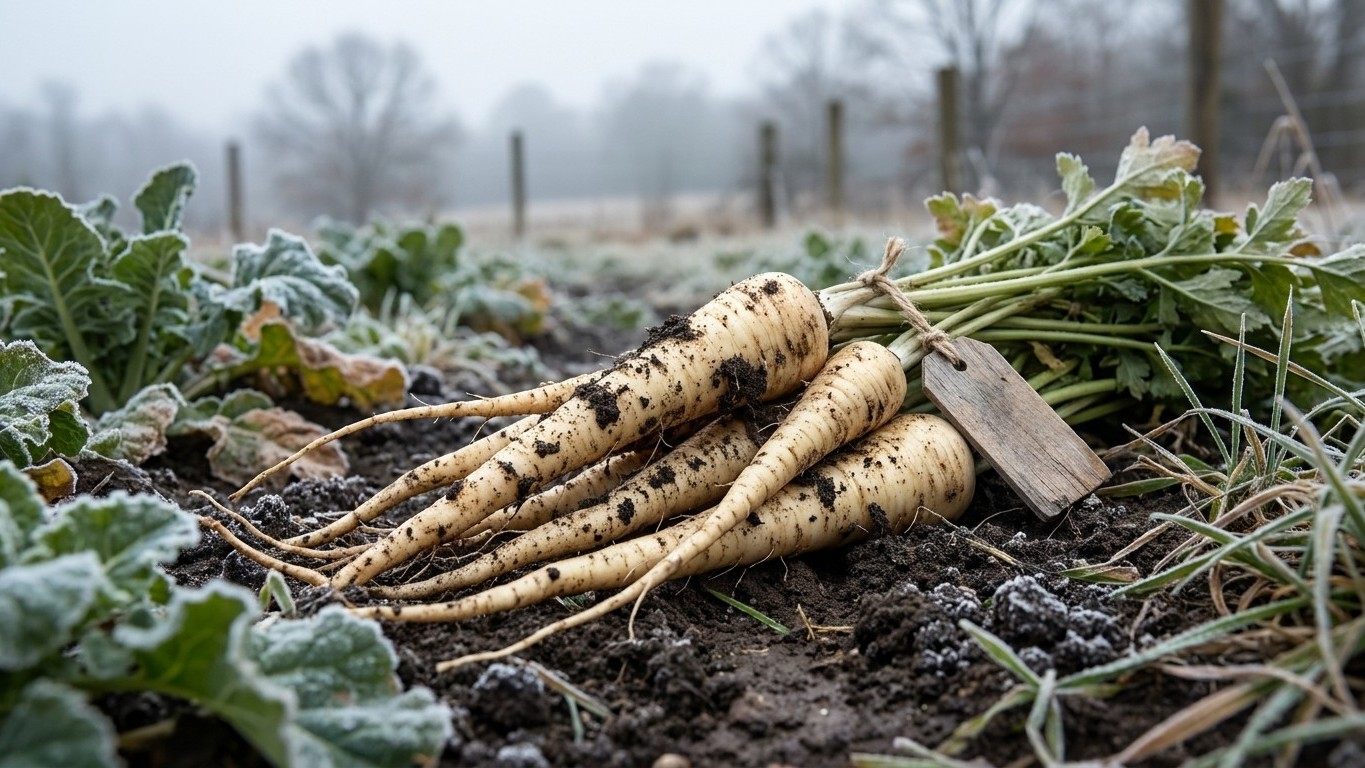

Newfoundland and Labrador’s cold, damp falls do exactly what a parsnip needs: weeks of frost before the ground locks solid. That is the ingredient that turns a bland root into a sweet one, and this province delivers it without much doubt. The trickier part is the calendar. Squeezed between a late spring frost and an early fall one, the growing season here runs tighter than the climate’s reputation for cold might suggest.
The short answer
The question that decides everything isn’t the hardiness zone printed on a seed packet. It’s whether the coldest month brings sustained cold, night after night, rather than a scattered frost or two. In St. John’s, the mean daily minimum of the coldest month sits at 16.4°F, according to Environment and Climate Change Canada’s Canadian Climate Normals for 1981-2010. That figure describes an average low across the whole coldest month, not a record low and not a rough seasonal feel. It means most nights in that stretch drop well below freezing, and stay there.
That distinction matters because parsnips don’t sweeten from surviving winter. They sweeten from being exposed to it. Left in the ground, a mature parsnip root converts its stored starch into sugar during several weeks of cool, frosty weather, a process confirmed by Utah State University Extension in its guidance on growing the crop. A plant can be perfectly hardy for a zone and still come out of the ground starchy and flat if the cold never really arrives, or arrives for only a few days before a thaw resets everything. A mild-winter region can grow a fine-looking parsnip that never gets sweet.
Newfoundland and Labrador doesn’t have that problem. A coldest-month average minimum of 16.4°F is a long way from marginal frost. Combined with a first fall frost that arrives, on average, October 17, and a fall that only gets colder from there, this province offers the kind of sustained, weeks-long chill that the sweetening process actually needs. The answer, then, isn’t a hedge. A parsnip grown here and left in the ground through autumn’s frosty stretch will sweeten, not merely grow to size and stop.
Where the caution belongs is timing, not climate. Getting a root to full size before that frost exposure begins is the part growers actually have to manage, and that depends on when seed goes into the ground each spring.
Does the season fit?
Parsnips are sown directly in place, and the 100 to 120 days Utah State University Extension gives for the crop run from that seeding date, not from when seedlings finally show themselves. Lining that window up against this province’s frost dates means working through the calendar step by step.
- Start from the average last spring frost for the St. John’s A station: May 30. Environment and Climate Change Canada is clear that this is a mean date, not a guarantee. In roughly half of all years, frost arrives even later, so treating May 30 as a safe cutoff is a mistake worth avoiding.
- Parsnip seed tolerates cool soil well, which is why growers sow it 2 to 3 weeks ahead of that last frost date rather than after it. For this province, that puts sowing somewhere around May 9 to May 16.
- Don’t expect anything visible right away. Parsnip germination takes 14 to 21 days, so seedlings won’t break the surface until roughly the tail end of May into early June. Digging up the row before then because “nothing came up” is a common, and avoidable, mistake.
- Count forward 100 to 120 days from that seeding window, not from emergence. From a May 9 to May 16 sowing, the 100-day mark lands between roughly August 17 and August 24, and the 120-day mark lands between roughly September 6 and September 13.
- Compare that maturity window to the average first fall frost of October 17. Even at the slow end of the range, roots reach size a full five to nine weeks before frost typically shows up, leaving a real cushion rather than a photo finish.
That cushion is what separates this province from a marginal short-season climate. The roots don’t just squeak by, they finish with weeks to spare, which then gives them time sitting in the ground through the very frosty weeks that convert their starch to sugar. Season length here is not the limiting factor. What happens in the soil during those months is.
What goes wrong here
- Forked, twisted roots in heavy or stony ground. Parsnip taproots push straight down, and any rock, clay lens, or compacted layer splits them into forks. Utah State University Extension recommends deep, sandy soil for this reason, and says heavy ground needs to be double dug before sowing so the root has a clear, loose path down.
- Forked roots from overwatering, a separate cause from soil texture. Even in loose, well-prepared ground, keeping the bed constantly saturated encourages the same kind of splitting and can invite rot along the root. The fix is steady, moderate moisture, not a heavy soak followed by dry stretches.
- A season that runs out before the roots size up. This usually traces back to sowing later than the 2 to 3 weeks before the mean May 30 last frost, or to giving up on the bed during that 14 to 21 day germination wait and resowing over seedlings that were already on their way. Sow promptly in that mid-May window and be patient with the wait.
- Ground freezing too hard to dig before the crop is used. This is the flip side of a climate cold enough to sweeten well: once the coldest month’s nights are averaging 16.4°F, soil can lock up solid. A heavy mulch layer over the row after the first few frosty weeks keeps the ground workable longer, letting a grower dig sweetened roots into the fall rather than losing them to frozen soil.
Common questions
Do parsnips need to be dug up before winter in Newfoundland and Labrador?
No. The sweetening process depends on the roots staying in the ground through several frosty weeks, so digging too early defeats the purpose. The limit is practical rather than biological: once soil freezes hard, digging becomes difficult, which is why a mulch layer to delay that freeze is worth the effort.
Is the hardiness zone the same thing as frost exposure?
No, and mixing the two up is the most common error with this crop. A hardiness zone rating describes whether a plant survives a region’s winter minimum. Parsnip sweetening depends on a different measure entirely, the number of weeks a mature root sits exposed to cold, frosty conditions before harvest.
What happens if parsnip seed is sown right at the last frost date instead of earlier?
The 100 to 120 day countdown simply starts later, pushing maturity later into fall. Given the roughly five to nine week cushion this province’s frost dates already allow, a short delay likely still fits, but sowing 2 to 3 weeks ahead of the May 30 average, as recommended for the crop, keeps that buffer intact rather than spending it.
Why do some parsnips come out of the ground forked even in loose soil?
Loose soil rules out one cause, but not the other. Overwatering on its own can split a root growing in otherwise well-prepared ground, since consistently saturated soil affects root development independently of texture. Steady, moderate watering rather than heavy, irregular soaking is the fix in that case.