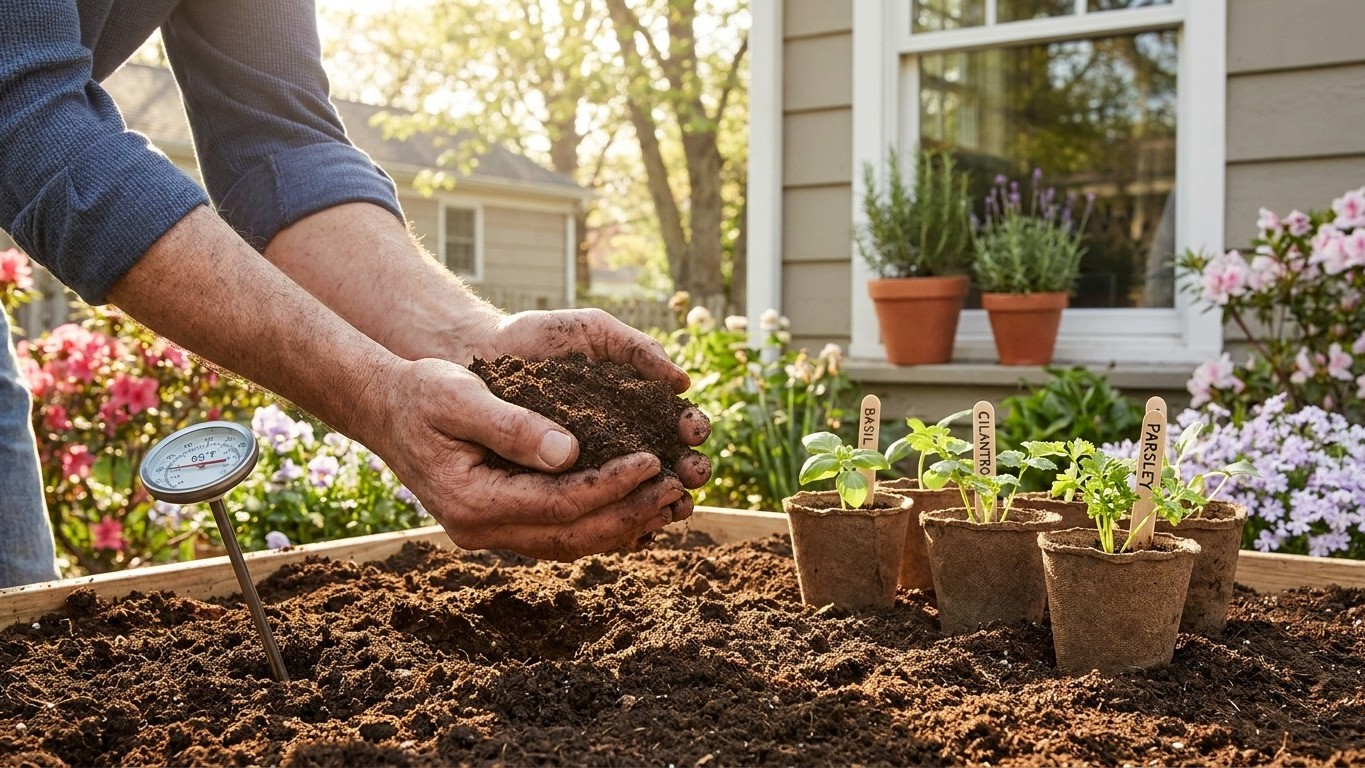

North Dakota herbs work on a short, sharp calendar. The frost-free window runs roughly mid-May to late September, sitting inside USDA hardiness zone 3a-4b, so the real decision isn’t which herb tastes best but which ones survive a Fargo-area winter outdoors and which ones need a pot and a windowsill.
When the soil is warm enough in North Dakota
The last spring frost at the reference station, Fargo’s Hector International Airport, falls between May 4 and May 15, based on NOAA’s 1991-2020 Climate Normals for the 30-70% freeze probability band. That’s a wide ten-day spread, and it’s a probability, not a promise: some years the freeze risk clears earlier, some years it lingers past the 15th. Suburban yards and rural gardens away from that airport station commonly see frost hang on a week or two longer, especially in low spots or near tree lines where cold air pools overnight.
Frost dates get quoted so often that gardeners start treating them as the finish line. They’re really a proxy for something slower: soil temperature. Air can clear 32°F and still leave the ground cold enough to rot a seed or stall a transplant. Herbs split cleanly along this line. Cool-tolerant types, parsley, cilantro, chives, will germinate in soil that’s still on the chilly side and can go in the ground close to that frost-clearing window. Warm-soil herbs, basil chief among them, do better waiting another week or two after the frost date passes, until the soil itself has caught up with the air.
This is also where it’s worth being direct about scope. Some herbs carry long-standing reputations as remedies or traditional treatments, that’s a real part of their history, but this page doesn’t evaluate those claims one way or the other. It sticks to garden and kitchen use. It’s also worth saying plainly: never rely on a garden guide, this one included, to identify an unknown plant found growing wild. Several herb look-alikes are toxic, and the stakes of guessing wrong are too high for a general planting page to responsibly wade into.
Naming exact varieties runs into the same problem as timing precision: this page can talk about herb types (a basil, a thyme, a chive) but can’t responsibly recommend one packet over another without local trial data. That question belongs to the next sections, and eventually to your local extension office.
How long the season lasts here
Line up the two frost windows and the growing season takes shape. Using the earlier end of each range, May 4 to September 25, the frost-free stretch runs about 144 days. Using the later end of each range, May 15 to October 5, it’s roughly 143 days. Either way, North Dakota gardeners are working with a season in the neighborhood of four and a half to five months, bookended by frost dates that themselves carry a week or two of built-in uncertainty depending on where in the state, and where on the property, you’re gardening.
That length matters more for what it rules out than what it allows. A 140-something day window is enough for one full run of most annual culinary herbs from seed or transplant to harvest, and it leaves room for a second sowing of the fastest, most cold-tolerant types, think a spring cilantro crop followed by a fall one, or a second round of dill timed to avoid peak summer heat stress. It is not enough of a runway to comfortably grow slow, heat-loving herbs from seed outdoors and still get meaningful harvest; those need to start as transplants, purchased or started indoors weeks before the last frost date.
It also changes the math on transplanting versus direct-seeding. With a shorter clock, checking root development before you set a transplant out, rather than just watching the calendar, buys back time that a longer-season garden could afford to waste. For the specifics of staggering plantings to make the most of a compressed window like this one, the site’s succession sowing guide walks through timing crops so the garden keeps producing rather than peaking once and stalling.
None of this changes if you’re gardening in Bismarck, Grand Forks, or a rural county between them, but the exact week your own frost dates fall will. The Fargo station numbers are a starting point, not a local guarantee.
Heat and water in North Dakota
North Dakota does see stretches of 90-degree afternoons most Julys, and summer moisture tends to arrive in scattered thunderstorms rather than steady, even rainfall. But for herbs specifically, that’s not the number that reorganizes the garden. Most culinary herbs, Mediterranean types especially, actually prefer a hot, dry stretch; it’s closer to their native climate than a cool, damp one. Where summer heat and dry spells hit hard, the fix is mulch and consistent watering, not a redesign of the herb bed.
The number that actually decides the herb bed here is winter. Fargo’s reference data puts the mean daily minimum temperature of the coldest month at just 0.2°F, and the USDA Plant Hardiness Zone Map (2023, built on 1991-2020 normals) places the state at zone 3a-4b. That’s not the record low, it’s the average low on an ordinary cold-month night, and it’s brutal by the standards of most herbs sold at garden centers nationally. A huge share of “perennial” culinary herbs, rosemary, bay laurel, many lavenders, are only perennial in climates far milder than zone 3a-4b. Left outside through a North Dakota winter, they die.
That single fact reorganizes how the whole herb garden gets planned here. Instead of asking “how do I keep this herb alive through summer,” the real planning question becomes “does this herb come back on its own next spring, or does it need to spend winter in a pot indoors.” Hardy perennial herbs that tolerate zone 3a-4b conditions in the ground are a genuinely different category from tender perennials that need to be dug up, potted, or replaced every year. Treating them the same, because a plant tag says “perennial” without specifying where, is the single most common planning mistake in a climate this cold.
Humidity plays a smaller supporting role. In summers that run cool and damp rather than hot and dry, the practical risks shift toward powdery mildew and slower ripening rather than heat stress, which is one more reason airflow around herb plantings matters as much as sun exposure.
Which herbs suit North Dakota
Reasoning from the numbers above, three categories sort out most of the herb bed decisions here, without ever needing to name a specific cultivar.
- Cold-hardy perennials that reliably survive zone 3a-4b winters in the ground: chives, most mints, oregano, and many thyme and sage types fall here, though exact winter survival still depends on the specific plant and its siting.
- Fast annual herbs suited to the shorter, cooler shoulder seasons: dill, cilantro, and parsley handle the cooler soil at both ends of the season and fit well into a succession-sowing plan given the roughly 140-day window.
- Tender perennials that need container life: rosemary, bay laurel, and most lavenders won’t survive a Fargo-area winter outdoors and need to be grown in pots that come indoors before the first fall frost risk arrives.
Basil deserves its own note, since it’s grown everywhere but doesn’t sort neatly into either extreme here: it wants the warm soil discussed earlier, dislikes any lingering spring chill, and in a cool, damp summer stretch benefits from airflow and drier footing to avoid disease pressure. It’s an annual in this climate regardless, so winter survival isn’t the question; timing the planting to warm soil is.
This page deliberately stops short of naming specific varieties within any of these types. Which basil, which thyme, which oregano performs best against North Dakota’s particular combination of short season, harsh winter, and variable summer moisture is a question that local field trials answer far better than a general planting guide can. The NDSU Extension Service runs exactly that kind of regional variety testing, county by county, and its recommendations reflect actual local trial results rather than a national seed catalog’s best guess at what might work in a zone 3a-4b garden. That’s the more useful next stop for anyone deciding between specific packets or plants this season.