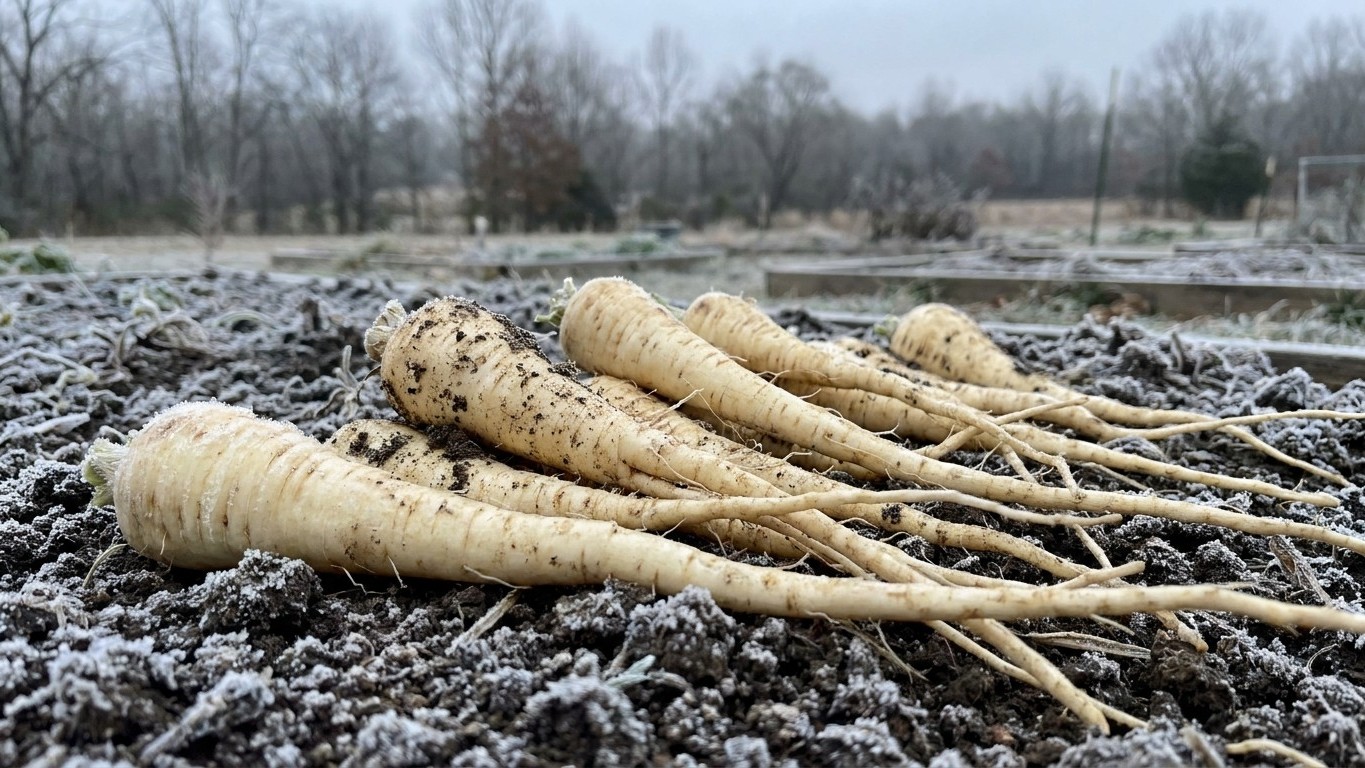

North Dakota winters bring more than enough cold to sweeten a parsnip crop, and the calendar works in your favor too, if you get seed in the ground early. The catch isn’t whether frost will show up. It’s making sure the roots are already mature by the time it does, and that you can still dig them once the ground turns to concrete.
The short answer
Here’s the question that actually decides this, not the one most gardeners ask: does this ground stay cold enough, for enough consecutive weeks, to convert stored starch into sugar? A parsnip doesn’t sweeten because a calendar says winter arrived. It sweetens because its root sits in soil chilled repeatedly near or below freezing, and that process takes sustained exposure, not a single overnight dip.
At the Fargo reference station, NOAA’s 1991-2020 Climate Normals put the mean daily minimum for the coldest month at 0.2°F. Read that again: the average low, not the record low, sits barely above zero for an entire month. That’s not one cold snap. That’s weeks of nights that stay below freezing as a matter of routine, which is exactly the kind of exposure a parsnip root needs to turn starchy and bland into something genuinely sweet.
So the short answer is yes. A parsnip grown in North Dakota, left in the ground through the early frosty stretch of autumn, will sweeten reliably. This isn’t a borderline territory where you might get lucky with a cold snap some years and miss it in others. The cold here is dependable enough that sweetening isn’t the uncertain part of growing parsnips in this state. Timing the season so the root reaches full size before that cold locks the ground solid, that’s the part worth planning around.
It’s worth being precise about what’s driving this, because it’s easy to reach for the wrong shorthand. A hardiness zone number tells you whether a perennial plant survives winter where it’s planted. It says nothing about whether an annual root vegetable gets enough frost exposure to sweeten before harvest. Those are two different questions with two different answers, and conflating them is how gardeners end up disappointed by a technically hardy but flavorless crop. In North Dakota, the frost exposure itself, that 0.2°F coldest-month average, is the number that matters here, not any broader climate classification.
Does the season fit?
Parsnips are sown directly in the ground, not started indoors and transplanted, and Utah State University Extension pegs the timeline at 100 to 120 days from seeding, with sowing recommended 2 to 3 weeks before the last spring frost. Lay that against North Dakota’s frost dates and the arithmetic works out like this:
- The Fargo reference station’s last spring frost, per NOAA NCEI’s 32°F freeze probability data, falls between May 4 and May 15.
- Sowing 2 to 3 weeks ahead of that puts your seeding window somewhere in mid to late April, as soon as the soil can actually be worked without turning to mud.
- Add the 14 to 21 days parsnip seed typically needs just to germinate, a slow starter compared to most root crops, and true growth doesn’t even begin until early to mid-May.
- From that same seeding date, the full 100 to 120 days needed for root maturity lands somewhere between late July and roughly the third week of August.
- The first fall frost at the same reference station arrives September 25 to October 5, per that same NOAA dataset, meaning maturity is reached five to eight weeks before frost even shows up.
- Because the sweetening process depends on frost exposure AFTER the root has matured, that extra five-to-eight-week cushion isn’t wasted time. It’s the window where the root sits fully grown in cooling soil, absorbing exactly the cold it needs.
That’s a comfortable fit, more comfortable than a lot of gardeners expect from a state this far north. The season isn’t tight here. If anything, North Dakota’s frost calendar gives parsnips room to mature well ahead of the cold and then linger in the ground through the sweetening period without a rushed finish. Remember these dates come from a single airport weather station; a rural or elevated garden nearby may see frost a week or two earlier or later, which shifts this math slightly but rarely enough to change the outcome.
What goes wrong here
- Forked roots from heavy or stony ground. Much of North Dakota carries dense clay-loam soils that resist a straight taproot, splitting it around compaction or buried rock. Utah State University Extension recommends deep sandy soil for parsnips, and where the native ground is heavier, double digging to loosen and aerate a foot or more of soil before sowing is the fix, not a raised bed alone.
- Forked roots from overwatering. This is a separate cause from soil texture, and gardeners often blame the dirt when the real issue is a hose left running too long. Excess moisture, especially inconsistent soaking after dry stretches, pushes the root to branch. Even, moderate watering through the growing season keeps the taproot growing in one direction instead of several.
- A late, cold, wet spring delaying the sowing window. If soil stays too soggy to work into mid-May, that pushes seeding later, eating into the maturity window calculated above. Waiting for soil to dry enough to crumble in your hand, rather than sowing into mud on a fixed date, protects germination without costing you the season.
- Ground freezing solid before you get the roots dug. North Dakota’s hard freeze doesn’t just chill the soil, it can lock it into a shovel-resistant block by late fall. A heavy layer of straw or leaf mulch laid down before the ground fully freezes keeps a diggable layer workable and lets you harvest gradually through early winter instead of racing a closing window.
Every part of a parsnip plant, not just the leafy tops, carries chemical compounds called furocoumarins. According to North Carolina Extension Gardener Plant Toolbox, “All parts of this plant contain furocoumarins which can make skin sensitive to light causing burns so be sure to wear gloves, long sleeves and long pants when dealing with it.”
What makes this catch people off guard is the mechanism. The sap alone doesn’t burn skin. It’s sap combined with sunlight that triggers the reaction, which is why a burn shows up hours after a bright afternoon spent pulling tops or hauling roots out of the ground, not immediately at contact. Rinsing your hands afterward doesn’t undo the exposure once UV light has already reacted with the sap on your skin. That’s why the real protection is preventing skin contact in the first place, gloves, long sleeves, long pants, rather than any cleanup step done after the fact. Harvest on an overcast day if you can, but don’t skip the coverage even then.
Checking this against your own county
The figures here come from a single reference weather station, and North Dakota is a big state with real differences between a sheltered valley garden and an open, wind-exposed plot further west. Before you commit a full bed to parsnips, check your own county’s typical frost dates and soil conditions with your local office of the NDSU Extension. They can tell you how your specific area’s frost timing compares to the Fargo-based figures used above, and flag any local soil quirks worth planning around before seed goes in the ground.
Common questions
Can I start parsnip seed indoors and transplant it in North Dakota to get a head start?
No. Parsnips are sown directly where they’ll grow. Transplanting disturbs the developing taproot and is a common cause of forked, misshapen roots, regardless of how cold-tolerant the seedling might otherwise be.
What if the ground freezes before I’ve dug all my parsnips?
A thick mulch layer, straw or shredded leaves piled several inches deep, laid down before the hard freeze sets in keeps a workable layer of soil accessible. Many gardeners harvest parsnips gradually through early winter this way rather than digging the whole bed at once.
Does North Dakota’s soil type mean I need to amend before planting?
Heavy or clay-loam soils, common across much of the state, benefit from double digging a foot or more deep before sowing. Utah State University Extension recommends deep, sandy conditions as the ideal, and amending compacted ground gets you closer to that even without replacing the soil entirely.
Do I need to worry about the sap once the plant’s tops have died back in fall?
Yes. The furocoumarins are present in all parts of the plant, not just green, living foliage. Wear gloves and long sleeves when clearing dead tops or digging roots, even late in the season on a sunny day.