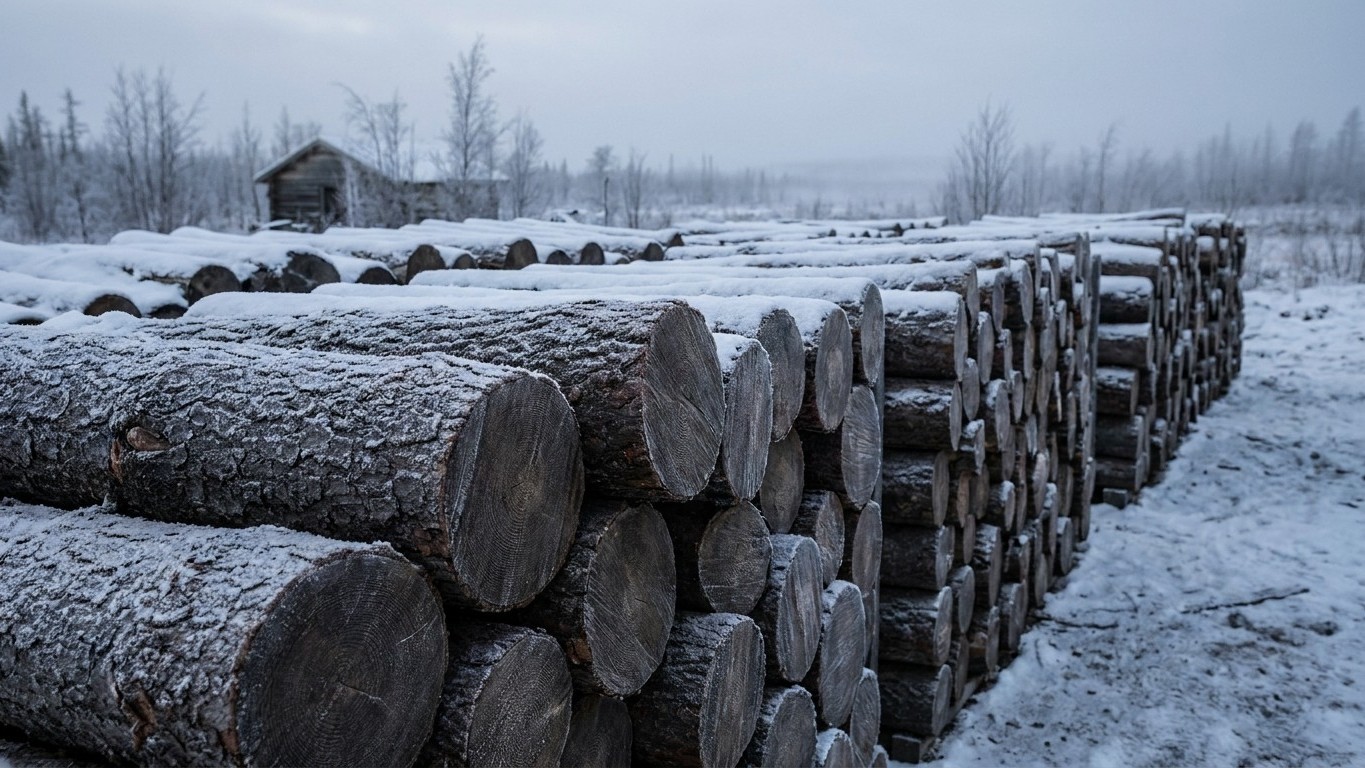

Yellowknife’s coldest month averages a low of -21.1°F. That single number tells you almost everything about heating a Northwest Territories home with wood: how many cords you’ll burn, how dense your wood needs to be, and why a half-seasoned load of softwood won’t get you through February. This guide breaks down what actually works here, species by species, cord by cord.
How cold it actually gets here

The reference figure for the territory, drawn from Environment and Climate Change Canada’s 1981-2010 Climate Normals for Yellowknife, is a mean daily minimum of -21.1°F for the coldest month. That’s not a record low pulled from some freak January night. It’s the average low, meaning temperatures at or below that mark are simply routine for weeks at a stretch during the deep winter months.
A number like that changes the math on everything. Heating with wood in a climate that bottoms out near -21°F is not about ambiance or supplementing a furnace on a chilly evening. It’s about keeping pipes from freezing and keeping a house livable when the outdoor air is cold enough to be dangerous within minutes of exposure. Wood here has to perform, night after night, without fail.
Why this figure matters more than the average January temperature
A lot of firewood guides quote a monthly average temperature, which flattens out the daytime highs and nighttime lows into a single misleading number. The mean daily minimum is more honest. It tells you what the fire has to fight against at 3 a.m., which is the hour that actually determines whether a stove load holds heat until morning or burns out and lets the house go cold.
At -21°F average lows, a wood stove or fireplace insert is working at close to its design limit most nights in December and January. This is the opposite end of the spectrum from milder Canadian and northern U.S. climates where wood heat is a lifestyle choice. In the Northwest Territories, for anyone relying on wood as a primary or major heat source, the cold figure isn’t a data point to skim past. It’s the reason dense, high-BTU species aren’t a preference here. They’re close to a requirement.
That doesn’t mean every Northwest Territories household burns wood out of necessity. Plenty use it to take the edge off a propane or oil furnace, or to heat a cabin on weekends. But even for that reader, the cold figure sets a floor: whatever you burn has to be seasoned well and burn hot, because -21°F doesn’t leave much room for wasted heat boiling off trapped moisture instead of warming a room.
Which woods are worth the effort here
A cord is a fixed volume, a stack 4 feet by 4 feet by 8 feet, or 128 cubic feet total. That measurement never changes, but the weight packed into it does, depending on the density of the wood. In a climate that averages -21°F lows for weeks, that difference matters enormously, because a denser cord holds more burnable mass and delivers more heat over a longer burn.
According to Michigan State University Extension, well-seasoned hardwood delivers roughly 20 million BTU per cord, which works out to about the same heat as 145 gallons of #2 fuel oil, or 215 gallons of LP gas. That figure is an average across species and assumes proper seasoning; a green or poorly dried load of the same wood will deliver noticeably less usable heat, because energy gets spent boiling off moisture before it ever warms the room.
Red oak stands out as a documented hardwood that runs dense and burns long, which makes it well suited to the coldest overnight stretches this climate throws at a stove. The tradeoff, and it’s an important one for anyone planning ahead, is that red oak’s cell structure makes it slow to dry. MSU Extension specifically flags it as a species that needs more than a single summer of stacked seasoning to reach a safe burning moisture level. Buy or cut red oak this year, and it may not be ready to burn until next winter, not this one.
Matching wood to the job, not just the coldest night
Not every fire needs to be the densest possible load. Lighter, faster-burning wood has its place too: getting a cold stove lit quickly in the morning, carrying a fire through a mild shoulder-season evening in September or April, or topping off a bed of coals without overloading the firebox. Dense hardwood is for the long, cold overnight burn where you need coals still glowing at 6 a.m. Lighter wood is for convenience and control, not for stretching through a -21°F night unattended.
| Wood type | BTU per cord (seasoned) | Smoke | Sparks |
|---|---|---|---|
| Seasoned hardwood average (e.g. red oak) | About 20 million BTU | Low, when properly dried | Few |
| Softwood / kindling-grade wood | Noticeably below the hardwood average | Higher, especially if not fully seasoned | More, due to resin content |
Availability shapes this decision as much as the numbers do. A dense species you can’t find seasoned, or can’t get delivered dry, is a worse choice than a more modest hardwood you can actually buy properly cured. Ask any wood supplier in the territory what’s been split and stacked for a full season, not just what’s cut. That question matters more than chasing a specific species name.
How much wood a winter takes
There’s no honest single number for how many cords a Northwest Territories winter requires, because the answer depends entirely on the specific house, not just the climate. A published “average” figure ignores the variables that actually move the estimate, sometimes by a factor of two.
Three things decide how much wood you’ll burn between October and April:
- The cold figure for your location: a winter that averages -21°F lows demands far more heat output, and more overnight burns, than a milder climate would.
- How well the house holds heat: insulation, air sealing, window quality, and even how exposed the house is to wind all determine how fast heat escapes once the fire’s built it up.
- Whether wood is the main heat source or a supplement: a household burning wood exclusively needs a very different supply than one using it to reduce a furnace’s workload on the coldest nights.
The mechanism that makes these variables so powerful is simple physics. A poorly insulated house loses heat continuously, which means the stove has to work harder and burn more wood just to hold the same indoor temperature that a tightly built house maintains on half the fuel. In the same -21°F winter, one house might burn through four cords while an identically sized but leakier one burns eight. That’s not an exaggeration, it’s the ordinary range seen when insulation quality varies from tight to poor in a cold climate.
The practical move is to estimate conservatively in the first year of burning wood in a new house, track how much you actually use by the stack, and adjust the following year. No chart or average can replace watching your own woodpile shrink through an actual Northwest Territories winter.
Drying wood in this climate
Seasoning matters more than species selection almost everywhere firewood is burned, and the Northwest Territories is no exception. The target, regardless of climate, is 20 percent moisture or less. Green wood, by contrast, can hold over 60 percent moisture, according to Michigan State University Extension, meaning more than half the wood’s weight at cutting time is water that has to be driven off before the wood gives useful heat.
What accomplishes that drying is airflow and time, not sunlight. Wood dries because moving air pulls moisture out of split faces over months of exposure, which is why the MSU guidance is specific: green wood split and stacked so air can move through the pile typically reaches 20 percent moisture after one full summer season. Left in unsplit rounds, or piled too tightly for air to circulate, the same wood can take much longer, sun exposure or not.
Red oak is the flagged exception here too. Its dense cell structure slows moisture loss even under ideal stacking conditions, so it needs more than a single summer to season properly. Anyone counting on red oak for this coming winter should have split and stacked it well over a year ago, not last spring.
That timing is the most common mistake made across the territory. Wood cut and split in spring for the winter immediately ahead is, in most cases, not ready. A -21°F average low doesn’t forgive a half-dried log; the fire spends its first hours boiling off water instead of heating the room, and the difference shows up as a stove that never quite gets the house warm no matter how full the firebox is. Planning firewood a full year, sometimes two for red oak, ahead of the winter you intend to burn it is the difference between a stove that performs and one that disappoints.