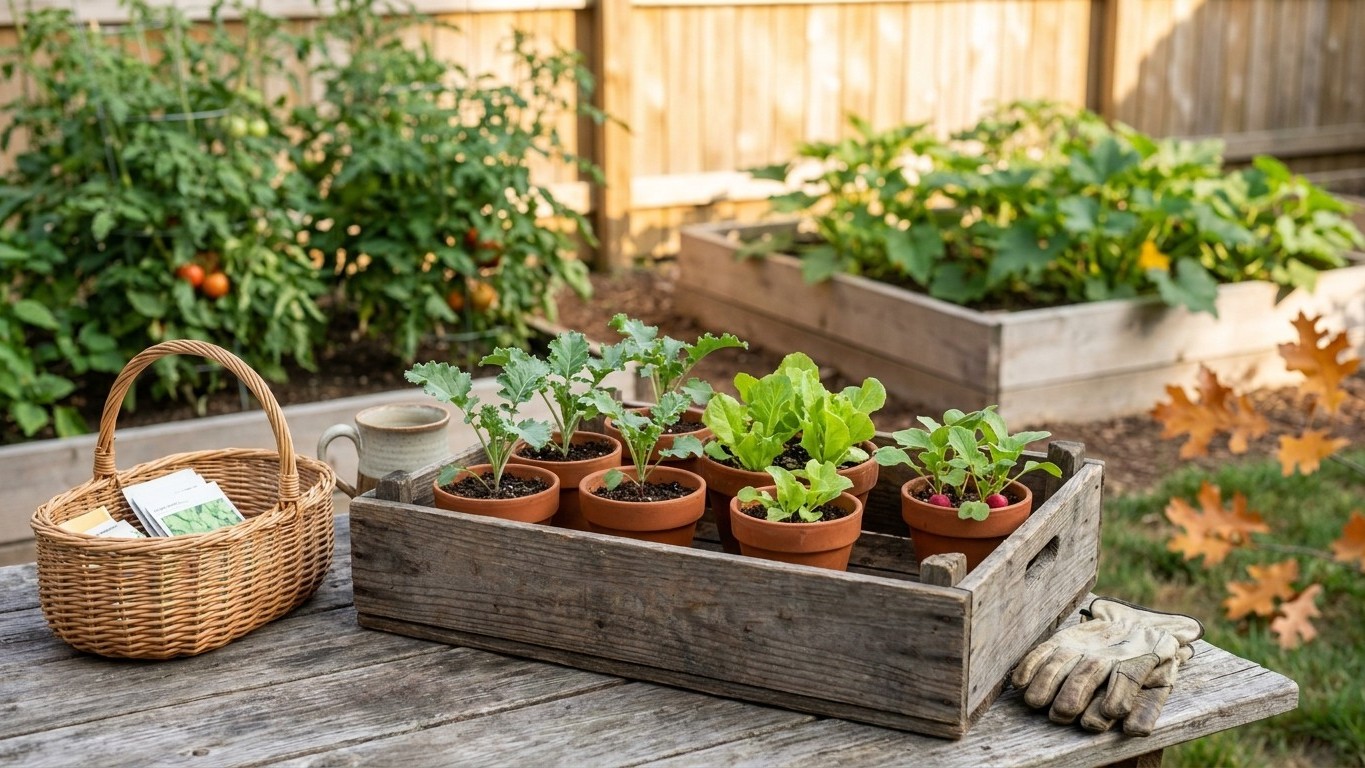

Late May to late September is the working window for outdoor growing around Yellowknife, and August sits deep inside it. That means this is a harvest month first, a fast-crop-planting month second. Anything you put in the ground now needs to finish in under six weeks, because the average first fall frost lands September 18.
What goes in the ground in August

The soil is as warm as it gets right now, which is good news, but warmth isn’t the limiting factor anymore. The limiting factor is the calendar running out. Environment and Climate Change Canada’s Yellowknife A station puts the average first fall frost at September 18, based on the 1981-2010 climate normals. That’s a mean date, not a promise: in roughly half of all years, frost arrives earlier than that, and in the other half it holds off longer. Treat it as the midpoint of a risk window, not a line you can plant right up against.
Do the arithmetic before you sow anything. From early August, you’ve got roughly six weeks until the average frost date. From mid-August, closer to four. From late August, three or fewer. That rules out almost everything except crops that mature fast and shrug off a light chill.
What still fits the window
Radishes, baby lettuce mixes, spinach, mesclun, and quick turnip greens can all still go into open ground in the first half of the month, since most finish in 25 to 40 days. Push past mid-August and you’re gambling on the mild side of the frost window rather than the average.
| Crop | Typical days to maturity | Fits sown early August? |
|---|---|---|
| Radish | 25-30 | Yes |
| Spinach | 35-45 | Yes, if sown by first week |
| Baby lettuce/mesclun | 25-30 | Yes |
| Turnip (greens only) | 30-40 | Yes, early month only |
| Carrots (full root) | 60-75 | No, too late |
Anything with a longer maturity, carrots grown for storage roots, beets, full-size brassicas, should already be in the ground from May or June. New transplants of tender crops like tomatoes or squash have no place going outdoors now; whatever isn’t already fruiting under cover won’t catch up before frost.
What to start under cover
Count backward from September 18, not forward from today. If you want a fall harvest of something started indoors now, it needs roughly 25 to 35 days to a pickable stage, plus the buffer of getting it hardened off and into a cold frame or hoop house before frost hits the exposed leaves. That leaves a tight but real slot for starting fast greens and baby brassicas indoors in early-to-mid August, destined for transplant under cover rather than open soil.
Kale, mustard greens, and bok choy started now for cold frame transplant can still deliver pickable leaves into September and, with row cover added, sometimes into early October. Start them too early in the month and they get leggy and rootbound sitting on a windowsill waiting for space; start them too late and they never size up before the light and heat drop off.
The two failure modes are worth naming plainly. Start too early without a spot to transplant into, and you end up with stretched, weak seedlings competing for pot space. Start too late, thinking there’s more season left because the days still feel warm, and the plants run out of daylight and heat before they’re worth harvesting. Given that Yellowknife’s average frost date is just a midpoint, err toward the earlier side of any sowing you’re doing under cover in August.
A cold frame or an unheated hoop house adds real insurance here. Even a few degrees of protection can push a marginal sowing from a wasted seed packet to a usable fall crop, which matters more in a zone 1b climate than almost anywhere else the calendar applies.
What is ready to pick
August is one of the two or three heaviest harvest months of the whole NWT growing season, so there’s a lot coming out of the garden if spring planting went in on schedule. Peas sown in late May or June are typically finishing now. Radishes and baby greens sown in June and July are cycling through, ready to pull as soon as the roots size up or the leaves reach a usable length, whichever comes first for that crop.
Early brassicas planted as transplants, bok choy, baby kale, quick cabbage, are often at a pickable stage this month, and it pays to harvest outer leaves progressively rather than waiting for a single big cut. Root crops sown early, baby carrots and turnips especially, can come out now too if you check size by gently pulling one and looking at the shoulder width above the soil.
Rhubarb stalks are typically still productive, and any currant or hardy berry plantings established in the region tend to ripen through this window. In greenhouses and hoop houses, where warmth-loving crops like tomatoes and cucumbers get grown at all in this zone, August is usually the peak fruiting stretch, since the extra heat inside the structure buys weeks that the open garden doesn’t have.
Check anything already in storage from earlier harvests, onions, garlic if grown, and any potatoes lifted early, for soft spots or sprouting. A single rotting bulb in a storage bin spreads faster than most gardeners expect, so a five-minute check now saves a shelf of produce later.
The jobs that matter this month
Watering rhythm needs attention because long daylight hours in the NWT summer push evaporation harder than the temperature alone would suggest. Check soil moisture by hand rather than by feel of the air, since a breezy 60 degree day can dry a bed out nearly as fast as a hot one elsewhere.
Succession sowing has a hard deadline this month. If you want a second flush of radishes or baby greens, get the seed in during the first half of August, because anything sown after that is racing the average frost date with very little margin. Staking peas and any taller greens before they flop over saves you from picking rotten pods off wet soil later.
Pest scouting matters more in August than most gardeners assume, because aphid and leaf miner populations tend to build through the season and peak right when your crops are at their most valuable. A quick check of leaf undersides twice a week catches an infestation while it’s still small enough to squash or hose off, rather than after it’s stripped a bed.
Start getting frost protection gear ready now, not in September. Row covers, cloches, and cold frame lids should be checked, repaired, and staged near the beds they’ll cover, because the average frost date is a mean, and a cold snap arriving on the early side of that range gives you almost no warning. Begin curing and storing anything harvested that’s meant to keep, onions and any early potatoes, in a cool, airy spot out of direct sun. And if you’re growing under cover, this is a reasonable point in the season to start planning what beds get amended and rested once the current crops finish, since a short growing season leaves little room to fix soil problems mid-cycle.
What not to do in August
The most common mistake is treating a run of warm days as proof that frost risk is gone. It isn’t. The September 18 average is a midpoint calculated from decades of Yellowknife records, which means plenty of years on file had frost earlier than that. Basing a decision to keep tender crops uncovered on how the air feels on a given afternoon ignores the actual statistic.
A related error is pulling row covers or cold frame lids off too early after a mild stretch, then getting caught when temperatures drop overnight. Once you’ve committed to frost protection for a bed, keep it accessible and ready to redeploy rather than storing it away because the week looked warm.
Feeding nitrogen heavily this late in the season is another classic misstep. A dose of high-nitrogen fertilizer in August pushes soft, leafy new growth on crops that should be finishing and hardening off instead. That new growth is exactly the tissue most vulnerable to an early frost, so what feels like a boost can actually increase what you lose when the temperature drops. If a crop needs feeding at all this late, a lighter, balanced feed does less harm than a nitrogen-heavy one.
Sowing anything with a long maturity window in open ground this month is also a losing bet. Full-size carrots, storage beets, and long-season brassicas started now simply won’t reach a usable size before the average frost date, no matter how warm the soil feels.
Checking this against your own county
The dates above come from a single weather station, Yellowknife A, and the Northwest Territories covers a lot of ground beyond it. Elevation, distance from large lakes, and how far north or south a garden sits can shift these frost windows by weeks in either direction. A garden near a large lake often runs milder in early fall than one on open, exposed ground the same distance north.
Treat everything here as a starting point. For local adjustments, the Government of the Northwest Territories’ agriculture services page is the right place to check for territory-specific guidance before committing a bed to a risky sowing.
Common questions
Is August too late to start a vegetable garden in the Northwest Territories?
Not entirely, but options narrow fast. Fast crops like radishes and baby greens sown in the first half of the month can still mature before the average frost date; anything with a longer maturity should wait for spring.
Can I still transplant seedlings outdoors in August?
Generally no, unless the seedlings are fast-maturing greens headed into a cold frame or hoop house rather than open ground. Tender crops like tomatoes and squash have no realistic path to maturity if transplanted this late.
What Canadian hardiness zone applies here, and does it match USDA zones?
Yellowknife sits in Canadian hardiness zone 1b, a rating from Natural Resources Canada that does not convert directly to the USDA system used elsewhere in the US. The two systems use different climate variables, so treat the Canadian zone as its own separate scale.
How reliable is the September 18 frost date for planning?
It’s a long-term average from a single weather station, not a guarantee. In roughly half the years on record, frost arrived later than September 18, and in the other half, it arrived earlier. Use it as a midpoint for planning, and keep frost protection ready well before that date.