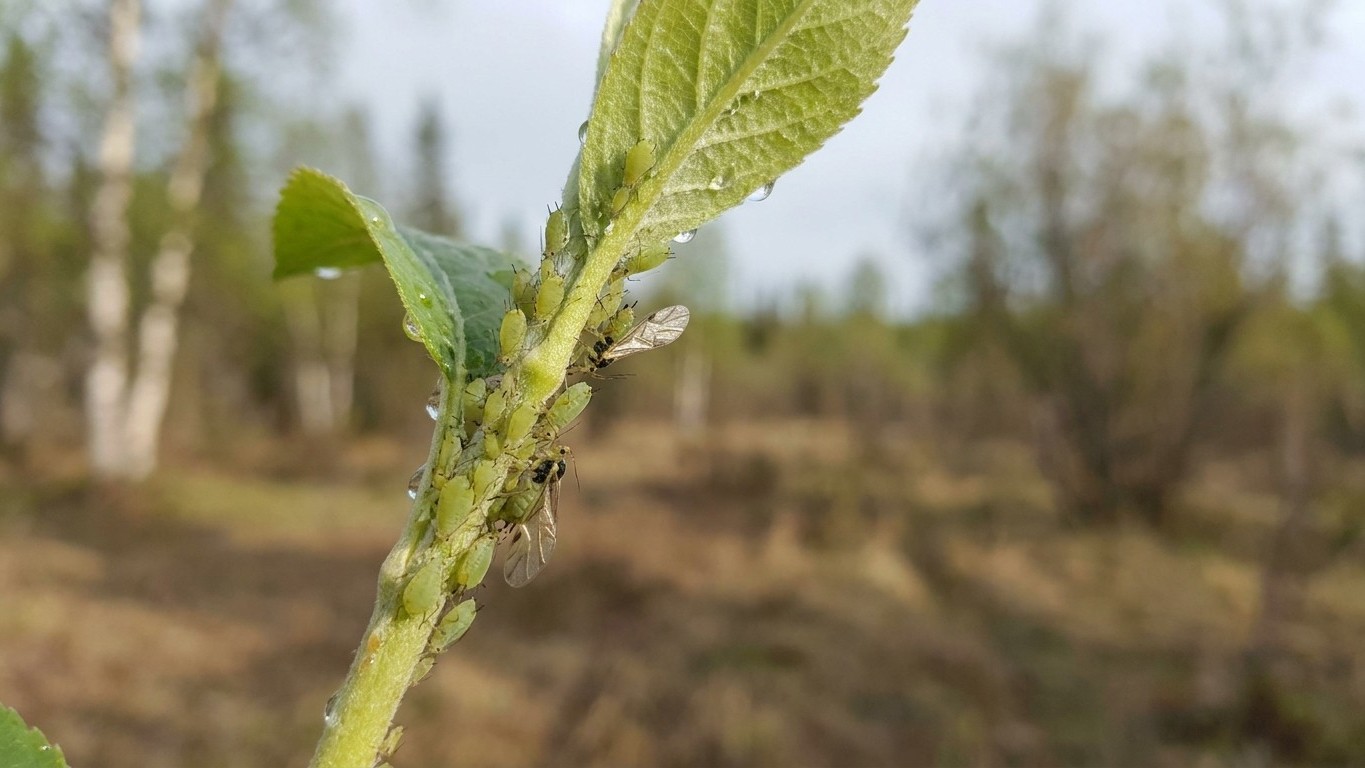

Aphids show up in the Northwest Territories the moment temperatures stay above roughly 45°F for more than a few days running, which usually lands somewhere between late May and mid-June depending on how far north you are. What actually stops them isn’t frost alone, since many species survive as eggs tucked into bark. Consistent control comes from a mix of predator insects, insecticidal soap, and breaking their reproductive cycle before populations explode in the short window when the territory’s plants are actively growing.
When Aphids Actually Show Up in NWT

The growing season in the Northwest Territories is short and blunt. Yellowknife gets roughly 100 frost-free days, Hay River and Fort Smith a bit more, and communities further north considerably less. Aphids don’t wait for a calendar date. They respond to soil and air temperature, and once daytime highs settle into the mid-40s Fahrenheit for a stretch, overwintered eggs on trees like willow, birch, and poplar begin hatching.
Those first hatchlings are wingless females that reproduce without mating, a trick called parthenogenesis. One aphid becomes a colony of dozens within two to three weeks under decent warmth. That’s the part that surprises a lot of new gardeners in the territory: a plant that looked clean on the Victoria Day long weekend can be crawling by Canada Day.
Because the frost-free period is so compressed, aphid pressure tends to peak fast and hard in July, right when vegetables and flowering annuals are putting on their biggest growth spurt. By late August, as nights cool and daylight shortens dramatically, populations usually crash on their own, though greenhouse and indoor plants don’t get that natural reset.
Which Species Turn Up in NWT Gardens and Greenhouses
Boreal and subarctic conditions favor a handful of hardy species. Green peach aphid is common on vegetable starts and greenhouse transplants, partly because it arrives on nursery stock shipped in from southern Canada. Potato aphid and cabbage aphid show up on root vegetables and brassicas, both of which are staples in NWT community and home gardens because they tolerate cool soil and a short window to maturity.
Woolly aphids and various birch and willow aphids are the ones you’ll notice on native trees and shrubs around Yellowknife and Hay River, often announced by the sticky honeydew they leave on sidewalks and car windshields parked underneath. That honeydew attracts wasps and grows sooty mold, a black fungal film that isn’t harmful to the tree itself but looks alarming and can coat leaves enough to slow photosynthesis.
Rose aphid is worth a specific mention because roses and other ornamentals grown in sheltered, south-facing spots around territorial homes create a warm microclimate that aphids exploit earlier than the open garden. If you’re going to find aphids first anywhere on the property, it’s usually there.
Greenhouse and Indoor Aphids Don’t Follow the Calendar
Community greenhouses and hoop houses are common across the territory precisely because they extend a growing season that would otherwise be too short for tomatoes, peppers, and cucumbers. But heated or even just sun-warmed enclosed structures let aphids skip the winter die-off entirely. A single overlooked colony on a houseplant or a greenhouse pepper can keep reproducing straight through a Northwest Territories winter, restarting the outdoor infestation the following spring when plants move outside or windows open.
Anyone starting seedlings indoors under grow lights, which is standard practice given how late the outdoor soil warms up, should check the undersides of leaves weekly starting in March. That’s often a month or two before outdoor aphids are even active, and it’s the easiest point to stop a population before it has real numbers behind it.
What Actually Stops Aphids
Aphids are soft-bodied and slow-moving, which makes them one of the more manageable garden pests once you commit to a routine rather than a one-time spray. A few approaches consistently work better than others in a subarctic growing season this compressed.
- Water spray from a hose knocks colonies off leaves and stems, and it’s often enough on its own for light infestations caught early on hardy northern vegetables like kale and potatoes.
- Insecticidal soap works by dissolving the aphid’s outer coating; it needs direct contact and reapplication every 5 to 7 days during an active infestation, which fits a short season where you’re checking plants often anyway.
- Neem oil disrupts feeding and reproduction, and doubles as a mild deterrent against other soft-bodied pests common in NWT greenhouses.
- Ladybugs and lacewings are the most effective long-term control if you can keep them around; a single ladybug larva eats dozens of aphids a day before it even reaches adulthood.
- Pruning heavily infested shoot tips on roses and soft new growth removes the densest colonies fast, since aphids cluster on the newest, softest tissue first.
Chemical broad-spectrum insecticides tend to backfire in a short season because they kill off the ladybugs and parasitic wasps that would otherwise keep aphids in check for the rest of the summer. Once those predators are gone, aphids rebound faster than the beneficial insects can recolonize, which is a real problem when there are only 100 days to work with.
Prevention Timeline That Matches the NWT Season
Timing matters more here than in most parts of the country simply because there’s so little slack. A prevention routine built around the territory’s actual frost dates outperforms generic pest-control advice written for a six-month growing season.
Starting indoor seedlings in March or April means checking leaf undersides weekly from the start, since any aphids riding in on purchased transplants or overwintered houseplants get a running start in the warmth of a home or heated greenhouse. Before moving anything outdoors after the last frost, usually early June around Yellowknife and Hay River, a close inspection prevents transferring an established colony straight into the garden.
Once plants are outside, weekly checks through July catch the population boom before it becomes visible honeydew and curled leaves. Avoiding heavy nitrogen fertilizer helps too, since nitrogen-rich growth is exactly the soft, sappy tissue aphids prefer, and gardeners pushing fast growth to compensate for the short season sometimes overdo it.
By late August, as the territory’s daylight drops fast and temperatures fall toward frost, outdoor aphid pressure tapers off without intervention. That’s the point to focus attention back on anything moving indoors for winter, houseplants, herb pots, or greenhouse holdovers, since those are the colonies that will restart the cycle come spring.
One detail that trips up transplants from warmer provinces: aphids overwintering as eggs on trees don’t need a mild winter to survive the Northwest Territories’ extreme cold. Those eggs are built to handle temperatures well below what kills the adult insects, which is why spraying dormant trees in fall does little and timing control efforts to the actual spring hatch matters more than trying to prevent overwintering in the first place.
Related guides
- Aphids in Yukon: When It Shows Up and What Stops It
- Aphids in British Columbia: When It Shows Up and What Stops It
- Aphids in Ohio: When It Shows Up and What Stops It
- Aphids in Ontario: When It Shows Up and What Stops It
- Root maggots in Northwest Territories
- Slugs in Northwest Territories
- Spruce beetle in Northwest Territories
- Aphids in Alaska: When It Shows Up and What Stops It