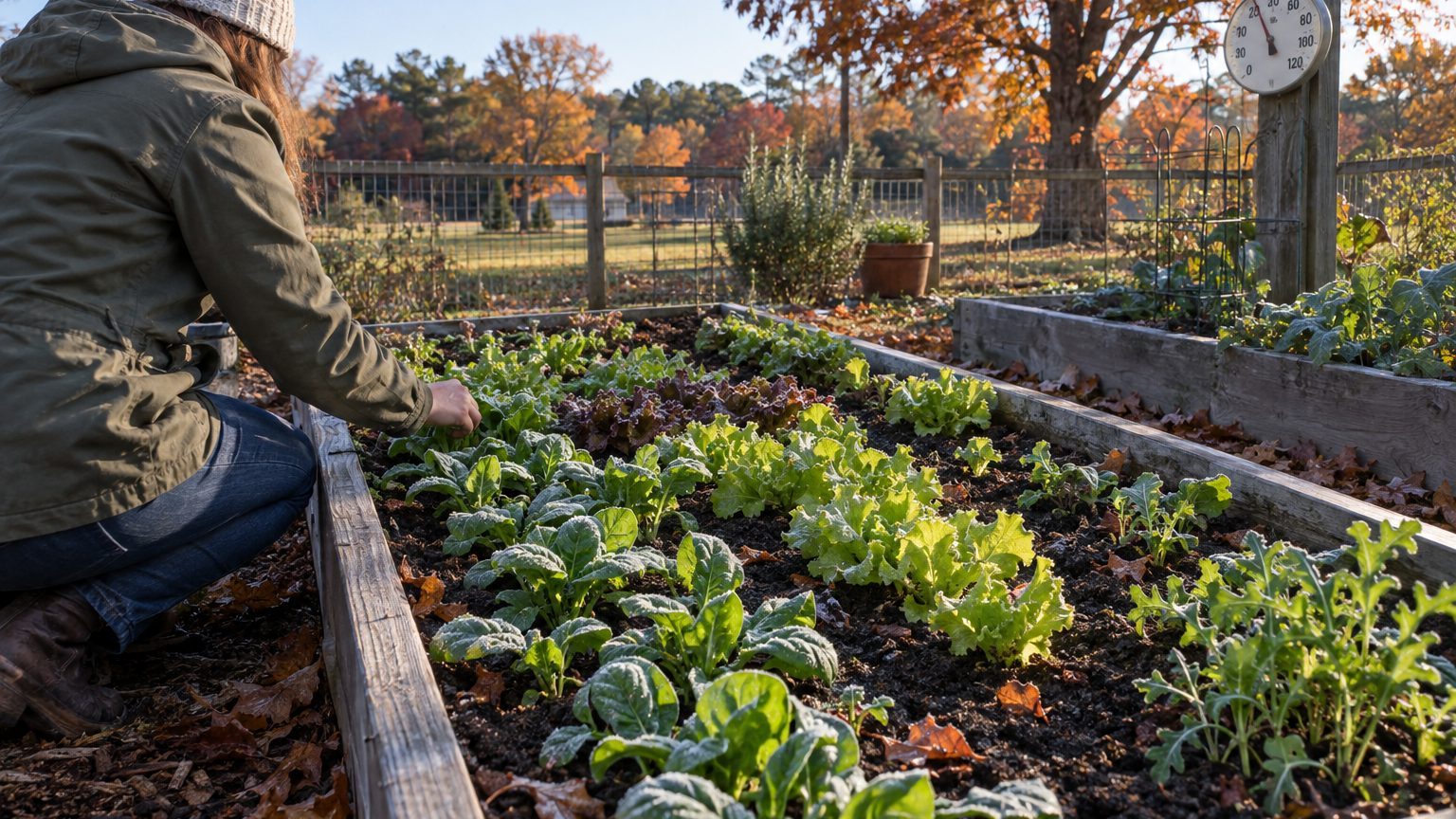

In the Northwest Territories, winter salads get sown twice. Cold-hardy greens go in as soon as the soil thaws in spring, and a main batch follows in midsummer for harvest well into fall. Nothing sown here stands through a winter outdoors. The goal is to cut fresh leaves for as many weeks as the cold allows, and to keep a few crops going under cover after that.
The short answer for Northwest Territories
Sow the first round of hardy greens when the ground can be worked in May, and sow the main fall batch from mid-July to early August. Both windows hang on two averages from the Yellowknife A weather station: the last spring frost falls on average May 25, and the first fall frost arrives on average September 18.
Those are mean dates, the midpoint of a window. In one year out of two the last frost falls later than May 25, and in one year out of two the first fall frost arrives earlier than September 18. Neither is a safe date. Between them the reference station has about 116 frost-free days. The averages cover 1981-2010, and districts north of Yellowknife or at higher elevation run weeks behind them.
When can you sow winter salads outdoors in spring?
Spinach, arugula, mizuna and similar greens take light frost without harm. Seed can go in as soon as the soil is thawed and crumbles in your hand, which in many years is before May 25. A sheet of row cover over the seedlings buys a few degrees on cold nights. Tender lettuce is another matter and should wait until the frost risk has clearly passed, which in half of all years means after the average date.
What is the last sowing date for fall salads?
Count back from September 18. Baby-leaf greens are usually ready to cut once the leaves have sized up, so seed sown in early August has time before the first frost. Growth slows as days shorten after the September equinox, which is why a sowing in late August rarely gets past seedling size in open ground. Under a cold frame or low tunnel the window stretches to about mid-August.
| Sowing | Window | What goes in |
|---|---|---|
| Spring | Soil workable, up to about May 25 | Spinach, arugula, mizuna, hardy lettuce |
| Main fall batch | Mid-July to early August | The same greens, plus kale for baby leaves |
| Covered late batch | Up to about mid-August | Baby greens in a cold frame or low tunnel |
Which greens earn their space is a separate question, covered in The Best Winter Salads for Northwest Territories.
What will not work here

Overwintering in open ground fails first. The mean daily minimum of the coldest month is -29.5 °C (-21.1 °F), and that is an average, so individual nights run well below it. No salad green survives that unprotected. An unheated cold frame shelters plants by a few degrees, not by thirty, so treat anything under cover as a way to extend the fall harvest rather than to carry plants through January.
Sowing in June is the second mistake, and it surprises people who assume earlier is always better. At this latitude the solstice brings long days, and spinach, arugula and many lettuces read long days as a signal to bolt. A June sowing often runs to flower stalks before it makes a decent leaf. Waiting until mid-July puts the seedlings into shortening days, where they stay leafy.
The slowest crops lose out to the short season. With about 116 frost-free days in total, anything slow from sowing to a usable leaf leaves no margin, and mâche and claytonia sown late stall at seedling size once light fades. Full-sized heading lettuce has the same problem. Choose baby-leaf cutting types that give a quick harvest.
Treating May 25 as a green light also costs plants. Because the frost falls later than that date in half of all years, tender seedlings set out on the average date lose to a late frost about every other spring. The same logic runs in reverse in fall: counting on frost-free weather until September 18 means losing tender lettuce to an earlier freeze in half the years. Keep row cover on hand from late August and the loss is a cold night rather than a ruined bed.
What changes across Northwest Territories
The Canadian hardiness zone for the reference city, Yellowknife, is 1b. That is Natural Resources Canada’s own system, built on seven climate variables, and it does not convert to a USDA zone. The territory stretches from the Alberta border to the Arctic coast, so there is no single answer. Zones fall as you travel north, and the Yellowknife figure describes one city, not the territory.
In practice the spread shows up as weeks. Districts toward the Alberta border generally warm earlier in spring and cool later in fall than Yellowknife, while communities toward the Arctic coast, such as Inuvik at about 68°N, start later and finish earlier. Large lakes can soften conditions along their shores. A gardener in the north should move both windows inward: sow the fall batch earlier in July, plan on row cover from the start, and favor the fastest baby-leaf greens.
Elevation and exposure move the dates too. A bed on a south-facing slope or against a wall can thaw days ahead of flat open ground, and a hollow where cold air settles runs behind it. To see where your own location falls, use the zone lookup at Canada’s Plant Hardiness Site, and read the zone for your municipality there. For a wider view of what suits the territory’s gardens, start with Winter Salads for Northwest Territories Gardens.
Where to check this for your own county
The Northwest Territories does not run county extension offices, so the best local source is the territorial government. The Northwest Territories Department of Industry, Tourism and Investment agriculture services are the place to start with questions about growing in your community.
Ask for two things. The first is a planting calendar for your community or region, with sowing dates for greens that reflect local frost and daylight rather than a territory-wide average. The second is a list of the varieties that have actually been grown in northern conditions near you, including which sowing dates and covers worked.
A recommendation written for your own community beats a territorial one, because frost dates and soil warmth differ by weeks across such a large area. The windows in this article come from the Yellowknife A station and work as a starting frame. If an agriculture officer or an experienced gardener nearby gives you different dates for your district, use theirs.
Checking this against your own garden
Your own observations outrank every date above. Three are worth watching, and none needs equipment.
Soil warmth by feel. In spring, push your hand a few inches into the bed. If the soil is thawed, crumbles and feels cool rather than icy, hardy seed can go in. Compare a sunny raised bed with open ground and you will see how many days your best spot gains.
First true leaves. The first pair after the seed leaves tells you how fast a sowing is moving. If an early August sowing has true leaves while the soil still holds warmth, your site holds heat well. If it lags, shift next year’s sowing earlier or add a cover.
Where frost lands first. On the first white morning in fall, walk the yard. The beds that frost earliest sit in the cold pockets, and the ones that stay green sit in the sheltered spots. Put the latest sowings in the sheltered beds, and the earliest cuttings from the cold ones.
Common questions
Can you grow winter salads outdoors all winter in the Northwest Territories?
No. The mean daily minimum of the coldest month is -29.5 °C (-21.1 °F), colder than any salad green tolerates unprotected. Outdoors, you get a fall harvest that extends past the first light frosts. Overwintering takes a heated structure or an indoor setup.
Is May 25 a safe date to sow?
Hardy greens can go in before it, since they take light frost. For tender crops, May 25 is only the average last frost, and in one year out of two frost falls later. Watch the forecast and keep row cover ready.
How long do baby greens take from sowing to harvest?
Cool fall weather and shortening days stretch that, so allow extra time for sowings made after early August.
Does the Canadian hardiness zone work like a USDA zone?
No. Yellowknife is zone 1b in the Canadian system, which draws on seven climate variables, while the USDA system uses one. The two do not convert, so read plant tags and seed catalogs for the system they actually use.