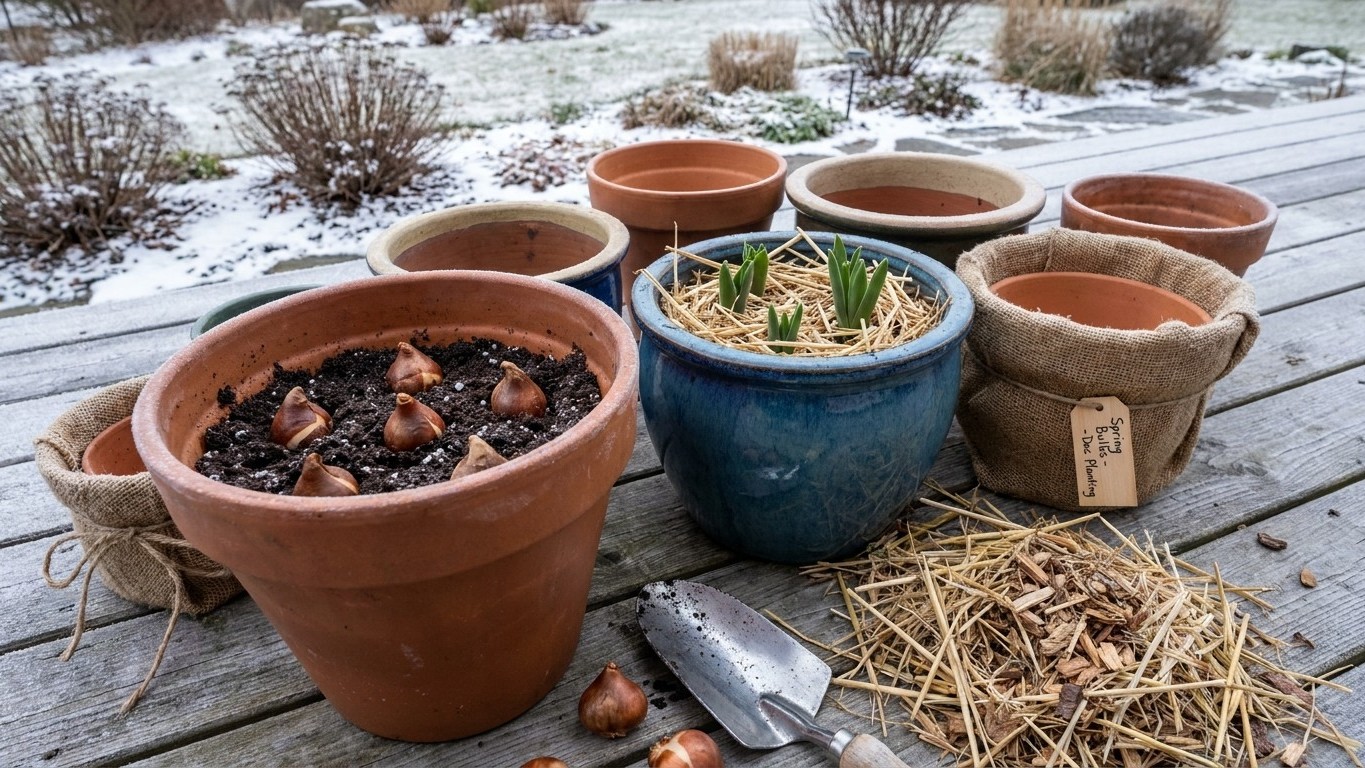

Nova Scotia doesn’t lack winter cold, so forcing isn’t the fix here the way it is in mild climates. The real problem is the container itself: a pot freezes solid, bulb and roots together, while garden soil freezes only at the surface. That single difference changes how you plant, protect, and choose bulbs for pots in this province.
Why this matters in Nova Scotia

Start with the number that settles the question: 13.3°F. That’s the mean daily minimum for the coldest month at the Halifax reference station, according to Environment and Climate Change Canada’s 1981-2010 Climate Normals. A winter that routinely dips into the low teens overnight has no trouble delivering the twelve to fourteen weeks below 45°F that a tulip or daffodil bulb needs to set flower. Forcing, in the technical sense, exists to solve a shortage of cold. That shortage doesn’t exist here.
What does exist is a mismatch between the ground and the pot. Nova Scotia sits in Canadian hardiness zone 6b, based on Natural Resources Canada’s Plant Hardiness Zone data for the reference city, using the 1991-2020 normals. That’s the Canadian system, built from seven climate variables, not the one-variable USDA system Americans usually see on plant tags, and the two don’t convert directly. A bulb rated hardy for zone 6b garden soil is not automatically hardy in a 6b container, because the pot has no earth insulating it on four sides and the bottom. Soil at eight inches down might sit at a stable 34°F through most of a cold snap, buffered by the mass of ground around it. A terracotta or plastic pot exposed to a night near 13°F cools through and through, and the bulb inside experiences something closer to the air temperature than the soil temperature.
That’s the situation this territory is actually in: not a forcing-deficit problem, but a container-exposure problem. A daffodil bulb that would sail through winter in a garden bed can be killed outright in an unprotected pot on a deck or porch, even though the calendar says the same zone applies to both. The fix isn’t more cold, it’s protecting the bulb from too much unbuffered cold in a small volume of soil that has nothing insulating it. Gardeners who want to force bulbs indoors for an earlier, controlled bloom can still do that by choice, using a refrigerator or unheated space to supply the chilling period on their own schedule. But that’s a timing decision, not a rescue for a climate that’s short on cold. Nova Scotia has cold to spare.
How to do it here
Whether the goal is an indoor forced pot for late-winter bloom or an outdoor container left through the season, the sequence below keeps each step something a gardener can check without guessing.
- Pick a pot with drainage holes and a bulb rated for at least zone 6b, or plan to move it. If the bulb’s rated hardiness is one zone milder than 6b, treat the container as needing extra protection rather than assuming it will behave like garden soil.
- Plant with the pointed tip up, at roughly the bulb’s own height in soil above it, in a well-draining potting mix. Soggy mix is the single most common cause of a lost bulb, addressed further down.
- If forcing indoors, start the cold period in an unheated garage that stays above freezing but below 45°F, or in a refrigerator crisper drawer kept away from ripening fruit. Apples, pears, and other ripening fruit release ethylene gas, and ethylene can abort the flower bud forming inside the bulb before it ever gets a chance to bloom.
- Hold that cold exposure for twelve to fourteen weeks, checking that the soil stays lightly moist, not wet, the whole time. A bulb sitting in ice-cold, saturated soil for three months is asking for rot rather than a flower.
- If the container stays outdoors instead of moving inside, the pot needs to be at least two hardiness zones hardier than the bulb’s rating, or it needs to be moved to an unheated but enclosed space and mulched heavily around the sides. Grouping several pots together and packing straw or leaves around them buys extra insulation the single pot doesn’t have on its own.
- Bring the container into a bright, cool room (not warm) once shoots are a couple of inches tall, and only move it to full warmth and light after the shoot has had time to firm up. Rushing this step is where a lot of forced bulbs go wrong, covered below.
Which bulbs are worth it
Not every spring bulb rewards the trouble of a pot. Bulbs with a shorter cold requirement move through the process faster and tend to stay short enough to hold themselves up without staking. Bulbs that grow tall on a thin stem, or that need an especially long chilling period, are harder to get right in a container and often fall over right as they bloom. There’s also a category where the question of “worth it” barely applies at all: bulbs that were never going to survive a Nova Scotia winter outdoors anyway, so growing them once in a container and composting them afterward costs nothing in the long run.
Bulbs that force reliably here
- Crocus (short chilling period, short stem, easy to keep upright)
- Grape hyacinth / muscari (short stem, forgiving of slightly uneven cold)
- Hyacinths (strong stem for their height, reliable bloom once chilled fully)
- Paperwhite narcissus (needs no cold period at all, one of the few true exceptions)
- Smaller trumpet daffodils (steady performers if the full chilling weeks are met)
Bulbs that tend to sulk
- Giant onion ornamentals like Allium giganteum (tall, top-heavy stem in a pot)
- Crown imperial fritillaria (needs an unusually long cold period and a tall stem to match)
- Tall Darwin hybrid tulips (impressive in a bed, prone to toppling in a container)
- Large trumpet daffodil mixes planted too densely (roots compete, stems crowd and lean)
Where hybrid tulips are concerned, forcing costs nothing to try even if it isn’t the most reliable choice, since most forced tulip bulbs are spent after one bloom cycle regardless of how carefully they’re handled. They weren’t going to be a long-term garden investment either way.
What goes wrong, and when you can still fix it
Leaves come up, but no flower ever forms
This means the cold period was too short. The bulb had enough chilling to push foliage but not enough to finish differentiating a flower bud inside. There’s no fix for the bulb this season. Next year, either plant it in the garden bed if it’s hardy for zone 6b soil, or restart the chilling process and hold it the full twelve to fourteen weeks before bringing it into warmth.
A flower shows up on a stem too short to really see
This is a timing mistake, not a cold mistake: the pot was moved into warmth and bright light before the shoot had a chance to elongate. Once that happens, the flower is what it is for this season. Nothing brings the stem back up. Next time, keep the pot in cool, dim conditions a week or two longer after the shoot first appears, before moving it into full light and warmth.
The bulb turns soft or rots inside the pot
Rot means the container never drained properly, whether from a mix that held too much water, a pot without adequate drainage holes, or a saucer that let water sit against the bottom. A rotted bulb is lost for good. There’s no reviving it this season or next. The only real fix is prevention on the next planting: drainage holes, a mix that drains freely, and no standing water at the base of the pot during the entire chilling and growing period.