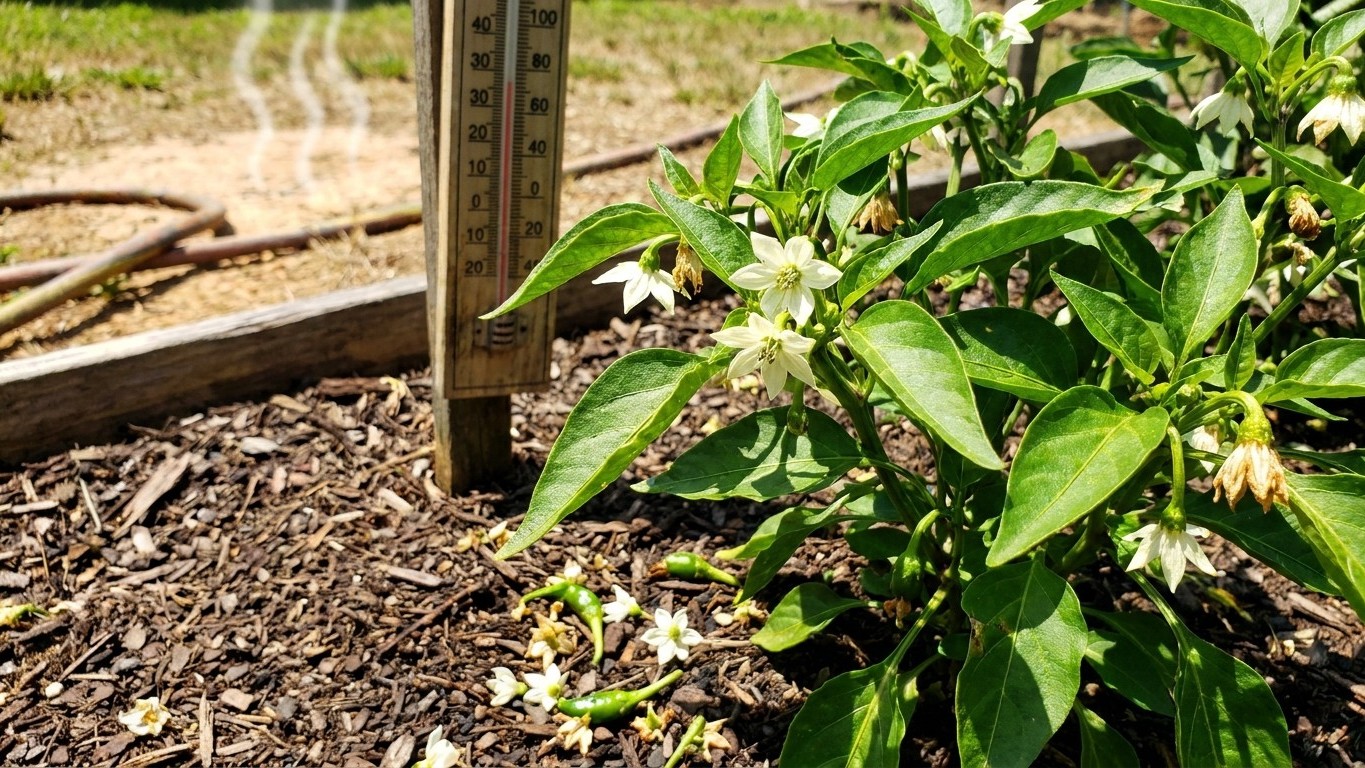

Peppers in Nova Scotia rarely stall because of heat. Halifax averages zero days a year at or above 90 F, so scorching afternoons are not the local threat. The real risk runs the other way: cool nights that stop pollen from setting, plus a growing season short enough that late-started transplants never catch up before fall. Get the timing right and watch your own nighttime lows, and fruit set improves fast.
The short answer
Start with the number: 0.0 days a year at or above 90 F, on average, at the Halifax reference station, per Environment and Climate Change Canada’s 1981-2010 climate normals. That is not a rounded-down “almost never.” It is a flat zero, year after year, on average. For pepper growers, that number matters because pepper flowers abort when daytime highs push past 90 F for any stretch, especially if the heat lands during bloom. In most of Nova Scotia, that particular failure mode barely exists. If your peppers are dropping blossoms in a Halifax-area garden, heat stress is not the first place to look.
The other threshold is just as important, and it cuts the opposite direction. Pepper fruit set also fails when nighttime temperatures drop below 55 F. Cool nights slow pollen germination and can cause flowers to drop before they ever form a fruit, even when the daytime weather looks perfectly pleasant. This is the threshold that actually threatens pepper crops in a maritime climate like Nova Scotia’s, where cool air off the Atlantic can keep nights on the chilly side well into what feels like full summer.
Here is the catch: this site tracks days above 90 F for every territory, because that figure is published in standard climate normals. Summer night minima are not part of that same public dataset in a way that can be reported reliably here. That means no one can hand you a night-temperature number for your exact garden, no matter how tempting a tidy figure would be. The responsible move is to watch your own thermometer through June and early July, and note whether nights are settling above or below that 55 F line during the weeks your pepper plants are flowering. A porch thermometer or a $15 min/max unit staked near the pepper bed will tell you more than any regional average ever could, because it reflects your yard, your wind exposure, and whether you are gardening on a coastal bluff or in a sheltered inland hollow a few miles from the water.
So the short version: heat almost never causes pepper failure in Nova Scotia. Cool nights during flowering are the far more likely culprit, and that is a variable you have to measure yourself rather than look up.
When to start seed here
Working out a start date for pepper seed is really just arithmetic run in reverse, starting from the transplant date and counting backward. Here is how that math plays out for Nova Scotia conditions.
- Start with the frost date. The average last spring frost at Halifax Stanfield International Airport is May 7, based on Environment and Climate Change Canada’s 1981-2010 climate normals. This is a mean date, not a guarantee. It is calculated so that in roughly one year out of two, frost actually arrives later than May 7. Treat it as the midpoint of a risk window, not a safe line to plant on. Coastal pockets can lag or lead this by days; inland and upland districts often run behind it by a couple of weeks.
- Add the soil condition. Frost date alone is not enough. Utah State University Extension notes that pepper transplants should go into the ground only after frost has passed and once soil temperature has reached 60 F. Cold soil stunts pepper roots even when the air feels warm enough, so a soil thermometer pushed 4 inches into the bed is worth more than a calendar guess.
- Count back 8 to 10 weeks for indoor starting. Once you have a realistic transplant date, in most Nova Scotia gardens that lands somewhere in the back half of May or into early June, once frost risk has genuinely passed and soil has warmed, count backward 8 to 10 weeks. That backward count is when pepper seed needs to go into starting trays indoors, under lights, well before the outdoor season even begins to look like spring.
- Adjust for your own microclimate. A gardener near the Bay of Fundy or on the Atlantic coast may see soil warm more slowly than someone gardening on well-drained sandy loam further inland. Push the transplant date later, and the indoor seed-start date later with it, rather than forcing plants outside on the calendar alone.
Run the numbers for your own county rather than borrowing someone else’s date. The formula stays fixed (frost past, soil at 60 F, minus 8 to 10 weeks indoors), but the actual calendar dates shift by property, by soil type, and by how exposed the garden bed is to wind and cold air drainage.
What goes wrong here
- Blossom drop from a cool night. This is the dominant failure in a Nova Scotia pepper patch. When nights fall below 55 F during flowering, blossoms open, Fail to Set Fruit, and drop off the plant within a day or two. The remedy is mostly about timing and siting: hold transplanting until nights have reliably warmed, choose the warmest microclimate in the yard, a south-facing wall or a spot shielded from onshore wind, and consider row cover pulled over plants on nights when a cool snap is forecast during peak bloom.
- Blossom drop from a hot spell. Far less common here given the region’s essentially zero days above 90 F on average, but not impossible during an unusual heat spike. If daytime highs do spike hard during flowering, expect the same blossom drop as the cold scenario, just from the opposite cause. Light afternoon shade cloth over plants during an unusual heat event, and consistent watering so plants are not also drought-stressed, reduces the damage.
- Sunscald on exposed fruit. Where sun exposure is strong and foliage is thin, sun can scald the skin of developing peppers, leaving pale, papery patches that soften and rot. Dense, healthy foliage is the best natural defense, so avoid over-pruning leaves in the name of tidiness, and stake plants so fruit stays shaded by their own canopy rather than dangling in direct sun.
- Blossom-end rot. This shows up as a sunken, leathery brown-black patch on the bottom of the fruit, and it is a calcium-uptake problem tied to inconsistent watering rather than a soil calcium shortage in most gardens. Even, regular watering, mulch to hold soil moisture steady, and avoiding the swing from bone-dry to soaked keeps peppers from developing the rot in the first place.
Common questions
Do peppers actually fail in Nova Scotia’s climate, or is it just slower growth?
Both happen, but they are different problems. Slower growth comes from a shorter, cooler season overall. Actual fruit-set failure comes specifically from nights dropping below 55 F during flowering, which stops pollen from doing its job even on a plant that otherwise looks healthy.
Since Nova Scotia has almost no days above 90 F, can I ignore heat entirely?
Mostly, yes, for planning purposes. The reference station shows an average of 0.0 days a year at or above 90 F, so heat-driven blossom drop is a rare event here rather than a routine risk. It is still worth watching the forecast during an unusual warm spell in bloom, since even a rare heat event can knock blossoms off if it lands at the wrong moment.
How do I know if my garden’s nights are staying below 55 F during bloom?
Place a min/max thermometer near the pepper bed and check it every morning through the flowering weeks. There is no regional dataset here that substitutes for that reading, since summer night minima are not part of the figures this site tracks. Your own yard’s microclimate, shaped by elevation, wind exposure, and distance from open water, decides the actual number.
Is May 7 a safe date to transplant peppers outdoors in Nova Scotia?
No. May 7 is the average last spring frost date at Halifax Stanfield International Airport, which means frost arrives later than that in roughly half of all years. Treat it as the middle of a risk window, wait for soil to reach 60 F as well, and lean later rather than earlier if your garden sits somewhere colder than the airport station.