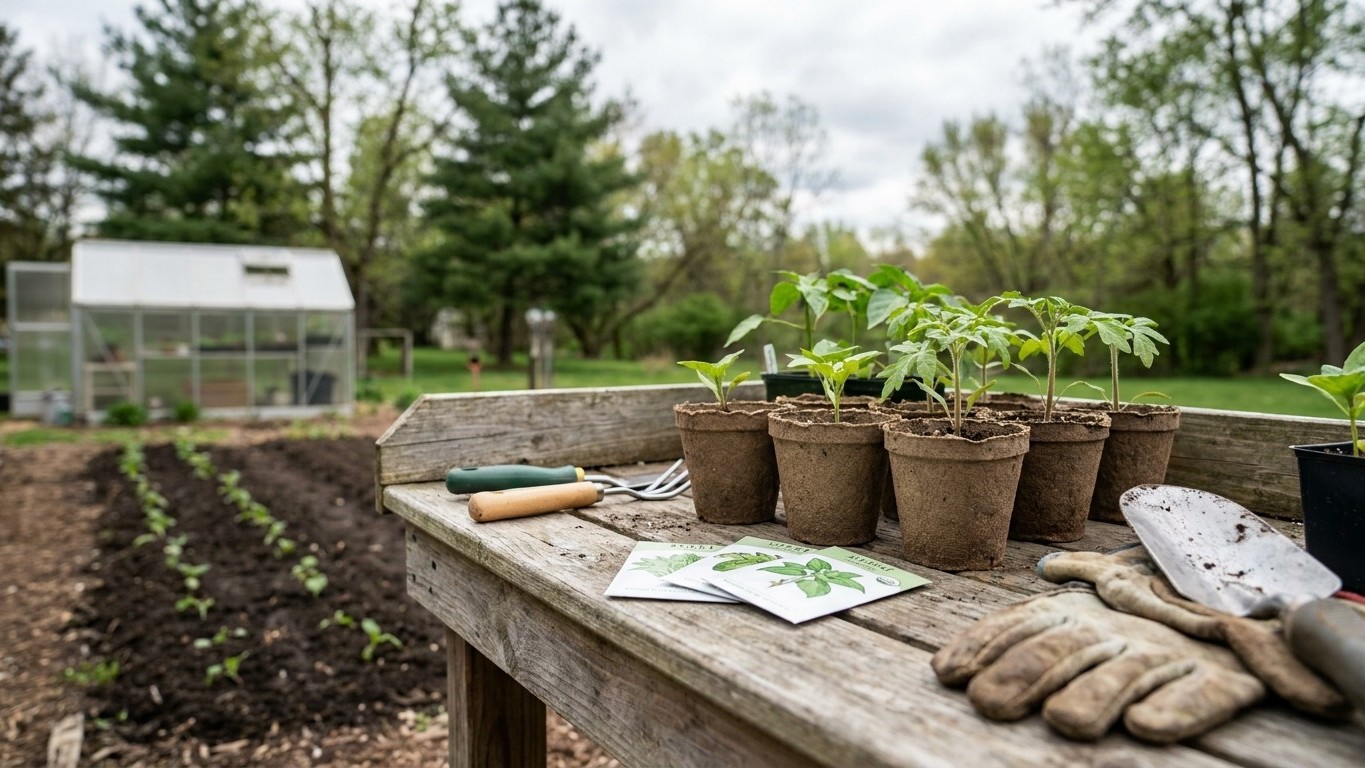

In Nova Scotia, April sits well ahead of the average last spring frost, so outdoor planting stays limited to cold-hardy crops and prepared ground. Peas, onion sets, shallots and tough greens can go in where the soil is workable and not waterlogged. Tomatoes, squash, basil and peppers wait. Indoors, this is the window for starting warm-season transplants, counted backward from frost. The real work this month is soil, pruning and seed-starting, not full garden planting.
What goes in the ground in April

The number that matters here is May 7. That is the average date of the last spring frost recorded at Halifax Stanfield International Airport, according to Environment and Climate Change Canada’s Climate Normals for 1981-2010. It is a mean, not a guarantee: in roughly half of all years, frost arrives after that date. Treat it as the midpoint of a risk window, not a green light, and remember the station sits on the coast near Halifax. Inland valleys and higher ground run behind it, sometimes by two or three weeks.
That single fact decides what belongs outside in April. Soil Temperature, not the calendar, tells you when seeds will actually germinate rather than rot in cold, wet ground. Nova Scotia’s clay and loam soils are often still cold and heavy this early, especially after a wet winter, and working them while sodden compacts the structure for the whole season. Wait until a handful of soil crumbles instead of smearing.
What can safely go in
| Crop | Frost tolerance | Note |
|---|---|---|
| Peas | High | Germinate in cool soil; sow as soon as ground is workable |
| Onion sets, shallots | High | Root growth continues even under light frost |
| Spinach, arugula, mesclun | High | Tolerate light frost; slow germination below 40°F |
| Fava beans | High | One of the earliest legumes to sow outdoors |
| Radishes | Moderate to high | Fast crop; sow in short rows every couple of weeks |
Everything tender, tomatoes, peppers, squash, cucumbers, basil, beans, stays indoors or under cover. Planting them outside now is not an early start, it is a bet against a frost date that is only a coin flip away from being missed. A cold frame or a low plastic tunnel buys real ground for the hardy crops above, warming the soil a few degrees and cutting wind, but it does not turn April into May.
What to start under cover
Work backward from that same May 7 average, and add a margin for the years frost runs later. Tomatoes and peppers typically need six to eight weeks indoors before they go outside, so starting them under lights in April lines up with transplanting after the frost risk has genuinely passed, not on the calculated average date itself. Slower growers like onions from seed, leeks and celery need even more lead time and should already be well underway by now if they were not started earlier.
Squash, cucumbers and melons are the opposite case. They resent root disturbance and grow fast, so starting them too early in April means leggy, rootbound plants sulking in small pots for weeks before the ground and air are warm enough to take them. Three to four weeks before the expected transplant date is closer to right for these.
The two ways this goes wrong are mirror images of each other. Start too early and you end up hardening off pale, stretched seedlings that sulk for a month after transplanting, if they survive the shock at all. Start too late, and short-season Nova Scotia summers do not give tomatoes or peppers time to size up before the first fall frost, which averages October 18 at the same Halifax Stanfield station. That gives a growing window of roughly five months between the two averages, and every week lost at either end eats into it.
What is ready to pick
Little comes out of a Nova Scotia garden from open ground this early, and that is worth saying plainly rather than padding with crops that are not actually there. What does come through is overwintered material: kale and leeks that sat under snow cover often taste sweeter after the cold, since frost converts starches to sugars in the leaves. Check leeks for soft, mushy centers before pulling a whole row, since a hard freeze-thaw cycle can rot the ones closest to the surface.
Cold frames planted with hardy greens the previous fall may already be giving small cuttings of spinach or mâche, and it is worth harvesting outer leaves rather than whole plants to keep them producing into warmer weeks. Sprouts and microgreens grown on a windowsill or under lights fill the gap for fresh salad material with no outdoor risk at all, and they are ready in one to two weeks from sowing.
Storage crops need a hands-on check now rather than later. Squash held since fall should be firm with no soft spots near the stem end; potatoes stored in a cool, dark spot can start sprouting eyes as daylight lengthens, a sign to use them before they shrivel; onions with any give at the neck or a moldy smell at the root plate should be pulled from storage and used first, since one soft onion spreads rot to its neighbors quickly.
The jobs that matter this month
Fruit tree and cane pruning has a real deadline here: it needs to happen while wood is still dormant and before buds swell and break, which in Nova Scotia’s Canadian hardiness zone 6b (a Natural Resources Canada rating built on seven climate variables, not comparable to a USDA zone) often means finishing up in April before growth resumes in earnest. Late pruning after sap is rising costs the tree energy and invites disease into fresh cuts.
Seed ordering is a job with a deadline too, just an invisible one. Popular varieties of peas, tomatoes and squash sell out from suppliers earlier than most gardeners expect, and by the time it is obviously planting season the good stock is often gone.
- Turn and check the compost pile, adding brown material if it has gone slimy over winter
- Test soil pH and amend beds with lime or sulfur while there is still time for it to act before sowing
- Clean and sharpen pruners, hoes and spades so they are ready the day the ground opens up
- Repair raised bed frames, trellises and fencing before plants and soil are in the way
- Plan crop rotation on paper now, while last season’s map is still fresh
None of these are filler tasks. A pruning cut made three weeks late, a rotation plan sketched after the seedlings are already started, a fence repaired after deer have already found the gap: each of these costs more time to fix later than it would have taken to do now.
What not to do in April
The classic mistake is trusting a warm afternoon over the soil thermometer. A run of 60°F days in April feels like permission to set out tomatoes or beans, but the ground several inches down often lags well behind air temperature, and a tender transplant sitting in 45°F soil will stall or rot at the roots even without a frost touching its leaves.
Pulling mulch and frost cloth off perennials and garlic beds too early after a mild stretch is the second common error. Nova Scotia’s spring weather swings hard, and a bed uncovered during a warm week can take a harder hit from the next cold snap than it would have under its winter cover. Leave protective mulch in place until new growth is well underway, then pull it back gradually rather than all at once.
Nitrogen-heavy feeding this early is the third trap. Established perennials, fruit trees and shrubs are only beginning to break dormancy, and a heavy dose of nitrogen now pushes soft, fast leaf growth before roots have caught up, leaving that growth vulnerable to the very frosts still likely before May 7. A light application once real growth is visible does far more good than an early one meant to force things along.
Checking this against your own county
Every figure above comes from one weather station, Halifax Stanfield, and Nova Scotia is not one climate. The Annapolis Valley warms up earlier than the Cape Breton highlands, and coastal fog belts along the South Shore lag behind inland pockets by real, measurable weeks. Elevation and distance from the water shift frost windows more than most gardeners expect.
Use the average dates here as a starting point, then check them against local knowledge and the Nova Scotia Department of Agriculture, which tracks conditions specific to the province’s growing regions.
Common questions
Is it too early to plant a vegetable garden in Nova Scotia in April?
For tender crops, yes. The average last frost falls around May 7, and that date runs later in about half of all years, so tomatoes, peppers and squash still belong indoors. Hardy crops like peas, onion sets and cold-tolerant greens can go into workable soil now.
Can I plant garlic in April in Nova Scotia?
Garlic is normally planted in fall for a summer harvest. If fall planting was missed, shallots and onion sets are a better spring substitute, since they tolerate cold soil and light frost while still bulbing up in one season.
When is it safe to move tomato seedlings outside?
Not on a fixed date. Wait until well past the average last frost of May 7, watch the extended forecast for cold snaps, and check that overnight soil temperature has warmed rather than relying on daytime air temperature alone.
What is the coldest hardiness zone risk for perennials in Nova Scotia?
The Halifax area sits in Canadian plant hardiness zone 6b, based on Natural Resources Canada’s seven-variable rating system. That number does not convert to a USDA zone, and it applies to the reference station only. Colder inland and upland districts of the province run behind it.