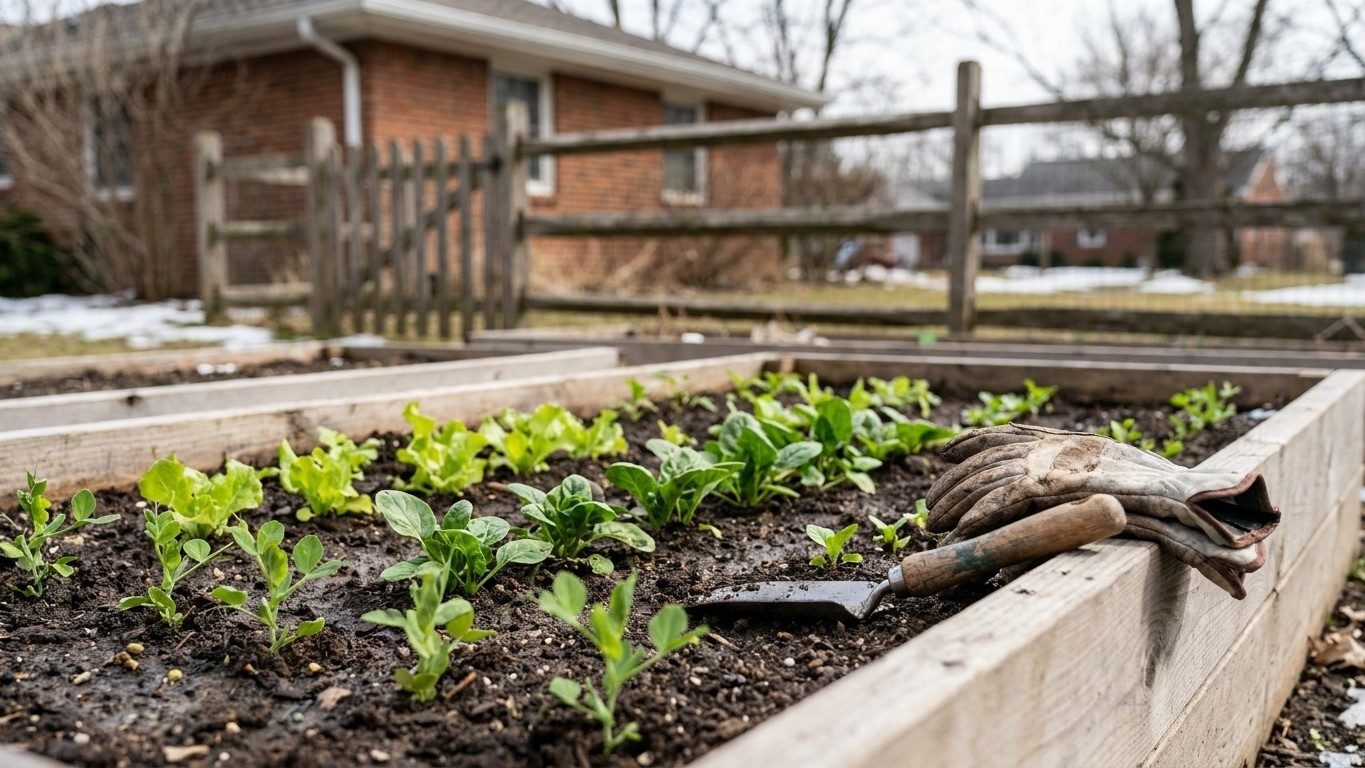

March in Nova Scotia sits roughly two months before the average last spring frost, so open-ground planting stays limited to the hardiest crops and to ground that is actually thawed and workable. The bulk of this month’s real work happens indoors, under cover, or in dormant outdoor tasks like pruning and soil prep rather than in direct sowing.
What goes in the ground in March

The number that matters here is May 7, the average last spring frost recorded at Halifax Stanfield Int’l A under the Canadian Climate Normals 1981-2010. That’s not a safe date, it’s a midpoint: in half the years on record, frost arrives later. March sits a full two months ahead of that average, which means soil Temperature, not the calendar, is what decides whether anything survives outdoors this month.
For most of the province, that soil is still frozen solid or waterlogged from snowmelt, and neither condition lets seed germinate or roots establish. So the honest answer is that very little goes into open ground in March. That said, a few things still move.
Fall-planted garlic and shallots, already in the ground since autumn, keep pushing up green shoots as the soil thaws, and they need nothing from you beyond patience. Where a bed has genuinely thawed and drains well, typically in milder pockets like the Annapolis Valley or the South Shore, shallot sets or the toughest pea varieties can go in, but treat this as a gamble rather than a plan: a late cold snap after the ground softens is common, not rare.
Cold frames and low tunnels are the more reliable route. They let you get hardy greens like spinach, mache, and arugula started or growing weeks ahead of open-ground conditions, because the covering buys several degrees of protection without needing the outdoor frost window to open. Bare-root fruit trees, cane fruit like raspberries, and asparagus crowns can also go in once the ground is workable, since they’re dormant and unfazed by cool soil. Indoors, forcing rhubarb crowns or chicory roots in a dark, warm spot gives you a harvest this month that has nothing to do with outdoor frost risk at all.
What to start under cover
Seed starting this month should be counted backward from that same May 7 average, not forward from today’s date. The arithmetic is simple once you know your crop’s lead time. Peppers and eggplant need eight to ten weeks indoors before they’re ready to go outside, and since they can’t go outside until well after the frost risk has genuinely passed, sowing them now, in March, lines up correctly. Tomatoes need six to eight weeks, so a March start also puts them on track for transplanting once the soil has warmed, sometime after that average frost date.
Onions and leeks started from seed want ten to twelve weeks before transplanting, which means a March sowing is workable but on the later edge for a full-size crop, since they tolerate cool soil and can go out a little ahead of the last frost. Brassicas, cabbage, broccoli, cauliflower, similarly need six to eight weeks indoors and can handle a transplant into a cold frame before the frost window fully closes, since they shrug off a light frost that would kill a tomato seedling outright.
The two ways this goes wrong are predictable. Start too early, working off nothing but impatience, and you end up with leggy, rootbound seedlings sitting in small trays for weeks longer than they should, stretching toward the light and stalling out before they ever see soil. Start too late, especially with peppers or eggplant, and you run out of growing season entirely, since these crops need every week of that lead time to produce before the first fall frost arrives around October 18. Neither mistake is fixable once the seedlings are struggling, so the backward count from the frost window is worth doing properly before the seed packet gets opened.
What is ready to pick
Outdoors, March offers little. Anything still standing in the garden bed has been there since fall, and what’s worth checking is overwintered kale, whose leaves often taste sweeter after repeated freezes, and leeks, which can sit under snow cover and still pull cleanly from softened ground once it’s accessible. Brussels sprouts stalks left standing sometimes still hold a few tight sprouts worth harvesting.
Cold frames do more of the feeding this month than the open garden does. Spinach, mache, and arugula sown under cover earlier in winter are often ready to cut, and a light touch, taking outer leaves rather than whole plants, keeps them producing longer. Indoors, sprouts and microgreens are the fastest turnaround in the entire garden calendar, ready in one to two weeks from seed with no outdoor conditions to worry about at all.
The other job this month is checking what’s already in storage before it turns. Squash should feel firm with no soft spots near the stem end; any give there means it’s breaking down and should be used first. Potatoes sprouting eyes aren’t ruined, but they’re signaling it’s time to cook them rather than let them keep sitting. Onions with soft necks or a sour smell have started to rot from the inside and won’t improve, so pull them from the batch before they spread that rot to the others sharing the same bin.
The jobs that matter this month
Dormant pruning is the single biggest task with a real deadline attached. Apple and pear trees, along with currant and gooseberry bushes and raspberry canes, should be cut back while they’re still fully dormant and before buds swell, since pruning after growth starts stresses the plant and wastes energy it should be putting into fruit. Once you see green tips, that window has closed for the season.
Seed ordering belongs here too, and it’s easy to underestimate how fast popular varieties sell out. Waiting until the seed-starting deadline arrives often means settling for whatever’s left rather than what you actually planned to grow.
Soil testing and amending pay off far more in March than later, because amendments like lime or compost need weeks to integrate before roots arrive to use them. Turning the compost pile now, even if it’s still cold and slow, keeps the decomposition moving instead of stalling out completely over a frozen winter. It’s also the natural month to plan next season’s crop rotation on paper, while beds are still empty and the plan doesn’t have to compete with anything actually growing.
Practical maintenance rounds out the list: cleaning and sharpening pruners and hoes before the season’s first real use, repairing raised bed frames or fencing that shifted over winter frost heave, and doing a final check of stored crops for rot before spring work takes over the schedule entirely. None of these jobs are glamorous, but skipping them now means paying for it in June.
What not to do in March
The most common mistake is trusting the air temperature over the soil. A mild, sunny stretch in March can feel like spring, but warm-season crops like beans, squash, or corn seeded directly into cold soil simply won’t germinate, or they’ll rot before they sprout, because soil temperature lags well behind a warm afternoon. Check the soil itself, not the forecast, before direct-sowing anything tender.
Uncovering cold frames or removing winter mulch too early after a mild spell is the second trap. Given that the average last frost doesn’t arrive until May 7, a week of warm weather in March is not a signal that frost risk has passed, it’s a pause in it. Plants exposed too soon can be knocked back hard by the next cold snap, undoing weeks of protected growth in a single night.
Feeding nitrogen at the wrong moment also backfires. Applying it to dormant beds or crops that haven’t started active growth mostly feeds nothing, since there’s no root uptake happening yet, and it leaches away or feeds weed germination instead. Wait until you see real growth resuming before applying fertilizer, and put the effort instead into soil structure and organic matter, which do their work regardless of temperature.
Checking this against your own county
A province-wide month is a starting point, not an instruction. Elevation, coastal exposure, and the real difference between Nova Scotia’s northern counties and its milder South Shore and Annapolis Valley can shift these windows by several weeks in either direction. A frost date recorded at one airport station doesn’t hold for a valley floor forty minutes inland.
Nova Scotia’s Department of Agriculture (novascotia.ca/agri/) is the resource worth checking against local conditions before committing to any of the timing above, particularly for anyone gardening outside the Halifax area.
Common questions
Can I plant potatoes in Nova Scotia in March?
Not outdoors, in most cases. With the average last frost falling around May 7, soil in March is typically still too cold and wet for seed potatoes to go into open ground. Chitting seed potatoes indoors this month, so they’ve sprouted before planting, is the useful step to take instead.
Is it too early to start tomato seeds in March?
No, March lines up well for tomatoes, since they need six to eight weeks indoors before transplanting, and transplanting happens after the frost risk has genuinely passed, well beyond that May 7 average.
What hardiness zone is Nova Scotia for planting purposes?
The reference city sits in Canadian hardiness zone 6b, based on Natural Resources Canada’s 1991-2020 normals. This is the Canadian system, built from seven climate variables, and it does not convert directly to a USDA zone.
What can I harvest from a Nova Scotia garden in March?
Outdoors, overwintered kale and leeks are about the extent of it. Cold frames extend that with spinach, mache, and arugula, and indoor sprouts or microgreens offer the quickest fresh harvest with no outdoor conditions involved at all.