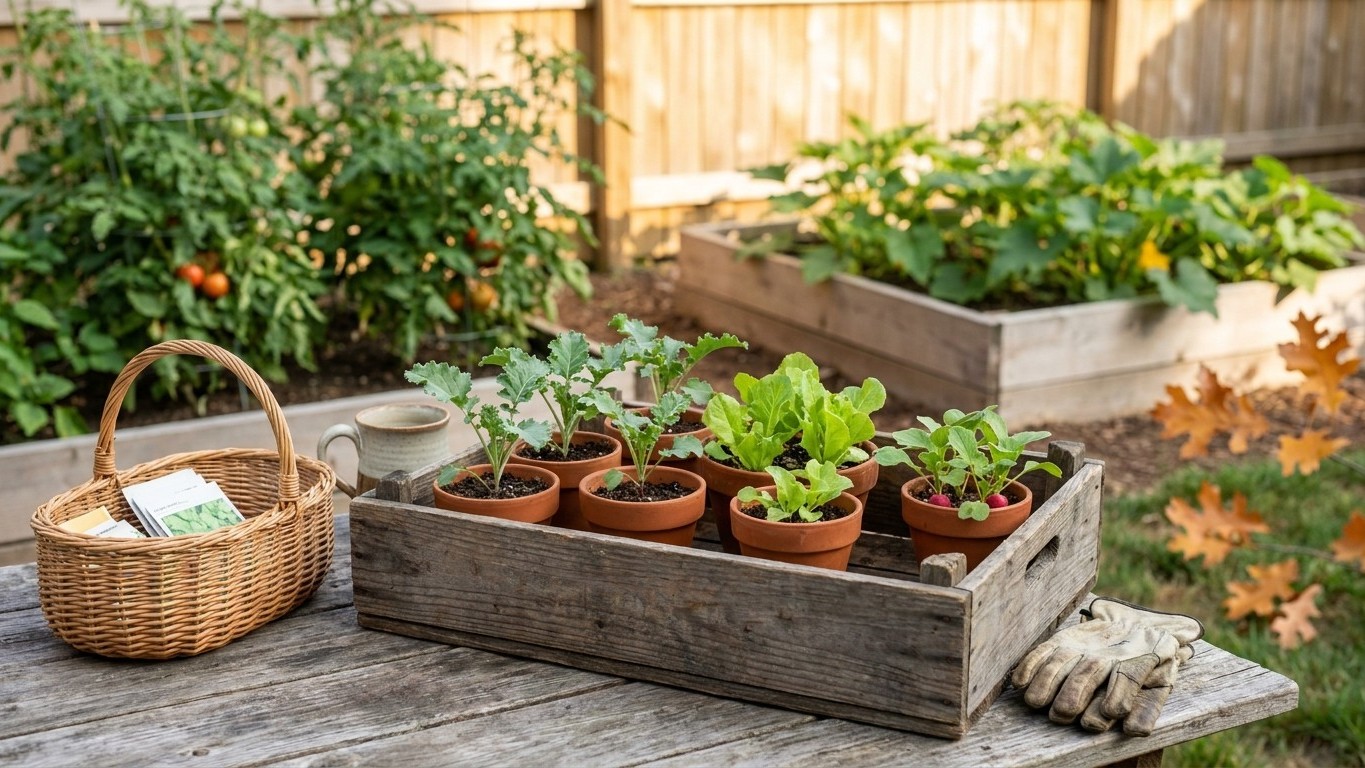

August in Nova Scotia is peak-of-season work, not a start-from-scratch month. With the province’s mean last spring frost long past (May 7) and the mean first fall frost still roughly seven to ten weeks out (October 18), the ground stays warm enough for a real second wave of quick crops, while the bigger job is managing what is already in full production and getting fall crops timed correctly.
What goes in the ground in August

The frost math is what decides this month, not the calendar page. Environment and Climate Change Canada’s Halifax Stanfield normals put the mean first fall frost at October 18, which is a midpoint, not a guarantee: in roughly half of years, frost arrives later, and in the other half it comes sooner. Count backward from that date using the days-to-maturity on a seed packet, and you’ll know within a week or two whether a crop sown now has a real shot at finishing outdoors.
Quick greens are the safest bet for direct sowing in early-to-mid August: lettuce, arugula, spinach, radish, baby turnips, and salad-size beets can all mature in 30 to 55 days, leaving enough buffer even against an early frost. Bush beans are a gamble past the first week of the month, since most varieties need 50 to 60 days plus a stretch of warm nights to fill pods properly, and a cool September can stall them before harvest.
Transplanting, not seeding, does the heavy lifting for fall brassicas. Broccoli, cabbage, cauliflower, kale, and collards started under cover in June or early July should be going into open ground now as transplants, not seeds, because a direct-sown brassica in August rarely has time left to head up before cold weather slows growth. This is also the last realistic window to set out fall-harvest carrots and parsnips as seed, since both are slow starters that need the summer’s remaining heat to size up before the ground cools.
What is a genuine gamble rather than a safe bet: any warm-season crop sown from seed now, including corn, squash, melons, and cucumbers. None of these reliably reach maturity between an August sowing and an October frost in this climate, and betting on a late fall is a bet the odds don’t support.
What to start under cover
Starting seed under row cover or in a cold frame in August is really about buying an extra few weeks at the tail end of the season, and the arithmetic works the same way whether you’re in Halifax or well inland. Take the days-to-maturity on the packet, add roughly ten to fourteen days to account for cooling soil and shortening daylight, then count back from the mean October 18 frost date. A 45-day lettuce, for instance, needs to go in by early-to-mid September at the latest to have any margin, and sowing it under cover now rather than later gives it a head start while soil temperatures are still favorable for germination.
The crops worth starting under cover this month are the same fall standbys: spinach, mâche, mustard greens, and a second round of quick brassica greens like tatsoi or mizuna. Cold frames and low tunnels don’t just extend the season past frost, they also protect August-sown seedlings from the heavy dew and occasional heat spike that can still hit the province before September settles in.
Two mistakes show up every year at this point in the season. Sow too early under cover in high summer heat, and greens bolt or germinate poorly, since many lettuce varieties won’t sprout reliably above roughly 80°F. Sow too late, and the plant runs out of daylight and warmth before it can size up, leaving you with a bed of stalled seedlings when frost arrives. The safest habit is to treat the October 18 mean as the deadline for harvest, not for planting, and work backward from there every time.
What is ready to pick
August is when the garden earns its keep. Summer squash and zucchini should be checked every day or two, since a fruit left on the vine an extra week turns from tender to tough almost overnight. Cucumbers follow the same rule: pick before the skin dulls and seeds harden. Bush beans are ready when pods snap cleanly rather than bend, and leaving mature pods on the plant signals it to stop producing new ones.
Garlic planted the previous fall usually finishes curing by now if it was pulled in late July, and the tell is straightforward: once the lower third to half of the leaves have browned, it’s time to lift the bulbs and cure them somewhere dry and out of direct sun for a couple of weeks before storage. Onions follow a similar cue, with tops that flop over on their own marking the point to stop watering and let the bulbs finish drying in the ground for a few days before harvest.
This is also peak time for the province’s soft fruit: blueberries, raspberries, and currants are all coming ripe, and Nova Scotia’s wild lowbush blueberries in particular are ready when they pull free with the lightest touch rather than needing to be tugged. New potatoes can be dug now by hand-forking gently at the edge of a hill, taking only what’s needed while leaving the rest of the plant to keep bulking up the remaining tubers.
The jobs that matter this month
Watering rhythm matters more in August than almost any other month, because dry spells combined with high heat stress plants exactly when many are setting fruit. Uneven watering on tomatoes and peppers is the classic cause of blossom end rot, so the fix isn’t more water overall, it’s steadier water: a deep soak two or three times a week beats a light daily sprinkle.
Succession sowing needs to happen now or the fall harvest gap shows up later. As spent pea and early bean rows come out, that ground should go straight into a quick green or a fall root crop rather than sitting empty, since every week of bare soil in August is a week of lost fall production.
Staking and support work pays off doubly this month: tomato and pepper plants are at their heaviest with fruit, and a cage or stake installed now prevents the kind of stem breakage that a sudden August wind or heavy rain can cause overnight. Mulching around these same plants helps hold soil moisture through dry stretches and keeps weeds from competing for water during the hottest weeks.
Pest scouting deserves a regular walk-through, since Japanese beetles, cabbage worms, and squash bugs are all active in August and multiply fast if left unchecked for even a week or two. Catching an infestation early, by hand-picking or targeted treatment, is far less work than dealing with a defoliated bed in September.
Garlic and onion curing is a job with a real deadline: bulbs left in the field too long after the tops brown risk splitting or rot, while bulbs cured in damp or overly hot conditions store poorly through winter. Get them into a dry, airy, shaded spot as soon as they’re lifted.
What not to do in August
The most common mistake is sowing warm-season crops from seed because the weather still feels like midsummer. Corn, squash, and melons sown in August rarely have enough runway before the October 18 mean frost to produce anything worth harvesting, and a warm stretch late in the month doesn’t change that math, since a single frost night ends the season for these crops regardless of how mild the days around it were.
A related error is easing off on watering once a dry spell breaks. One good rain doesn’t undo a week of drought stress, and plants that were water-stressed while setting fruit often show the damage days later, in split tomatoes or bitter cucumbers, even after conditions improve.
Fertilizing is another place timing matters more than quantity. A high-nitrogen feed applied to fall brassicas or perennials late in the month pushes soft, leafy growth right when the plant should be starting to toughen up for cooler weather ahead, which leaves that new growth more vulnerable rather than more productive.
Finally, letting garlic or onions cure in direct sun or leaving them out during a rain shower undoes weeks of good growing in a matter of days, since exposed bulbs can scald or start rotting from the outside in before they ever make it to storage.
Checking this against your own county
The frost dates and hardiness zone cited here come from a single reference point, the Halifax Stanfield station, and Nova Scotia is not one climate. The Annapolis Valley typically runs warmer and drier than the Atlantic coast, the Bay of Fundy shoreline deals with fog and cooler summer nights, and Cape Breton’s highlands lag weeks behind the provincial normals in both spring warm-up and fall cooling. Elevation alone can shift a frost date by a week or more within the same county.
Treat everything above as a starting point to test against your own site, not a fixed instruction. For localized guidance, the Nova Scotia Department of Agriculture is the province’s extension resource, and Natural Resources Canada’s Plant Hardiness site lets you check the zone rating for your specific municipality rather than relying on a single reference city.
Common questions
Can I still plant tomatoes in Nova Scotia in August?
Not from seed. Tomato transplants set out earlier in the season should already be fruiting by August; starting new plants now leaves no realistic path to ripe fruit before the mean October 18 frost.
Is it too late to sow carrots in August in Nova Scotia?
Early August is the last reasonable window for a fall carrot crop, since carrots are slow starters and need the remaining summer heat to size up before the ground cools. Sowing after mid-month cuts that margin thin.
What hardiness zone is Nova Scotia in?
The reference city used for this page sits in Canadian hardiness zone 6b, based on Natural Resources Canada’s 1991-2020 normals. This is the Canadian zone system, built on seven climate variables, and it does not convert directly to a USDA zone.
When should garlic be planted in Nova Scotia if not in August?
Garlic in this climate is typically a fall-planted crop, going into the ground closer to the first fall frost window so it establishes roots before winter dormancy. August is harvest and curing season for garlic planted the previous fall, not planting season for the next crop.