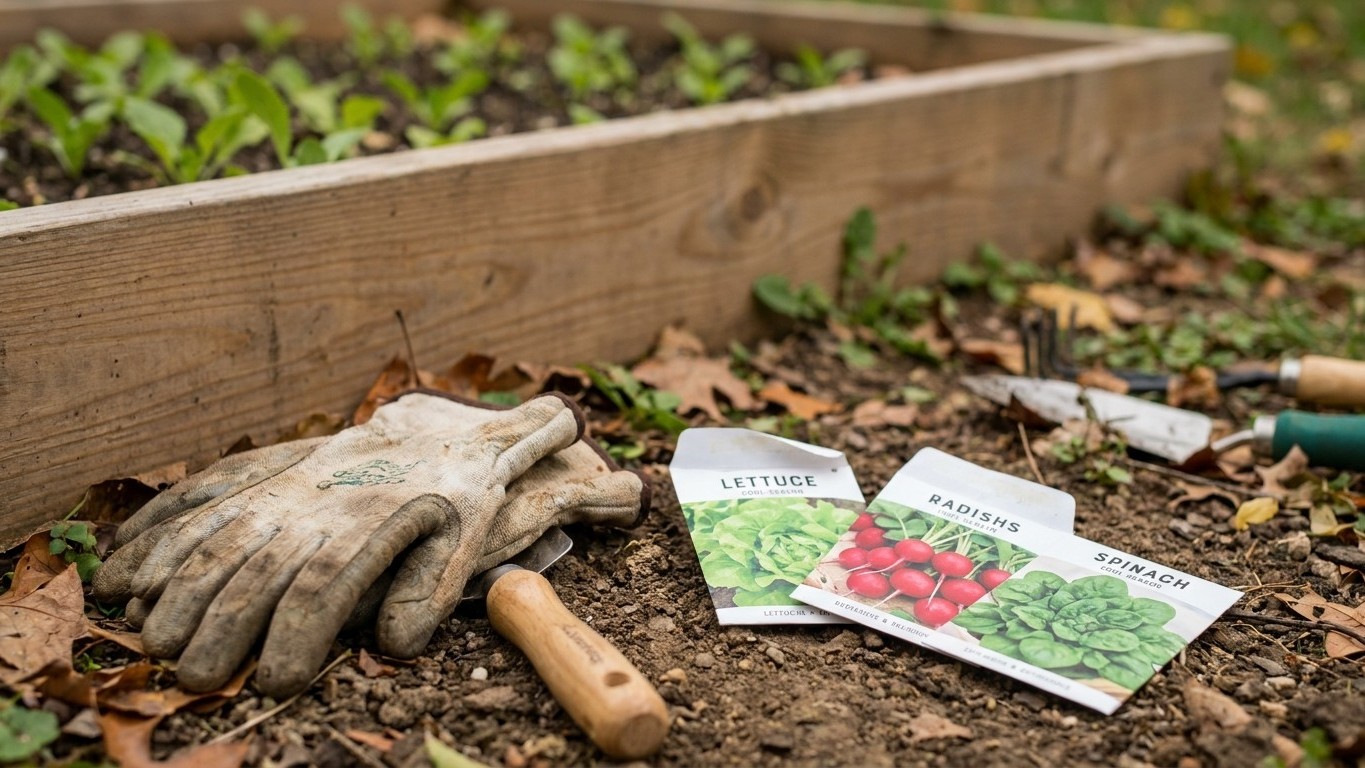

September in Nova Scotia still sits inside the growing season. The average first fall frost at Halifax Stanfield lands October 18, so there are roughly six weeks of usable ground left. That means hardy greens, roots, overwintering alliums, and cover crops all still go in the ground this month, while anything that needs a long warm run, tomatoes, peppers, squash from seed, is done for the season.
What goes in the ground in September

The frost date is an average, not a promise. Environment and Climate Change Canada’s Halifax Stanfield normal of October 18 means that in roughly half the years on record, frost arrived later than that, and in the other half, earlier. Soil Temperature, not the date on the calendar, decides what survives a September planting. Cool soil favors germination of greens and roots; it slows or stalls anything that wants summer heat.
Direct-sown crops that still make sense this month include spinach, arugula, mustard greens, radishes, and fast turnips, all of which can mature in the remaining frost-free window or shrug off the first light touches of cold once they arrive. Overwintering onion sets and shallots can go in toward the back half of the month once the soil starts to cool from its August peak. Garlic can also be planted from late September onward in beds that are workable and well-drained, though many Nova Scotia gardeners push garlic into October, giving cloves a shorter head start before the ground freezes.
What is a gamble: anything from the squash, bean, or tomato family sown from seed now. There simply is not enough frost-free runway left, even against the average date, to bring them to harvest.
| Category | Examples | Status this month |
|---|---|---|
| Direct-sow, safe | Spinach, arugula, radish, fast turnip | Go now |
| Overwintering alliums | Garlic, shallots, onion sets | Go late month, soil permitting |
| Cover crops | Winter rye, clover | Go now through early October |
| Warm-season seed | Tomato, squash, bean | Skip, too late |
What to start under cover
Count backward from October 18, the average first fall frost, rather than forward from today’s date. A crop that needs roughly 30 to 40 days to a first harvest, baby lettuce or mesclun mixes, for instance, can still be sown under a cold frame or low tunnel in early September and reach a usable size before frost tightens its grip, with the tunnel buying extra weeks past that average date if the fall runs mild.
The math gets less forgiving as the month goes on. Daylight is dropping fast by mid to late September, and growth slows even where temperatures stay mild, so a crop sown in the last week of the month may sit at half-size for weeks longer than the same seed would have taken in August. That is the first failure mode: sowing too late and running the clock out on daylight rather than on frost.
The second failure mode runs the other way. Starting slow-growing transplants, brassicas destined for next spring, for example, too early under cover in warm early September conditions produces leggy, rootbound seedlings that stall the moment they are potted up or set out. Cold frames and unheated tunnels work best in this month for direct-sown quick crops rather than for long-season transplants that need a controlled spring start. Hardy greens sown directly under cover now, kale, mache, winter lettuce, are the safer bet, since they can sit and hold once mature rather than needing to be moved.
What is ready to pick
September is one of the heaviest harvest months in the Nova Scotia garden. Summer squash and beans are still producing if the plants were kept picked through August. Potatoes planted in spring are typically ready to lift once the tops yellow and die back, and onions and garlic planted the previous fall should be cured and out of the ground by now if their tops have flopped over. Apples, pears, and late plums come off through the month depending on variety, and the last of the blueberries and raspberries usually wrap up early on.
Winter squash and pumpkins are the trickier call. The skin should resist a fingernail press before cutting the fruit free, and leaving a couple of inches of stem attached helps it store rather than rot. Cabbage and broccoli heads should be firm and tight rather than starting to loosen or flower, a sign they have gone past their best window.
Anything still in storage from earlier in the season, spring-planted potatoes and onions kept in a cool shed, for example, is worth a check now. A soft spot on one potato or a sprouting onion in a bin can spread rot to everything around it, so it pays to sort before the pile goes into deeper fall storage.
The jobs that matter this month
Soil preparation for the garlic and shallot bed pays off directly this month, since cloves planted into loose, amended ground root faster before the first hard freeze locks things down. Working compost into that bed now, rather than in a rush right before planting, gives it time to settle.
Mulching strawberry beds and any perennials that struggled through summer heat should happen before the first real cold snap, not after. Staking late tomatoes, dahlias, and tall asters matters now too, since September winds and rain tend to flatten anything left unsupported, and a plant knocked down a week before frost loses fruit and flowers it would otherwise have ripened.
Watering rhythm shifts this month as rainfall typically picks up, but a dry stretch in early September can still stress shallow-rooted greens and newly sown fall crops, so it is worth checking soil moisture rather than assuming the rain is doing the job. Succession sowing of quick greens can continue through the first half of the month for gardeners working under cover, as covered above.
Pest scouting stays worthwhile too. Cabbage worms and slugs often have a second push in cool, damp September weather, right when brassica transplants are most vulnerable. Beyond the growing bed itself, this is also the month to start ordering garlic and hardy bulb stock before the better varieties sell out, to clean and sharpen tools before they sit idle over winter, and to turn the compost pile so it has time to break down before cold weather slows it to a crawl.
What not to do in September
The most common mistake is treating a warm September afternoon as proof that summer crops still have time. Air temperature can feel like July while soil temperature and shortening daylight are already working against anything that needs a long warm run, so sowing tomatoes, peppers, or squash from seed now is effort spent on a crop that will not mature.
Uncovering cold frames or low tunnels too readily during a mild spell is the second trap. A string of warm days in mid-September can tempt a gardener to pull the cover off greens or transplants to harden them, but the average frost date of October 18 is a midpoint, not a guarantee, and a cold night can arrive well before it in a given year.
Feeding high-nitrogen fertilizer to shrubs, perennials, or fruit trees this month is the third classic error. Nitrogen pushes soft new growth right when the plant should be hardening off for winter, and that tender growth is exactly what gets burned by the first frost. If feeding is needed at all this time of year, a lower-nitrogen, higher-potassium approach supports root and hardiness development instead. Leaving mature crops in the ground too long past their ready point is the last one worth naming, since a winter squash or a row of carrots left out through a surprise early cold snap can suffer damage that shows up in storage weeks later.
Checking this against your own county
The frost dates above come from one station, Halifax Stanfield, and Nova Scotia is not one climate. Elevation, distance from the coast, and the general run of colder conditions in Cape Breton and the northern mainland compared with the Annapolis Valley can shift both the last spring frost and the first fall frost by weeks in either direction. The Canadian hardiness zone figure of 6b cited here is also specific to the reference station and its municipality, not the whole province, and it is built on a different set of climate variables than the USDA system used elsewhere.
For local planting calendars and up-to-date guidance, the Nova Scotia Department of Agriculture is the starting point worth checking before committing a bed to any of the timing above.
Common questions
Can garlic still go in the ground in September in Nova Scotia?
Yes, in beds that are workable and well-drained, though many gardeners in the province wait until October so cloves get a shorter head start before the ground freezes rather than pushing top growth too early.
Is it too late to sow greens outdoors this month?
Early September still allows time for fast greens like spinach, arugula, and radish to mature before the average first fall frost of October 18, especially under a cold frame or low tunnel that buys a few extra weeks.
Should I fertilize my shrubs and perennials in September?
Avoid high-nitrogen feeds this month, since they push soft new growth that gets damaged by the season’s first frost. A lower-nitrogen approach supports hardening off instead.
How reliable is the October 18 frost date for planning?
It is a long-term average from one station, Halifax Stanfield, meaning frost arrives later than that date in roughly half of all years and earlier in the other half. Treat it as a midpoint for planning, not a safe cutoff, and check local conditions in your own county.
Gardeners who plant by the Moon can check the September 2027 moon planting calendar, a tradition rather than a proven method.