
Cover crops can work in Nunavut, but the growing window is short enough that most of the usual playbook falls away. There’s no second planting to plan around, no heat to manage, and very little point in naming a variety, because the frost dates and the cold itself do most of the deciding. What’s left is a narrow, specific set of choices built around species, not brands.
When the soil is warm enough in Nunavut
The average last spring frost at Rankin Inlet A falls on June 19, according to Environment and Climate Change Canada’s Canadian Climate Normals for 1981-2010. That date is a mean, not a guarantee. In one year out of two, the actual last frost lands later than June 19, sometimes well into what feels like early summer everywhere else. Treat it as the midpoint of a window, not a green light.
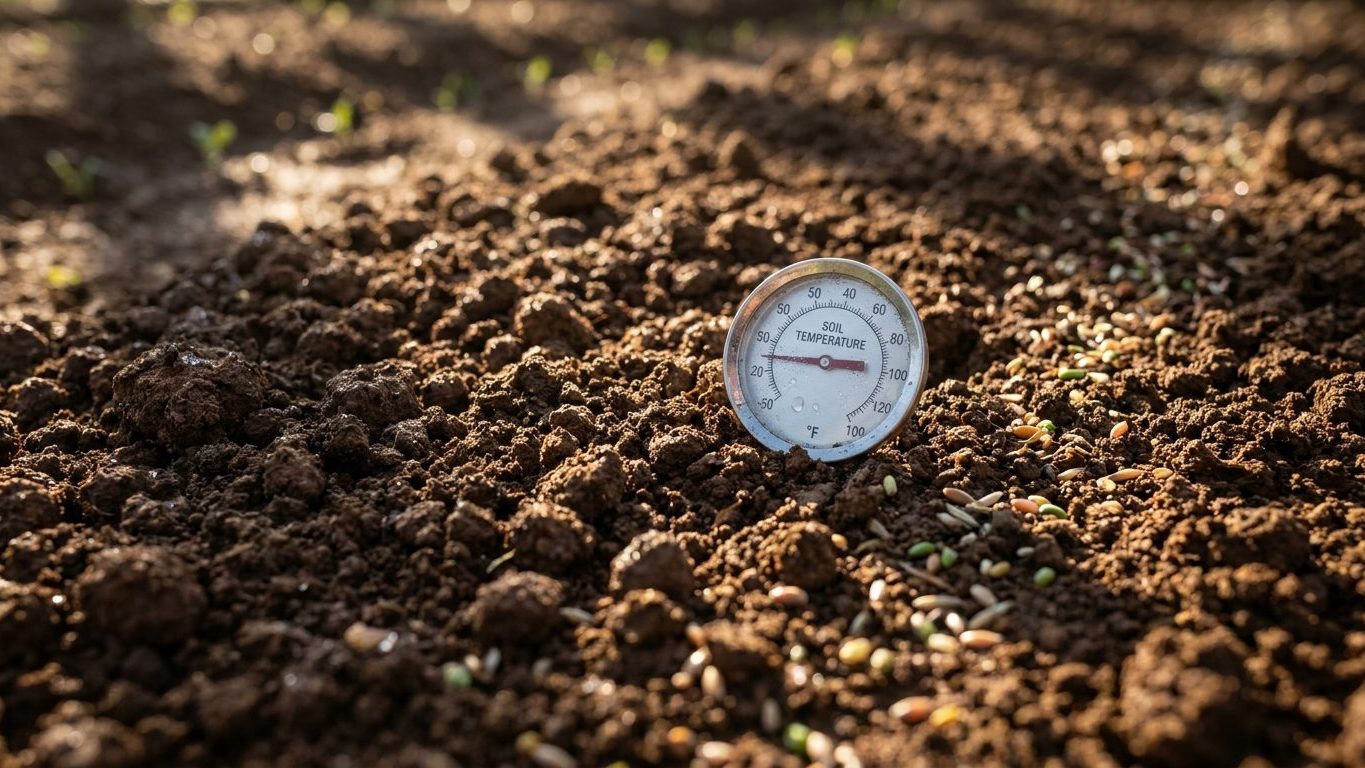
Frost dates track air temperature, and soil doesn’t warm on the same schedule. Cover crop seed germinates when the ground itself holds enough heat for a few consecutive days, and in a territory this far north, soil can lag behind the air by a stretch of time worth checking with a simple soil thermometer rather than a calendar. Rankin Inlet A is one station in a territory the size of Western Europe; communities further north, further inland, or at higher ground will run behind this date, sometimes by weeks, so local observation still beats any normal published here.
Species differ in what they’ll tolerate at sowing. Field peas and oats handle cool, still-recovering soil and a light residual frost without much trouble, which makes them reasonable candidates for sowing close to that June 19 midpoint. Buckwheat is frost-tender through and through and needs the soil to have moved further past that risk before it goes in.
Seeding rate isn’t something to pull from a general chart here. It shifts with the species chosen, whether the seed is broadcast or drilled, and whether the goal is quick ground cover or maximum biomass before the season closes. Nunavut’s own conditions are specific enough that a rate borrowed from a milder province could waste a season that doesn’t get a second try. The federal extension service, at agriculture.canada.ca, is the right place to get that number matched to what’s actually being grown.
Termination, whichever crop is chosen, is mechanical here: mowing, crimping, cutting, or simply letting the season’s own frost finish the job. No herbicide enters into it. And if a legume is part of the plan, how much nitrogen it leaves behind depends on the species, how much biomass it built, and when it gets terminated, not on a number that can be quoted in advance.
How long the season lasts here
Run the two mean dates together and the frost-free window comes out to roughly 86 days, from the June 19 average last spring frost to the September 13 average first fall frost, both from the same Rankin Inlet A normals. Eighty-six days sounds workable until it’s set against what a cover crop actually needs to establish, grow, and be terminated with anything to show for it.
A window this tight allows exactly one sowing in most seasons. There isn’t enough calendar left after an early crop is cut to get a second one up to any useful size before the cold returns, which is the opposite situation from territories where cover crops get planted in relay through the summer. That changes how much sense transplanting makes, too. Transplants skip the slowest early growth stage, which matters when every week is scarce, but they also need root systems already sound enough to handle a short, sharp finish to the season rather than a long soft one. In a window this size, checking root development before transplanting matters more than it would somewhere with slack to spare.
Readers gardening in a milder microclimate within the territory, a sheltered valley, a hoop house, or anywhere the effective season runs longer than the open-ground average, may find the math works differently. The site’s succession sowing guide lays out how that relay planting is calculated where the season allows it, and it’s worth a look before assuming Nunavut’s numbers rule it out everywhere in the territory.
Heat and water in Nunavut
Days above 90°F simply don’t feature in the Rankin Inlet climate record. Heat isn’t the variable that shapes a growing season this far north, and any cover crop advice written around managing high temperatures, giving roots shade, improving airflow around a canopy, doesn’t apply here. That’s worth saying plainly rather than forcing a hot-climate paragraph onto a territory where it has no bearing.
What actually governs the choice is cold, and it works from both ends of the season. The mean first fall frost of September 13 sets the last useful sowing date, since whatever goes in the ground has to build real cover before that date arrives, not just germinate. Then the coldest month takes over. Rankin Inlet’s coldest month has a mean daily minimum of -29.8°F, and the reference city sits in Canadian hardiness zone 0a, the harshest classification on that scale. That single figure decides which species could theoretically survive the winter as a living plant and which simply cannot, and in a territory this cold, the answer for almost every common cover crop is the latter.
That’s actually useful. In milder territories, a cold-tender annual like oats can survive a soft winter and come back the next spring as an unwanted volunteer, a low-grade weed problem the gardener didn’t plan for. In Nunavut, that risk disappears. The cold reliably kills oats and similar species outright, turning them into standing dead mulch rather than a species anyone needs to worry about controlling later. What’s a downside farther south becomes the whole reason oats work so well here.
On moisture, there’s no rainfall figure specific to this territory to lean on, but the general pattern of Arctic coastal tundra is worth flagging anyway: cool, often foggy summers, slow ripening, and a real risk of fungal disease wherever humidity gets trapped, particularly inside a hoop house or cold frame, which many Nunavut gardeners rely on to stretch that short window in the first place.
Which cover crops suit Nunavut
Reasoning from this territory’s own numbers narrows the field fast. A season this short rules out anything slow to establish, which favors the earliest-maturing types over anything bred for a long, leisurely build-up of biomass. Heat tolerance and airflow around the canopy, criteria that matter elsewhere, simply aren’t relevant here. What does matter, given the fog and the greenhouse humidity common to the region, is disease resistance, especially for anything grown under cover.
Comparing crop types by season fit
| Crop type | Frost tolerance | Growth speed | Typical role in Nunavut gardens |
|---|---|---|---|
| Oats | Killed reliably by fall frost | Fast | Quick cover, dies into mulch, no volunteer risk |
| Field peas | Tolerates cool soil and light frost | Fast to moderate | Early sowing option, some nitrogen contribution |
| Buckwheat | Frost-tender | Very fast | Short late-summer smother crop before frost |
| Forage radish | Killed by hard frost | Moderate | Soil structure, terminates cleanly over winter |
| Annual ryegrass | Sensitive to deep cold | Fast | Ground cover where a very short window rules out slower species |
No cultivar gets named here, and that’s a deliberate choice rather than an oversight. A territory with conditions this extreme depends on varieties actually trialled locally, and the only source that can point to those is the extension service working with this specific climate, not a general list written for readers across dozens of territories at once. That’s agriculture.canada.ca, and it’s the right next stop before buying seed.
The same caution applies to seeding rates, which depend on the species picked, the sowing method, and what the crop is meant to do, and to termination, which stays mechanical here, mowing, crimping, cutting, or the season’s own frost, with no chemical shortcut involved. And whatever nitrogen a legume leaves behind is a function of species, biomass, and timing, never a number worth quoting before the crop has actually grown.