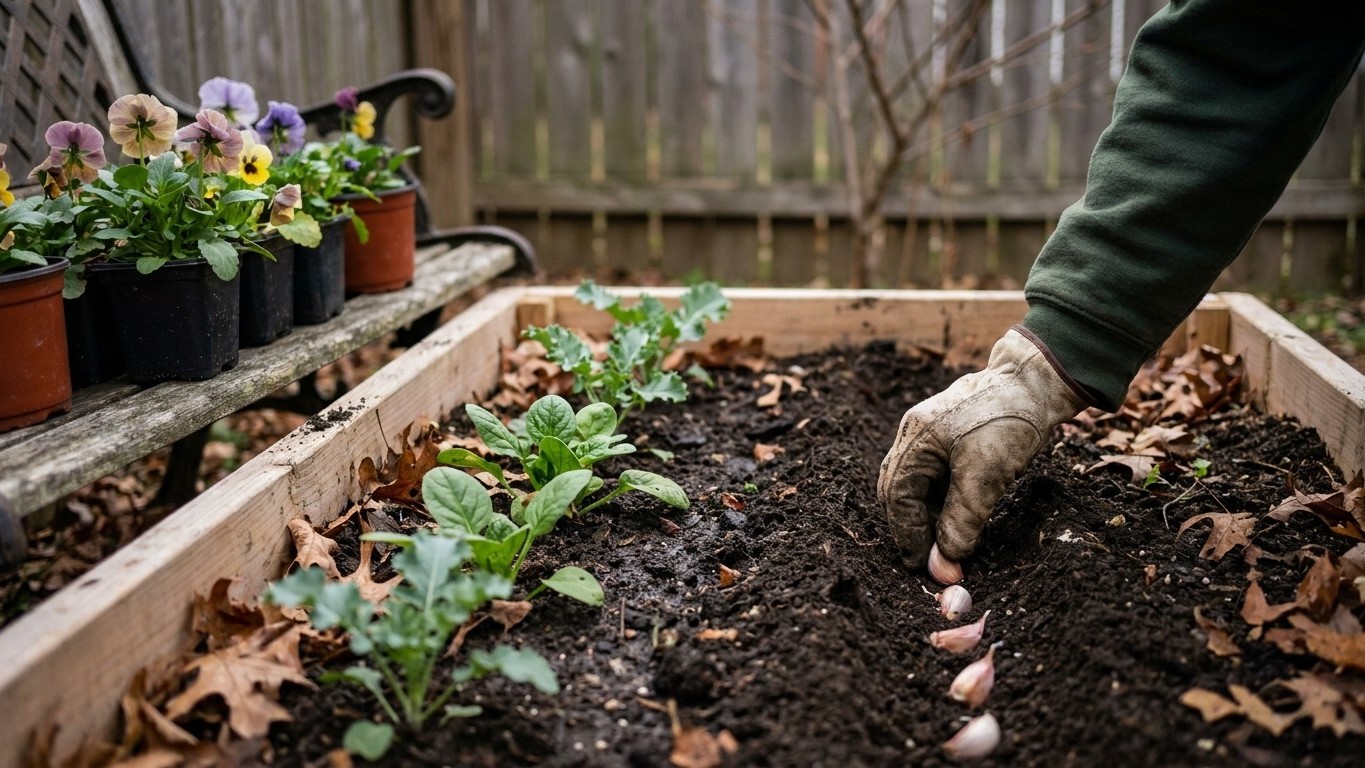

By October, Nunavut has already passed its average first fall frost date of September 13, and freeze-up is closing in across the territory. Nothing goes into open ground this month. The frost-free stretch that opened around June 19 ended weeks ago, and soil that isn’t already frozen solid is heading that way fast. What’s left is indoor and under-cover work: forcing bulbs, starting quick greens under lights, checking stored food, and lining up next year’s seed before it sells out.
What goes in the ground in October

The math here is simple and unforgiving. Using the Rankin Inlet A station as a reference point, the average frost-free window runs from June 19 to September 13, roughly 86 days. That’s already one of the shortest outdoor growing seasons anywhere in the country, and October sits three to four weeks past the average close of that window. Ground that was workable in late August is now crusted over or fully frozen in most communities, and the trend only moves in one direction from here.
So the honest answer is that direct-sowing or transplanting into open soil is off the table this month, territory-wide. That’s not a caution, it’s a fact tied to a hardiness zone. The reference community for these figures sits in Canadian plant hardiness zone 0a, a rating built from seven climate variables under the Canadian system, not the single-variable USDA scale used elsewhere in the U.S. Zone 0a does not translate into a USDA number, and it isn’t a stand-in for the whole territory either. Communities further south in the Kivalliq or in parts of the Qikiqtaaluk region may hold slightly milder pockets, but none of them buy back the weeks already lost to freeze-up by October.
What’s still realistic depends on what was set up earlier in the season. A cold frame or low tunnel built over a raised bed in August can sometimes hold hardy greens a little longer, but by October most of those need to be closed up tight or emptied out entirely. Community greenhouses, the backbone of vegetable growing in much of Nunavut, shift from active cropping to closing-down mode: cleaning benches, checking heaters, and pulling anything still in the ground before hard freeze sets in for good. Outdoors, this is not the month for garlic or shallot planting, since the soil is no longer reliably workable long enough to let cloves settle before it locks up. Indoors, forcing bulbs, sprouting paperwhites, or bringing a rhubarb crown in to force in a dark corner are realistic substitutes for a garden bed that simply isn’t available anymore.
What to start under cover
Counting backward from a frost-free window this short changes what “starting under cover” even means in Nunavut. In warmer provinces, an October indoor sowing might aim at a spring transplant date. Here, the next outdoor planting window doesn’t open until the average last frost lifts around June 19, which is eight to nine months away. Starting slow crops now, onions or leeks meant for eventual transplant, risks exactly the failure mode gardeners run into everywhere: seedlings that get rootbound and leggy long before there’s anywhere outside to put them.
What does make sense under cover this month is anything grown for its own sake indoors, not as a stepping stone to an outdoor bed. Microgreens and sprouts finish in one to three weeks under grow lights, so they can be sown, eaten, and resown on a rolling basis right through the dark months. Herbs like chives, parsley, or basil kept on a bright windowsill or under a simple light setup fill the same role, giving fresh food without betting on a season that hasn’t started yet. Community greenhouse growers sometimes use October to start a short bench crop of quick lettuce or spinach under supplemental light, since these mature in five to seven weeks and can be timed to finish well before the greenhouse itself needs to power down for winter.
The other failure mode, starting too late, matters less this month than the reverse. There’s no outdoor deadline to race against right now, so the real risk is treating an indoor sowing like it needs to hit a spring transplant date. It doesn’t. Anything started under cover in October should be planned to be eaten indoors, not moved outside.
What is ready to pick
Outdoors, the honest answer is little to nothing. Any hardy greens that were still standing in a cold frame or under a low tunnel in September have either been harvested by now or are past saving once the frame ices over. This is not a month to expect fresh harvest from open ground or even from lightly protected beds; freeze-up doesn’t leave much room for exceptions.
What still feeds the household comes from three places. Community greenhouse beds, if still running on supplemental heat, may hold a last cutting of kale, spinach, or chard before the space is cleared for winter. Indoor sprouts and microgreens started on a rolling schedule are ready in as little as a week and don’t depend on outdoor conditions at all. And stored food, the real backbone of winter eating in the north, needs regular checking this month: root vegetables, squash, and onions brought in earlier in the fall should be gone over by hand, looking for soft spots, a sweet or fermented smell, or skin that’s gone slightly translucent, all signs that a piece needs to be used or pulled before it spreads rot to the rest of the batch. Potatoes stored in a dark, cool spot should be checked for green shoulders or sprouting eyes, both of which mean it’s time to use them up rather than let them sit.
The jobs that matter this month

This is where October earns its keep, even without a single seed going into open ground. Community greenhouses and hoop houses need their fall shutdown: benches cleared of spent plants, heaters and vents checked before the coldest stretch arrives, and any plastic or glazing inspected for tears that wind will only make worse over winter. Wind, more than cold alone, is what tears apart poorly secured structures in Nunavut, so this is the month to tighten, patch, and anchor rather than assume things will hold.
Seed ordering belongs on this month’s list too. Varieties bred for short, cool seasons, the fast brassicas, quick lettuces, and hardy root crops that actually mature within an 86-day window, tend to sell out earlier than gardeners expect, and ordering now avoids scrambling for substitutes come spring. Anyone running raised beds or a greenhouse plot should use the quiet stretch to sketch out next year’s layout: which bed grew brassicas last, which one is due for something else, and where a cold frame might extend the edges of the season by even a week or two.
Soil testing and amending, where beds are accessible before hard freeze, pays off far more now than in the rush of a short spring. Compost bins or piles should get a turn before they freeze solid, since a frozen pile simply stalls until thaw. Tools deserve real attention this month too: hand trowels, pruners, and any greenhouse equipment should be cleaned, dried, and sharpened before they sit unused for months, since rust and dull blades left over winter make spring work slower and harder. And every stored crop, root vegetables, squash, dried herbs, needs a periodic hands-on check, because a single soft potato or moldy onion left in storage can take out a good share of the batch before anyone notices.
What not to do in October
The most common mistake this month is trusting a mild afternoon over the calendar and the ground itself. A stretch of sunny, calm days can feel like an invitation to leave a cold frame open or push off closing up a greenhouse bed, but soil temperature and freeze-up don’t reverse because the air felt warm for a day or two. Uncovering hardy greens after a mild spell, only to have them hit by the next hard freeze, wastes whatever protection was already in place.
Feeding nitrogen at this point is another misstep. Any fertilizing this late pushes soft, tender new growth right when plants and soil need to be shutting down for winter, not gearing up for another flush. That soft growth is exactly what gets damaged first once temperatures drop for good, so it does more harm than good.
Delaying the check on stored food is the third classic error. It’s easy to assume potatoes, squash, and onions brought in during September will keep fine untouched until they’re needed, but one softening piece left in a bin can spread rot to everything around it within weeks. A short, regular check-in beats a full bin lost to neglect. And for anyone still holding out hope for one more outdoor sowing, this is the month to let that idea go: soil temperature has already made the decision, regardless of what the thermometer says about the air.
Checking this against your own county
These figures come from a single station, Rankin Inlet A, and Nunavut is not one climate. Coastal communities, inland sites, and the vast range of latitude across the territory can shift both the average frost dates and the pace of freeze-up by weeks in either direction. A community further north or at higher exposure to wind will see its window close earlier than these averages suggest, while a more sheltered site might hold on a little longer.
Treat the June 19 and September 13 averages as a starting point, not a forecast for any one location or year. For local conditions, greenhouse programs, and planting guidance suited to a specific community, the federal Agriculture and Agri-Food Canada site is a reasonable place to start.
Common questions
Can anything still be planted outdoors in Nunavut in October?
No. By October the territory is well past its average first fall frost of September 13, and soil is frozen or freezing across most communities. Any planting this month happens indoors or under supplemental light, not in open ground.
Why is Nunavut’s growing season so short?
Based on the Rankin Inlet A station, the average frost-free window runs from June 19 to September 13, about 86 days total. That short stretch, combined with a Canadian plant hardiness rating of 0a for the reference community, leaves very little margin for outdoor crops compared to almost anywhere else in the country.
What does zone 0a actually mean for gardeners?
It’s a rating from the Canadian plant hardiness system, which combines seven climate variables rather than the single minimum-temperature measure used in the USDA system. Zone 0a does not convert to a USDA zone, and it applies to the reference community named in these figures, not uniformly across all of Nunavut.
What should be done with a community greenhouse in October?
Most greenhouses shift into shutdown mode this month: clearing spent plants, checking heating and ventilation before the coldest weather sets in, and patching or securing glazing against wind, which does more damage to unsecured structures in Nunavut than cold alone.
Gardeners who plant by the Moon can check the October 2026 moon planting calendar, a tradition rather than a proven method.
Related guides
- the Nunavut planting calendar
- What to Plant in Nunavut in September
- What to Plant in Nunavut in November
Elsewhere? See what to plant in October in every state and province.