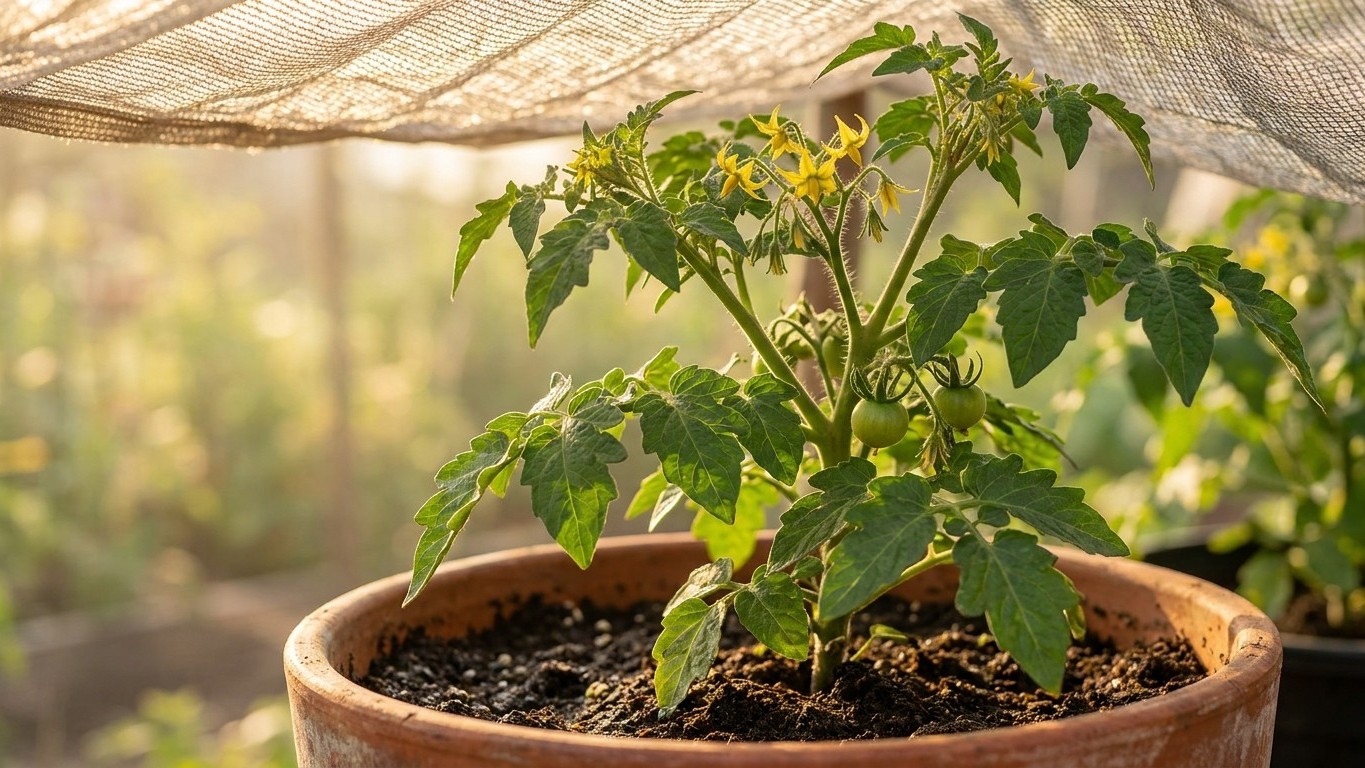

The short answer: pick by color and firmness, not by the calendar, but let the first fall frost set your final deadline. In Ohio, that frost typically lands between October 5 and October 15 for areas in USDA zone 6a, according to Ohio State University Extension’s Ohio Gardening Calendar. Everything still on the vine when that date arrives needs to come inside, ripe or not.
When to pick tomatoes in Ohio
A ripe tomato tells you it’s ready long before a calendar does. The fruit softens slightly under gentle pressure, the color deepens fully (whatever that variety’s mature color happens to be), and it often separates from the vine with a light tug rather than a fight. Waiting for a specific date misses the point: two tomatoes planted the same week can ripen five or six days apart depending on sun exposure, water stress, and where they sit on the plant.
What actually shifts the picking window in Ohio is temperature, not the sunrise-to-sunset clock. Tomatoes stop ripening properly once nights consistently drop below the mid-50s Fahrenheit, and the enzyme activity that turns green fruit red slows to a crawl below that threshold. That’s why the last stretch of the season matters more than any other. Ohio State University Extension’s Ohio Gardening Calendar puts the first fall frost for zone 6a areas between October 5 and October 15. Once that window opens, a grower’s job changes from “let it ripen on the vine” to “get it off the vine before the cold ends the conversation.”
Why the frost date matters more than the harvest date
Ohio spans USDA zones 5b to 6b, according to the USDA Plant Hardiness Zone Map (based on 1991-2020 averages of the coldest annual temperature). That’s a statewide range, not one number, so a grower working from a zone 6a frost window should expect earlier frost risk in colder pockets and a bit more cushion in warmer ones. The hardiness zone system is built on a single measurement, the average extreme minimum temperature each year, so it’s useful for judging how harsh a winter gets, not for pinpointing a fall harvest date on its own. The frost window from OSU Extension does that job instead.
Practically, this means checking a local forecast in the two weeks leading into that October window rather than trusting a fixed day. A clear, calm night can drop temperatures faster than a cloudy one, and low-lying gardens collect cold air the way a bowl collects water. If frost is forecast, that’s the signal to strip the plant, not to wait one more day hoping for a little more color.
What to do with the green ones
Not every green tomato is the same tomato. There’s a real difference between a fruit that’s fully grown but hasn’t started coloring yet, and one that’s still small and immature. That distinction decides whether it’s worth bringing inside at all.
A mature green tomato has reached full size for its variety, the skin has turned from matte to slightly glossy, and the shoulders near the stem have started to lighten from dark green to a pale, almost whitish green. Cut one open and the gel around the seeds should look fully formed, not watery or thin. Those fruits have finished their growth and just need warmth and time to finish coloring. An immature green tomato, by contrast, still has a dark, dull skin all over, feels dense and hard with no give, and the interior gel hasn’t set. Those rarely ripen well off the vine. They tend to shrivel, rot, or stall out somewhere between green and a dull orange that never quite becomes red.
Sorting before frost hits
The night before frost is forecast, walk the rows and sort the harvest into three rough piles.
- Fruit already showing a color break (any blush of pink, yellow, or orange) goes straight to the kitchen counter, no special treatment needed.
- Mature green fruit, identified by size, lightened shoulders, and set gel, goes into a ripening setup indoors.
- Small, hard, dark-green fruit is best used green, in relishes or fried green tomato recipes, since it’s unlikely to ripen fully once picked.
This sorting step is the difference between a windowsill full of tomatoes that slowly turn red over the following weeks and a bowl of green tomatoes that just sit there going soft without ever coloring. It’s worth the ten minutes before a frost warning to separate them, since mixing all three together in one paper bag or box means checking constantly and pulling out the ones that are done while the others lag behind.
Ripening indoors, and how long they keep
Once mature green tomatoes are inside, the goal is warmth, some airflow, and patience. Cold, especially refrigerator cold, stops the ripening process outright and dulls the flavor even if color eventually develops. Room temperature, somewhere in the 65 to 75 degree Fahrenheit range most homes sit in during fall, works far better than a chilly porch or garage.
Ethylene gas, the same compound bananas and apples give off, speeds up ripening. That’s why a paper bag with a banana or apple tucked inside tends to color fruit faster than an open bowl on the counter. Direct sunlight isn’t necessary and can actually cause uneven ripening or soft spots, so a spot out of direct light, like a kitchen counter or a cardboard box in a closet, generally works as well as a sunny windowsill.
Comparing common indoor ripening setups
| Method | Speed | Trade-off |
|---|---|---|
| Paper bag with a banana or apple | Faster, thanks to trapped ethylene | Needs daily checking so ripe fruit doesn’t sit too long against others |
| Open cardboard box, single layer | Moderate | Good airflow reduces mold risk, but ripening takes longer without trapped gas |
| Sunny windowsill | Uneven | Sun-facing side can ripen faster while the shaded side lags or gets soft |
| Wrapped individually in newspaper | Slower | Reduces contact rot but requires unwrapping to check progress |
Once a green tomato starts to color, that process generally continues at a fairly steady pace as long as it stays at room temperature. Checking every day or two and pulling out any fruit that’s ripe (or starting to soften unevenly, a sign of rot rather than ripening) keeps the whole batch from spoiling together. A fully ripe tomato, once picked, holds its best flavor for a few days at room temperature and should go into the refrigerator only once it’s fully soft and needs to last a bit longer, since cold storage does dull flavor and texture over time.
What goes wrong here
The most common mistake isn’t picking too early, it’s picking too late and losing the whole batch to frost damage overnight. A tomato that’s been touched by frost turns watery and soft within a day, even if it looked fine right after the cold snap. Those fruits won’t ripen properly indoors, they’ll just break down faster. If frost is in the forecast, harvesting the evening before beats waiting to see how bad it actually gets.
Refrigerating green or partly ripe tomatoes too soon is another frequent misstep. Cold temperatures below roughly 55 degrees Fahrenheit interrupt the ripening enzymes permanently in some cases, leaving a tomato stuck in an unripe state even after it warms back up. That’s the reason a bag of green tomatoes tossed straight into the fridge for storage often ends up disappointing.
Sealing tomatoes in a completely airtight container is a third problem. Some airflow matters, since trapped moisture without ventilation encourages mold, especially on fruit that has any small blemish or crack from growing conditions. A loosely folded paper bag or a box with the flaps open works better than a sealed plastic bag or tightly shut container.
Finally, growers sometimes assume every green tomato on the vine will ripen given enough time indoors. Immature fruit, the small hard ones without set gel inside, generally won’t. Sorting before frost, rather than after, saves the disappointment of a windowsill full of tomatoes that just shrivel instead of turning red. For more on planting timing and variety choices that affect how much fruit is still green at frost, Ohio State University Extension’s local offices, listed at extension.osu.edu, publish county-specific guidance worth checking each season.
Common questions
Can I pick tomatoes before a light frost warning, or is it only necessary for a hard freeze?
The facts published by Ohio State University Extension give a single fall frost window for zone 6a areas (October 5 to October 15) without separating light frost from hard freeze thresholds. The safest approach is to treat any frost warning in that window as the deadline for harvesting.
Do tomatoes ripen faster in a paper bag than in the open air?
Generally yes, because a bag traps the ethylene gas the fruit naturally gives off, and adding a banana or apple increases that effect. An open bowl or box on the counter still works, just more slowly.
Should I bring in green tomatoes even if there’s no frost forecast yet?
Not necessarily. If the growing season still has time left before the October frost window for zone 6a areas, mature green fruit often does better finishing on the vine, where flavor tends to develop more fully than indoors.
Is it true that Ohio’s frost date is the same everywhere in the state?
No. Ohio spans USDA zones 5b to 6b, per the USDA Plant Hardiness Zone Map, so colder pockets of the state can see frost earlier than the October 5 to October 15 window cited for zone 6a, while some warmer areas may see it slightly later.