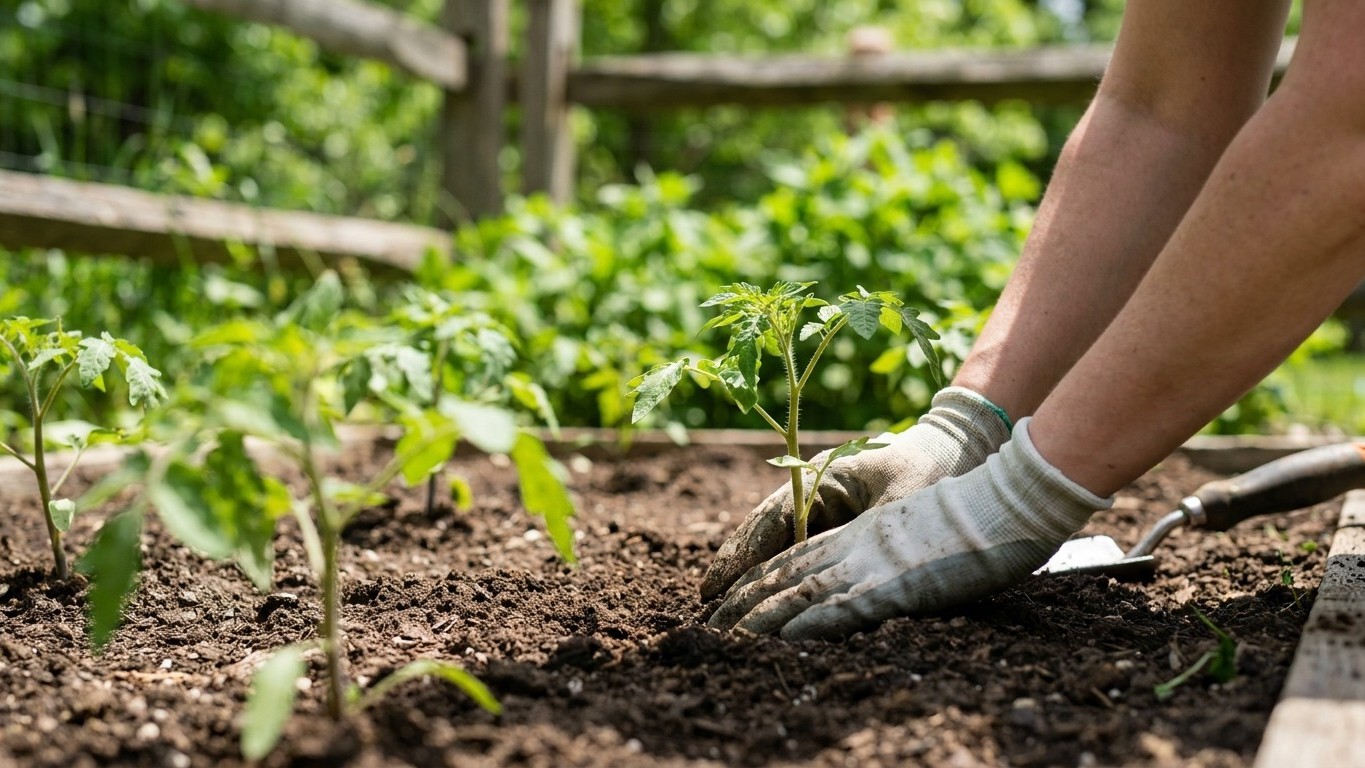

By June, Oklahoma soil has left the frost window far behind. The last spring freeze runs March 28 to April 10 depending on where you sit in the state, so this month belongs to heat-loving crops: beans, squash, melons, okra, sweet potatoes, southern peas. Soil temperatures across most of the state now sit warm enough for anything in the seed catalog. The real work is timing water and mulch before the real Oklahoma summer heat arrives.
What goes in the ground in June
Soil temperature, not the calendar, decides what survives here. By June, ground temps across Oklahoma have climbed well past the 60-65°F threshold that stalls warm-season seed. That means direct-sowing is wide open: bush and pole beans, sweet corn, okra, southern peas (also called cowpeas or black-eyed peas), and summer squash all germinate fast in soil this warm. Cucumbers and melons do the same, whether started from seed hills or set out as young transplants.
Sweet potato slips go in now too, pressed into loose, well-drained soil where they’ll have the whole summer to bulk up. Okra in particular rewards a June start in Oklahoma clay because it shrugs off heat that would stunt lettuce or peas. If tomato and pepper transplants didn’t make it out in May, early June is still workable, just water them in deeply and shade them for the first few days if a heat spike hits.
What’s a gamble this month
Cool-season crops are the wrong call now. Lettuce, spinach, and peas planted in June will bolt or fail to set pods once daytime highs push past 85-90°F, which happens routinely across the state by mid-month. Save those for late summer, timed for a fall harvest instead.
Watch soil moisture closely at planting. Newly seeded beans and squash need consistent moisture to germinate even in warm ground; a dry crust on top of hot Oklahoma clay will keep seeds from breaking through. A light layer of straw or compost over the row helps hold that moisture without smothering the seedling. Succession planting matters here too: staggering bean and squash sowings every two to three weeks through June keeps harvest coming instead of arriving all at once and then stopping.
What to start under cover
June is when Oklahoma gardeners quietly start planning for fall, and that planning happens indoors under lights or in a shaded cold frame, not outside in the heat. The math runs backward from the first fall frost, which lands October 29 to November 8 depending on location. Broccoli, cabbage, and Brussels sprouts typically need 70-100 days from transplant to harvest, plus another three to four weeks as seedlings before they’re ready to go into the garden. Counting back from early November, that puts the indoor start date for these crops squarely in June, even though it feels early with tomatoes still ripening outside.
Starting too early creates its own failure mode: seedlings held too long indoors get leggy and rootbound, and they sulk for weeks after transplanting instead of taking off. Starting too late is worse in Oklahoma, because fall broccoli or cabbage set out after the first cool snap simply runs out of days before frost shuts things down. The safest approach is to start seed trays indoors in a spot that stays under 80°F, since cabbage-family seed germinates poorly in heat, and hold seedlings under bright light rather than a sunny windowsill to keep them stocky.
This is also the month to start fall broccoli and cabbage seed specifically for transplanting outdoors once August heat begins to break. A second, later round of seed-starting for lettuce and spinach can wait until July or August, timed closer to the actual cooldown. Trying to start those now, in June, just wastes trays on seedlings that will bolt the moment they hit warm soil.
What is ready to pick
June is a harvest month across most of Oklahoma, and the list changes fast from the first week to the last. Garlic planted the previous fall is usually ready to pull when the lower leaves start browning, typically five to six green leaves still standing on top; pull too late and the bulb wrappers split in the ground. Once out, garlic needs a few weeks curing in a dry, shaded, airy spot before storage.
Strawberries wind down through the month, and any bed that’s been fruiting for three or more seasons is worth flagging for renovation after the last picking. Spring lettuce and spinach that survived into June are almost certainly bolting, sending up a bitter flower stalk; that’s the signal to pull them rather than wait for a rebound that won’t come. Sugar snap and English peas are also finishing up as daytime heat climbs, and the pods left on the vine past this point turn starchy fast.
Early potatoes planted in spring may be ready for a first “new potato” harvest by late June, checked by gently digging at the edge of a hill rather than pulling the whole plant. The first zucchini and yellow squash typically start coming in by mid to late June for anyone who direct-sowed in May, and they’re best picked young, six to eight inches, before the skin toughens and the plant shifts energy from more blossoms to one oversized fruit.
The jobs that matter this month
Mulch is the single biggest lever in an Oklahoma June, and skipping it costs the whole summer. A two-to-three-inch layer of straw, shredded leaves, or grass clippings over exposed soil holds moisture through the heat spikes that are now routine and keeps root zones from swinging between soggy and bone-dry, a swing that cracks tomatoes and stresses squash into dropping blossoms.
Staking and caging need to happen now, before plants sprawl past the point where support does any good. Indeterminate tomatoes especially outgrow a flimsy cage fast in June heat, and trying to wrestle a heavy, fruit-laden vine into a cage after the fact usually snaps stems. Cucumbers and pole beans on trellises are easier to manage, cleaner to harvest from, and less prone to rot where fruit touches wet soil.
Watering rhythm matters more than volume. Oklahoma clay soils hold water but also crack and shed it fast once dry, so deep, infrequent watering, aimed at the root zone rather than a daily sprinkle over the leaves, builds deeper roots and more heat tolerance. Morning watering beats evening, since wet foliage overnight invites fungal problems in the humidity that settles across the state through June.
Pest scouting pays off now too. Squash bugs lay clusters of bronze eggs on the undersides of squash and cucumber leaves starting this month, and catching them before they hatch is far easier than fighting an established colony in July. Japanese beetles also start showing up on beans and roses by mid-June in much of the state; hand-picking into soapy water in the cool of early morning, when they’re sluggish, keeps numbers down without reaching for a sprayer.
What not to do in June
The classic June mistake in Oklahoma is planting cool-season crops because a mild stretch of weather feels forgiving. Lettuce, spinach, and peas sown now will bolt within days once heat returns, since these crops respond to day length and soil temperature, not how pleasant the morning feels. Hold that seed for a late-summer sowing timed toward the fall frost window instead.
Uncovering plants too early after a cool front is another trap. A late-May or early-June cold snap can tempt gardeners to strip row cover or shade cloth the moment temperatures drop, but young transplants that were hardened off under cover often scorch fast once fully exposed to direct June sun. Ease them into full exposure over several days rather than pulling protection all at once.
Nitrogen timing trips up a lot of tomato growers this month. A heavy nitrogen feeding once plants are flowering and setting fruit pushes leafy growth at the expense of blossoms, leading to tall, green, fruitless plants by midsummer. A balanced or lower-nitrogen feed, or simply backing off fertilizer once flowering starts, keeps energy going toward fruit instead of foliage.
Letting soil dry out completely between waterings is the last common error. Clay soil that cracks in the heat doesn’t rehydrate evenly; water runs down the cracks past the root zone instead of soaking in. Mulch and a steady watering schedule prevent that cycle before it starts.
Checking this against your own county
A state-wide June calendar is a starting point, not a fixed schedule. Oklahoma’s hardiness zones run from 6a in the northern panhandle to 8a in the southeast, according to the USDA Plant Hardiness Zone Map, and that spread alone shifts planting windows by two to three weeks between the far north and the far south. Elevation, local microclimates, and distance from the reference weather station used for the frost dates above all move the real dates in a given backyard, usually later in spring and earlier in fall than the airport figures suggest.
The most reliable adjustment is local: check current conditions and county-specific guidance through the Oklahoma State University Extension service, which publishes region-specific planting calendars and soil temperature data county by county.
Common questions
Is it too late to plant tomatoes in Oklahoma in June?
Early June transplants still have a strong shot in most of the state, especially if watered deeply at planting and given a few days of shade during the first heat spike. By late June, extreme daytime heat can interfere with fruit set on new transplants, so earlier in the month is safer than later.
Can I still direct-sow corn in June in Oklahoma?
Yes. Sweet corn sown in early to mid-June still has enough time to mature before the first fall frost, which lands October 29 to November 8 depending on location. Later June sowings work for shorter-season varieties but leave less margin for a cool, early fall.
Why is my June-planted lettuce bolting so fast?
Lettuce responds to both day length and soil heat, and Oklahoma soil in June routinely runs warm enough to trigger flowering within days of germination. Hold lettuce seed for a late-summer sowing instead, timed toward cooler fall conditions.
When should I start fall broccoli seed if I garden in Oklahoma?
Count backward from the first fall frost window of October 29 to November 8. Broccoli needs roughly three to four weeks as a seedling plus 70 or more days to maturity after transplanting, which puts the indoor seed-starting date in June for most of the state.