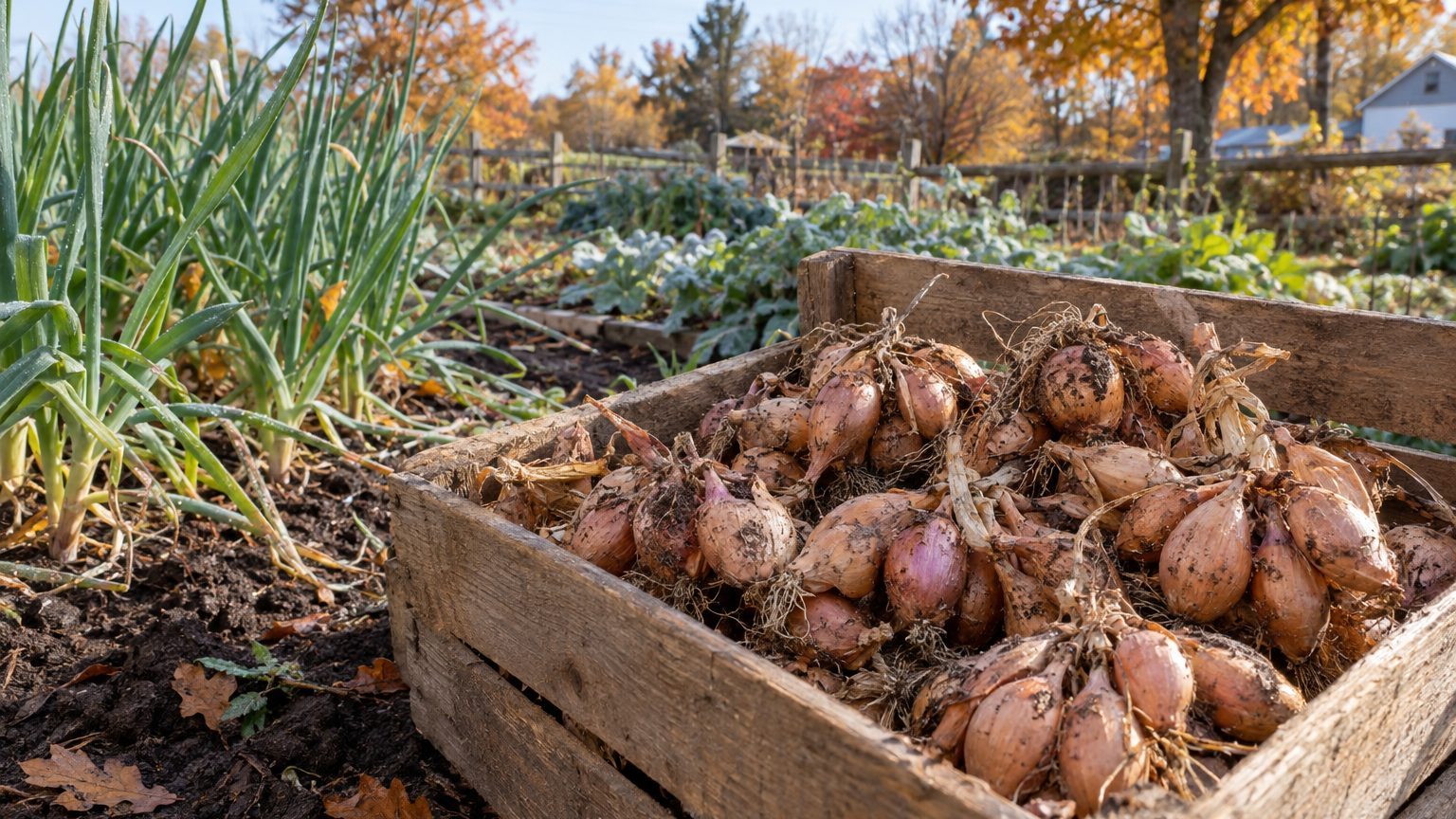

For most Oklahoma gardens, the best shallots are bulb-type (multiplier) shallots planted in fall. Spring-planted bulbs make a decent backup, and seed-grown types come a distant third. The state offers a long, cool runway for root and leaf growth and then closes it with heat. Fall-planted bulbs use that runway well. Slow seed-grown types often run out of it. The sections below explain why, what fails, and where to confirm it for your county.
The short answer for Oklahoma
Choose bulb-type shallots, plant them in fall, and keep spring planting as the fallback. At the Oklahoma City reference station, NOAA’s 1991-2020 normals put the last spring frost between March 28 and April 10, and the first fall frost between October 29 and November 8. Those dates mark where the probability of a 32°F freeze sits between 30 and 70 percent. They describe the odds of a freeze, not a guarantee that one will or won’t come.
Why the type matters more than the cultivar
The coldest month at the same station averages a daily minimum of 27.0°F. That is cold enough to stop growth but mild enough that a bulb planted in fall can root, sit through winter, and restart on its own in spring. Shallots are among the hardier alliums, so the winter itself is rarely the problem here. The problem is the other end of the year, when heat arrives and ends bulb growth.
| Type | Fit for Oklahoma | Reason |
|---|---|---|
| Bulb-type, planted in fall | Best | Roots before winter and gets a head start on bulbing before summer heat |
| Bulb-type, planted in early spring | Good fallback | Works if planted as soon as soil is workable; loses ground quickly if spring warms fast |
| Seed-grown | Riskiest | Needs a long growing period to size up, and the season is tight at both ends |
What this page does not have
This page has no Oklahoma variety trial data, so it names no cultivars. Guessing at names would be worse than skipping them. The type decision above holds either way, and your county extension office is the place to match it to named varieties (more on that below). For timing, see When to Plant Shallots in Oklahoma, and for the full crop guide, Growing Shallots in Oklahoma.
What will not work here
Start with the clock. Between the frost bands at the reference city, the gap runs a bit over six months at the tight end. Gardens outside the airport typically lose one to two weeks at each end of that, and more at elevation. A shallot that needs a long, steady season to bulb up gets squeezed.
Slow seed-grown plantings and late spring starts
Seed-grown shallots start from a tiny seedling indoors in winter and must build a big leaf canopy before they bulb. Oklahoma springs can swing from cold to hot quickly. A seedling set out late has few leaves when the heat arrives, and a shallot’s bulb size follows its leaf count closely. The same logic defeats bulbs planted in late spring. They get a short window, make few leaves, and finish with small bulbs.
Planting too early in fall also backfires. The first fall frost at the reference city does not arrive until late October to early November, so a warm autumn can push tall, tender top growth before winter. Waiting for cooler soil keeps the bulb working on roots rather than foliage.
Water and spacing habits that fit the wrong climate
A weekly deep soak is a poor match for shallow-rooted shallots in a hot, dry stretch, and western Oklahoma tends to get less rain than the eastern half. This page does not carry rainfall or summer temperature figures, so treat the following as a rule of thumb, not a measurement. Where summers run hot and dry, mulch and lighter, more frequent watering during bulb swell usually beat one big weekly watering.
The opposite problem shows up in the wetter east. Humid, rainy springs and heavy clay soils reward wide spacing and good drainage, and punish tight rows where leaves stay damp and bulbs sit in wet ground. Raised beds or ridged rows help. Crowding shallots to squeeze in more clumps is the habit most likely to cost you the crop to rot there.
One more thing that will not work is planning around winter kill. A 27.0°F mean daily minimum in the coldest month is not what threatens established shallots. Mulch matters in the cold north more for stopping frost heave, which pushes shallow bulbs out of the soil, than for survival.
What changes across Oklahoma
Oklahoma is not one garden. The USDA Plant Hardiness Zone Map (2023 edition, built on 1991-2020 normals) places the state in zones 6a to 8a. That system rests on a single variable, the average annual extreme minimum temperature, and the spread covers two full zones. So there is no single answer for the state, and the Oklahoma City figures on this page are one reference point, not the middle of a tidy range.
If you garden in the north or at higher elevation
The Panhandle and northern counties sit at the colder end, with later last frosts and earlier first frosts than the airport numbers show. Shift your fall planting toward the early side of the recommended window so bulbs root well before the ground freezes. Mulch after the soil has cooled, not before, and pull it back in spring so the ground can warm. If you plant in spring instead, get bulbs in the moment the soil is workable, since waiting a few weeks costs you a larger share of a shorter season.
If you garden in the south or southeast
Warmer winters and an earlier spring warm-up make late spring planting a steeper gamble there. Fall planting becomes even more strongly the default, and harvest comes earlier. For your own zone, use the USDA map to look up your location by ZIP code. Do not rely on a neighbor’s zone or on the state range printed here.
Where to check this for your own county
Your state extension service is the next stop. Oklahoma State University Extension runs the land-grant program for the state, with county offices staffed by people who know the soils and weather where you actually garden.
Look for two things there. The first is a local planting calendar for alliums, ideally one that gives fall and spring windows for your county, not just a state-wide range. The second is any record of varieties trialled in your county or a nearby one: which shallots finished well, which bolted, and which stored through summer. If shallots are not covered by name, onion and garlic guidance is a close proxy for timing. This page did not find an Oklahoma-specific shallot calendar in its sources, so it will not invent one.
A county recommendation beats a state one, plainly. The frost dates here come from a single airport weather station, and suburban or rural gardens usually see a later last spring frost and an earlier first fall frost, often by one to two weeks. What you read here is the state-level view, good for deciding which type to buy and when to start thinking, and nothing more precise than that.
Checking this against your own garden
No date on this page outranks what your own beds show you. Three observations tell you more than the calendar, and none needs equipment.
First, soil warmth by feel. Push your hand into the bed to wrist depth in the morning. In fall, soil that still feels warm means wait. In spring, soil that feels cold and sticks in clumps means the bed is not ready, and one that crumbles and feels neutral is. Beds against south-facing walls and raised beds warm sooner, which tells you your microclimate runs ahead of the neighbors’.
Second, the first true leaves. Note when green shoots appear on fall-planted bulbs, or when the first real leaves open on seedlings. A bed that wakes early is a warm pocket, and its bulbs will finish early too, so plan to harvest ahead of the county advice.
Third, the first male flowers on your squash or cucumbers, if you grow them. They open when the season has tipped warm. If shallot tops are still green and upright by then, you are late, and next year plant earlier. Write the dates down. Two years of notes will outrank any state calendar.
Common questions
Can I plant shallots in fall in Oklahoma?
Yes, and it is the best approach for most gardens. The coldest month at the Oklahoma City reference station averages a daily minimum of 27.0°F, and bulbs planted in fall can root and overwinter. Colder northern and Panhandle gardens should plant on the early side and mulch after the soil cools.
Are seed-grown shallots worth trying?
They are worth a small trial, not a main crop. They need a long growing period to size up, and Oklahoma’s season is tight on both ends. Start them early indoors and treat any harvest as a bonus.
Which named varieties should I buy?
This page has no Oklahoma trial data, so it does not name any. Ask your county extension office which have been trialled locally, and buy bulbs sold specifically for planting.
Do the frost dates here apply to my garden?
Only roughly. The March 28 to April 10 and October 29 to November 8 ranges come from the Oklahoma City airport station and mark the 30 to 70 percent band of 32°F freeze probability. Suburban and rural gardens usually see the last spring frost later and the first fall frost earlier, often by one to two weeks.