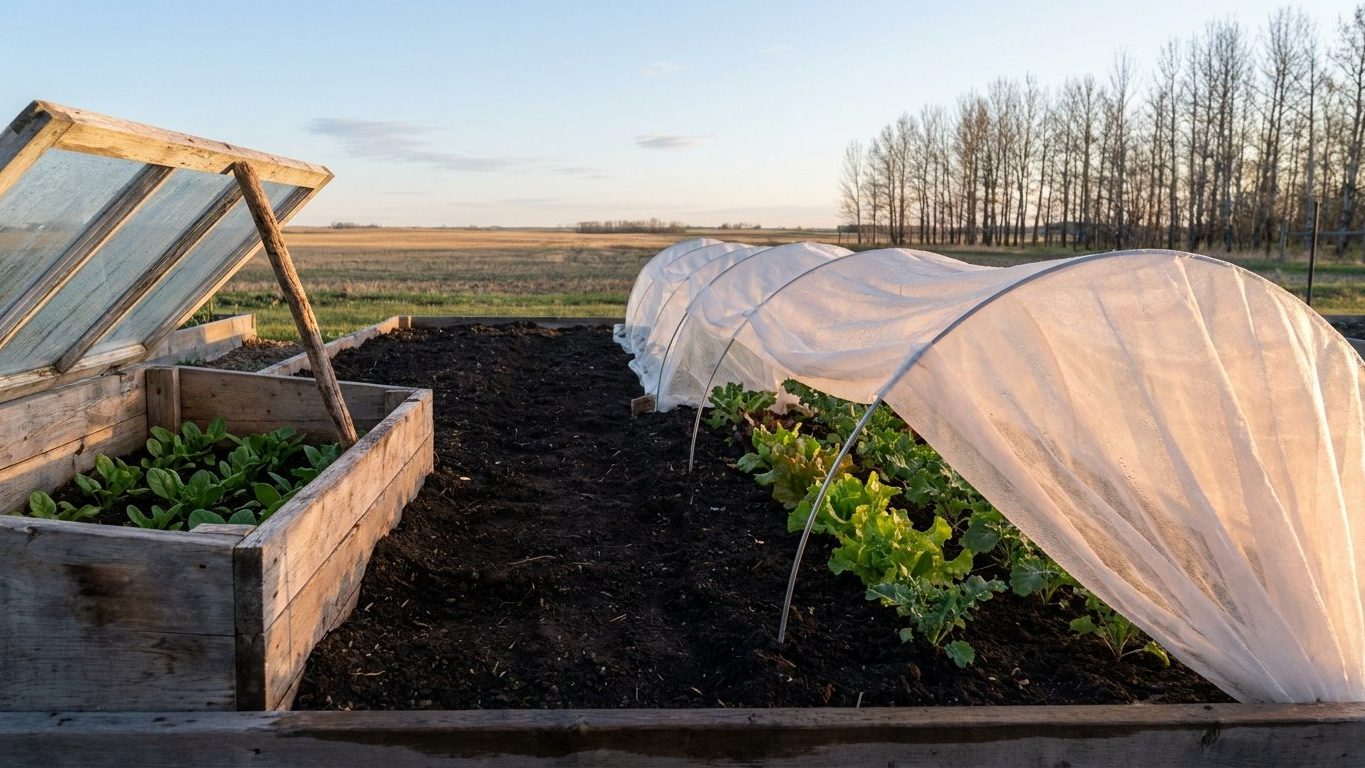

Floating row cover on hoops, a cold frame, and shade cloth handle most season extension in New Mexico. Each solves a different problem: a late freeze, a cold winter bed, or summer sun that scorches cool-season crops. Which one earns its space depends on how high your garden sits. Gardens near Albuquerque can use all three, while gardens in the northern mountains usually need a sturdier setup.
The short answer for New Mexico
Lightweight row cover over wire or PVC hoops is the most useful extender, followed by a cold frame for winter greens and shade cloth for the hot months. Row cover adds a few degrees of frost protection, which is what spring and fall nights call for, and it costs little to put up and take down.
At the Albuquerque airport station, the last spring frost falls between March 31 and April 12. The first fall frost falls between October 29 and November 9. Those dates come from NOAA’s 1991-2020 climate normals and mark where the chance of a 32°F freeze sits between 30 and 70 percent. A freeze after the early date is still a coin flip. The reference station has roughly seven months between the two windows. In Albuquerque’s coldest month the average daily minimum is 26.4°F, which stops tender crops but leaves hardy greens alive under a cold frame or low tunnel.
Suburban and rural gardens usually see the last spring frost one to two weeks later than the airport, and the first fall frost one to two weeks earlier. The gap grows with elevation. Keep row cover within reach whenever frost is possible, and push both windows wider if your garden sits above the valley floor. The full seasonal approach is laid out in Extending the Growing Season in New Mexico.
Which extender fits which job?
| Extender | Best use | Main risk |
|---|---|---|
| Floating row cover on hoops | Frost nights in spring and fall, early transplants | Wind lifts it unless edges are weighted |
| Cold frame | Winter greens, hardening off seedlings | Overheats on sunny days unless vented |
| Low tunnel with clear plastic | Early spring beds, winter crops | Cooks plants when closed in midday sun |
| Water-filled cloche | Single early tomato or pepper transplants | Covers one plant at a time |
| Shade cloth | Summer lettuce, fall sowings of cool crops | Cuts light for fruiting crops |
Dry, clear air shapes all of this. Heat escapes fast after sunset, so a warm afternoon can still be followed by a freezing dawn. The same sun can push a closed frame past safe temperatures by midday.
What will not work here
Clear plastic closed up on a sunny day fails first. Spring afternoons can be bright and mild while nights still dip to freezing, and a sealed tunnel or frame heats far beyond what seedlings tolerate. Plastic needs to be opened or vented every sunny morning. A gardener who cannot be home to do it should choose fabric row cover, which breathes.
Light fabric without anchors fails next. Spring wind in New Mexico can strip an unweighted cover off a bed and leave it across the yard. Bury the edges in soil, pin them with boards or bricks, and use clips on the hoops. Weekly watering also fails in a hot, dry summer, whether you grow under shade cloth or in a bed that bakes. Soil under cover dries quickly, so check it by hand more often than you would in a humid climate and favor drip lines over a once-a-week soak.
Can row cover protect plants from a hard freeze in New Mexico?
Not by itself. A single light layer buys a few degrees, which handles a frost near 32°F but not the single digits that high-elevation gardens see in winter. In the Albuquerque area the average coldest-month minimum is 26.4°F, so hardy crops like spinach, kale, and many lettuces can hold under cover. Tender crops cannot, and no fabric will keep a tomato alive through a hard freeze.
Winter day length is a second limit. At about 35 degrees north, winter days are short enough that growth slows to a crawl even when the plant is warm. A cover keeps a winter crop alive and lets you pick from it, but it will not make it grow fast. Setting out tender transplants on the early end of the frost window also backfires. Cold soil stalls them under a cover just as it would uncovered, and the 30 to 70 percent freeze chance means a heavier cover may still be needed.
What changes across New Mexico
The USDA Plant Hardiness Zone Map (2023 edition, built on 1991-2020 normals) runs from 4b to 9a inside the state’s borders. That is a huge spread, covering high mountain valleys and low desert basins. The zone is based on one variable, the average annual extreme minimum temperature, so it tells you what winter does to a plant. It does not set your frost dates. There is no single answer for the state, and the Albuquerque figures above describe one city.
Gardeners in the north or at altitude should shift the plan in a few ways. Expect the last spring frost later and the first fall frost earlier than the airport dates. Use a double layer of row cover, or a cover over a low tunnel, for frost nights instead of a single sheet. Lean on cold frames for hardening off, and sow quick crops such as radishes and lettuce under cover instead of waiting on the calendar. A short season rewards the quick varieties and the protected start.
Gardeners in the low, warm parts of the south have the opposite problem. Their season is long enough that frost protection matters mostly at the edges, and shade cloth for summer does more work. Latitude also shifts across the state. The 35.04 degrees north figure belongs to Albuquerque, so someone near the northern or southern border should check their own latitude. To find your hardiness zone, look up your location on the USDA map and do not infer it from a neighbor’s garden or a nursery tag.
Where to check this for your own county
The best next stop is New Mexico State University’s Cooperative Extension Service, which runs offices in the state’s counties. Call or visit the one that covers your garden and ask for two things. The first is the local planting calendar, with frost dates for your area instead of the airport’s. The second is the list of varieties trialled in your county, which tells you which tomatoes, peppers, and greens actually finished a season where you live.
A county recommendation beats a statewide one every time. Statewide advice, including the dates above, runs on one reference city and a range of zones that spans mountains and desert. County agents know the local frost pockets, wind patterns, and what failed last year. Ask them how much later your spring frost runs compared with Albuquerque, and what cover they suggest at your elevation.
Many counties also have Master Gardener volunteers who answer questions in person. Bring the specifics: your elevation, which direction your beds face, and the crops you want to stretch. Local answers are usually more precise than anything written for the whole state.
Checking this against your own garden
Your own observations outrank every date above. Three things are worth watching, and none needs equipment.
- Soil warmth by feel. Push your hand a few inches into the bed in the morning. If it feels cold and stays that way for several days, wait on warm-season transplants. Compare a covered bed with an open one, and the difference shows how much your cover really gives you.
- The first male flowers on squash or cucumbers. These open before the female flowers. When they appear on plants in one bed but not another, the first bed is warmer, and your cover or exposure is doing real work there.
- The first true leaves on seedlings. The first pair are seed leaves, and the true leaves come after. If they arrive slowly under cover, the soil is still too cold or the light is too weak, and the frame may need venting or moving to a sunnier spot.
Write down the dates once a year. After a season or two, your own notes will say more about your microclimate than any chart. When to Cover Your Garden in New Mexico shows how to turn those notes into a covering schedule.
Common questions
Is a cold frame worth building in New Mexico?
Yes, for winter greens and for hardening off seedlings. It needs venting on sunny days, even in winter, because bright dry sun can overheat a closed frame quickly.
When should I put row cover on?
Cover plants the evening before a night when the forecast low is near 32°F, and weigh down the edges. Take it off the next morning once the weather warms.
Does shade cloth count as season extension?
It does. Shade cloth extends the season for lettuce, spinach, and other cool-season crops into the hot months. It also helps fall sowings get established while the sun is still strong.
Can I use the Albuquerque frost dates for my garden?
Use them as a reference. Suburban and rural gardens typically see the last spring frost one to two weeks later and the first fall frost one to two weeks earlier, and more at elevation. Your county extension office can give local dates.