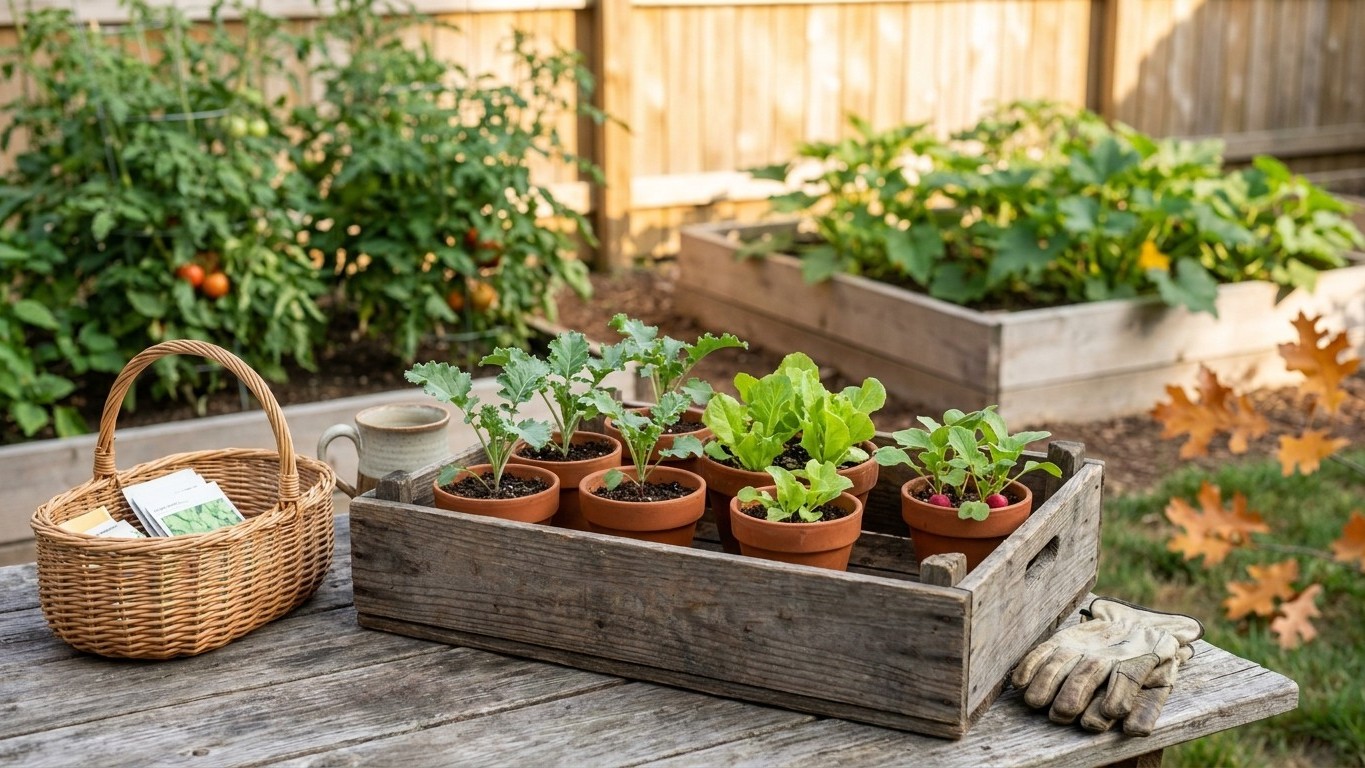

August sits deep in the growing season west of the Cascades, months past the last frost and months before the first. That means this is fall-crop planting time, not a fresh start: direct-sow quick-maturing greens and roots, transplant brassicas for autumn harvest, and get sweet onions into the ground for next year’s overwintering crop. Central and eastern Oregon’s shorter, harsher season narrows that list considerably.
What goes in the ground in August

The calendar says August everywhere in Oregon, but the ground doesn’t know that. In the Willamette Valley and along the coast, soil is warm, days are long, and the growing season still has real distance left before the first fall frost, which arrives somewhere between November 11 and November 27 depending on where you sit (NOAA NCEI 1991-2020 Climate Normals). That’s the number that decides what’s safe to plant this month, not the fact that it’s still summer on the porch thermometer.
Count backward from that window and a lot of quick crops still fit. Beets, carrots, bush beans, kale, lettuce, spinach, radishes, and turnips can all go straight into the ground now and mature well before frost shuts things down. Peas sown now for a fall crop tend to do better than a spring sowing, since they mature into cooling weather instead of racing the summer heat. And this is the classic month for sowing Walla Walla sweet onions directly in the ground, since they’re grown as an overwintering crop and need the extra months in the soil to bulb up the following summer.
Transplants matter here too. Broccoli, cabbage, cauliflower, and Brussels sprouts started from seed a few weeks earlier can go into the garden now for a fall harvest, and transplanting beats direct-seeding these in August because the soil surface can get too hot and dry for tiny brassica seedlings to establish.
The gamble list is short but real: starting corn, tomatoes, or peppers from seed this late is a losing bet almost everywhere in the state, since none of them have time to mature before frost. The USDA hardiness zone range across Oregon runs from 4a to 9b, and that spread (built on a single measure, average annual extreme minimum temperature) is exactly why a planting date that works in a milder pocket of the valley can fail outright in a colder inland spot. Treat this month as fall-crop planting, not a second spring.
What to start under cover
Under cover in August means two different things depending on what you’re chasing. If you want a fall and winter harvest of lettuce, spinach, or Asian greens, starting seedlings in trays under some shade keeps the soil temperature down around the roots, since direct-sown seed for these crops often struggles to germinate in hot, dry August soil. Transplant them out two to three weeks later once the worst heat has passed.
The other project is longer-range: seed-starting for next spring’s earliest crops, or getting a jump on biennials that need a long runway. Work backward from the first fall frost window of November 11 to November 27. A crop that needs roughly 10 to 12 weeks to reach a harvestable size, started now, lands its finish line right around that frost window, which is cutting it close in a colder part of the state and comfortable in a milder one.
The two ways this goes wrong are predictable. Start too early under cover in August heat and seedlings get leggy and rootbound before the weather even cools enough to plant them out, wasting the head start. Start too late and the transplants hit the ground just as the light and warmth are dropping off, and they stall instead of sizing up. Watch the trays daily in this heat, since seedlings under cover in August dry out far faster than they would in a cooler month, and a single missed watering can set them back a week.
What is ready to pick
August is harvest month for the crops that took all summer to get here. Tomatoes, peppers, summer squash, cucumbers, and corn are hitting their stride, along with bush and pole beans that need picking every few days to keep the plant producing. Blueberries are finishing up, and early apples and stone fruit like peaches and plums are coming ripe depending on the variety and the specific summer’s heat.
Garlic and the earlier onion crop, if planted the previous fall, should already be pulled and curing somewhere dry and shaded with good airflow, not still sitting in the ground. Check the necks: once the tops have fallen over and started to dry, the bulb is done growing and it’s time to lift it rather than leave it exposed to soil moisture that invites rot.
New potatoes can be dug now too, gently, from around the edges of a hill without disturbing the whole plant, which lets the rest of the crop keep sizing up for a later main harvest. Zucchini and summer squash need daily eyes on them; a fruit that looks modest one afternoon can be oversized and seedy by the next, so pick on the small side and pick often. Anything that’s bolted, whether lettuce or spinach left too long in the heat, is done for the season; pull it and use the space for one of the fall crops from the first section instead of hoping it recovers.
The jobs that matter this month

Watering rhythm matters more in August than in almost any other month, since heat and long daylight pull moisture out of soil fast. Deep, infrequent watering that reaches the root zone beats a daily light sprinkle, which just wets the surface and encourages roots to stay shallow and vulnerable. Mulch pays for itself here too: a few inches over exposed soil cuts evaporation and keeps roots cooler, and it’s cheaper to lay down now than to fight blossom-end rot and stressed plants later.
Staking and supporting need attention before, not after, plants sprawl. Tomato branches loaded with fruit snap under their own weight in a summer storm, and beans left to flop onto damp soil are an invitation to rot and slugs. Pest scouting is worth a few minutes every few days: spider mites show up as fine stippling on leaves in dry heat, squash bugs cluster on the undersides of squash leaves, and powdery mildew starts as a dusty white film on squash and cucumber leaves once nights start cooling and humidity rises.
Succession sowing keeps the garden producing instead of stalling. Every couple of weeks, a fresh row of beans, a patch of lettuce, or a new sowing of radishes replaces what’s finishing, and August is exactly the window where that habit either keeps paying off or quietly stops, since anything sown too late runs out of season before the first fall frost between November 11 and November 27. Garlic bulbs should be curing, not still drying in direct sun, and stored crops from earlier in the summer are worth a check for soft spots before they spread to the rest of the batch.
What not to do in August
The most common mistake this month is confusing warm air with warm intent. A hot afternoon doesn’t mean it’s a good moment to start tomatoes or peppers from seed; there simply isn’t enough season left before the first fall frost, whichever end of the November 11 to November 27 window applies locally. Redirect that energy into the fall crops that actually have time to finish: beets, carrots, kale, lettuce, and the rest of the direct-sow list.
Uncovering row covers or shade cloth too early after a cool stretch is another trap, since Oregon’s August weather can swing back to a hard heat spell within days, and tender fall seedlings that just went into the ground have no buffer against that kind of stress. Leave protection in place a little longer than feels necessary rather than pulling it at the first cool morning.
Nitrogen-heavy feeding is also easy to overdo at the wrong point in the season. Late-summer nitrogen pushes soft, leafy growth on fruit trees and perennials just as they should be hardening off for winter, which leaves that new growth vulnerable to the first real cold snap. On fall vegetable crops, the same overfeeding tends to produce lush foliage at the expense of the roots or heads you’re actually trying to grow, so a lighter, more balanced feed suits this stretch of the season better than a heavy nitrogen boost.
Checking this against your own county
Everything above is a starting point built for the state as a whole, not an instruction for a specific backyard. Elevation, distance from the coast, and simply being west or east of the Cascades can shift these frost windows by weeks in either direction, and a garden in a high desert valley in central or eastern Oregon is working with a genuinely shorter season than one in the Willamette Valley. Before committing a bed to any of this, check the Oregon State University Extension Service for local planting guidance tuned to your county’s actual conditions rather than a statewide average.
Common questions
Is it too late to plant tomatoes in Oregon in August?
Yes, in almost every part of the state. Tomatoes started from seed this late won’t have enough time to reach maturity before the first fall frost, which falls between November 11 and November 27 depending on location. If you already have established plants producing, keep tending them, but don’t start new ones from seed this month.
What vegetables can still be direct-sown in Oregon in August?
Fast-maturing crops like beets, carrots, bush beans, kale, lettuce, radishes, spinach, and turnips can all go straight into the ground this month and finish before frost. Peas sown now for a fall harvest also tend to perform well as temperatures cool.
When should Walla Walla sweet onions be planted in Oregon?
August is the standard month for direct-sowing Walla Walla onions, since they’re grown as an overwintering crop that needs the extra months in the ground before bulbing up the following year.
Does the planting window change between western and eastern Oregon?
Considerably. The state’s USDA hardiness zones span 4a to 9b, and central and eastern Oregon’s high desert conditions mean a shorter frost-free season than the Willamette Valley or coastal areas. Check with the Oregon State University Extension Service for guidance specific to your county.