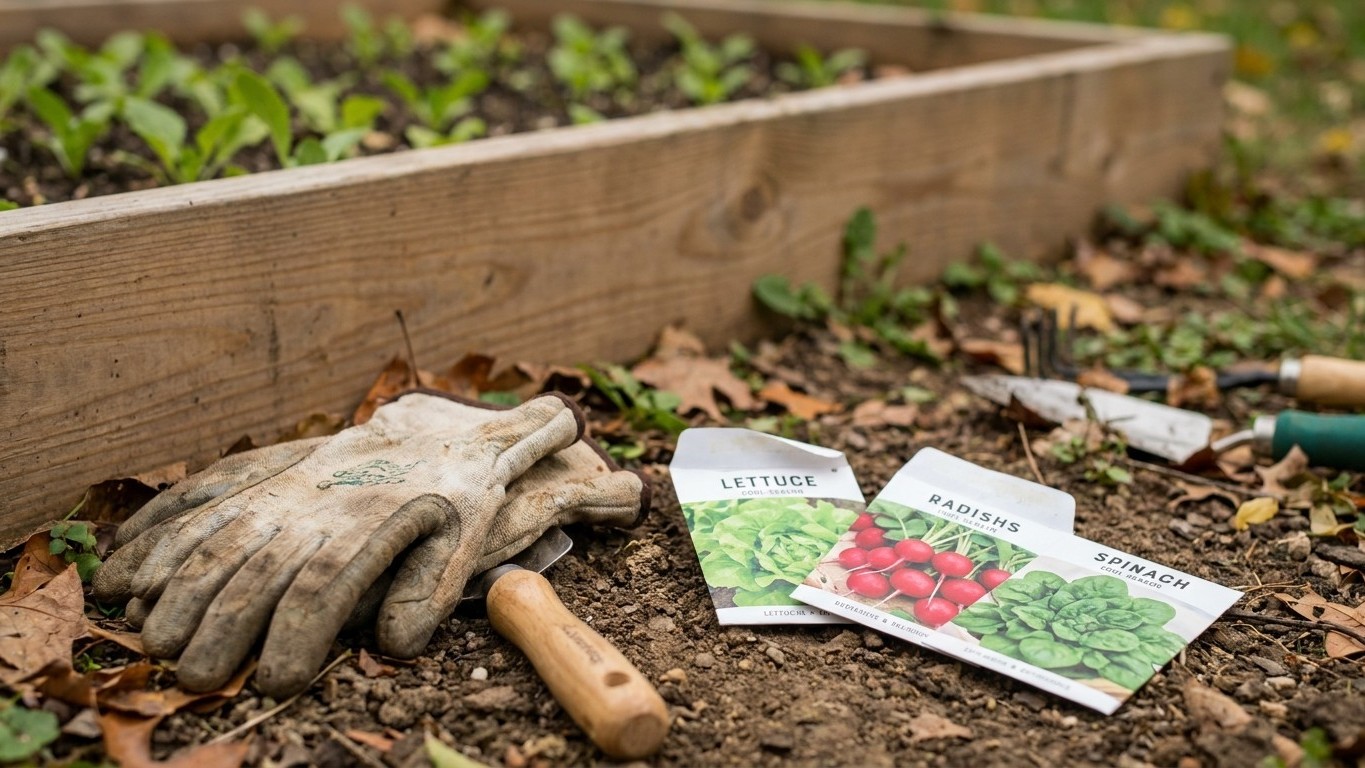

September in western Oregon means one thing above all: the fall garden. The soil is warm from a full summer, nights start cooling toward the mid-40s, and the first fall frost window (November 11 to November 27, per NOAA climate normals for the Portland reference station) sits ten to twelve weeks away. That gap is enough for quick greens, brassica transplants, cover crops and cured winter squash, but not for anything that needs a long summer to finish.
What goes in the ground in September

The math that matters here isn’t the calendar, it’s the number of days left before that first frost window arrives. A crop that needs 30 to 45 days to mature, like spinach, radish, arugula, mustard greens or mache, still has plenty of room. Direct-sow these now and they’ll be ready well before the ground cools for good. Turnips and beets for greens (not full roots) also fit this window if seeded in the first half of the month.
Transplants are the bigger opportunity. Kale, collards, cabbage and broccoli started under cover back in midsummer are exactly the right size to go into open beds now. They’ll size up through the mild fall weather and, in the case of kale and collards, keep producing into winter west of the Cascades. Overwintering onion sets and some hardy pea varieties (for shoots, not a full crop) can also go in toward the back half of the month in beds that drain well.
Cover crops deserve a mention because September is close to the ideal window for them. Crimson clover, winter rye and fava beans sown now have time to establish real root systems before growth slows, which means better weed suppression and more organic matter turned under.
Garlic and shallots are often saved for October or November in Oregon, but if a bed is free and the soil workable, there’s no rule against getting cloves in early. The caution runs the other way for central and eastern Oregon: that’s high desert country with a much shorter, more variable season, and a crop that’s safe on the west side in September can meet an early, hard frost on the east side. Treat any statewide date as a starting point, not a guarantee.
What to start under cover
Counting backward from the first fall frost window is the only reliable way to decide what’s worth starting now. If a crop needs 50 to 60 days from seed to a harvestable size, and frost arrives sometime between November 11 and 27, seed started in the first week of September lands right at the edge of safety. Anything started after mid-month should be a crop that matures in 30 days or less, or one grown specifically for cold tolerance rather than speed.
Cold frames and low tunnels are the tool that buys extra weeks. Spinach, mache, claytonia and the hardier lettuce varieties sown under cover in September will keep growing slowly even after open-ground crops have stalled, giving a harvest window that stretches well past what bare soil allows.
The two ways this goes wrong are predictable. Start too early, while daytime temperatures are still in the 70s and 80s, and cool-season greens bolt or turn bitter before they’re worth eating. Start too late, past the third week of September in most western Oregon locations, and slow-growing crops simply run out of daylight and warmth before they size up, leaving small, tough plants that never really produce. The sweet spot is narrow: warm enough soil to germinate quickly, but early enough in the month that there’s still real growing time left.
What is ready to pick
September is the month western Oregon gardens are at their fullest. Tomatoes, peppers, summer squash, cucumbers, beans and sweet corn are all coming off in volume, and the first apples and pears are ready depending on variety. Winter squash and pumpkins are sizing up on the vine but shouldn’t be cut yet; wait until the rind resists a thumbnail and the stem starts to dry and corky.
Onions and garlic from spring planting are usually pulled and curing by now, spread in a dry, airy spot out of direct sun for two to three weeks before storage. Check that curing area weekly. Any bulb that’s gone soft or started sprouting should be used first, not stored with the rest.
Late raspberries and early fall-bearing varieties are often producing a second flush this month, and grapes in warmer western valleys are approaching harvest. For anything still on the vine, the test is simple: taste one. Sugar content in fruit doesn’t keep rising much after picking, so waiting for “perfect” color without tasting often means picking too late or too early depending on the variety.
The jobs that matter this month

Watering rhythm changes here more than gardeners expect. Late-summer heat can still push soil dry fast, but the days are shorter and evaporation slower, so deep, less frequent watering serves better than the daily light watering that worked in July. Tomatoes and squash in particular do better with consistent deep soaks now, since irregular moisture late in the season is what splits ripening fruit.
Staking and support work should happen before, not after, plants sprawl under the weight of a full harvest. A tomato vine loaded with green and ripening fruit that topples in a September windstorm loses a week of ripening time it doesn’t have to spare.
Succession sowing is still worth doing through the first half of the month for the fast crops, spinach, radish, salad greens, but every week that passes narrows the window. Keep a simple written log of sowing dates against the first fall frost range; it’s the fastest way to learn how the general date applies to a specific yard.
Pest scouting matters more in September than gardeners assume, because pests that built up all summer are now concentrated on a smaller number of ripening, high-value plants. Powdery mildew on squash and cucumbers, and late-season aphids on brassica transplants, are both easier to manage caught early than after they’ve spread across a bed.
Curing and storage prep rounds out the list: winter squash needs a warm, dry spot for a week or two after harvest to harden its skin, and any storage area for onions, garlic or squash should be cleaned out and checked for good airflow before the harvest arrives in volume.
What not to do in September
The most common mistake is sowing warm-season crops like bush beans or summer squash because the air still feels like midsummer. The soil may be warm enough to germinate them, but there isn’t enough season left before the first fall frost window for many of these to actually produce a harvest. Warm air in September doesn’t buy back the growing days that have already passed.
A second mistake is uncovering cold frames or row covers too early after a stretch of unusually warm, dry weather. Removing protection on the assumption that fall arrived early leaves tender greens exposed the moment temperatures drop back down, and Oregon’s fall weather swings enough that a warm week is no guarantee of a warm month.
Heavy nitrogen feeding is the third trap. Pushing soft, leafy new growth on fruit trees, canes or perennials late in the season means that growth hasn’t had time to harden off before cooler nights arrive, and it’s the softest, newest growth that gets damaged first by an early cold snap. Feeding earlier in the season, or switching to lower-nitrogen amendments by September, protects plants better than a late nutrient boost ever will.
Checking this against your own county
A statewide frost window is a starting point, not an instruction for a specific yard. Elevation alone can shift a frost date by weeks, and the difference between western valleys and the high desert of central and eastern Oregon is closer to a different climate than a different neighborhood. Local factors like slope, tree cover and distance from water all move the numbers further still.
The most reliable next step is checking that against local data rather than a single statewide figure. The Oregon State University Extension Service publishes county-level guidance and a planting calendar built for the state’s different growing regions, and it’s worth cross-referencing before committing a full bed to any single date.
Common questions
Is it too late to plant a vegetable garden in September in Oregon?
No, but the choice narrows to fast-maturing crops. Quick greens, radishes and transplanted brassicas still have time before the first fall frost window (November 11 to 27); anything needing a full summer to mature does not.
Can I still plant tomatoes or squash in September?
Direct-seeding them is a gamble west of the Cascades and a near-certain loss in central or eastern Oregon, where the season is shorter. Any warm-season crop needs to already be an established transplant with fruit set to have a realistic chance of finishing before frost.
When should garlic actually go in the ground?
Many Oregon gardeners plant garlic in October or November rather than September, though a workable, well-drained bed can take cloves earlier. Local extension guidance is the better source for a firm date, since this shifts with elevation and region.
Does the USDA hardiness zone tell me when to plant?
Not directly. The USDA Plant Hardiness Zone Map is built on one measure, the average annual extreme minimum temperature, and Oregon spans zones 4a to 9b across the state. It tells you what a plant can survive over winter, not when it’s safe to put seed in the ground; the frost window does that job.
Gardeners who plant by the Moon can check the September 2027 moon planting calendar, a tradition rather than a proven method.